Not Everything is Political. Hurricanes, for Example.

During the two recent “once in a lifetime” hurricanes that happened to strike the southern US within two weeks of each other, people apparently thought they were a political plot and that meteorologists were in on the conspiracy,

Michigan meteorologist Katie Nickolaou received death threats through social media.

“I have had a bunch of people saying I created and steered the hurricane, there are people assuming we control the weather. I have had to point out that a hurricane has the energy of 10,000 nuclear bombs and we can’t hope to control that. But it’s taken a turn to more violent rhetoric, especially with people saying those who created Milton should be killed.”

Many weather scientists were simply stunned at the level of stupidity and misinformation hurled their way. After someone suggested that someone should “stop the breathing” of those that “made” the hurricanes, Nickolaou responded with this post, “Murdering meteorologists won’t stop hurricanes. I can’t believe I just had to type that.”

Washington, D.C. based meteorologist Matthew Cappucci also received threats: “Seemingly overnight, ideas that once would have been ridiculed as very fringe, outlandish viewpoints are suddenly becoming mainstream, and it’s making my job much more difficult.” 

Marjorie Taylor Greene, U.S. Representative for  Georgia’s 14th congressional district, jumped forcefully into the fray by suggesting the conspiracy was politically motivated.  She posted on X: “This is a map of hurricane affected areas with an overlay of electoral map by political party shows how hurricane devastation could affect the election.”

And just in case you’re giving her the benefit of the doubt by saying she might just be pointing out a correlation, not a cause, she doubled down with this post on X: “Yes they can control the weather, it’s ridiculous for anyone to lie and say it can’t be done.” 

You may say that when it comes to MTG, we must consider the source and sigh “You can’t cure stupid.”   But Marjorie Taylor Greene easily won a democratic election with almost 66% of the vote, which means the majority of people in her district believed in her enough to elect her as their representative. Her opponent, Marcus Flowers, is a 10-year veteran of the US Army and he served 20 years as a contractor or official for the State Department and Department of Defense. He’s no slouch. But in Georgia’s 14th Congressional district, two out of three voters decided a better choice would be the woman who believes that the Nazi Secret Police were called the Gazpacho.

I’ve talked about this before. Ad nauseum – actually. But this reaches a new level of stupidity…and stupidity on this scale is f*&king frightening. It is the most dangerous threat we as humans face.

That’s right, I said the “biggest” threat.  Bigger than climate change. Bigger than AI. Bigger than the new and very scary alliance emerging between Russia, Iran, North Korea and China. Bigger than the fact that Vladimir Putin, Donald Trump and Elon Musk seem to be planning a BFF pajama party in the very near future.

All of those things can be tackled if we choose to. But if we are functionally immobilized by choosing to be represented by stupidity, we are willfully ignoring our way to a point where these existential problems – and many others we’re not aware of yet – can no longer be dealt with.

Brian Cox, a professor of particle physics at the University of Manchester and host of science TV shows including Universe and The Planets, is also warning us about rampant stupidity. “We may laugh at people who think the Earth is flat or whatever, the darker side is that, if we become unmoored from fact, we have a very serious problem when we attempt to solve big challenges, such as AI regulation, climate or avoiding global war. These are things that require contact with reality.” 

At issue here is that people are choosing politics over science. And there is nothing that tethers political to reality. Politics are built on beliefs. Science strives to be built on provable facts. If we choose politics over science, we are embracing wilful ignorance. And that will kill us.

Hurricanes offer us the best possible example of why that is so. Let’s say you, along with Marjorie Taylor Greene, believe that hurricanes are created by meteorologist and mad weather scientists. So, when those nasty meteorologists try to warn you that the storm of the century is headed directly towards you, you respond in one of two ways: You don’t believe them and/or you get mad and condemn them as part of a conspiracy on social media. Neither of those things will save you. Only accepting science as a reliable prediction of the impending reality will give you the best chance of survival, because it allows you to take action.

Maybe we can’t cure stupid. But we’d better try, because it’s going to be the death of us.

Band Identities and Identity Bands

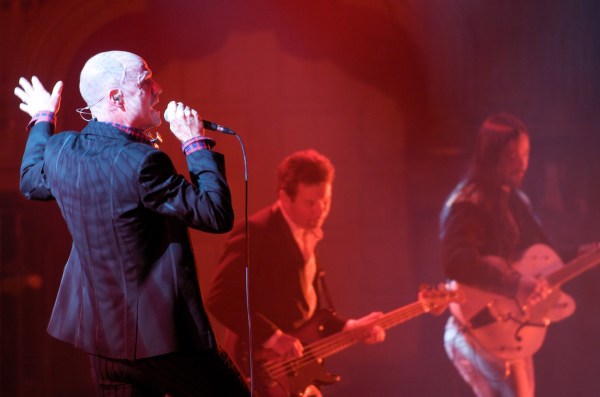
If one nation ever identified with one band, it would be Canada and The Tragically Hip. Up here in the Great White North, one can’t even mention the band without the word “iconic” spilling out. And, when iconic is defined as “a representative symbol or worthy of veneration” – well, as a Canadian, all I can say is – the label fits. I went on about why this was way back in 2016 when the Tragically Hip did their farewell concert in Kingston, Ontario. Just 14 months later, lead singer Gord Downie was gone, a victim at far-too-young an age of glioblastoma – a deadly form of brain cancer.

If you are at all curious about how a bond can build between a nation and a band, I would highly recommend diving into the new Prime Video docuseries, The Tragically Hip: No Dress Rehearsal. Directed by Gord’s brother, Mike Downie, it’s a 256-minute, 4 part love story to a band. A who’s who of famous Canadian Hip fans, including Dan Ackroyd, Jay Baruchel, Will Arnett and even our Prime Minister, Justin Trudeau, go on about the incredible connection between the band and our nation.

But, like all love stories, there is bitter and sweet here. Over their 32-year history as Canada’s favorite band, there were rough patches. Mike Downie interviews the remaining 4 band members and pulls no punches when it comes to talking about one particularly tense time – from 2009 to 2014 – when the band was barely communicating with each other.

Most Canadians had no idea there was “Trouble at the Henhouse” (the name of the Hip’s 6th album). As George Stromboulopoulos, a Canadian journalist who interviewed the band more than once, said, “”There are a couple of things that you can’t tell the truth about in this country, and one of the things you can’t tell the truth about in the country is that the guys in the Tragically Hip probably didn’t get along as often as everybody said they did.” 

As I watched the series, I couldn’t help but think about the strange nature of band identities and how they play out, both internally and externally. How and why do we find part of our identities in a rock band, and what happens on the inside when the band breaks up? That didn’t happen to the Hip, but that’s possibly because Downie received his terminal diagnosis in 2015 and he wanted to do one last tour.

In the Panther, the campus newspaper of California’s Chapman University, reporter Megan Forrester explores why bands break up. She points to a psychological theory as the possible culprit: “Psychology professor Samantha Gardner told The Panther that friction and an ultimate dissolution of a group happens due to social identity theory. This theory suggests that any group that people associate themselves with, whether that is an extracurricular club, volunteer organization or a band, helps boost their self-esteem and reduce uncertainty in one’s identity. 

“But once the values of the group change course, Gardner said that is when tensions rise. 

‘The group members may have thought, ‘I don’t think this identity of being a member of this group is really who I am or it’s not what I envisioned,’ Gardner said.”

The issue with bands is that evolution of values and identities happens at different times to different members. We, as the public, find it hard to identify with 4 or 5 individuals equally. We naturally elevate one or – at the most – two members of the band to star status. This is typically the lead singer. That can be a tough pill to swallow for the rest of the band who play just beyond the reach of the spotlight. That is, in part, what happened to the Tragically Hip. When you have a mesmerizing front man, it’s hard not to focus on him. Gord Downie was moving at a different speed than the rest of the Hip.

But an equally interesting thing is what happens to the fans of the band. Not only do the members get their identify from the band. If we follow a band, we also get part of our identity from that band. And when that band breaks up, we lose a piece of ourselves. We still haven’t forgiven Yoko Ono for breaking up the Beatles, and that supposedly happened (we should blame social identity theory rather than Yoko) over 50 years ago.

I think the Tragically Hip also knew Canada would never forgive them if they broke up. We needed to believe in 5 guys who were happy to be famous in Canada, who more than once flipped US-based stardom the bird (including getting high before their SNL debut) and who banded together to create great music for the world – but especially Canada – to enjoy. 

There’s nothing new about us common folks looking to the famous to help define ourselves. We’ve been doing that for centuries. But there is a difference when we look to get that identity from a group rather than an individual. Canada has lots of stars – singular – that we could identify with: Celine Dion, Drake, Justin Bieber. So why did 5 guys from Kingston, Ontario become the ones we chose as our identity badge? We did we resist the urge to look for an individual star and chose the Tragically Hip instead?

I think part of it was what I wrote before: the Tragically Hip appealed to Canadians because they stayed in Canada and gained a very Canadian type of stardom. But I also think Canadians liked the idea of identifying with a group rather than an individual. That was a good fit for our shared values.

Let’s do a little “napkin-back” testing of that hypothesis. If Canadians looked to a band for identity, would a more individualistic culture – like the U.S. – be more likely to look for that identify in individuals?

Given U.S. domination of pretty much every type of culture, you would expect it to also dominate a list of the greatest bands of all time. But a little research on Google will tell you that of a typical Top 10 list of the Greatest Bands, about two-thirds are British. There are a few that are American, but they are typically named with the same formula: Lead Singer + the Name of Band. For example: Prince and the Revolution, Joan Jett and the Blackhearts, Bruce Springsteen and the E Street Band. There are exceptions, but I was surprised how few really famous US based bands have names that are not tied to a person or persons in the band (Nirvana and The Eagles are two that come to mind).

Let’s try another angle: as our culture becomes more individualistic – as it undoubtedly has over the last 3 decades – would our search for identity follow a similar trend? There again, the proof seems to be in our playlists. If you look for the greatest hits of the last 20 years, you will find very few bands in there. Maroon 5 seems to be the only band that creeps into the top 20.

Be that as it may, I recommend taking 256 minutes to learn what Canadians already know: The Tragically Hip kicked ass!

The Songs that Make Us Happy

Last Saturday was a momentous day in the world of media, especially for those of us of a certain age. Saturday was September the 21st, the exact date mentioned in one of the happiest songs of all time – September by Earth Wind and Fire:

Do you remember
The 21st night of September?
Love was changin’ the minds of pretenders
While chasin’ the clouds away

If you know the song, it is now burrowing its way deep into your brain. You can thank me later.

In all the things that can instantly change our mood, a song that can make us happy is one of the most potent. Why is that? For me, September can instantly take me to my happy place. And it’s not just me. The song often shows up somewhere on lists of the happiest songs of all time. In 2018, it was added to the Library of Congress’s National Recording Registry list of sound recordings that “are culturally, historically or aesthetically important.

But what is it about this song that makes it an instant mood changer?

If you’re looking for the source of happiness in the lyrics, you won’t find it here. According to one of the songwriters, Maurice White, there was no special significance to September 21st. He just liked the way it rhymed with “remember.”

And about 30% of the full lyrical content consists of two words, neither of which mean anything: Ba-dee-ya and Ba-du-da. Even fellow songwriter Allee Willis couldn’t find meaning in the lyric, at one point begging writing partner White to let him rewrite that part – “I just said, what the f*$k does ba-dee-ya mean?”

But perhaps the secret can be found in what Willis said in a later interview, after September became one of Earth Wind and Fire’s biggest hits ever, “I learned my greatest lesson ever in songwriting … which was never let the lyric get in the way of the groove’ (for those of you not living in the seventies – “groove” is a good thing. In Gen Z speak, it would be “vibing”).

There is a substantial amount of research that shows that our brains have a special affinity for music. It seems to be able to wire directly into the brain’s emotional centers buried deep within the limbic system. Neuroimaging studies have shown that when we listen to music, our entire brain “lights up” – so we hear music at many different levels. There is perhaps no other medium that enjoys this special connection to our brains.

In 2015, Dutch neuroscientist Dr. Jacob Jolij narrowed in on the playlists that make us happy. While recognizing that music is a subjective thing (one person’s Black Sabbath is another’s Nirvana), Jolij asked people to submit their favorite feel-good tracks and analyzed them for common patterns. He found that the happiest tunes are slightly faster than your average song (between 140 and 150 beats per minute on average), written in a major key, and either about happy events or complete nonsense.

Earth Wind and Fire’s September ticked almost all of these boxes. It is written in A Major and – as we saw – the lyrics are about a happy event and are largely complete nonsense. It’s a little low on the beat per minute meter – at 126 BPM. But still, it makes me happy.

I was disappointed to see September didn’t make Dr. Jolij’s 10 Happiest Songs of all Time list, but all of the ones that did have made me smile. They are, in reverse order:
10. Walking on Sunshine – Katrina and the Waves
9. I Will Survive – Gloria Gaynor
8. Livin’ on a Prayer – Jon Bon Jovi
7. Girls Just Wanna Have Fun – Cyndi Lauper
6. I’m a Believer – The Monkees
5. Eye of the Tiger – Survivor
4. Uptown Girl – Billie Joel
3. Good Vibrations – The Beach Boys
2. Dancing Queen – ABBA

    And the happiest song of all time?

    1. Don’t Stop Me Now – Queen

    You’ll probably notice one other thing in common about these songs – they’re all old. The newest song on the list is Livin’ on a Prayer, released in 1986. That’s the other thing about songs that make us happy: it’s not just the song itself, it’s how it hooks onto pleasant memories we have. Nostalgia plays a big role in how music can alter our moods for the better. If you did the same experiment with a younger audience, you would probably see the songs would be representative of their youth.

    Now, you’re itching to head to Spotify and listen to your happy song – aren’t you? Before you do, share it with us all in the comments section!

    Grandparenting in a Wired World

    You might have missed it, but last Sunday was Grandparents Day. And the world has a lot of grandparents. In fact, according to an article in The Economist (subscription required), at no time in history has the ratio of grandparents to grandchildren been higher.

    The boom in Boomer and Gen X grandparents was statistically predictable. Sine 1960, global life expectancy has jumped from 51 years to 72 years. At the same time, the number of children a woman can expect to have in her lifetime has been halved, from 5 to 2.4. Those two trendlines means that the ratio of grandparents to children under 15 has vaulted from 0.46 in 1960 to 0.8 today. According to a little research the Economist conducted, it’s estimated that there are 1.5 billion grandparents in the world.

    My wife and I are two of them.

    So – what does that mean to the three generations involved?

    Grandparents have historically served two roles. First, they, and by they, I mean typically the grandmother, provided an extra set of hands to help with child rearing. And that makes a significant difference to the child, especially if they were born in an underdeveloped part of the world. Children in poorer nations with actively involved grandparents have a higher chance of survival. And in Sub Saharan Africa, a child living with a grandparent is more likely to go to school.

    But what about in developed nations, like ours? What difference could grandparents make? That brings us to the second role of grandparents – passing on traditions and instilling a sense of history. And with the western world’s obsession with fast forwarding into the future, that could prove to be of equal significance.

    Here I have to shift from looking at global samples to focussing on the people that happen to be under our roof. I can’t tell you what’s happening around the world, but I can tell you what’s happening in our house.

    First of all, when it comes to interacting with a grandchild, gender specific roles are not as tightly bound in my generation as it was in previous generations.  My wife and I pretty much split the grandparenting duties down the middle. It’s a coin toss as to who changes the diaper. That would be unheard of in my parents’ generation. Grandpa seldom pulled a diaper patrol shift.

    Kids learn gender roles by looking at not just their parents but also their grandparents. The fact that it’s not solely the grandmother that provides nurturing, love and sustenance is a move in the right direction.

    But for me, the biggest role of being “Papa” is to try to put today’s wired world in context. It’s something we talk about with our children and their partners. Just last weekend my son-in-law referred to how they think about screen time with my 2-year-old grandson: Heads up vs Heads down.  Heads up is when we share screen time with the grandchild, cuddling on the couch while we watch something on a shared screen. We’re there to comfort if something is a little too scary, or laugh with them if something is funny. As the child gets older, we can talk about the themes and concepts that come up. Heads up screen time is sharing time – and it’s one of my favorite things about being a “Papa”.

    Heads down screen time is when the child is watching something on a tablet or phone by themselves, with no one sitting next to them. As they get older, this type of screen time becomes the norm and instead of a parent or grandparent hitting the play button to keep them occupied, they start finding their own diversions.  When we talk about the potential damage too much screentime can do, I suspect a lot of that comes from “heads down” screentime. Grandparents can play a big role in promoting a healthier approach to the many screens in our lives.

    As mentioned, grandparents are a child’s most accessible link to their own history. And it’s not just grandparents. Increasingly, great grandparents are also a part of childhood. This was certainly not the case when I was young. I was at least a few decades removed from knowing any of my great grandparents.

    This increasingly common connection gives yet another generational perspective. And it’s a perspective that is important. Sometimes, trying to bridge the gap across four generations is just too much for a young mind to comprehend. Grandparents can act as intergenerational interpreters – a bridge between the world of our parents and that of our grandchildren.

    In my case, my mother and father-in-law were immigrants from Calabria in Southern Italy. Their childhood reality was set in World War Two. Their history spans experiences that would be hard for a child today to comprehend – the constant worry of food scarcity, having to leave their own grandparents (and often parents) behind to emigrate, struggling to cope in a foreign land far away from their family and friends.  I believe that the memories of these experiences cannot be forgotten. It is important to pass them on, because history is important. One of my favorite recent movie quotes was in “The Holdovers” and came from Paul Giamatti (who also had grandparents who came from Southern Italy):

    “Before you dismiss something as boring or irrelevant, remember, if you truly want to understand the present or yourself, you must begin in the past. You see, history is not simply the study of the past. It is an explanation of the present.”

    Grandparents can be the ones that connect the dots between past, present and future. It’s a big job – an important job. Thank heavens there are a lot of us to do it.

    The Olympics Are Finished — But We’ll Always Have Paris!

    I have to confess: The Olympics sucked me in again.

    Prior to the kickoff in Paris, I was unusually ambivalent about the Olympics. Given the debacle that was the spectator-less Tokyo Olympics, it was like the world had agreed not to expect too much from these games. Were the Olympics still relevant? Do we need them anymore?

    I caught the opening ceremonies and was still skeptical. It was very Parisienne – absolutely breathtaking, with a healthy dose of “WTF.” Still, I was withholding judgement.

    But by day three, I was hooked. I had signed up for the daily Olympic news feed. I was watching Canada’s medal count. I was embarrassed – along with the rest of the nation – by our women’s soccer team’s drone spying scandal. I became an instant expert in all those obscure sports that pique our interest on a quadrennial cycle. I could go on at length about the nuances of speed climbing, slalom canoe or B-Boy breaking.

    The Olympics had done it again. Paris did not disappoint.

    So, this last Sunday night, I watched the closing ceremony with all the feels you get when you have to say goodbye to those new friends you made as you board the bus taking you home from summer camp. Into this bittersweet reverie of video flashbacks and commentators gushing about this international kumbaya moment, my wife had the nerve to kill my vibe by commenting that “there must be a better use for all the billions this game cost.”

    It’s hard to argue against that. The estimated total cost of the games was 9 billion euros, or almost $10 billion U.S. You don’t need to be particularly jaded to realize that the Olympics are really a spectacle for rich nations. Sure, any nation can send a team, but if you combine the 40 smallest teams – coming from places like the Sudan, Chad, Namibia, Lesotho and Belize — you’d have a total of 120 athletes. That would be about the same size as the Olympic team from Denmark, the 25th largest team that attended.

    The Olympics are supposed to offer an opportunity to those of all nations, but the bigger your GDP (gross domestic product) the more likely you are to end up with a medal around your neck.

    So I come back to the question: Do we still need the Olympics, if only to break the relentless downward spiral of our horrific news cycle for 16 brief days?

    Before we get too gooey about the symbolism of the Olympics, we should take a look back at its history.

    Baron Pierre de Coubertin, who revived the modern Olympics, did so because he was fascinated by the culture and ideals of ancient Greece. The original Olympic Games were essentially a chance for city states to “one-up” their rivals. A temporary truce was in place during the games but behind the athletic competitions, there was a flurry of alliances and back-room deals being made to gain advantages when Greece went back to its warlike ways after the games.

    The idea that the modern games are a symbol of equality and fraternity was — at best – tangential to Coubertin’s original plan. He wanted to encourage amateur competition and athletic prowess because he believed better athletes made better soldiers. The Games were also an attempt to keep amateur sports in the hands of the upper classes, out of the grimy grips of the working class.

    Let’s also not forget that women were not allowed to participate in the games until the second Olympiad — the original Paris Olympics in 1900. There were five female athletes and almost 1,000 men participating. And even then, Coubertin was not in favor of it. He later said women competing in sports was “impractical, uninteresting, unaesthetic, and we are not afraid to add: incorrect.”

    Even the much-commented-on Olympic tradition of athletes at the Opening Ceremonies coming in divided by nation, but at the closing, all athletes coming in as one, without national divides, was never part of the original plan. That was added by the Aussies in the 1956 Melbourne Games, which would be called the “Friendly Games.” It was put forward by John Ian Wing, an Australian teenager who wrote an anonymous letter to the IOC suggesting the idea. He didn’t put his name on it because he was afraid of the backlash his family (who were Chinese) might receive.

     Let’s get back to today. Paris excelled at pulling off a delicate balancing act. The hope to make these the “Games wide open” was realized at the opening ceremonies, the marathons and the men’s and women’s road races. In the case of the latter, over a million spectators lined the streets of Paris.

    The organizing committee managed to balance the French flair for spectacle with a tastefulness that was generally successful. They gave the modern Olympics at least four more years of life.

    It remains to be seen whether the inevitable bombast that comes when the Games move to Los Angeles in 2028 will continue the trend — or put the final nail in the coffin.

    My Mind is Meandering

    Thirty-seven years ago, when I first drove into the valley I now call home, I said to myself, “Now, this is a place for meandering!”

    Meandering is a word we don’t use enough today. We certainly don’t do the actual act of meandering enough anymore. To “meander” is to “flow in a winding course.” It comes from Maiandros, the Greek name of a river in Turkey (also known as the Büyük Menderes) known for its sinuous path. This is perhaps what brought the word to mind when I drove into Western Canada’s Okanagan Valley. This is a valley formed by water, either in flowing or frozen form.

    I have always loved the word meander. Even the sound of it is like a journey; you scale the heights of the hard “e,” pausing for a minute to rest against the soft “a”, after which you descend into the lush vale that is formed by its remaining syllable. The aquatic origins of the word are appropriate, because to meander is to be in a state of flow but with no purpose in mind. Meandering allows the mind to freewheel, to pick its own path.

    You know what’s another great word? Saunter.

    My favorite story about sauntering is that told by Albert Palmer in his 1919 book, The Mountain Trail and Its Message. He tells of an exchange with John Muir, the founder of the Sierra Club, who was called the Father of America’s National Parks. In the exchange, Muir explains why he finds the word “saunter” far more to his taste than “hike”:

    “Do you know the origin of that word ‘saunter’? It’s a beautiful word. Away back in the Middle Ages people used to go on pilgrimages to the Holy Land, and when people in the villages through which they passed asked where they were going, they would reply, “A la sainte terre,’ ‘To the Holy Land.’ And so they became known as sainte-terre-ers or saunterers. Now these mountains are our Holy Land, and we ought to saunter through them reverently, not ‘hike’ through them.”

    According to Google’s Ngram viewer, literary usage of the word “saunter”  hit Its peak in the 1800s and was in decline for most of the following century. That timeline makes sense. Sauntering would definitely be popular with the Romantic movement of the late 1800s. This was a movement back to appreciate the charms of nature and would have been an open invitation to “saunter” in Muir’s “Holy Land.”

    For some reason, the word seems to be enjoying a bit of a resurgence in usage in the last 20 years.

    Meander is a different story. It only started to really appear in books towards the end of the 1800s and continued to be used through the 20th century, although usage dropped during times of tribulation, notably World War I, the Great Depression of the 1930s and throughout World War II. Again, that’s not surprising. It’s hard to meander when you’re in a constant state of anxiety.

    As my mind meandered down this path, I wondered if there is a digital equivalent to meandering or sauntering. Take scrolling through Facebook, for example. It is navigating without any specific destination in mind, so perhaps it qualifies as meandering. There is no direct line to connect A to B.

    But I wouldn’t call social media scrolling sauntering. There’s a distinction between ”meandering” and “sauntering.” I think saunter implies that you know where you’re going, but there is no rigid schedule set to get there. You can take as much time as you like to smell the flowers on your way.

    Also, as John Muir mentioned, sauntering requires a certain sense of place. The setting in which you saunter is of critical importance. However you would define your own “Holy Land,” that’s the place where you should saunter. It should be grounded in some gravitas.

    That’s why I don’t think you can really saunter through social media. To me, Facebook, Instagram or TikTok are a far cry from being considered hallowed ground.

    Navigating Grief: Ouija Boards and AI Communication with the Dead

    When I was growing up, we had a Ouija board in our home. But no one was allowed to use it, so it was hidden in the bottom of a forgotten closet. It was, according to my mother, “a thing of the devil.”

    At this point, you might have two questions: what is a Ouija board, and if it was evil, why did we have one in the first place?

    Ouija boards first gained popularity with the rise of the spiritualist movement in the late 1800s. They were also called spirit boards or witch boards. By the turn of the last century, it had become a parlor game, marketed by the Kennard Novelty Company.

    The Ouija board had the alphabet, numbers, the words “yes” and “no” and various other graphics and symbols printed on it. There is a “planchette” – a small heart shaped piece of wood, generally on felt tipped pegs. The planchette was placed in the middle of the board and those seated around the board would place their fingers on the planchette. Then, the planchette, seemingly moving of its own accord, would spell out answers to questions from the group. Typically, the board was supposedly used to communicate with spirits of those who had passed on, speaking through the board from the other side.

    That brings us to why we had the board. My father died suddenly in 1962 at the age of 27. I was one year old when he passed away. My mother was just 24 and, in the span of a disappearing heartbeat, became both a widow and a single mother. My father did everything for my mom. And now, suddenly, he was gone.

    Mom, as you may have guessed from the “devil” comment, was always quite religious. And despite the church frowning heavily on things like Ouija boards, her grief was such that she was convinced by a friend to try the board to talk once more to her departed husband, the love of her young life.

    She never told me exactly what came from this experiment, but suffice to say that after that, the board was moved to the bottom of the closet, underneath a big cardboard box of other things we couldn’t use but also couldn’t throw away. It was never used again. I suspect some of my father’s things were also tucked away in that box.

    While Ouija boards are not as popular as they once were, they’re still around, if you look hard enough for them. Hasbro now markets them, and you can even buy one through Amazon, if the spirit moves you. Amazon helpfully suggests bundling your purchase with a handheld LED ghost detector and the SB7 Spirit Box – also useful for exorcisms and hunting trips into the great beyond.

    Various church leaders are still warning us not to use Ouija boards. One religious online publication cautions, “Ouija boards are not innocent toys that can be played at Halloween parties. They can have grave spiritual consequences that can last years, leading a person down the dark path of Satan’s lies.”

    Consider yourself duly warned.

    Of course, in the 62 years since my father passed away, technology has added a new wrinkle or two to our ability to talk to the dead. We can now do it through AI.

    At the Amazon re:MARS conference in 2022, Senior Vice President Rohit Prasad told attendees that they were working on ways to change Alexa’s voice to that of anyone, living or dead. A video showed Alexa reading a bedtime story to a young child in the voice of his grandmother (presumably no longer with us to read the story herself). Prasad said Alexa could collect enough voice data from less than a minute of audio to make this personalization possible. While that may seem weird, or even creepy, to most of us, Prasad was non-plussed: “While AI can’t eliminate that pain of loss, it can definitely make their memories last.”

    A recent CNN article talked about other ways the grieving are using AI to stay in touch with their dearly departed. Rather than using a wooden pointer to laboriously spell out answers on a board, an AI avatar based on someone who has passed on can carry on a real time conversation with us. If you train it with the right data, it can answer questions and provide advice. You can even create a video of those no longer here and chat with them. I know if any of these technologies were around 62 years ago, my mom would have probably tried them.

    I spent much of my childhood watching my mother deal with her grief, so I certainly wouldn’t want to pass judgement on anyone willing to try anything to help heal the scars of loss, but this seems to be a dangerous path to go down, and not just because you may end up unknowingly chatting with demons.

    As Mary-Frances O’Connor, a University of Arizona professor who studies grief, said in the CNN article, “When we fall in love with someone, the brain encodes that person as, ‘I will always be there for you and you will always be there for me.’ When they die, our brain has to understand that this person isn’t coming back.”

    In 1969, psychiatrist Elizabeth Kübler-Ross defined the five stages of grief: denial, anger, bargaining, depression and acceptance. While these have been criticized as being overly simplistic and misleading (i.e. – grief is usually not a linear journey going neatly from one stage to the next), it is commonly understood that – at some point – acceptance allows us to move on with our own lives. That might be harder to do if you’re lugging an AI powered Ouija Board with you.

    My mom understood; some things are better left at the bottom of a forgotten closet.

    AI Customer Service: Not Quite Ready For Prime Time

    I had a problem with my phone, which is a landline (and yes, I’ve heard all the smartass remarks about being the last person on earth with a landline, but go ahead, take your best shot).

    The point is, I had a problem. Actually, the phone had a problem, in that it didn’t work. No tone, no life, no nothing. So that became my problem.

    What did I do? I called my provider (from my cell, which I do have) and after going through this bizarre ID verification process that basically stopped just short of a DNA test, I got routed through to their AI voice assistant, who pleasantly asked me to state my problem in one short sentence.

    As soon as I heard that voice, which used the same dulcet tones as Siri, Alexa and the rest of the AI Geek Chorus, I knew what I was dealing with. Somewhere at a board table in the not-too-distant past, somebody had come up with the brilliant idea of using AI for customer service. “Do you know how much money we could save by cutting humans out of our support budget?” After pointing to a chart with a big bar and a much smaller bar to drive the point home, there would have been much enthusiastic applause and back-slapping.

    Of course, the corporate brain trust had conveniently forgotten that they can’t cut all humans out of the equation, as their customers still fell into that category.  And I was one of them, now dealing face to face with the “Artificially Intelligent” outcome of corporate cost-cutting. I stated my current state of mind more succinctly than the one short sentence I was instructed to use. It was, instead, one short word — four letters long, to be exact. Then I realized I was probably being recorded. I sighed and thought to myself, “Buckle up. Let’s give this a shot.”

    I knew before starting that this wasn’t going to work, but I wasn’t given an alternative. So I didn’t spend too much time crafting my sentence. I just blurted something out, hoping to bluff my way to the next level of AI purgatory. As I suspected, Ms. AI was stumped. But rather than admit she was scratching her metaphysical head, she repeated the previous instruction, preceded by a patronizing “pat on my head” recap that sounded very much like it was aimed at someone with the IQ of a soap dish. I responded again with my four-letter reply — repeated twice, just for good measure.

    Go ahead, record me. See if I care.

    This time I tried a roundabout approach, restating my issue in terms that hopefully could be parsed by the cybernetic sadist that was supposedly trying to help me. Needless to say, I got no further. What I did get was a helpful text with all the service outages in my region. Which I knew wasn’t the problem. But no one asked me.

    I also got a text with some troubleshooting tips to try at home. I had an immediate flashback to my childhood, trying to get my parents’ attention while they were entertaining friends at home, “Did you try to figure it out yourself, Gordie? Don’t bother Mommy and Daddy right now. We’re busy doing grown up things. Run along and play.”

    At this point, the scientific part of my brain started toying with the idea of making this an experiment. Let’s see how far we can push the boundaries of this bizarre scenario: equally frustrating and entertaining. My AI tormenter asked me, “Do you want to continue to try to troubleshoot this on the phone with me?”

    I was tempted, I really was. Probably by the same part of my brain that forces me to smell sour milk or open the lid of that unidentified container of green fuzz that I just found in the back of the fridge.  And if I didn’t have other things to do in my life, I might have done that. But I didn’t. Instead, in desperation I pleaded, “Can I just talk to a human, please?”

    Then I held my breath. There was silence. I could almost hear the AI wheels spinning. I began to wonder if some well-meaning programmer had included a subroutine for contrition. Would she start pleading for forgiveness?

    After a beat and a half, I heard this, “Before I connect you with an agent, can I ask you for a few more details so they’re better able to help you?” No thanks, Cyber-Sally, just bring on a human, posthaste! I think I actually said something to that effect. I might have been getting a little punchy in my agitated state.

    As she switched me to my requested human, I swore I could hear her mumble something in her computer-generated voice. And I’m pretty sure it was an imperative with two words, the first a verb with four letters, the second a subject pronoun with three letters.

    And, if I’m right, I may have newfound respect for AI. Let’s just call it my version of the Turing Test.

    My Award for the Most Human Movie of the Year

    This year I watched the Oscars with a different perspective. For the first time, I managed to watch nine of the 10 best picture nominees (My one exception was “The Zone of Interest”) before Sunday night’s awards. And for each, I asked myself this question, “Could AI have created this movie?” Not AI as it currently stands, but AI in a few years, or perhaps a few decades.

    To flip it around, which of the best picture nominees would AI have the hardest time creating? Which movie was most dependent on humans as the creative engine?

    AI’s threat to the film industry is on the top of everyone’s mind. It has been mentioned in pretty much every industry awards show. That threat was a major factor in the strikes that shut down Hollywood last year. And it was top of mind for me, as I wrote about it in my post last week.

    So Sunday night, I watched as the 10 nominated films were introduced, one by one. And for each, I asked myself, “Is this a uniquely human film?” To determine that, I had to ask myself, “What sets human intelligence apart from artificial intelligence? What elements in the creative process most rely on how our brains work differently from a computer?”

    For me, the answer was not what I expected. Using that yardstick, the winner was “Barbie.”

    The thing that’s missing in artificial intelligence, for good and bad, is emotion. And from emotion comes instinct and intuition.

    Now, all the films had emotion, in spades. I can’t remember a year where so many films driven primarily by character development and story were in the running. But it wasn’t just emotion that set “Barbie” apart; it was the type of emotion.

    Some of the contenders, including “Killers of the Flower Moon” and “Oppenheimer,” packed an emotional wallop, but it was a wallop with one note. The emotional arc of these stories was predictable. And things that are predictable lend themselves to algorithmic discovery. AI can learn to simulate one-dimensional emotions like fear, sorrow, or disgust — and perhaps even love.

    But AI has a much harder time understanding emotions that are juxtaposed and contradictory. For that, we need the context that comes from lived experience.

    AI, for example, has a really tough time understanding irony and sarcasm. As I have written before, sarcasm requires some mental gymnastics that is difficult for AI to replicate.

    So, if we’re looking for backwater of human cognition that so far has escaped the tidal wave of AI bearing down on it, we could well find it in satire and sarcasm.

    Barbie wasn’t alone in employing satire. “Poor Things” and “American Fiction” also used social satire as the backbone of their respective narratives.

    What “Barbie” director Greta Gerwig did, with exceptional brilliance, was bring together a delicately balanced mix of contradictory emotions for a distinctively human experience. Gerwig somehow managed to tap into the social gestalt of a plastic toy to create a joyful, biting, insightful and ridiculous creation that never once felt inauthentic. It lived close to our hearts and was lodged in a corner of our brains that defies algorithmic simulation. The only way to create something like this was to lean into your intuition and commit fully to it. It was that instinct that everyone bought into when they came onboard the project.

    Not everyone got “Barbie.” That often happens when you double down on your own intuition. Sometimes it doesn’t work — but sometimes it does. “Barbie” was the highest grossing movie of last year. Based on that endorsement, the movie-going public got something the voters of the Academy didn’t: the very human importance of Gerwig’s achievement. If you watched the Oscars on Sunday night, the best example of that importance was when Ryan Gosling committed completely to his joyous performance of “I’m Just Ken,” which generated the biggest positive response of the entire evening for the audience.

     I can’t imagine an algorithm ever producing a creation like “Barbie.”

    Why Was 1984 Such a Good Year for Music?

    Every so often, I like to play a Billboard top 100 playlist from a certain year on Spotify. Recently, I zeroed in on my grad year, which was 1979. While it was reminiscent, I can’t say it was transcendent. It was like you had 60 seconds to rummage around the year and quickly stick whatever top pop you could grab in a bag.

    Actually, it was a bit of a train wreck. There was the peak (and – as we now know – the sudden demise) of disco, with Donna Summer’s “Bad Girls” and Chic’s “Le Freak.” There was a lot of top 40 schmaltz, with Peaches and Herb saying how good it was to be Reunited, Neil Diamond and Barbra Streisand lamenting about a lack of flowers, and Randy VanWarmer crying we weren’t there just when he needed us most. And if all that wasn’t chaotic enough, throw in The Charlie Daniels Band with the Devil went down to Georgia. The bright spots were few and far between: a little Blondie, the odd Billy Joel and some Cheap Trick. And even they didn’t shine too brightly.

    So I tried my wife’s graduation year, 1984. Wow, what a difference! Every track seemed to be a classic: Prince, Van Halen, Yes, Bruce Springsteen, Tina Turner, U2, Elton John, the Cars. Even the obviously commercial stuff was in a totally different league from just five years before: Cyndi Lauper, Culture Club, Phil Collins, Madonna, Huey Lewis and Lionel Richie. And, although it missed 1984 by a few weeks, don’t forget the release of the final video from Michael Jackson’s “Thriller,” the seven-minute video of the title track, released in December, 1983.

    I realize music is subjective. Maybe, I thought, 1984 was just a better year for my own personal tastes. But, with a little more research, I found those who know more about such things than I do — for example, Billboard magazine — called 1984 the greatest year ever in pop music. Of course, I had to ask why there such a quantum leap in quality between the two years. The answer almost everyone seems to agree on was that it was because of the introduction of a new medium: the music video.

    A New Medium

    It was in 1984 that MTV reinvented itself as a top 40 phenomenon, with VJs introducing music videos. Music now expanded in all directions at once. There was a second British invasion, a reincarnation of disco as dance music, gender bending and blending with Boy George and Annie Lennox. Rap even made its appearance known that year, with Run-D.M.C.’s pioneering self-titled debut album.

    But more than anything, music had become a visual medium. Performing was just as much for the eyes as it was for the ears. And the introduction of a new medium seemed to pour fuel onto the sparks of creativity.

    The bar was raised significantly with Jackson’s release of “Thriller.” Its cinematic scope (it was directed by John Landis, who was definitely on a directorial roll at the time) and sheer visual spectacle forever redefined the role of music videos in popular culture.

    I was working at a radio station in Canada at the time and I remember what an event the debut was. We all gathered in bars and clubs on December 2, 1983 to watch MTV on the big screen and to be able to say we were there. For each pre-announced playing of the video, MTV had audiences ten times bigger than normal. I wasn’t even a Michael Jackson fan, but it didn’t matter. Everybody was watching this video.

    The stunning success of “Thriller” ushered in an intense period of visual and auditory creative competitiveness. It was if music finally had its blindfold removed. Prince launched “Purple Rain.” Madonna writhed on stage during the very first MTV Video awards. Even Bruce Springsteen did a philosophical about face and buffed up for the camera to harness its power for “Born to Run”.

    As I dug further into the reasons for 1984 music’s superiority, it became clear that in this case, a new medium was the message. It turns out that the Buggles were wrong. Video didn’t kill the radio star. In fact, if the 1984 playlist is any indication, it gave them a new life unlike anything they had experienced before.