Navigating Grief: Ouija Boards and AI Communication with the Dead

When I was growing up, we had a Ouija board in our home. But no one was allowed to use it, so it was hidden in the bottom of a forgotten closet. It was, according to my mother, “a thing of the devil.”

At this point, you might have two questions: what is a Ouija board, and if it was evil, why did we have one in the first place?

Ouija boards first gained popularity with the rise of the spiritualist movement in the late 1800s. They were also called spirit boards or witch boards. By the turn of the last century, it had become a parlor game, marketed by the Kennard Novelty Company.

The Ouija board had the alphabet, numbers, the words “yes” and “no” and various other graphics and symbols printed on it. There is a “planchette” – a small heart shaped piece of wood, generally on felt tipped pegs. The planchette was placed in the middle of the board and those seated around the board would place their fingers on the planchette. Then, the planchette, seemingly moving of its own accord, would spell out answers to questions from the group. Typically, the board was supposedly used to communicate with spirits of those who had passed on, speaking through the board from the other side.

That brings us to why we had the board. My father died suddenly in 1962 at the age of 27. I was one year old when he passed away. My mother was just 24 and, in the span of a disappearing heartbeat, became both a widow and a single mother. My father did everything for my mom. And now, suddenly, he was gone.

Mom, as you may have guessed from the “devil” comment, was always quite religious. And despite the church frowning heavily on things like Ouija boards, her grief was such that she was convinced by a friend to try the board to talk once more to her departed husband, the love of her young life.

She never told me exactly what came from this experiment, but suffice to say that after that, the board was moved to the bottom of the closet, underneath a big cardboard box of other things we couldn’t use but also couldn’t throw away. It was never used again. I suspect some of my father’s things were also tucked away in that box.

While Ouija boards are not as popular as they once were, they’re still around, if you look hard enough for them. Hasbro now markets them, and you can even buy one through Amazon, if the spirit moves you. Amazon helpfully suggests bundling your purchase with a handheld LED ghost detector and the SB7 Spirit Box – also useful for exorcisms and hunting trips into the great beyond.

Various church leaders are still warning us not to use Ouija boards. One religious online publication cautions, “Ouija boards are not innocent toys that can be played at Halloween parties. They can have grave spiritual consequences that can last years, leading a person down the dark path of Satan’s lies.”

Consider yourself duly warned.

Of course, in the 62 years since my father passed away, technology has added a new wrinkle or two to our ability to talk to the dead. We can now do it through AI.

At the Amazon re:MARS conference in 2022, Senior Vice President Rohit Prasad told attendees that they were working on ways to change Alexa’s voice to that of anyone, living or dead. A video showed Alexa reading a bedtime story to a young child in the voice of his grandmother (presumably no longer with us to read the story herself). Prasad said Alexa could collect enough voice data from less than a minute of audio to make this personalization possible. While that may seem weird, or even creepy, to most of us, Prasad was non-plussed: “While AI can’t eliminate that pain of loss, it can definitely make their memories last.”

A recent CNN article talked about other ways the grieving are using AI to stay in touch with their dearly departed. Rather than using a wooden pointer to laboriously spell out answers on a board, an AI avatar based on someone who has passed on can carry on a real time conversation with us. If you train it with the right data, it can answer questions and provide advice. You can even create a video of those no longer here and chat with them. I know if any of these technologies were around 62 years ago, my mom would have probably tried them.

I spent much of my childhood watching my mother deal with her grief, so I certainly wouldn’t want to pass judgement on anyone willing to try anything to help heal the scars of loss, but this seems to be a dangerous path to go down, and not just because you may end up unknowingly chatting with demons.

As Mary-Frances O’Connor, a University of Arizona professor who studies grief, said in the CNN article, “When we fall in love with someone, the brain encodes that person as, ‘I will always be there for you and you will always be there for me.’ When they die, our brain has to understand that this person isn’t coming back.”

In 1969, psychiatrist Elizabeth Kübler-Ross defined the five stages of grief: denial, anger, bargaining, depression and acceptance. While these have been criticized as being overly simplistic and misleading (i.e. – grief is usually not a linear journey going neatly from one stage to the next), it is commonly understood that – at some point – acceptance allows us to move on with our own lives. That might be harder to do if you’re lugging an AI powered Ouija Board with you.

My mom understood; some things are better left at the bottom of a forgotten closet.

AI Customer Service: Not Quite Ready For Prime Time

I had a problem with my phone, which is a landline (and yes, I’ve heard all the smartass remarks about being the last person on earth with a landline, but go ahead, take your best shot).

The point is, I had a problem. Actually, the phone had a problem, in that it didn’t work. No tone, no life, no nothing. So that became my problem.

What did I do? I called my provider (from my cell, which I do have) and after going through this bizarre ID verification process that basically stopped just short of a DNA test, I got routed through to their AI voice assistant, who pleasantly asked me to state my problem in one short sentence.

As soon as I heard that voice, which used the same dulcet tones as Siri, Alexa and the rest of the AI Geek Chorus, I knew what I was dealing with. Somewhere at a board table in the not-too-distant past, somebody had come up with the brilliant idea of using AI for customer service. “Do you know how much money we could save by cutting humans out of our support budget?” After pointing to a chart with a big bar and a much smaller bar to drive the point home, there would have been much enthusiastic applause and back-slapping.

Of course, the corporate brain trust had conveniently forgotten that they can’t cut all humans out of the equation, as their customers still fell into that category.  And I was one of them, now dealing face to face with the “Artificially Intelligent” outcome of corporate cost-cutting. I stated my current state of mind more succinctly than the one short sentence I was instructed to use. It was, instead, one short word — four letters long, to be exact. Then I realized I was probably being recorded. I sighed and thought to myself, “Buckle up. Let’s give this a shot.”

I knew before starting that this wasn’t going to work, but I wasn’t given an alternative. So I didn’t spend too much time crafting my sentence. I just blurted something out, hoping to bluff my way to the next level of AI purgatory. As I suspected, Ms. AI was stumped. But rather than admit she was scratching her metaphysical head, she repeated the previous instruction, preceded by a patronizing “pat on my head” recap that sounded very much like it was aimed at someone with the IQ of a soap dish. I responded again with my four-letter reply — repeated twice, just for good measure.

Go ahead, record me. See if I care.

This time I tried a roundabout approach, restating my issue in terms that hopefully could be parsed by the cybernetic sadist that was supposedly trying to help me. Needless to say, I got no further. What I did get was a helpful text with all the service outages in my region. Which I knew wasn’t the problem. But no one asked me.

I also got a text with some troubleshooting tips to try at home. I had an immediate flashback to my childhood, trying to get my parents’ attention while they were entertaining friends at home, “Did you try to figure it out yourself, Gordie? Don’t bother Mommy and Daddy right now. We’re busy doing grown up things. Run along and play.”

At this point, the scientific part of my brain started toying with the idea of making this an experiment. Let’s see how far we can push the boundaries of this bizarre scenario: equally frustrating and entertaining. My AI tormenter asked me, “Do you want to continue to try to troubleshoot this on the phone with me?”

I was tempted, I really was. Probably by the same part of my brain that forces me to smell sour milk or open the lid of that unidentified container of green fuzz that I just found in the back of the fridge.  And if I didn’t have other things to do in my life, I might have done that. But I didn’t. Instead, in desperation I pleaded, “Can I just talk to a human, please?”

Then I held my breath. There was silence. I could almost hear the AI wheels spinning. I began to wonder if some well-meaning programmer had included a subroutine for contrition. Would she start pleading for forgiveness?

After a beat and a half, I heard this, “Before I connect you with an agent, can I ask you for a few more details so they’re better able to help you?” No thanks, Cyber-Sally, just bring on a human, posthaste! I think I actually said something to that effect. I might have been getting a little punchy in my agitated state.

As she switched me to my requested human, I swore I could hear her mumble something in her computer-generated voice. And I’m pretty sure it was an imperative with two words, the first a verb with four letters, the second a subject pronoun with three letters.

And, if I’m right, I may have newfound respect for AI. Let’s just call it my version of the Turing Test.

My Award for the Most Human Movie of the Year

This year I watched the Oscars with a different perspective. For the first time, I managed to watch nine of the 10 best picture nominees (My one exception was “The Zone of Interest”) before Sunday night’s awards. And for each, I asked myself this question, “Could AI have created this movie?” Not AI as it currently stands, but AI in a few years, or perhaps a few decades.

To flip it around, which of the best picture nominees would AI have the hardest time creating? Which movie was most dependent on humans as the creative engine?

AI’s threat to the film industry is on the top of everyone’s mind. It has been mentioned in pretty much every industry awards show. That threat was a major factor in the strikes that shut down Hollywood last year. And it was top of mind for me, as I wrote about it in my post last week.

So Sunday night, I watched as the 10 nominated films were introduced, one by one. And for each, I asked myself, “Is this a uniquely human film?” To determine that, I had to ask myself, “What sets human intelligence apart from artificial intelligence? What elements in the creative process most rely on how our brains work differently from a computer?”

For me, the answer was not what I expected. Using that yardstick, the winner was “Barbie.”

The thing that’s missing in artificial intelligence, for good and bad, is emotion. And from emotion comes instinct and intuition.

Now, all the films had emotion, in spades. I can’t remember a year where so many films driven primarily by character development and story were in the running. But it wasn’t just emotion that set “Barbie” apart; it was the type of emotion.

Some of the contenders, including “Killers of the Flower Moon” and “Oppenheimer,” packed an emotional wallop, but it was a wallop with one note. The emotional arc of these stories was predictable. And things that are predictable lend themselves to algorithmic discovery. AI can learn to simulate one-dimensional emotions like fear, sorrow, or disgust — and perhaps even love.

But AI has a much harder time understanding emotions that are juxtaposed and contradictory. For that, we need the context that comes from lived experience.

AI, for example, has a really tough time understanding irony and sarcasm. As I have written before, sarcasm requires some mental gymnastics that is difficult for AI to replicate.

So, if we’re looking for backwater of human cognition that so far has escaped the tidal wave of AI bearing down on it, we could well find it in satire and sarcasm.

Barbie wasn’t alone in employing satire. “Poor Things” and “American Fiction” also used social satire as the backbone of their respective narratives.

What “Barbie” director Greta Gerwig did, with exceptional brilliance, was bring together a delicately balanced mix of contradictory emotions for a distinctively human experience. Gerwig somehow managed to tap into the social gestalt of a plastic toy to create a joyful, biting, insightful and ridiculous creation that never once felt inauthentic. It lived close to our hearts and was lodged in a corner of our brains that defies algorithmic simulation. The only way to create something like this was to lean into your intuition and commit fully to it. It was that instinct that everyone bought into when they came onboard the project.

Not everyone got “Barbie.” That often happens when you double down on your own intuition. Sometimes it doesn’t work — but sometimes it does. “Barbie” was the highest grossing movie of last year. Based on that endorsement, the movie-going public got something the voters of the Academy didn’t: the very human importance of Gerwig’s achievement. If you watched the Oscars on Sunday night, the best example of that importance was when Ryan Gosling committed completely to his joyous performance of “I’m Just Ken,” which generated the biggest positive response of the entire evening for the audience.

 I can’t imagine an algorithm ever producing a creation like “Barbie.”

Why Was 1984 Such a Good Year for Music?

Every so often, I like to play a Billboard top 100 playlist from a certain year on Spotify. Recently, I zeroed in on my grad year, which was 1979. While it was reminiscent, I can’t say it was transcendent. It was like you had 60 seconds to rummage around the year and quickly stick whatever top pop you could grab in a bag.

Actually, it was a bit of a train wreck. There was the peak (and – as we now know – the sudden demise) of disco, with Donna Summer’s “Bad Girls” and Chic’s “Le Freak.” There was a lot of top 40 schmaltz, with Peaches and Herb saying how good it was to be Reunited, Neil Diamond and Barbra Streisand lamenting about a lack of flowers, and Randy VanWarmer crying we weren’t there just when he needed us most. And if all that wasn’t chaotic enough, throw in The Charlie Daniels Band with the Devil went down to Georgia. The bright spots were few and far between: a little Blondie, the odd Billy Joel and some Cheap Trick. And even they didn’t shine too brightly.

So I tried my wife’s graduation year, 1984. Wow, what a difference! Every track seemed to be a classic: Prince, Van Halen, Yes, Bruce Springsteen, Tina Turner, U2, Elton John, the Cars. Even the obviously commercial stuff was in a totally different league from just five years before: Cyndi Lauper, Culture Club, Phil Collins, Madonna, Huey Lewis and Lionel Richie. And, although it missed 1984 by a few weeks, don’t forget the release of the final video from Michael Jackson’s “Thriller,” the seven-minute video of the title track, released in December, 1983.

I realize music is subjective. Maybe, I thought, 1984 was just a better year for my own personal tastes. But, with a little more research, I found those who know more about such things than I do — for example, Billboard magazine — called 1984 the greatest year ever in pop music. Of course, I had to ask why there such a quantum leap in quality between the two years. The answer almost everyone seems to agree on was that it was because of the introduction of a new medium: the music video.

A New Medium

It was in 1984 that MTV reinvented itself as a top 40 phenomenon, with VJs introducing music videos. Music now expanded in all directions at once. There was a second British invasion, a reincarnation of disco as dance music, gender bending and blending with Boy George and Annie Lennox. Rap even made its appearance known that year, with Run-D.M.C.’s pioneering self-titled debut album.

But more than anything, music had become a visual medium. Performing was just as much for the eyes as it was for the ears. And the introduction of a new medium seemed to pour fuel onto the sparks of creativity.

The bar was raised significantly with Jackson’s release of “Thriller.” Its cinematic scope (it was directed by John Landis, who was definitely on a directorial roll at the time) and sheer visual spectacle forever redefined the role of music videos in popular culture.

I was working at a radio station in Canada at the time and I remember what an event the debut was. We all gathered in bars and clubs on December 2, 1983 to watch MTV on the big screen and to be able to say we were there. For each pre-announced playing of the video, MTV had audiences ten times bigger than normal. I wasn’t even a Michael Jackson fan, but it didn’t matter. Everybody was watching this video.

The stunning success of “Thriller” ushered in an intense period of visual and auditory creative competitiveness. It was if music finally had its blindfold removed. Prince launched “Purple Rain.” Madonna writhed on stage during the very first MTV Video awards. Even Bruce Springsteen did a philosophical about face and buffed up for the camera to harness its power for “Born to Run”.

As I dug further into the reasons for 1984 music’s superiority, it became clear that in this case, a new medium was the message. It turns out that the Buggles were wrong. Video didn’t kill the radio star. In fact, if the 1984 playlist is any indication, it gave them a new life unlike anything they had experienced before.

Greetings from the Great, White (Frozen) North

This post comes to you from Edmonton, Alberta, where the outside temperature right now is minus forty degrees Celsius. If you’re wondering what that is in Fahrenheit, the answer is, “It doesn’t matter.” Minus forty is where the two scales match up.

If you add a bit of a breeze to that, you get a windchill factor that makes it feel like minus fifty Celsius (-58° F). The weather lady on the morning news just informed me that at that temperature, exposed flesh freezes in two to five minutes. Yesterday, an emergency alert flashed on my phone warning us that Alberta’s power grid was overloaded and could collapse under the demand, causing rotating power outages.

I don’t know about you, but I don’t think anyone should live in a place where winter can kill you. Nothing works as it should when it gets this cold, humans included. And yet, Albertans are toughing it out. I noticed that when it gets this cold, the standard niceties that people say change. Instead of telling me to “have a nice day,” everyone has been encouraging me to “stay warm.”

There’s a weird sort of bonding that happens when the weather becomes the common enemy. Maybe we all become brothers and sisters in arms, struggling to survive against the elements. It got me to wondering: Is there a different sense of community in places where it’s really cold in the winter?

When I asked Google which countries had the strongest social ties, it gave me a list of nine: Finland, Norway, Canada, Denmark, Switzerland, Australia, Netherlands, Iceland and Italy. Seven of those places have snowy, cold winters. If you look at countries that have strong social democracies — governments established around the ideal of the common good — again, you’ll find that most of them are well north (or south, in the case of New Zealand) of the equator.

But let’s leave politics aside. Maybe it’s just the act of constantly transitioning from extreme cold to warm and cozy places where there’s a friendly face sincerely wishing you’ll “stay warm” that builds stronger social bonds. As I mentioned in a previous post, the Danes even have a name for it: hygge. It translates loosely to “coziness.”

There are definitely physical benefits to going from being really cold to being really warm. The Finns discovered this secret thousands of years ago when they created the sauna. The whole idea is to repeatedly go from a little hut where the temperature hovers around 80-90° C (176-194° F) to then jump through a hole you’ve cut in the ice into waters barely above freezing. A paper from the Mayo Clinic lists the health benefits of saunas in a rather lengthy paragraph, touching on everything from reducing inflammation to clearer skin to fighting the flu. 

But the benefits aren’t just physical. Estonia, which is just south of Finland, also has a strong sauna culture. A brilliant documentary by Anna Hints, “Smoke Sauna Sisterhood,” shows that the sauna can be a sacred space. As Estonia’s official submission to the Oscars, it’s in contention for a nomination.

Hints’ documentary shows that saunas can touch us on a deeply spiritual level, healing scars that can build up through our lives. There is something in the cycle of heat and cold that taps into inner truths. As Hints said in a recent interview, “With time, deeper, deeper layers of physical dirt start to come up to the surface, but also emotional dirt starts to come up to the surface.”

While I didn’t visit any saunas on my Edmonton trip, every time I ventured outside it was a hot-cold adventure. Everyone turns the thermostat up a little when it gets this cold, so you’re constantly going through doors where the temperature can swing 75 degrees (Celsius, 130 degrees Fahrenheit) in an instant. I don’t know if there’s a health benefit, but I can tell you it feels pretty damned good to get that warm welcome when you’re freezing your butt off.

Stay warm!

In Defense of SEO

Last week, my social media feeds blew up with a plethora (yes – a plethora!) of indignant posts about a new essay that had just dropped on The Verge.

It was penned by Amanda Chicago Lewis and it was entitled: “The People that Ruined the Internet”

The reason for the indignation? Those “people” included myself, and many of my past colleagues. The essay was an investigation of the industry I used to be in. One might even call me one of the original pioneers of said industry. The intro was:

“As the public begins to believe Google isn’t as useful anymore, what happens to the cottage industry of search engine optimization experts who struck content oil and smeared it all over the web? Well, they find a new way to get rich and keep the party going.”

Am I going to refute the observations of Ms. Lewis?

No, because they are not lies. They are observations. And observations happen through the lens the observer uses to observe. What struck me is the lens Lewis chose to see my former industry through, and the power of a lens in media.

Lewis is an investigative journalist. She writes exposes. If you look at the collection of her articles, you don’t have to scroll very far before you have seen the words “boondoggle”, “hustler”, “lies”, “whitewashing”, and “hush money” pop up in her titles. Her journalistic style veers heavily towards being a “hammer”, which makes all that lie in her path “nails.”

This was certainly true for the SEO article. She targeted many of the more colorful characters still in the SEO biz and painted them with the same acerbic, snarky brush. Ironically, she lampoons outsized personalities without once considering that all of this is filtered through her own personality. I have never met Lewis, but I suspect she’s no shrinking violet. In the article, she admits a grudging admiration for the hustlers and “pirates” she interviewed.

Was that edginess part of the SEO industry? Absolutely. But contrary to the picture painted by Lewis, I don’t believe that defined the industry. And I certainly don’t believe we ruined the internet. Google organic search results are better than they were 10 years ago. We all have a better understanding of how people actually search and a good part of that research was done by those in the SEO industry (myself included). The examples of bad SEO that Lewis uses are at least 2 decades out of date.

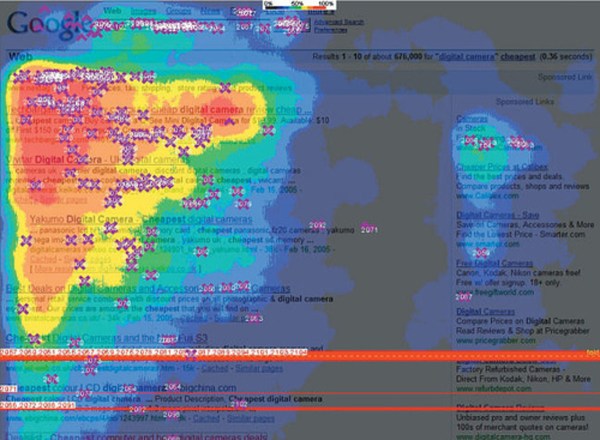
I think Lewis, and perhaps others of her generation, suffer from “rosy retrospection” – a cognitive bias that automatically assumes things were better yesterday. I have been searching for the better part of 3 decades and – as a sample of one – I don’t agree. I can also say with some empirical backing that the search experience is quantitatively better than it was when we did our first eye tracking study 20 years ago. A repeat study done 10 years ago showed time to first click had decreased and satisfaction with that click had increased. I’m fairly certain that a similar study would show that the search experience is better today than it was a decade ago. If this is a “search optimized hellhole”, it’s much less hellish than it was back in the “good old days” of search.

One of the reasons for that improvement is that millions of websites have been optimized by SEOs (a label which, by the way Amanda, has absolutely nothing to do with wanting to be mistaken for a CEO) to unlock unindexable content, fix broken code, improve usability, tighten up and categorize content and generally make the Internet a less shitty and confusing place. Not such an ignoble pursuit for “a bunch of megalomaniacal jerks (who) were degrading our collective sense of reality because they wanted to buy Lamborghinis and prove they could vanquish the almighty algorithm.”

Amanda Chigaco Lewis did interview those who sat astride the world of search providers and the world of SEO: Danny Sullivan (“angry and defensive” – according to Lewis), Barry Schwartz (“an unbelievably fast talker”), Duane Forrester (a “consummate schmoozer”) and Matt Cutts (an “SEO celebrity”). Each tried to refute her take that things are “broken” and the SEOs are to blame, but she brushed those aside, intent on caricaturing them as a cast of characters from a carnival side show.  Out of the entire scathing diatribe, one scant paragraph grudgingly acknowledges that maybe not all SEO is bad. That said, Lewis immediately spins around and says that it doesn’t matter, because the bad completely negates the good.

Obviously, I don’t agree with Lewis’s take on the SEO industry. Maybe it’s because I spent the better part of 20 years in the industry and know it at a level Lewis never could. But what irritates me the most is that she made no attempt to go beyond taking the quick and easy shots. She had picked her lens through which she viewed SEO before the very first interview and everything was colored by that lens. Was her take untrue? Not exactly. But it was unfair. And that’s why reporters like Lewis have degraded journalism to the point where it’s just clickbait, with a few more words thrown in.

Lewis gleefully stereotypes SEOs as “content goblin(s) willing to eschew rules, morals, and good taste in exchange for eyeballs and mountains of cash.” That’s simply not true. It’s no more true than saying all investigative journalists are “screeching acid-tongued harpies who are hopelessly biased and cover their topics with all the subtlety of a flame-thrower.”

P.S.  I did notice the article was optimized for search, with keywords prominently shown in the URL. Does that make the Verge and Lewis SEOs?

Getting from A to Zen

We live in a Type A world. And sometimes, that’s to our detriment.

According to one definition, Type A is achievement oriented, competitive, fast-paced and impatient.

All of that pretty much sums up the environment we live in. But you know what’s hard to find in a Type A world? Your Zen.

I know what you’re thinking — “I didn’t peg Gord for a Zen-seeking kinda guy.” And you’re mostly right. I’m not much for meditation. I’ve tried it — it’s not for me. I’ll be honest. It feels a little too airy-fairy for my overly rational brain.

But I do love cutting the grass. I also love digging holes, retouching photos in Photoshop and cleaning pools. Those are some of the activities where I can find my Zen.

For best-selling author Peggy Orenstein, she found her Zen during COVID – shearing sheep. She shares her journey in her new book, “Unraveling: What I Learned About Life While Shearing Sheep, Dyeing Wool, and Making the World’s Ugliest Sweater.” Orenstein has a breezy, humorous, and self-deprecating style, but there are some deep thoughts here.

In reading the book, I learned it wasn’t the act of shearing where Peggy found her Zen. That’s because sheep shearing is really hard work. You can’t let your mind wander as you wrestle 200 to 300 pounds of Ovis aries, holding a buzzing, super-sharp set of sheers while trying to give it a haircut.

As Orenstein said in a recent interview, “Imagine you were in a ballet with Nureyev and nobody told you the steps. That was what it felt like to reach shearing sheep, you know, for the first time.”

No. You might find a lot of things in that activity, but Zen isn’t likely to be one of them. Orenstein finds her Zen in a less terrifying place, cleaning poop out of the newly shorn wool. She did it the way it’s been done for centuries, in a process called carding. While she carded the wool, she would “Facetime” her dad, who has dementia.

In the interview, she said, “You know, I could just slow down. These ancient arts are slow. They’re very slow and (I would) sit with him and just be next to him and have that time together and sing.”

When I heard her say that in the interview, that hit me. I said, “I have to read this book.” Because I got it. That slowing down, that inner connection, the very act of doing something that seems mindless but isn’t – because doing the act creates the space for your mind to think the thoughts it normally doesn’t have time to do. All that stuff is important.

To me, that’s my Zen.

Now, unless you’re a Mahayana Buddhist, Zen is probably nothing more than a buzzword that made its way westward into our zeitgeist sometime in the last century. I am certainly not a Buddhist, so I am not going to dare tell you the definitive meaning of Zen. I am just going to tell you what my version is.

For me, Zen is a few things:

I think these Zen acts have to contribute to the world in some small way. There has to be something at the end that gives you a sense of accomplishment – the feeling of a job well done.

Maybe that’s why meditation is not for me. There is not a tangible reward at the end. But you can look at a pile of newly shorn fleece or a lawn neatly delineated with the tire tracks of your lawnmower.

The brain must be engaged in a Zen task, but not too much. It needs some space to wander. Repetition helps. As you do the task, your mind eventually shifts to auto-pilot mode. And that’s when I find Zen, as my mind is given the license to explore.

I think this is where step one is important – whatever you’re doing has to be useful enough that you don’t feel that you’re wasting time doing it.

Finally, it helps if your Zen tasks are done in a place where the Type A world doesn’t intrude. You need the space to push back interruption and let your mind wander freely.

I realize there are some of you who will immediately connect with what I’m saying, and others who won’t have a clue. That’s okay.

I think that’s the magic of Zen: it’s not for everyone. But for those of us who understand how important it is, we sometimes need a little reminder to sometimes go seek it. Because in this Type A world, it’s becoming harder to find.

The Challenge in Regulating AI

A few weeks ago, MediaPost’s Wendy Davis wrote a commentary on the Federal Trade Commission’s investigation of OpenAI. Of primary concern to the FTC was ChatGPT’s tendency to hallucinate. I found this out for myself when ChatGPT told some whoppers about who I was and what I’ve done in the past.

Davis wrote, “The inquiry comes as a growing chorus of voices — including lawmakers, consumer advocates and at least one business group — are pushing for regulations governing artificial intelligence. OpenAI has also been hit with lawsuits over copyright infringement, privacy and defamation.”

This highlights a problem with trying to legislate AI. First, the U.S. is using its existing laws and trying to apply them to a disruptive and unpredictable technology. Laws, by their nature, have to be specific, which means you have to be able to anticipate circumstances in which they’d be applied. But how do you create or apply laws for something unpredictable? All you can do is regulate what you know. When it comes to predicting the future, legislators tend to be a pretty unimaginative bunch. 

In the intro to a Legal Rebels podcast on the American Bar Association’s website, Victor Li included this quote, “At present, the regulation of AI in the United States is still in its early stages, and there is no comprehensive federal legislation dedicated solely to AI regulation. However, there are existing laws and regulations that touch upon certain aspects of AI, such as privacy, security and anti-discrimination. “

The ironic thing was, the quote came from ChatGPT. But in this case, ChatGPT got it mostly right. The FTC is trying to use the laws at its disposal to corral OpenAI by playing a game of legal whack-a-mole:  hammering things like privacy, intellectual property rights, defamation, deception and discrimination as they pop their heads up.

But that’s only addressing the problems the FTC can see. It’s like repainting the deck railings on the Titanic the day before it hit the iceberg. It’s not what you know that’s going to get you, it’s what you don’t know.

If you’re attacking ChatGPT’s tendency to fabricate reality, you’re probably tilting at the wrong windmill. This is a transitory bug. OpenAI benefits in no way from ChatGPT’s tendency to hallucinate. The company would much rather have a large language-based model that is usually truthful and accurate. You can bet they’re working on it. By the time the ponderous wheels of the U.S. legislative system get turned around and rolling in the right direction, chances are the bug will be fixed and there won’t really be anything to legislate against.

What we need before we start talking about legislation is something more fundamental. We need an established principle, a framework of understanding from which laws can be created as situations arise.

This is not the first time we’ve faced a technology that came packed with potential unintended consequences. In February, 1975, 140 people gathered at a conference center in Monterey, California to attempt to put a leash on genetic manipulation, particularly Recombinant DNA engineering.

This group, which included mainly biologists with a smattering of lawyers and physicians, established principle-based guidelines that took its name from the conference center where they met. It was called the Asilomar Conference agreement.

The guidelines were based on the level of risk involved in proposed experiments. The higher the risk, the greater the required precautions.

These guidelines were flexible enough to adapt as the science of genetic engineering evolved. It was one of the first applications of something called “the precautionary principle” – which is just what it sounds like: if the future is uncertain, go forward slowly and cautiously.

While the U.S. is late to the AI legislation party, the European Union has been taking the lead. And, if you look its first attempts at E.U. AI regulation drafted in 2021, you’ll see it has the precautionary principle written all over it. Like the Asilomar guidelines, there are different rules for different risk levels. While the U.S. attempts at legislation are mired in spotty specifics, the EU is establishing a universal framework that can adapt to the unexpected.

This is particularly important with AI, because it’s an entirely different ballgame than genetic engineering. Those driving the charge are for-profit companies, not scientists working in a lab.

OpenAI is intended as a platform that others will build on. It will move quickly, and new issues will pop up constantly. Unless the regulating bodies are incredibly nimble and quick to plug loopholes, they will constantly be playing catch-up.

It’s All in How You Spin It

I generally get about 100 PR pitches a week. And I’m just a guy who writes a post on tech, people and marketing now and then. I’m not a journalist. I’m not even gainfully employed by anyone. I am just one step removed — thanks to the platform  MediaPost has provided me — from “some guy” you might meet at your local coffee shop.

But still, I get 100 PR pitches a week. Desperation for coverage is the only reason I can think of for this to be so. 99.9999% of the time, they go straight to my trash basket. And the reason they do is that they’re almost never interesting. They are — well, they’re pitches for free exposure.

Now, the average pitch, even if it isn’t interesting, should at least try to match the target’s editorial interest. It should be in the strike zone, so to speak.

Let’s do a little postmortem on one I received recently. It was titled “AI in Banking.” Fair enough. I have written a few posts on AI. Specifically, I have written a few posts on my fear of AI.

I have also written about my concerns about misuse of data. When it comes to the nexus between AI and data, I would be considered more than a little pessimistic. So, something linking AI and banking did pique my interest, but not in a good way. I opened the email.

There, in the first paragraph, I read this: “AI is changing how banks provide personalized recommendations and insights based on enriched financial data offering tailored suggestions, such as optimizing spending, suggesting suitable investment opportunities, or identifying potential financial risks.”

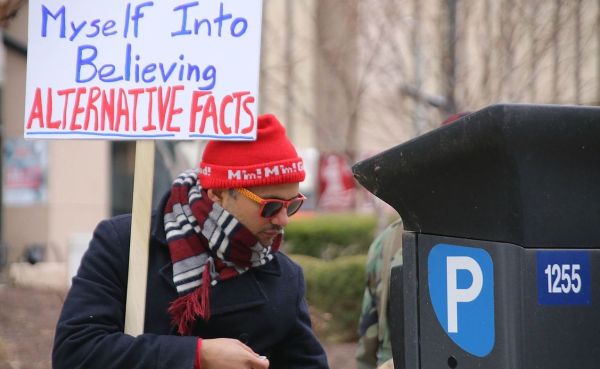
This, for those of you not familiar with “PR-ese,” is what we in the biz call “spin.” Kellyanne Conway once called it — more euphemistically — an alternative fact.

Let me give you an example. Let’s say that during the Tour de France half the Peloton crashes and bicyclists get a nasty case of road rash. A PR person would spin that to say that “Hundreds of professional cyclists discover a new miracle instant exfoliation technique from the South of France.”

See? It’s not a lie, it’s just an alternative fact.

Let’s go on. The second paragraph of the pitch continued: “Bud, a company that specializes in data intelligence is working with major partners across the country (Goldman Sachs, HSBC, 1835i, etc.) to categorize and organize financial information and data so that users are empowered to make informed decisions and gain a deeper understanding of their financial situation.”

Ah — we’re now getting closer to the actual fact. The focus is beginning to switch from the user, empowered to make better financial decisions thanks to AI, to what is actually happening: a data marketplace being built on the backs of users for sale to corporate America.

Let’s now follow the link to Bud’s website. There, in big letters on the home page, you read:

“Turn transactional data into real-time underwriting intelligence

Bud’s AI platform and data visualizations help lenders evaluate risk, reduce losses and unlock hidden revenue potential.”

Bingo. This is not about users, at least, not beyond using them as grist in a data mill. This is about slipping a Trojan Horse into your smartphone in the form of an app and hoovering your personal data up to give big banks an intimate glimpse into not just your finances, but also your thinking about those finances. As you bare your monetary soul to this helpful “Bud,” you have established a direct pipeline to the very institutions that hold your future in their greedy little fingers. You’re giving an algorithm everything it needs to automatically deny you credit.

This was just one pitch that happened to catch my eye long enough to dig a little deeper. But it serves as a perfect illustration of why I don’t trust big data or AI in the hands of for-profit corporations.

And that will continue to be true — no matter how you PR pros spin it.

No News is Good News

I’m trying not to pay too much attention to the news. This is partly because I’m exhausted by the news, and partly because of the sad state of journalism today.

This isn’t just a “me” thing. Almost everyone I talk to says they’re trying to find coping mechanisms to deal with the news. The News industry – and its audience – has gone from being an essential part of a working democracy to something that is actually bad for you.  In an online essay from 4 years, Swiss author Rolf Dobelli equates news consumption to a bad diet:

“(translated from its original German) News is to the mind what sugar is to the body. News is appetizing, easily digestible and at the same time highly harmful. The media feeds us morsels of trivial stories, tidbits that by no means satisfy our hunger for knowledge. Unlike with books and long, well-researched, long articles, there is no saturation when consuming news. We can devour unlimited amounts of messages; they remain cheap sugar candies. As with sugar, the side effects only show up with a delay.”

Rolf Dobelli, 2019

This alarming state is due to the fact that the News (in the US) is supported by advertising, which means it has a ravenous appetite for eyeballs. Because of this, it is highly profitable to make news addictive.

This creates a state, as Dobelli points out, where even though the news is highly inflammatory, like a constantly jangling alarm bell, almost all the news we consume is irrelevant to our daily lives. While the news we watch pushes all our hot buttons, it doesn’t serve a useful purpose. In fact, it does the exact opposite: it leads to chronic mental and physical ill-being and may cause us to start ignoring the warning signs we should be paying attention to.

A study last year (McLaughlin, Gotlieb and Mills) found ties between problematic news consumption and mental ill-being. The study found that 16.5% of 1,100 people polled in an online survey showed signs of “severely problematic” news consumption, which led them to focus less on school, work and family, and contributed to an inability to sleep.

Dobelli’s essay goes even further, pointing a finger at excessive news consumption as the cause of a list of issues including cognitive errors, inhibiting deeper thinking, wasting time, killing creativity, making us more passive and even wiring our brains for addiction in a manner similar to drugs.

All these negative side effects come from chronic stress – a constant and pervasive alarmed state that excessive news consumption puts our brains into. And if you thought Dobelli’s list was scary, wait until you see the impact of chronic stress! It actually attacks the brain by releasing excessive amounts of cortisol and restricting the uptake of serotonin, which can increase inflammation, lead to depression, shrink your hippocampus and impact your memory, make it difficult to sleep and impair your ability to think rationally.

To put a new twist on an old saying, “No news is good news.”

But let’s put aside for a moment the physical and mental toll that news takes on us. Even if none of that were true, our constant diet of bad news can also lead to something known as “alarm fatigue.”

Alarm fatigue is essentially our response to the proverbial boy who calls wolf. After several false alarms, we stop paying attention. And on that one time when we should be paying attention, we are caught with our guard down.

There is one other problem with our news diet: it oversimplifies complex problems into simple sound bites. Thomas Jefferson said, “An educated citizenry is a vital requisite for our survival as a free people.” But when the news abdicates its role as an informer to pursue profit as entertainment, it is no longer educating us. It is pandering to us by stuffing bite sized opinion pieces that reinforce our beliefs – right or wrong. We are never challenged to examine our beliefs or explore the complexity of the wicked problems that confront us. Real journalism has been replaced by profitable punditry.

All this leaves us with a choice. Until the News industry cleans up its act (I’m not holding my breath), you’re likely far better off to ignore it. Or at least, ignore the profit driven platforms that are hungry for eyeballs. Stay informed by turning to books, long articles and true investigative journalism. That’s what I’m going to start doing.

Failing all that, just think about things. I understand it’s good for you.