Home Movies: The Medium of Memories

Media is a word that is used a lot, especially in my past industry of advertising, but we may not stop to think about the origin of the word itself. Media is the plural of medium, and in our particular context, medium is defined as “the intervening substance through which impressions are conveyed to the senses.”

When defined this way, media are powerful stuff. Let me give you a personal example.

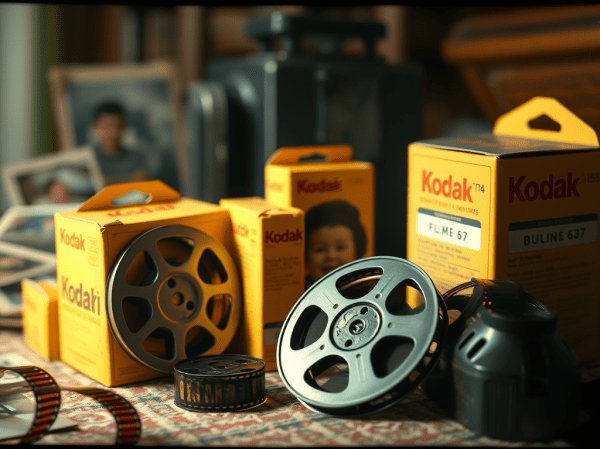
At a recent family gathering a few cousins were talking about old 8 mm home movies. Some of you know what I’m talking about. You might even have some yourself, stuck somewhere in your attic or basement. They came in yellow-orange boxes from Kodak and might have “Kodachrome II” on the front. In my case, I had some which I salvaged from my mom during her transfer to her care facility. Two of my cousins similarly took custody of their films from their respective mothers. I packed what I could of these in my suitcase and gingerly transported them home, after trying to explain what they were to a curious TSA official and why they couldn’t go through an X-Ray scanner.

When I got them home, I transferred them to digital. Then, starting December 1st, I have been sharing small snippets of the resulting videos with the rest of my family, one a day in a type of home movie Advent Calendar.

Most of these home movies were shot between the mid 1950’s and mid 1960’s; capturing picnics, weekends at the family cottage north of Toronto, weddings, birthdays, going away parties, Christmases and other assorted occasions. I’ll soon tell you what this sharing of one particular medium has meant to my family and I, but first I want to give you a little background on 8 mm home movies, because I think it helps to understand why they were such an important medium.

The 8 mm format was introduced by Kodak in 1932. It was actually a 16mm format that had to be flipped and run through the camera twice. In processing, the film would be split and spliced together to create a 50 ft reel, capturing about 3 to 4 minutes.

Kodak hoped to extend the ability to make movies to the home market, but between the Great Depression and World War II, the format didn’t gain real traction until the post-war consumerism boom. Then, thanks to smaller cameras that were easier to use and improved picture quality, 8 mm movie cameras became more common place and started showing up at family gatherings, weddings, honeymoons, vacations and other notable events.

It would have been in the mid 1950’s that my mother’s family bought their first cameras. My grandfather and grandmother, a few great uncles and my mom and dad all became amateur movie makers. Suddenly, many family events became multi-camera shoots.

It was the results of this movie making boom in my family that I recently started digging through, rounding up those little yellow boxes, delicately threading the fragile film into a digital scanning system and letting grainy and poorly lit moving pictures transport me back to a time I had only heard stories about before.

Let me tell you what that meant to my family and myself. I never met my maternal grandfather (or my paternal one either, but that’s another story for another time). He passed away two weeks after I was born. I also never knew my father. He tragically died when I was just one year old. These were two man I desperately wanted to know, but never had the chance. I only knew them through still photos and stories passed on from older family members.

But suddenly, there they were; moving, laughing and living. My grandfather teasing my grandmother mercilessly and then sitting back in his easy chair with a big smile on his face as he watched his family around him. My father at his and my mom’s wedding, holding a huge cigar in one hand while he picked confetti out of his hair with the other. “My God!,” I thought, “he stands just like me!”

This medium, long forgotten as it sat in dusty boxes, brought my grandfather and father back to life for me. It colored in the outline sketches I had of who they were. For my family, these movies reconnected us to our younger selves, brought loved ones back, introduced the younger members to their direct ancestors and – for myself and others – shed new light on figures in our past that had been shrouded in the shadows of time.

Because of this project, two things became clear to me. First of all, if you have also inherited old media filled with family memories, find the time to transfer them into a medium that allows them to be shared and preserved for the future in some type of transferable format. The act of archiving brings up images of bespectacled staff peering over dusty tomes and pulling forgotten boxes from the top shelf. But it is simply the act of imbuing the past with a type of permanence so it always remains accessible.

Secondly, recognize the importance of any type of medium that captures the moments of our lives. Rick Prelinger, an archivist in California, has compiled a collection of over 30,000 home movies. He published a list of 22 reasons why home movies are important. For me, number 21 resonated most deeply: “showing and reusing (these movies) today invests audiences with the feeling that their own lives are also worth recording.”

I’m sure my dad or granddad had no idea of their own impending mortality when they were captured on these movies. They weren’t planning on being memorialized. They didn’t realize the importance of the moment – or the medium.

But today, these movies are one of the all-too-rare things we have to remember who they were. For me, it was this medium that erased the time and distance between my senses, here at the end of 2025, and that day in June, 1957 – the day my parents got married.

Thank Heavens someone was there with a camera.

Face Time in the Real World is Important

For all the advances made in neuroscience, we still don’t fully understand how our brains respond to other people. What we do know is that it’s complex.

Join the Chorus

Recent studies, including this one from Rochester University, are showing that when we see someone we recognize, the brain responds with a chorus of neuronal activity. Neurons from different parts of the brain fire in unison, creating a congruent response that may simultaneously pull from memory, from emotion, from the rational regions of our prefrontal cortex and from other deep-seated areas of our brain. The firing of any one neuron may be relatively subtle, but together this chorus of neurons can create a powerful response to a person. This cognitive choir represents our total comprehension of an individual.

Non-Verbal Communication

“You’ll have your looks, your pretty face. – And don’t underestimate the importance of body language!” – Ursula, The Little Mermaid

Given that we respond to people with different parts of the brain, it makes sense that we use part of the brain we didn’t realize when communicating with someone else. In 1967, psychologist Albert Mehrabian attempted to pin this down with some actual numbers, publishing a paper in which he put forth what became known as Mehrabian’s Rule: 7% of communication is verbal, 38% is tone of voice and 55% is body language.

Like many oft-quoted rules, this one is typically mis-quoted. It’s not that words are not important when we communication something. Words convey the message. But it’s the non-verbal part that determines how we interpret the message – and whether we trust it or not.

Folk wisdom has told us, “Your mouth is telling me one thing, but your eyes are telling me another.” In this case, folk wisdom is right. We evolved to respond to another person with our whole bodies, with our brains playing the part of conductor. Maybe the numbers don’t exactly add up to Mehrabian’s neat and tidy ratio, but the importance of non-verbal communication is undeniable. We intuitively pick up incredibly subtle hints: a slight tremor in the voice, a bead of sweat on the forehead, a slight turn down of one corner of the mouth, perhaps a foot tapping or a finger trembling, a split-second darting of the eye. All this is subconsciously monitored, fed to the brain and orchestrated into a judgment about a person and what they’re trying to tell us. This is how we evolved to judge whether we should build trust or lose it.

Face to Face vs Face to Screen

Now, we get to the question you knew was coming, “What happens when we have to make these decisions about someone else through a screen rather than face to face?”

Given that we don’t fully understand how the brain responds to people yet, it’s hard to say how much of our ability to judge whether we should convey trust or withhold it is impaired by screen-to-screen communication. My guess is that the impairment is significant, probably well over 50%. It’s difficult to test this in a laboratory setting, given that it generally requires some type of neuroimaging, such as an fMRI scanner. In order to present a stimulus for the brain to respond to when the subject is strapped in, a screen is really the only option. But common sense tells me – given the sophisticated and orchestrated nature of our brain’s social responses – that a lot is lost in translation from a real-world encounter to a screen recording.

New Faces vs Old Ones

If we think of how our brains respond to faces, we realize that in today’s world, a lot of our social judgements are increasing made without face-to-face encounters. In a case where we know someone, we will pull forward a snapshot of our entire history with that person. The current communication is just another data point in a rich collection of interpersonal experience. One would think that would substantially increase our odds of making a valid judgement.

But what if we must make a judgement on someone we’ve never met before, and have only seen through a screen; be it a TikTok post, an Instagram Reel, a YouTube video or a Facebook Post? What if we have to decide whether to believe an influencer when making an important life decision? Are we willing to rely on a fraction of our brain’s capacity when deciding whether to place trust in someone we’ve never met?

Bread and Circuses: A Return to the Roman Empire?

Reality sucks. Seriously. I don’t know about you, but increasingly, I’m avoiding the news because I’m having a lot of trouble processing what’s happening in the world. So when I look to escape, I often turn to entertainment. And I don’t have to turn very far. Never has entertainment been more accessible to us. We carry entertainment in our pocket. A 24-hour smorgasbord of entertainment media is never more than a click away. That should give us pause, because there is a very blurred line between simply seeking entertainment to unwind and becoming addicted to it.

Some years ago I did an extensive series of posts on the Psychology of Entertainment. Recently, a podcast producer from Seattle ran across the series when he was producing a podcast on the same topic and reached out to me for an interview. We talked at length about the ubiquitous nature of entertainment and the role it plays in our society. In the interview, I said, “Entertainment is now the window we see ourselves through. It’s how we define ourselves.”

That got me to thinking. If we define ourselves through entertainment, what does that do to our view of the world? In my own research for this column, I ran across another post on how we can become addicted to entertainment. And we do so because reality stresses us out, “Addictive behavior, especially when not to a substance, is usually triggered by emotional stress. We get lonely, angry, frustrated, weary. We feel ‘weighed down’, helpless, and weak.”

Check. That’s me. All I want to do is escape reality. The post goes on to say, “Escapism only becomes a problem when we begin to replace reality with whatever we’re escaping to.”

I believe we’re at that point. We are cutting ties to reality and replacing them with a manufactured reality coming from the entertainment industry. In 1985 – forty years ago – author and educator Neil Postman warned us in his book Amusing Ourselves to Death that we were heading in this direction. The calendar had just ticked past the year 1984 and the world collectively sighed in relief that George Orwell’s eponymous vision from his novel hadn’t materialized. Postman warned that it wasn’t Orwell’s future we should be worried about. It was Aldous Huxley’s forecast in Brave New World that seemed to be materializing:

“As Huxley remarked in Brave New World Revisited, the civil libertarians and rationalists who are ever on the alert to oppose tyranny “failed to take into account man’s almost infinite appetite for distractions…  Orwell feared that what we fear will ruin us. Huxley feared that what we desire will ruin us.”

Postman was worried then – 40 years ago – that the news was more entertainment than information. Today, we long for even the kind of journalism that Postman was already warning us about. He would be aghast to see what passes for news now. 

While things unknown to Postman (social media, fake news, even the internet) are throwing a new wrinkle in our downslide into an entertainment induced coma, it’s not exactly new.   This has happened at least once before in history, but you have to go back almost 2000 years to find an example. Near the end of the Western Roman Empire, as it was slipping into decline, the Roman poet Juvenal used a phrase that summed it up – panem et circenses – “bread and circuses”:

“Already long ago, from when we sold our vote to no man, the People have abdicated our duties; for the People who once upon a time handed out military command, high civil office, legions — everything, now restrains itself and anxiously hopes for just two things: bread and circuses.”

Juvenal was referring to the strategy of the Roman emperors to provide free wheat and circus games and other entertainment games to gain political power. In an academic article from 2000, historian Paul Erdkamp said the ploy was a “”briberous and corrupting attempt of the Roman emperors to cover up the fact that they were selfish and incompetent tyrants.”

Perhaps history is repeating itself.

One thing we touched on in the podcast was a noticeable change in the entertainment industry itself. Scarlett Johansenn noticed the 2025 Academy Awards ceremony was a much more muted affair than in years past. There was hardly any political messaging or sermons about how entertainment provided a beacon of hope and justice. In an interview with Vanity Fair  – Johanssen mused that perhaps it’s because almost all the major studies are now owned by Big-Tech Billionaires, “These are people that are funding studios. It’s all these big tech guys that are funding our industry, and funding the Oscars, and so there you go. I guess we’re being muzzled in all these different ways, because the truth is that these big tech companies are completely enmeshed in all aspects of our lives.”

If we have willingly swapped entertainment for reality, and that entertainment is being produced by corporations who profit from addicting as many eyeballs as possible, prospects for the future do not look good.

We should be taking a lesson from what happened to Imperial Rome.

Will AI Wipe Out the Canadian Film and TV industry?

If you happen to be Canadian, you know that one of our favourite past times is watching Hollywood movies and TV shows and picking out the Canadian locations that are standing in for American ones.

For example, that one shot from the otherwise amazing episode 3 in The Last of Us, establishing a location supposedly “10 miles west of Boston”? It was actually in Kananaskis, Alberta. Waltham, Mass is 10 miles west of Boston. I’ve been there and I know, there is nary a mountain on the horizon in any direction.

Loudermilk, which is now streaming on Netflix, was a little more subtle with its geographic sleight of hand. There, Vancouver stands in for Seattle. The two cities are quite similar and most people would never notice the substitution, especially when the series uses stock footage of the Seattle skyline for its establishing shots. But if you’re Canadian, you couldn’t miss the Canada Post truck driving through the background of one shot.

Toronto is another popular “generic” Canadian city. It stood in for New York in Suits and the fictional Gilead in The Handmaid’s Tale. Ironically, this brings us full circle, because the location where the handmaid Offred lives is supposedly a post-revolution Boston. And, as we now know, if you go 10 “miles” west, you end up in Kananaskis, Alberta. Don’t wreck the Hollywood magic by reminding us that Toronto and Kananaskis are separated by 1725 actual miles.

The ability of Canadian locations to stand in for American ones is a critical element in our own movie and TV industry. It brings billions of production dollars north of the 49th parallel.

But it’s not just locations, it’s also people. Canadians have long flown “under the radar” as substitutes for Americans. I, and many Canadians, can reel them off from memory over a beer and a Hawaiian pizza (yep, that culinary cockup is Canadian too – sorry about that). The original Captain Kirk? Canadian. Bonanza patriarch Ben Cartwright? Canadian. Perry Mason? Canadian. Hell, even Barbie’s Ken is Canadian – eh?

But AI could be threatening this quintessentially Canadian activity. And that’s just the tip of the proverbial iceberg (another thing often found in Canada).

 If you happened to watch the recent SAG-AFTRA awards, you probably saw president Fran Drescher refer to the threat AI poised to their industry. She warned us that, “AI will entrap us in a matrix where none of us know what’s real. If an inventor lacks empathy and spirituality, perhaps that’s not the invention we need.”

If you’ve looked at OpenAI’s release of Sora, you can understand Drescher’s worry. Type a text prompt in and you instantly get a photorealistic HD video: a nighttime walk through Tokyo, Mastadons in the mountains, pirate ships battling in a cup of coffee. And this is just the beginning.

But like many existential threats, it’s hard to wrap your mind around the scope of this one. So, in attempt to practice what I preach and reduce the psychological distance, I’m going try to bring it home for Canada – while understanding that the threat of AI to our particular neck of the woods is a small fraction of the potential damage that it might do to the industry as a whole.

First of all, let’s understand the basis of the Canadian film and television industry. It’s almost entirely a matter of dollars and cents. The currently industry exists at its present scale because it’s cheaper to make a film or a TV show in Canada. And if a Canadian location can be made to look like a US one, so much the better. We have lots of talent up here, we have sound stages; but most importantly, we have a beneficial exchange rate and tax incentives. A production dollar goes a lot further here. That, and the ability of Canada to easily stand in for the US, are really the reason why Hollywood moved north.

But if it suddenly becomes cheaper to stay in L.A. and use AI to create your location, rather that physically move to a “stand-in” location, our film and TV industry will dry up almost instantly. Other than Quebec, where homegrown productions have a loyal francophone audience, there are relatively few films or TV shows that acknowledge that they are set in Canada. It’s the curse of living next to a potential audience that outnumbers ours 10 to 1, not to mention the ravenous world-wide appetite for entertainment that looks like it’s made in the US.

Even the most successful Canadian sitcom in history, Schitt’s Creek, had a location that was vaguely non-specific. The Roses never said their Rosebud motel wasn’t in Canada, but they also never said it was.  (Here’s a tidbit for TV trivia fans:  the motel used for the exterior shots is in Mono, Ontario, about 50 miles northwest of Toronto)

So, if AI makes it easier and cheaper to CGI a location rather than move your production to Canada, what might that mean for our industry? Let’s put some scope to this. Just before COVID put the brakes on production, film and TV added $12.2 billion to Canada’s GDP and provided work for 244,500 people. I don’t want to minimize the creative efforts of our homegrown producers and directors, but if Hollywood stops coming north, we’ll be lucky to hold on to one-tenth of that economic spin off.

Like I said, the Canadian perspective of the impact AI might have on film and TV is a drop in the bucket. There are so many potential tentacles to this monster that it’s difficult to keep count. But even in the limited scope of this one example, the impact is devastating: over 12 billion dollars and a quarter million jobs. If we zoom out, it becomes enough to boggle the mind.

Greetings from the Great, White (Frozen) North

This post comes to you from Edmonton, Alberta, where the outside temperature right now is minus forty degrees Celsius. If you’re wondering what that is in Fahrenheit, the answer is, “It doesn’t matter.” Minus forty is where the two scales match up.

If you add a bit of a breeze to that, you get a windchill factor that makes it feel like minus fifty Celsius (-58° F). The weather lady on the morning news just informed me that at that temperature, exposed flesh freezes in two to five minutes. Yesterday, an emergency alert flashed on my phone warning us that Alberta’s power grid was overloaded and could collapse under the demand, causing rotating power outages.

I don’t know about you, but I don’t think anyone should live in a place where winter can kill you. Nothing works as it should when it gets this cold, humans included. And yet, Albertans are toughing it out. I noticed that when it gets this cold, the standard niceties that people say change. Instead of telling me to “have a nice day,” everyone has been encouraging me to “stay warm.”

There’s a weird sort of bonding that happens when the weather becomes the common enemy. Maybe we all become brothers and sisters in arms, struggling to survive against the elements. It got me to wondering: Is there a different sense of community in places where it’s really cold in the winter?

When I asked Google which countries had the strongest social ties, it gave me a list of nine: Finland, Norway, Canada, Denmark, Switzerland, Australia, Netherlands, Iceland and Italy. Seven of those places have snowy, cold winters. If you look at countries that have strong social democracies — governments established around the ideal of the common good — again, you’ll find that most of them are well north (or south, in the case of New Zealand) of the equator.

But let’s leave politics aside. Maybe it’s just the act of constantly transitioning from extreme cold to warm and cozy places where there’s a friendly face sincerely wishing you’ll “stay warm” that builds stronger social bonds. As I mentioned in a previous post, the Danes even have a name for it: hygge. It translates loosely to “coziness.”

There are definitely physical benefits to going from being really cold to being really warm. The Finns discovered this secret thousands of years ago when they created the sauna. The whole idea is to repeatedly go from a little hut where the temperature hovers around 80-90° C (176-194° F) to then jump through a hole you’ve cut in the ice into waters barely above freezing. A paper from the Mayo Clinic lists the health benefits of saunas in a rather lengthy paragraph, touching on everything from reducing inflammation to clearer skin to fighting the flu. 

But the benefits aren’t just physical. Estonia, which is just south of Finland, also has a strong sauna culture. A brilliant documentary by Anna Hints, “Smoke Sauna Sisterhood,” shows that the sauna can be a sacred space. As Estonia’s official submission to the Oscars, it’s in contention for a nomination.

Hints’ documentary shows that saunas can touch us on a deeply spiritual level, healing scars that can build up through our lives. There is something in the cycle of heat and cold that taps into inner truths. As Hints said in a recent interview, “With time, deeper, deeper layers of physical dirt start to come up to the surface, but also emotional dirt starts to come up to the surface.”

While I didn’t visit any saunas on my Edmonton trip, every time I ventured outside it was a hot-cold adventure. Everyone turns the thermostat up a little when it gets this cold, so you’re constantly going through doors where the temperature can swing 75 degrees (Celsius, 130 degrees Fahrenheit) in an instant. I don’t know if there’s a health benefit, but I can tell you it feels pretty damned good to get that warm welcome when you’re freezing your butt off.

Stay warm!

My Many Problems with the Metaverse

I recently had dinner with a comedian who had just did his first gig in the Metaverse. It was in a new Meta-Comedy Club. He was excited and showed me a recording of the gig.

I have to admit, my inner geek thought it was very cool: disembodied hands clapping with avataresque names floating above, bursts of virtual confetti for the biggest laughs and even a virtual-hook that instantly snagged meta-hecklers, banning them to meta-purgatory until they promised to behave. The comedian said he wanted to record a comedy meta-album in the meta-club to release to his meta-followers.

It was all very meta.

As mentioned, as a geek I’m intrigued by the Metaverse. But as a human who ponders our future (probably more than is healthy) – I have grave concerns on a number of fronts. I have mentioned most of these individually in previous posts, but I thought it might be useful to round them up:

Removed from Reality

My first issue is that the Metaverse just isn’t real. It’s a manufactured reality. This is at the heart of all the other issues to come.

We might think we’re clever, and that we can manufacturer a better world than the one that nature has given us, but my response to that would be Orgel’s Second Rule, courtesy of Sir Francis Crick, co-discoverer of DNA: “Evolution is cleverer than you are.”

For millions of years, we have evolved to be a good fit in our natural environment. There are thousands of generations of trial and error baked into our DNA that make us effective in our reality. Most of that natural adaptation lies hidden from us, ticking away below the surface of both our bodies and brains, silently correcting course to keep us aligned and functioning well in our world.

But we, in our never-ending human hubris, somehow believe we can engineer an environment better than reality in less than a single generation. If we take Second Life as the first iteration of the metaverse, we’re barely two decades into the engineering of a meta-reality.

If I was placing bets on who is the better environmental designer for us, humans or evolution, my money would be on evolution, every time.

Who’s Law is It Anyway?

One of the biggest selling features of the Metaverse is that it frees us from the restrictions of geography. Physical distance has no meaning when we go meta.

But this also has issues. Societies need laws and our laws have evolved to be grounded within the boundaries of geographical jurisdictions. What happens when those geographical jurisdictions become meaningless? Right now, there are no laws specifically regulating the Metaverse. And even if there are laws in the future, in what jurisdiction would they be enforced?

This is a troubling loophole – and by hole I mean a massive gaping metaverse-sized void. You know who is attracted by a lack of laws? Those who have no regard for the law. If you don’t think that criminals are currently eyeing the metaverse looking for opportunity, I have a beautiful virtual time-share condo in the heart of meta-Boca Raton that I’d love to sell you.

Data is Matter of the Metaverse

Another “selling feature” for the metaverse is the ability to append metadata to our own experiences, enriching them with access to information and opportunities that would be impossible in the real world. In the metaverse, the world is at our fingertips – or in our virtual headset – as the case may be. We can stroll through worlds, real or imagined, and the sum of all our accumulated knowledge is just one user-prompt away.

But here’s the thing about this admittedly intriguing notion: it makes data a commodity and commodities are built to be exchanged based on market value. In order to get something of value, you have to exchange something of value. And for the builders of the metaverse, that value lies in your personal data. The last shreds of personal privacy protection will be gone, forever!

A For-Profit Reality

This brings us to my biggest problem with the Metaverse – the motivation for building it. It is being built not by philanthropists or philosophers, academics or even bureaucrats. The metaverse is being built by corporations, who have to hit quarterly profit projections. They are building it to make a buck, or, more correctly, several billion bucks.

These are the same people who have made social media addictive by taking the dirtiest secrets of Las Vegas casinos and using them to enslave us through our smartphones. They have toppled legitimate governments for the sake of advertising revenue. They have destroyed our concept of truth, bashed apart the soft guardrails of society and are currently dismantling democracy. There is no noble purpose for a corporation – their only purpose is profit.

Do you really want to put your future reality in those hands?

The Ten Day Tech Detox

I should have gone cold turkey on tech. I really should have.

It would have been the perfect time – should have been the perfect time.

But I didn’t. As I spent 10 days on BC’s gorgeous sunshine coast with family, I also trundled along my assortment of connected gadgets. 

But I will say it was a partially successful detox. I didn’t crack open the laptop as much as I usually do. I generally restricted use of my iPad to reading a book.

But my phone – it was my phone, always within reach, that tempted me with social media’s siren call.

In a podcast, Andrew Selepak, social media professor at the University of Florida, suggests that rather than doing a total detox that is probably doomed to fail, you use vacations as an opportunity to use tech as a tool rather than an addiction.

I will say that for most of the time, that’s what I did. As long as I was occupied with something I was fine. 

Boredom is the enemy. It’s boredom that catches you. And the sad thing was, I really shouldn’t have been bored. I was in one of the most beautiful places on earth. I had the company of people I loved. I saw humpback whales – up close – for Heaven’s sake. If ever there was a time to live in the moment, to embrace the here and now, this was it. 

The problem, I realized, is that we’re not really comfortable any more with empty spaces – whether they be in conversation, in our social life or in our schedule of activities. We feel guilt and anxiety when we’re not doing anything.

It was an interesting cycle. As I decompressed after many weeks of being very busy, the first few days were fine. “I need this,” I kept telling myself. It’s okay just to sit and read a book. It’s okay not to have every half-hour slot of the day meticulously planned to jam as much in as possible.

That lasted about 48 hours. Then I started feeling like I should be doing something. I was uncomfortable with the empty spaces.

The fact is, as I learned – boredom always has been part of the human experience. It’s a feature – not a bug. As I said, boredom represents the empty spaces that allow themselves to be filled with creativity.  Alicia Walf, a neuroscientist and a senior lecturer in the Department of Cognitive Science at Rensselaer Polytechnic Institute, says it is critical for brain health to let yourself be bored from time to time.

“Being bored can help improve social connections. When we are not busy with other thoughts and activities, we focus inward as well as looking to reconnect with friends and family. 

Being bored can help foster creativity. The eureka moment when solving a complex problem when one stops thinking about it is called insight.

Additionally, being bored can improve overall brain health.  During exciting times, the brain releases a chemical called dopamine which is associated with feeling good.  When the brain has fallen into a predictable, monotonous pattern, many people feel bored, even depressed. This might be because we have lower levels of dopamine.”

That last bit, right there, is the clue why our phones are particularly prone to being picked up in times of boredom. Actually, three things are at work here. The first is that our mobile devices let us carry an extended social network in our pockets. In an article from Harvard, this is explained: “Thanks to the likes of Facebook, Snapchat, Instagram, and others, smartphones allow us to carry immense social environments in our pockets through every waking moment of our lives.”

As Walf said, boredom is our brains way of cueing us to seek social interaction. Traditionally, this was us getting the hell out of our cave – or cabin – or castle – and getting some face time with other humans. 

But technology has short circuited that. Now, we get that social connection through the far less healthy substitution of a social media platform. And – in the most ironic twist – we get that social jolt not by interacting with the people we might happen to be with, but by each staring at a tiny little screen that we hold in our hand.

The second problem is that mobile devices are not designed to leave us alone, basking in our healthy boredom. They are constantly beeping, buzzing and vibrating to get our attention. 

The third problem is that – unlike a laptop or even a tablet – mobile devices are our device of choice when we are jonesing for a dopamine jolt. It’s our phones we reach for when we’re killing time in a line up, riding the bus or waiting for someone in a coffee shop. This is why I had a hard time relegating my phone to being just a tool while I was away.

As a brief aside – even the term “killing time” shows how we are scared to death of being bored. That’s a North American saying – boredom is something to be hunted down and eradicated. You know what Italians call it? “Il dolce far niente” – the sweetness of doing nothing. Many are the people who try to experience life by taking endless photos and posting on various feeds, rather than just living it. 

The fact is, we need boredom. Boredom is good, but we are declaring war on it, replacing it with a destructive need to continually bath our brains in the dopamine high that comes from checking our Facebook feed or latest Tiktok reel. 

At least one of the architects of this vicious cycle feels some remorse (also from the article from Harvard). “ ‘I feel tremendous guilt,’ admitted Chamath Palihapitiya, former Vice President of User Growth at Facebook, to an audience of Stanford students. He was responding to a question about his involvement in exploiting consumer behavior. ‘The short-term, dopamine-driven feedback loops that we have created are destroying how society works,’ “

That is why we have to put the phone down and watch the humpback whales. That, miei amici, is il dolci far niente!

With Digital Friends Like These, Who Needs Enemies?

Recently, I received an email from Amazon that began:

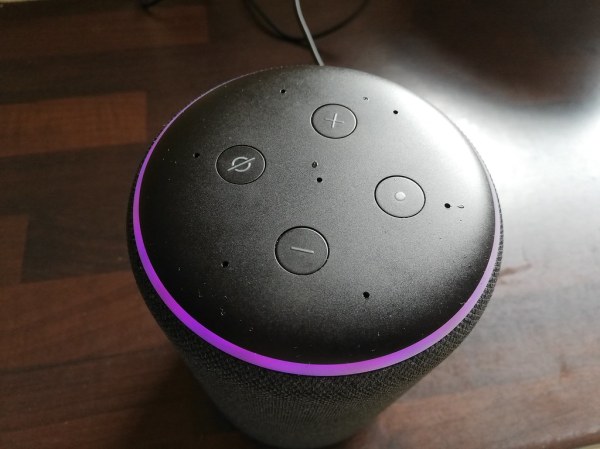
“You’re amazing. Really, you’re awesome! Did that make you smile? Good. Alexa is here to compliment you. Just say, ‘Alexa, compliment me’”

“What,” I said to myself, “sorry-assed state is my life in that I need to depend on a little black electronic hockey puck to affirm my self-worth as a human being?”

I realize that the tone of the email likely had tongue at least part way implanted in cheek, but still, seriously – WTF Alexa? (Which, incidentally, Alexa also has covered. Poise that question and Alexa responds – “I’m always interested in feedback.”)

My next thought was, maybe I think this is a joke, but there are probably people out there that need this. Maybe their lives are dangling by a thread and it’s Alexa’s soothing voice digitally pumping their tires that keeps them hanging on until tomorrow. And – if that’s true – should I be the one to scoff at it?

I dug a little further into the question, “Can we depend on technology for friendship, for understanding, even – for love?”

The answer, it turns out, is probably yes.

A few studies have shown that we will share more with a virtual therapist than a human one in a face-to-face setting. We feel heard without feeling judged.

In another study, patients with a virtual nurse ended up creating a strong relationship with it that included:

  • Using close forms of greeting and goodbye
  • Expressing happiness to see the nurse
  • Using compliments
  • Engaging in social chat
  • And expressing a desire to work together and speak with the nurse again

Yet another study found that robots can even build a stronger relationship with us by giving us a pat on the hand or touching our shoulder. We are social animals and don’t do well when we lose that sociability. If we go too long without being touched, we experience something called “skin hunger” and start feeling stressed, depressed and anxious. The use of these robots is being tested in senior’s care facilities to help combat extreme loneliness.

In reading through these studies, I was amazed at how quickly respondents seemed to bond with their digital allies. We have highly evolved mechanisms that determine when and with whom we seem to place trust. In many cases, these judgements are based on non-verbal cues: body language, micro-expressions, even how people smell. It surprised me that when our digital friends presented none of these, the bonds still developed. In fact, it seems they were deeper and stronger than ever!

Perhaps it’s the very lack of humanness that is the explanation. As in the case of the success of a virtual therapist, maybe these relationships work because we can leave the baggage of being human behind. Virtual assistants are there to serve us, not judge or threaten us. We let our guards down and are more willing to open up.

Also, I suspect that the building blocks of these relationships are put in place not by the rational, thinking part of our brains but the emotional, feeling part. It’s been shown that self-affirmation works by activating the reward centers of our brain, the ventral striatum and ventromedial prefrontal cortex. These are not pragmatic, cautious parts of our cognitive machinery. As I’ve said before, they’re all gas and no brakes. We don’t think a friendship with a robot is weird because we don’t think about it at all, we just feel better. And that’s enough.

AI companionship seems a benign – even beneficial use of technology – but what might the unintended consequences be? Are we opening ourselves up to potential dangers by depending on AI for our social contact – especially when the lines are blurred between for-profit motives and affirmation we become dependent on.

In therapeutic use cases of virtual relationships as outlined up to now, there is no “for-profit” motive. But Amazon, Apple, Facebook, Google and the other providers of consumer directed AI companionship are definitely in it for the money. Even more troubling, two of those – Facebook and Google – depend on advertising for their revenue. Much as this gang would love us to believe that they only have our best interests in mind – over $1.2 trillion in combined revenue says otherwise. I suspect they have put a carefully calculated price on digital friendship.

Perhaps it’s that – more than anything – that threw up the red flags when I got that email from Amazon. It sounded like it was coming from a friend, and that’s exactly what worries me.

The Physical Foundations of Friendship

It’s no secret that I worry about what the unintended consequences might be for us as we increasingly substitute a digital world for a physical one. What might happen to our society as we spend less time face-to-face with people and more time face-to-face with a screen?

Take friendship, for example. I have written before about how Facebook friends and real friends are not the same thing. A lot of this has to do with the mental work required to maintain a true friendship. This cognitive requirement led British anthropologist Robin Dunbar to come up with something called Dunbar’s Number – a rough rule-of-thumb that says we can’t really maintain a network of more than 150 friends, give or take a few.

Before you say, “I have way more friends on Facebook than that,” realize that I don’t care what your Facebook Friend count is. Mine numbers at least 3 times more than Dunbar’s 150 limit. But they are not all true friends. Many are just the result of me clicking a link on my laptop. It’s quick, it’s easy, and there is absolutely no requirement to put any skin in the game. Once clicked, I don’t have to do anything to maintain these friendships. They are just part of a digital tally that persists until I might click again, “unfriending” them. Nowhere is the ongoing physical friction that demands the maintenance required to keep a true friendship from slipping into entropy.

So I was wondering – what is that magical physical and mental alchemy that causes us to become friends with someone in the first place? When we share physical space with another human, what is the spark that causes us to want to get to know them better? Or – on the flip side – what are the red flags that cause us to head for the other end of the room to avoid talking to them? Fortunately, there is some science that has addressed those questions.

We become friends because of something in sociology call homophily – being like each other. In today’s world, that leads to some unfortunate social consequences, but in our evolutionary environment, it made sense. It has to do with kinship ties and what ethologist Richard Dawkins called The Selfish Gene. We want family to survive to pass on our genes. The best way to motivate us to protect others is to have an emotional bond to them. And it just so happens that family members tend to look somewhat alike. So we like – or love – others who are like us.

If we tie in the impact of geography over our history, we start to understand why this is so. Geography that restricted travel and led to inbreeding generally dictated a certain degree of genetic “sameness” in our tribe. It was a quick way to sort in-groups from out-groups. And in a bloodier, less politically correct world, this was a matter of survival.

But this geographic connection works both ways. Geographic restrictions lead to homophily, but repeated exposure to the same people also increases the odds that you’ll like them. In psychology, this is called mere-exposure effect.

In these two ways, the limitations of a physical world has a deep, deep impact on the nature of friendship. But let’s focus on the first for a moment. 

It appears we have built-in “friend detectors” that can actually sense genetic similarities. In a rather fascinating study, Nicholas Christakis and James Fowler found that friends are so alike genetically, they could actually be family. If you drill down to the individual building blocks of a gene at the nucleotide level, your friends are as alike genetically to you as your fourth cousin. As Christakis and Fowler say in their study, “friends may be a kind of ‘functional kin’.”

This shows how deeply friendships bonds are hardwired into us. Of course, this doesn’t happen equally across all genes. Evolution is nothing if not practical. For example, Christakis and Fowler found that specific systems do stay “heterophilic” (not alike) – such as our immune system. This makes sense. If you have a group of people who stay in close proximity to each other, it’s going to remain more resistant to epidemics if there is some variety in what they’re individually immune to. If everyone had exactly the same immunity profile, the group would be highly resistant to some bugs and completely vulnerable to others. It would be putting all your disease prevention eggs in one basket.

But in another example of extreme genetic practicality, how similar we smell to our friends can be determined genetically.  Think about it. Would you rather be close to people who generally smell the same, or those that smell different? It seems a little silly in today’s world of private homes and extreme hygiene, but when you’re sharing very close living quarters with others and there’s no such thing as showers and baths, how everyone smells becomes extremely important.

Christakis and Fowler found that our olfactory sensibilities tend to trend to the homophilic side between friends. In other words, the people we like smell alike. And this is important because of something called olfactory fatigue. We use smell as a difference detector. It warns us when something is not right. And our nose starts to ignore smells it gets used to, even offensive ones. It’s why you can’t smell your own typical body odor. Or, in another even less elegant example, it’s why your farts don’t stink as much as others. 

Given all this, it would make sense that if you had to spend time close to others, you would pick people who smelled like you. Your nose would automatically be less sensitive to their own smells. And that’s exactly what a new study from the Weizmann Institute of Science found. In the study, the scent signatures of complete strangers were sampled using an electronic sniffer called an eNose. Then the strangers were asked to engage in nonverbal social interactions in pairs. After, they were asked to rate each interaction based on how likely they would be to become friends with the person. The result? Based on their smells alone, the researchers were able to predict with 71% accuracy who would become friends.

The foundations of friendship run deep – down to the genetic building blocks that make us who we are. These foundations were built in a physical world over millions of years. They engage senses that evolved to help us experience that physical world. Those foundations are not going to disappear in the next decade or two, no matter how addictive Facebook or TikTok becomes. We can continue to layer technology over these foundations, but to deny them it to ignore human nature.

Don’t Be Too Quick To Dismiss The Metaverse

According to my fellow Media Insider Maarten Albarda, the metaverse is just another in a long line of bright shiny objects that — while promising to change the world of marketing — will probably end up on the giant waste heap of overhyped technologies.

And if we restrict Maarten’s caution to specifically the metaverse and its impact on marketing, perhaps he’s right. But I think this might be a case of not seeing the forest for the trees.

Maarten lists a number of other things that were supposed to revolutionize our lives: Clubhouse, AI, virtual reality, Second Life. All seemed to amount to much ado about nothing.

But as I said almost 10 years ago, when I first started talking about one of those overhyped examples, Google Glass — and what would eventually become the “metaverse” (in rereading this, perhaps I’m better at predictions than I thought)  — the overall direction of these technologies do mark a fundamental shift:

“Along the way, we build a “meta” profile of ourselves, which acts as both a filter and a key to the accumulated potential of the ‘cloud.’ It retrieves relevant information based on our current context and a deep understanding of our needs, it unlocks required functionality, and it archives our extended network of connections.”

As Wired founder and former executive editor Kevin Kelly has told us, technology knows what it wants. Eventually, it gets it. Sooner or later, all these things are bumping up against a threshold that will mark a fundamental shift in how we live.

You may call this the long awaited “singularity” or not. Regardless, it does represent a shift from technology being a tool we use consciously to enhance our experiences, to technology being so seamlessly entwined with our reality that it alters our experiences without us even being aware of it. We’re well down this path now, but the next decade will move us substantially further, beyond the point of no return.

And that will impact everything, including marketing.

What is interesting is the layer technology is building over the real world, hence the term “meta.” It’s a layer of data and artificial intelligence that will fundamentally alter our interactions with that world. It’s technology that we may not use intentionally — or, beyond the thin layer of whatever interface we use, may not even be aware of.

This is what makes it so different from what has come before. I can think of no technical advance in the past that is so consequential to us personally yet functions beyond the range of our conscious awareness or deliberate usage. The eventual game-changer might not be the metaverse. But a change is coming, and the metaverse is a signal of that.

Technology advancing is like the tide coming in. If you watch the individual waves coming in, they don’t seem to amount to much. One stretches a little higher than the last, followed by another that fizzles out at the shoreline. But cumulatively, they change the landscape — forever. This tide is shifting humankind’s relationship with technology. And there will be no going back.

Maybe Maarten is right. Maybe the metaverse will turn out to be a big nothingburger. But perhaps, just perhaps, the metaverse might be the Antonio Meucci  of our time: an example where the technology was inevitable, but the timing wasn’t quite right.

Meucci was an Italian immigrant who started working on the design of a workable telephone in 1849, a full two decades before Alexander Graham Bell even started experimenting with the concept.  Meucci filed a patent caveat in 1871, five years before Bell’s patent application was filed, but was destitute and didn’t have the money to renew it.  His wave of technological disruption may have hit the shore a little too early, but that didn’t diminish the significance of the telephone, which today is generally considered one of the most important inventions  of all time in terms of its impact on humanity.

Whatever is coming, and whether or not the metaverse represents the sea change catalyst that alters everything, I fully expect at some point in the very near future to pinpoint this time as the dawn of the technological shift that made the introduction of the telephone seem trivial in comparison.