Serendipity And Our Media Menu

Vintage radio, open book, steaming cup of tea with teapot and cookies on wooden table

We live an optimized life. But as is often the case with optimization, these helpers focus on efficiency, not necessarily effectiveness. 

There is a difference. Efficiency used time as the yardstick of success. The goal of the efficiency expert is to get more done in less time. To do this, they identify friction and eliminate it. Anything that looks like a sticking point is hunted down and eradicated.

Effectiveness is more focused on the end product. At the end of the process, how good were the results? Efficiency is focused on the means to an end. Effectiveness cares more about the end itself.

Our optimized world is a ruthless hunter of friction. We are obsessed with finding the shortest path, and by doing this, we have become myopically efficient. Technology is accelerating this, as the path to information is getting shorter and straighter than ever. AI takes us straight to exactly the information we were looking for and guides us through future prompts to take us by the hand down curated paths. It is undoubtedly more efficient. But are we losing sight of the things that might make us more effective?

As I have said before, I am a fan of friction in some things. I believe friction makes us more human. More imperfect? Undoubtedly. But also more curious, more contemplative and more appreciative of serendipity. Friction opens up the possibilities of discovery by taking us off the well-optimized route and sometimes letting us wander in the wilderness.

That’s one of the reasons I love public radio. In the U.S, that’s NPR. Here in Canada, our public broadcaster is the Canadian Broadcasting Corporation (CBC). Public radio is one of the few media choices left to us that still has one foot firmly planted in yesteryear. Listening to the CBC today is not all that different from listening to it in 1985.

Our media menu, like many things, has been optimized to the extreme. Algorithms determine what we hear, see and read based on what it predicts will capture our engagement, and thus provide the best returns for advertisers.

Public radio has resisted this trend, both through editorial policy and through the nature of the medium itself. It is at this confluence that I can find my media friction, leaving me the room to wander and get lost in new ideas by taking unexpected turns. Many of the topics that have made their way into my posts first germinated when I was listening to public radio.

So, let’s look at what makes public radio different, first by design, then by how we interact with this particular medium.

Public radio is editorially curated. Content is chosen by a human — or group of humans — trying to assemble topics based on what they think their audience might be interested in. This process is not that different from what happens at a newspaper like the New York Times or an online news platform like CNN. What does make public radio different is the breadth of its subject matter — covering every conceivable topic — and the make-up of the network itself, with multiple layers of contribution and editorial decision-making that go from international stories at the top to hyper-local stories at the individual station level.

But the biggest difference in public radio lies in how we consume this medium. Public radio is listened to in blocks. It is like we’re being served a set selection of media content rather than picking and choosing individual items from a tasting menu. A 10-minute segment on the disappearing cod population of the North Atlantic might be programmed directly adjacent to an exploration of how Brazilian Baila Funk music has roots going back to the Miami Bass artists of the 1980s. 

Public radio listeners typically don’t change the station because there is nothing else on the dial even remotely comparable. We usually just go along for the ride.

People who know that I am a public radio fan have suggested that I listen to podcasts because they’re “basically the same thing.” I have tried podcasts and always felt that something was missing, but couldn’t put my finger on what. It was only recently that I realized hat was missing: serendipity. I have never run into the unexpected in a podcast. With public radio, it happens all the time, usually at the top and bottom of the hour.

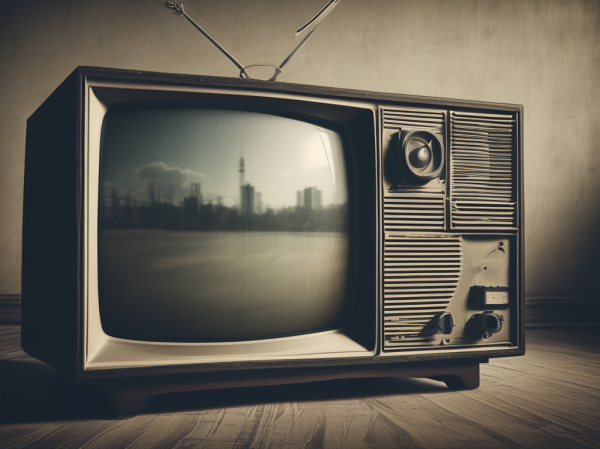
Getting Tired of Trying to tell the Truth

It’s not always easy writing these weekly posts. I try to deal with things of consequence, and usually I choose things that may be negative in nature. I also try to learn a little bit more about these topics by doing some research and approaching the post in a thoughtful way.  All of this means I have gone down several depressing rabbit holes in the course of writing these pieces over the years.

I have to tell you that, cumulatively, it takes a toll. Some weeks, it can only be described as downright depressing. And that’s just for myself, who only does these once a week. What if this were my full-time job? What if I were a journalist reporting on an ever more confounding world? How would I find the motivation to do my job every day?

The answer, at least according to a recent survey of 402 journalists by PR industry platform creator Muck Rake, is that I could well be considering a different job. Last year, 56% of those journalists considered quitting.

The reasons are many. I and others have repeatedly talked the dismal state of journalism in North America. The advertising-based economic model that supports true reporting is falling apart. Publishers have found that it’s more profitable to pander to prejudice and preconceived beliefs than it is to actually try to report the truth and hope to change people’s minds. When it comes to journalism, it appears that Colonel Nathan R. Jessup (from the movie A Few Good Men) may have been right. We can’t handle the truth. We prefer to spoon fed polarized punditry that aligns with our beliefs. When profitability is based on the number of eye-balls gained, you get a lot more of them at a far lower cost by peddling opinion rather than proof. This has led to round after round of mass layoffs, cutting newsroom staffing by double digit percentages.

This reality brings a crushing load of economic pressure down on journalists. According to the Muck Rake survey, most journalist are battling burnout due to working longer hours with fewer resources. But it’s not just the economic restraints that are taking their toll on journalists. A good part of the problem is the evolving nature of how news develops and propagates through our society.

There used to be such a thing as a 24-hour news cycle which was defined by a daily publication deadline, whether that was the printing of a newspaper or the broadcast of the nightly news. As tight as 24 hours was, it was downright leisurely compared to the split-second reality of today’s information environment. New stories develop, break and fade from significance in minutes now rather than days or weeks as was true in the past. And that means that a journalist that hopes to keep up always has to be on. There is no such thing as downtime or being “off the grid.” Even with new tools and platforms to help monitor and filter the tidal wave of signal vs. noise that is today’s information ecosystem, a journalist always has to be plugged in and logged on to do their job.

That is exhausting.

But perhaps the biggest reason why journalists are considering a career change is not the economic constraints nor the hours worked. It’s the nature of the job itself. No one choses to be a journalist because they want to get rich. It’s a career built on passion. Good journalists want to do something significant and make a difference. They do it because they value objectivity and truth and believe that by reporting it, they can raise the level of thought and discourse in our society. Given the apparent dumpster fire that seems to sum up the world today, can you blame them for becoming disillusioned with their chosen career?

All of this is tremendously sad. But even more than that, it is profoundly frightening. In a time when we need more reliably curated, reliably reported information about the state of affairs than ever before, those we have always trusted to provide this are running – in droves – towards the nearest exit.

Can Media Move the Overton Window?

I fear that somewhere along the line, mainstream media has forgotten its obligation to society.

It was 63 years ago, (on May 9, 1961) that new Federal Communications Commission Chair Newton Minow gave his famous speech, “Television and the Public Interest,” to the convention of the National Association of Broadcasters.

In that speech, he issued a challenge: “I invite each of you to sit down in front of your own television set when your station goes on the air and stay there, for a day, without a book, without a magazine, without a newspaper, without a profit and loss sheet or a rating book to distract you. Keep your eyes glued to that set until the station signs off. I can assure you that what you will observe is a vast wasteland.”

Minow was saying that media has an obligation to set the cultural and informational boundaries for society. The higher you set them, the more we will strive to reach them. That point was a callback to the Fairness Doctrine, established by the FCC in 1949. The policy required that “holders of broadcast licenses to present controversial issues of public importance and to do so in a manner that fairly reflected differing viewpoints.” The Fairness Doctrine was abolished by the FCC in 1987.

What Minow realized, presciently, was that mainstream media is critically important in building the frame for what would come to be called, three decades later, the Overton Window. First identified by policy analyst Joseph Overton at the Mackinaw Center for Public Policy, the term would posthumously be named after Overton by his colleague Joseph Lehman.

The term is typically used to describe the range of topics suitable for public discourse in the political arena. But, as Lehman explained in an interview, the boundaries are not set by politicians: “The most common misconception is that lawmakers themselves are in the business of shifting the Overton Window. That is absolutely false. Lawmakers are actually in the business of detecting where the window is, and then moving to be in accordance with it.

I think the concept of the Overton Window is more broadly applicable than just within politics. In almost any aspect of our society where there are ideas shaped and defined by public discourse, there is a frame that sets the boundaries for what the majority of society understands to be acceptable — and this frame is in constant motion.

Again, according to Lehman,  “It just explains how ideas come in and out of fashion, the same way that gravity explains why something falls to the earth. I can use gravity to drop an anvil on your head, but that would be wrong. I could also use gravity to throw you a life preserver; that would be good.”

Typically, the frame drifts over time to the right or left of the ideological spectrum. What came as a bit of a shock in November of 2016 was just how quickly the frame pivoted and started heading to the hard right. What was unimaginable just a few years earlier suddenly seemed open to being discussed in the public forum.

Social media was held to blame. In a New York Times op-ed written just after Trump was elected president (a result that stunned mainstream media) columnist Farhad Manjoo said,  “The election of Donald J. Trump is perhaps the starkest illustration yet that across the planet, social networks are helping to fundamentally rewire human society.”

In other words, social media can now shift the Overton Window — suddenly, and in unexpected directions. This is demonstrably true, and the nuances of this realization go far beyond the limits of this one post to discuss.

But we can’t be too quick to lay all the blame for the erratic movements of the Overton Window on social media’s doorstep.

I think social media, if anything, has expanded the window in both directions — right and left. It has redefined the concept of public discourse, moving both ends out from the middle. But it’s still the middle that determines the overall position of the window. And that middle is determined, in large part, by mainstream media.

It’s a mistake to suppose that social media has completely supplanted mainstream media. I think all of us understand that the two work together. We use what is discussed in mainstream media to get our bearings for what we discuss on social media. We may move right or left, but most of us realize there is still a boundary to what is acceptable to say.

The red flags start to go up when this goes into reverse and mainstream media starts using social media to get its bearings. If you have the mainstream chasing outliers on the right or left, you start getting some dangerous feedback loops where the Overton Window has difficulty defining its middle, risking being torn in two, with one window for the right and one for the left, each moving further and further apart.

Those who work in the media have a responsibility to society. It can’t be abdicated for the pursuit of profit or by saying they’re just following their audience. Media determines the boundaries of public discourse. It sets the tone.

Newton Minow was warning us about this six decades ago.