
I was reading recently that 70% of American ex-pats that move to their dream destinations move back to the US within 5 years. Their fantasy of a sun-drenched, easier life in places like southern Portugal, Spain or Italy didn’t quite come true when their expectations run into reality. The Algarve villa, Costa del Sol hacienda or Sicilian villaggio that seemed so wonderful when you went there for a three-week vacation constitutes a different ball of wax entirely when you pick up your stakes and attempt to embed them again in foreign soil. There is a reason why everything seems so laid back in these Mediterranean destinations – it’s because it’s really hard to get anything done there- especially if you’re a foreigner carrying the extra baggage of North American entitlement.
Our unfulfilled expectations are becoming more and more of a problem. We incorrectly tend to over-forecast the positives and under forecast the negatives when we think about the future. And things seem to be trending towards more of this in the future.
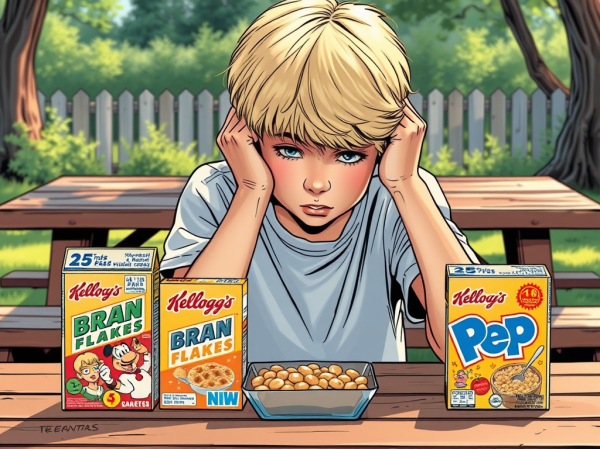
I have always tried to live by the Kellogg’s Variety Pack Philosophy – everything in life is a mix – some things are great, some things you just have to put up with. Remember those trays of little individual sized cereal boxes? We used to get them when we went camping. For every little box of Frosted Flakes or Froot Loops, there would be a box of Pep or Bran Flakes. But we (and by we – I mean my 10-year-old self) cannot live on Froot Loops alone. Someone needs to eat the Pep. The sooner we learn that, the less disappointing life becomes.
This philosophy applies to most things in life – the people on your cruise, the cousins you’re going to run into at your family reunion, the things you do in your job, the experiences you’re going to have on your next vacation – even how happy you will be today. Not everything can be wonderful. But not everything will be horrible either.
There’s nothing new about this, but for some reason, our expectations seem to be set at an impossibly high level for more and more things lately. All we want is a life full of Froot Loops – or sunsets on the Costa Del Sol sipping sangria, and when the world can’t possible deliver what we expect, we end up living with chronic disappointment.
Now, obviously we’re not all that fragile that we’ll collapse is a sobbing heap if it rains on our birthday or we’re 8th in line at the grocery store checkout. We are made of sterner stuff than that. But I’ve also seen a noticeable trend towards less tolerance.
For example, how often do you hear the word “toxic” now? Toxic used to be exclusively applied to things that were – well – toxic: industrial waste, hazardous chemicals, weapons of mass destruction. I think we can all agree that those things are 100% bad. But in the last ten years, toxic started being applied to the general stuff of our lives – people, jobs, behaviors, experiences and situations. And when we give things the label “toxic” we write those things off as a whole. We cease trying to look for the positive in any of it. Our patience with the real world runs out.
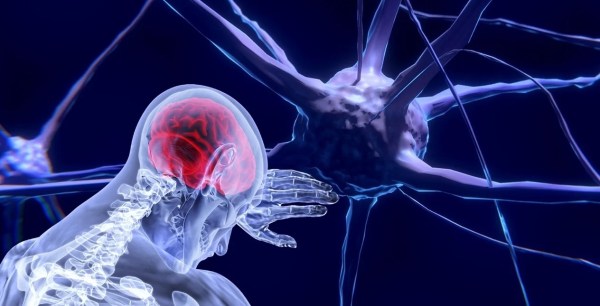
As it turns out, even disappointment is not an entirely bad thing. It does serve an evolutionary purpose. Part of our brain’s ability to learn and adapt is due to something called Reward Prediction Error – which measures the difference between expected and actual rewards. Using dopamine as the driver, the brain gets a pleasant jolt with unexpected rewards, a neutral response for expected rewards and if we end up with less than we expected, the dopamine factory shuts down and we get mopey. Suddenly, everything takes on a negative tinge.
This mechanism works well when disappointment is just part of our adaptive landscape, a temporary signal that tells us to steer towards something that offers a better chance of reward. But in a world where all our media is telling us to expect something better, bigger and more exciting, because that seems to be what everyone else is enjoying, real life will never live up to our expectations. We are doomed to be chronically disappointed.
When that happens, our brains start to rewire the dopamine circuits, trying to protect itself by recalibrating away from anticipation, moving from hope to pessimism. We settle for dopamine-neutral responses, trying to avoid the dopamine lows. We expect the bad and stop looking for the good. Our world seems filled with toxicity.
Here’s the problem with that. When we enter that state of mind, we prejudge a lot of the world as being toxic. Remember, the biggest dopamine jolt comes with unexpected rewards. It we look at the whole world with cynical eyes, we shut ourselves down to those surprise positive experiences that get the dopamine flowing again.
And that might be the biggest disappointment of all, because the joy of life is almost never planned. It just happens.





 Out of My Gord