The Cost of Not Being Curious

The world is having a pandemic-proportioned wave of Ostrichitis.

Now, maybe you haven’t heard of Ostrichitis. But I’m willing to bet you’re showing at least some of the symptoms:

  • Avoiding newscasts, especially those that feature objective and unbiased reporting
  • Quickly scrolling past any online news items in your feed that look like they may be uncomfortable to read
  • Dismissing out of hand information coming from unfamiliar sources

These are the signs of Ostrichitis – or the Ostrich Effect – and I have all of them. This is actually a psychological effect, more pointedly called willful ignorance, which I wrote about a few years ago. And from where I’m observing the world, we all seem to have it to one extent or another.

I don’t think this avoidance of information comes as a shock to anyone. The world is a crappy place right now. And we all seem to have gained comfort from adopting the folk wisdom that “no news is good news.” Processing bad news is hard work, and we just don’t have the cognitive resources to crunch through endless cycles of catastrophic news. If the bad news affirms our existing beliefs, it makes us even madder than what we were. If it runs counter to our beliefs, it forces us to spin up our sensemaking mechanisms and reframe our view of reality. Either way, there are way more fun things to do.

A recent study from the University of Chicago attempted to pinpoint when children started avoid bad news. The research team found that while young children don’t tend to put boundaries around their curiosity, as they age they start avoiding information that challenges their beliefs or their own well-being. The threshold seems to be about 6 years old. Before that, children are actively seeking information of all kinds (as any parent barraged by never ending “Whys” can tell you). After that, chidren start strategizing the types of information they pay attention to.

Now, like everything about humans, curiosity tends to be an individual thing. Some of us are highly curious and some of us avoid seeking new information religiously. But even if we are a curious sort, we may pick and choose what we’re curious about. We may find “safe zones” where we let our curiosity out to play. If things look too menacing, we may protect ourselves by curbing our curiosity.

The unfortunate part of this is that curiosity, in all its forms, is almost always a good thing for humans (even if it can prove fatal to cats).

The more curious we are, the better tied we are to reality. The lens we use to parse the world is something called a sense-making loop. I’ve often referred to this in the past. It’s a processing loop that compares what we experience with what we believe, referred to as our “frame”. For the curious, this frame is often updated to match what we experience. For the incurious, the frame is held on to stubbornly, often by ignoring new information or bending information to conform to their beliefs. A curious brain is a brain primed to grow and adapt. An incurious brain is one that is stagnant and inflexible. That’s why the father of modern-day psychology, William James, called curiosity “the impulse towards better cognition.”

When we think about the world we want, curiosity is a key factor in defining it. Curiosity keeps us moving forward. The lack of curiosity locks us in place or even pushes us backwards, causing the world to regress to a more savage and brutal place. Writers of dystopian fiction knew this. That’s why authors including H.G. Wells, Aldous Huxley, Ray Bradbury and George Orwell all made a lack of curiosity a key part of their bleak future worlds. Our current lack of curiosity is driving our world in the same dangerous direction.

For all these reasons, it’s essential that we stay curious, even if it’s becoming increasingly uncomfortable.

Saying Goodbye to our Icons

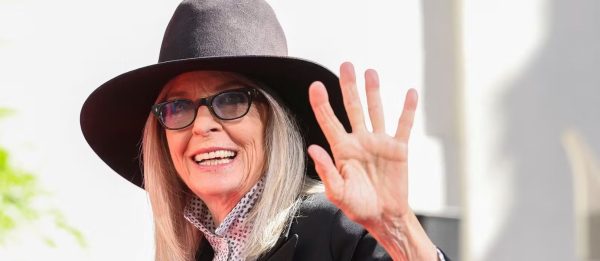
It’s been a tough couple of months for those of us who grew up in the 60s and 70s. Last month, we had to say goodbye to Robert Redford, and then, just over a week ago, we bid farewell to Diane Keaton.

It’s always sobering to lose those cultural touchstones of our youth. It brings us to forcibly reckon with our own mortality. Our brains play that maudlin math, “I remember them being young when I was young, so they can’t be that much older than me.”  We tend to conflate the age difference between us and those we watch when we’re young, so when they’re gone, we naturally wonder how much time we have left.

This makes it hard to lose any of the icons of our youth, but these two – for me – felt different: sadder, more personal. It was like I had lost people I knew.

I know there are many who swooned for Bobby Redford. But I know first-hand that an entire generation of male (and possibly female) adolescents had a crush on Diane Keaton’s Annie Hall. Her breakout role was one of those characters that carved a permanent place in our psyche. “Annie Hall-esque” became a descriptor we could all immediately understand – quirky, cute, with insecurities that were rendered as charming. We all wanted to be her port in a storm.

Diane Keaton and Robert Redford seemed like people we could know, given the chance. If circumstances ever caused our paths to cross, we felt we could have a real conversation with them. We could talk about meaningful things and perhaps connect on a personal level. There was depth below the celebrity and the heart of a real person beating there. We may have just known them through a screen – but they used those platforms to build a connection that felt real and human.

I wondered what it was about these two – in particular – that made the connection real. It was something that went beyond their talent, although their talent was undeniable. One only has to watch an example of Keaton’s master acting with Al Pacino in The Godfather: Part Two. After a visit with her estranged children, she is being pushed out the door before ex-husband Michael Corleone comes home, but he walks in while she’s still standing in the doorway. No words are said between the two for almost a minute. Everything is conveyed just by their expressions. It’s a scene that still rips my heart out.

It was also not about celebrity. In fact, Redford and Keaton both eschewed the life of a celebrity. Robert Redford found his life away from Hollywood in the ranch lands of Montana and Diane Keaton – well – in typical Keaton fashion, she just kind of ignored being a celebrity. In an interview with Vanity Fair in 1985, she said, ““I think I like to deny it (being famous). It suits me to deny it. It’s more comfortable for me to deny it, but I suppose that’s another one of my problems. Look, I don’t think it’s such a big deal. I don’t think I’m that big a thing.”

So, if it wasn’t their talent or their celebrity status, what was it about Keaton and Redford that forged such a strong bond with many of us? I think it may have been three things.

First, it was about consistency. They were judicious about what they shared with us but what they did choose to share was rock solid and reliable. Whatever was at the core of who they were – it shone through their performances. There was a foundation to each Redford and Keaton performance that was both essential and relatable. You couldn’t imagine anyone else playing these roles. 

The authenticity of their humanness was another factor. Robert Redford’s acting style was restrained and typically underplayed, but his charismatic good looks sometimes got in the way of the depth and vulnerability he tried to bring to his performances. He famously tried out for the title role in 1967’s The Graduate (which went to Dustin Hoffman) but was turned down by director Mike Nichols because he couldn’t see Redford as a believable “loser.” “Let’s put it this way,” Nichols reportedly said, “Have you ever struck out with a girl?” “What do you mean?” Redford replied.

Keaton was a little different. She embodied vulnerability in every role she played. She wasn’t perfect, and that was the point. We loved her imperfections. The characters Diane Keaton played were neither aspirational nor cautionary, they were revelatory. We connected with them, because we could see ourselves in them.

Finally, we knew there was depth to both Diane Keaton and Robert Redford. They believed passionately in things and weren’t afraid to speak out on behalf of those beliefs. I would have loved to have a conversation with either of them about serious things, because I feel I would have walked away with a perspective worth discovering.

It’s sadly ironic that for two icons who shared so much screen time with us, they never shared it with each other. They were tentatively scheduled to appear in a 2012 Holiday comedy but it never made it to the screen.

I will miss having both Robert Redford and Diane Keaton in my world. They made it better.

The Credibility Crisis

We in the western world are getting used to playing fast and loose with the truth. There is so much that is false around us – in our politics, in our media, in our day-to-day conversations – that it’s just too exhausting to hold everything to a burden of truth. Even the skeptical amongst us no longer have the cognitive bandwidth to keep searching for credible proof.

This is by design. Somewhere in the past four decades, politicians and society’s power brokers have discovered that by pandering to beliefs rather than trading in facts, you can bend to the truth to your will. Those that seek power and influence have struck paydirt in falsehoods.

In a cover story last summer in the Atlantic, journalist Anne Applebaum explains the method in the madness: “This tactic—the so-called fire hose of falsehoods—ultimately produces not outrage but nihilism. Given so many explanations, how can you know what actually happened? What if you just can’t know? If you don’t know what happened, you’re not likely to join a great movement for democracy, or to listen when anyone speaks about positive political change. Instead, you are not going to participate in any politics at all.”

As Applebaum points out, we have become a society of nihilists. We are too tired to look for evidence of meaning. There is simply too much garbage to shovel through to find it. We are pummeled by wave after wave of misinformation, struggling to keep our heads above the rising waters by clinging to the life preserver of our own beliefs. In the process, we run the risk of those beliefs becoming further and further disconnected from reality, whatever that might be. The cogs of our sensemaking machinery have become clogged with crap.

This reverses a consistent societal trend towards the truth that has been happening for the past several centuries. Since the Enlightenment of the 18th century, we have held reason and science as the compass points of our True Norh. These twin ideals were buttressed by our institutions, including our media outlets. Their goal was to spread knowledge. It is no coincidence that journalism flourished during the Enlightenment. Freedom of the press was constitutionally enshrined to ensure they had the both the right and the obligation to speak the truth.

That was then. This is now. In the U.S. institutions, including media, universities and even museums, are being overtly threatened if they don’t participate in the wilful obfuscation of objectivity that is coming from the White House. NPR and PBS, two of the most reliable news sources according to the Ad Fontes media bias chart, have been defunded by the federal government. Social media feeds are awash with AI slop. In a sea of misinformation, the truth becomes impossible to find. And – for our own sanity – we have had to learn to stop caring about that.

But here’s the thing about the truth. It gives us an unarguable common ground. It is consistent and independent from individual belief and perspective. As longtime senator Daniel Patrick Moynihan famously said, “Everyone is entitled to his own opinion, but not to his own facts.” 

When you trade in falsehoods, the ground is consistently shifting below your feet. The story is constantly changing to match the current situation and the desired outcome. There are no bearings to navigate by. Everyone had their own compass, and they’re all pointing in different directions.

The path the world is currently going down is troubling in a number of ways, but perhaps the most troubling is that it simply isn’t sustainable. Sooner or later in this sea of deliberate chaos, credibility is going to be required to convince enough people to do something they may not want to do. And if you have consistently traded away your credibility by battling the truth, good luck getting anyone to believe you.

Bread and Circuses: A Return to the Roman Empire?

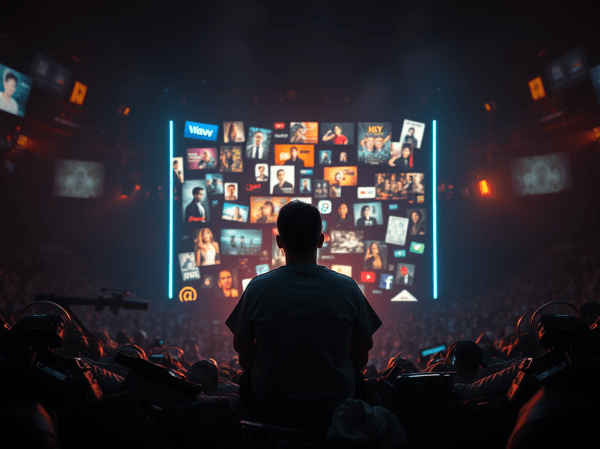
Reality sucks. Seriously. I don’t know about you, but increasingly, I’m avoiding the news because I’m having a lot of trouble processing what’s happening in the world. So when I look to escape, I often turn to entertainment. And I don’t have to turn very far. Never has entertainment been more accessible to us. We carry entertainment in our pocket. A 24-hour smorgasbord of entertainment media is never more than a click away. That should give us pause, because there is a very blurred line between simply seeking entertainment to unwind and becoming addicted to it.

Some years ago I did an extensive series of posts on the Psychology of Entertainment. Recently, a podcast producer from Seattle ran across the series when he was producing a podcast on the same topic and reached out to me for an interview. We talked at length about the ubiquitous nature of entertainment and the role it plays in our society. In the interview, I said, “Entertainment is now the window we see ourselves through. It’s how we define ourselves.”

That got me to thinking. If we define ourselves through entertainment, what does that do to our view of the world? In my own research for this column, I ran across another post on how we can become addicted to entertainment. And we do so because reality stresses us out, “Addictive behavior, especially when not to a substance, is usually triggered by emotional stress. We get lonely, angry, frustrated, weary. We feel ‘weighed down’, helpless, and weak.”

Check. That’s me. All I want to do is escape reality. The post goes on to say, “Escapism only becomes a problem when we begin to replace reality with whatever we’re escaping to.”

I believe we’re at that point. We are cutting ties to reality and replacing them with a manufactured reality coming from the entertainment industry. In 1985 – forty years ago – author and educator Neil Postman warned us in his book Amusing Ourselves to Death that we were heading in this direction. The calendar had just ticked past the year 1984 and the world collectively sighed in relief that George Orwell’s eponymous vision from his novel hadn’t materialized. Postman warned that it wasn’t Orwell’s future we should be worried about. It was Aldous Huxley’s forecast in Brave New World that seemed to be materializing:

“As Huxley remarked in Brave New World Revisited, the civil libertarians and rationalists who are ever on the alert to oppose tyranny “failed to take into account man’s almost infinite appetite for distractions…  Orwell feared that what we fear will ruin us. Huxley feared that what we desire will ruin us.”

Postman was worried then – 40 years ago – that the news was more entertainment than information. Today, we long for even the kind of journalism that Postman was already warning us about. He would be aghast to see what passes for news now. 

While things unknown to Postman (social media, fake news, even the internet) are throwing a new wrinkle in our downslide into an entertainment induced coma, it’s not exactly new.   This has happened at least once before in history, but you have to go back almost 2000 years to find an example. Near the end of the Western Roman Empire, as it was slipping into decline, the Roman poet Juvenal used a phrase that summed it up – panem et circenses – “bread and circuses”:

“Already long ago, from when we sold our vote to no man, the People have abdicated our duties; for the People who once upon a time handed out military command, high civil office, legions — everything, now restrains itself and anxiously hopes for just two things: bread and circuses.”

Juvenal was referring to the strategy of the Roman emperors to provide free wheat and circus games and other entertainment games to gain political power. In an academic article from 2000, historian Paul Erdkamp said the ploy was a “”briberous and corrupting attempt of the Roman emperors to cover up the fact that they were selfish and incompetent tyrants.”

Perhaps history is repeating itself.

One thing we touched on in the podcast was a noticeable change in the entertainment industry itself. Scarlett Johansenn noticed the 2025 Academy Awards ceremony was a much more muted affair than in years past. There was hardly any political messaging or sermons about how entertainment provided a beacon of hope and justice. In an interview with Vanity Fair  – Johanssen mused that perhaps it’s because almost all the major studies are now owned by Big-Tech Billionaires, “These are people that are funding studios. It’s all these big tech guys that are funding our industry, and funding the Oscars, and so there you go. I guess we’re being muzzled in all these different ways, because the truth is that these big tech companies are completely enmeshed in all aspects of our lives.”

If we have willingly swapped entertainment for reality, and that entertainment is being produced by corporations who profit from addicting as many eyeballs as possible, prospects for the future do not look good.

We should be taking a lesson from what happened to Imperial Rome.

Our Memories Are Our Compass

“You can’t really know where you’re going until you know where you’ve been”

Maya Angelou

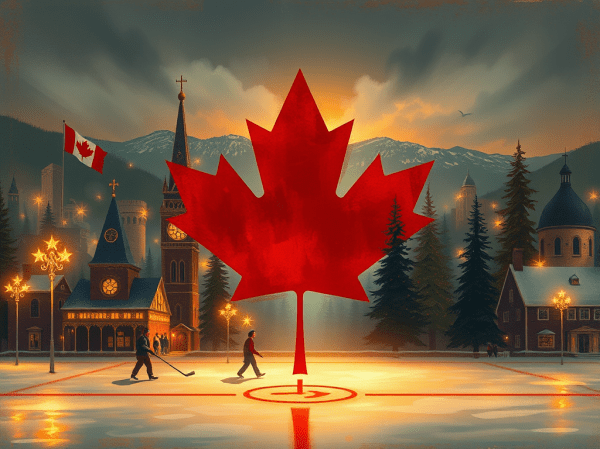
Today is Canada Day – the Canadian version of the Fourth of July. In the past decade or so, it’s been a day fraught with some existential angst, as we try to reconcile our feelings of pride with our often-glaring imperfections as Canadians. In a country known for its readiness to apologize, this is perhaps the most Canadian of Canadian holidays – a day made for wondering if we should be saying “we’re sorry.”

 This year, it will be interesting to see how Canada celebrates. As I’ve mentioned before, what is happening south of the border has caused Canadians to have a renewed burst of patriotism and pride. We may not be united on much, but we universally know we don’t want to be the 51st state. No offence (heaven forbid) but we’re good as is, President Trump. Really.

A few days ago, I happened across a little video posted to celebrate Canada. It was a montage of “Heritage Minutes” –little vignettes of our Canadian past produced since 1990 by Historica Canada. This montage was set to a song by another Canadian icon, “It’s a Good Life if You don’t Weaken” by the Tragically Hip. The 4 minute and 29 second video checked all the boxes guaranteed to generate the warm fuzzies for Canadians: Anne of Green Gables (check), the invention of basketball and the telephone (check), the discovery of Insulin (check), the origins of Superman (check), the naming of Winnie the Pooh (check), our contributions in two World Wars (check and check). It was Canadiana distilled; more than maple syrup – which is more of an Eastern Canadian thing. More than poutine, which most Canadians had never heard of until 20 years ago. Maybe on a par with hockey.

But the montage also reminded me of some not so glorious Canadian moments. We were imperfect, in our abhorrent treatment of immigrants in the past – especially the Chinese and Japanese. And our ignoring – and worse – our attempts to irradicate the incredibly rich and diverse Indigenous history and culture because it was inconvenient to our dreams of nation building.

Canada’s history is distinct from that of the U.S.A. In the last half of 19th Century and the beginning of the 20th Century, when immigration started in earnest, we were very much a British Colony. Anyone who was not British was treated as either a necessary evil (providing the manual labor required to build a new country) or as a persona non grata. As for those that preceded us – the Indigenous population of Canada – the British saw them as an inconvenience and potential threat to either be tamed or systematically eradicated.

This – too – is part of Canada’s history. And we have to acknowledge that, because to do so gives us a compass to navigate both the present and future. That montage reminds us that immigration built this country. And Canada’s thousands of years of Indigenous past needs to be recognized so the entire history of our nation can be honestly reconciled. We need to fix our bearings to they read true before we move forward.

Canadians today need to decide what we aspire to be as a nation in the future. And to do that, we need to remember where we’ve been. Do we ignore the fact that we are a nation of immigrants and are so much the richer for it? Do we conveniently forget that there were people here thousands of years before the first European set foot on Canadian soil? We need to fully understand what made Canada what it is – both good and bad – an imperfect country that still happens to be a pretty great place to live.

In the song that the montage is set to, the Tragically Hip’s Gord Downie sings:

In the forest of whispering speakers
Let’s swear that we will
Get with the times
In a current health to stay

But maybe we can do better than just maintain the status quo. If we remember where we’ve been, maybe we can do better in the future than where we are now.

Happy Canada Day!

The Presidential Post-a-Palooza Problem

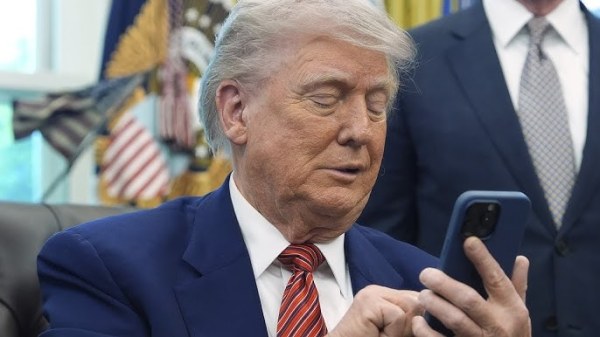
As of June 3rd of this year, President Donald Trump had posted 2262 times to Truth Social in the132 days since his inauguration. That’s 17 posts per day – or night.  According to a recent article in the Washington Post, the president’s social media use is far exceeding his posting in his first term: “His posting now overshadows even the most explosive Twitter days of his first presidency: He tweeted 14 times on his biggest-posting day in early 2017, the data show — a tenth of the 138 posts his Truth Social account sent on a single day this March.”

According to the White House, this is a good thing: “President Trump is the most transparent president in history and is meeting the American people where they are to directly communicate his policies, message, and important announcements,” said White House Assistant Press Secretary Taylor Rogers.

Transparent? I suppose – as in Saran Wrap transparency – only a few microns thick and unable to stand on its own. But the biggest problem with Trump’s brand of social media transparency is that it is a pinball type of presidentialism – continually launching projectiles just to see what they bump into.

Here’s how this scenario often plays out. Trump sends out many of his missives in the middle of the night. They are posted to Truth Social, the media platform he owns and which he is contractually obligated to post first on. In terms of comparison, X has almost 600 million users, Truth Social has about 1 percent of that – about 6 million. And that is hardly a diverse sampling. LA Times reporter Lorraine Ali dared to spend 24 hours on Truth Social last year, “so you don’t have to.” She found Truth Social to be like “a MAGA town hall in a ventless conference room, where an endless line of folks step up to the mic to share how the world is out to get them.”

Ali went on, “The Truth Social feed I experienced was a mix of swaggering gun talk, typo-filled Bible scripture, violent Biden bashing, nonsensical conspiracy theories and more misguided memes about Jan. 6 “hostages,” trans satanists and murderous migrants than anyone should be subjected to in one day. Or ever.”

This is the audience that is the first stop for Trump’s midnight social media musings. Truth Social is not the place for thoughtful policy statements or carefully crafted communication. Rather, it is a place that laps up posts like the beaut that Trump launched on Memorial Day, which started with: “Happy Memorial Day to all, including the scum that spent the last four years trying to destroy our country through warped radical left minds, who allowed 21,000,000 million people to illegally enter our country, many of them being criminals and the mentally insane.”

He then shortly followed that up by reposting this: “There is no #JoeBiden – executed in 2020. #Biden clones doubles & robotic engineered soulless mindless entities are what you see. >#Democrats don’t know the difference.”

From Truth Social, his posts rapidly move to more mainstream platforms. The Post article plotted the typical course of a Trump “Truth”:

“ ‘His messaging moves in real time from Truth to X, and it spreads just as far if not farther on X than it did when he was tweeting himself on the platform,’ said Darren Linvill, a professor and co-director of the Media Forensics Hub at Clemson University who studies social media.

What’s more, Truth Social’s almost exclusively congenial audience insulates the president from negative responses. ‘His current social media behavior suggests that with time he has been pulled even farther into his own echo chambers,’ Linvill said. ‘Truth Social gives him complete and constant positive feedback.’”

By the time dawn breaks over the White House, these missives have been echoing through the echo chambers of social media for at least a couple hours. Trump has received endorsement from the Truth Social crowd and the posts are out in the world, demanding to be dealt with. This is not even government by fiat. It’s as if you woke from a fever dream at 3 in the morning and decided that the two-headed dragon that was eating your Froot Loops needed to be taken out by an all-out military operation. And you were the President. And you could make it happen. And the Two-Headed Dragon was Iran – or Greenland – or Canada.

It is a quantum leap beyond insane that this is how government policy is currently being determined. Even more unbelievable is the fact that this has now been normalized by the same White House spokesperson Taylor Rogers, who said “President Trump was elected in a historic landslide victory and even won the popular vote — no further validation is needed.”

OMG – yes Taylor, further validation is needed. Desperately! These posts are determining the future of the world and everyone who lives in it. They should be given great thought. Or – at least – more thought than that generated by the mind-altering after-effects of Big Mac eaten at 1:30 in the morning

Do We Have the Emotional Bandwidth to Stay Curious?

Curiosity is good for the brain. It’s like exercise for our minds. It stretches the prefrontal cortex and whips the higher parts of our brains into gear. Curiosity also nudges our memory making muscles into action and builds our brain’s capacity to handle uncertain situations.

But it’s hard work – mentally speaking. It takes effort to be curious, especially in situations where curiosity could figuratively “kill the cat.” The more dangerous our environment, the less curious we become.

A while back I talked about why the world no longer seems to make sense. Part of this is tied to our appetite for curiosity. Actively trying to make sense of the world puts us “out there”, leaving the safe space of our established beliefs behind. It is literally the definition of an “open mind” – a mind that has left itself open to being changed. And that’s a very uncomfortable place to be when things seem to be falling down around our ears.

Some of us are naturally more curious than others. Curious people typically achieve higher levels of education (learning and curiosity are two sides of the same coin). They are less likely to accept things at face value. They apply critical thinking to situations as a matter of course. Their brains are wired to be rewarded with a bigger dopamine hit when they learn something new.

Others rely more on what they believe to be true. They actively filter out information that may challenge those beliefs. They double down on what is known and defend themselves from the unknown. For them, curiosity is not an invitation, it’s a threat.

Part of this is a differing tolerance for something which neuroscientists call “prediction error” – the difference between what we think will happen and what actually does happen. Non-curious people perceive predictive gaps as threats and respond accordingly, looking for something or someone to blame. They believe that it can’t be a mistaken belief that is to blame, it must be something else that caused the error. Curious people look at prediction errors as continually running scientific experiments, given them a chance to discover the errors in their current mental models and update them based on new information.

Our appetite for curiosity has a huge impact on where we turn to be informed. The incurious will turn to information sources that won’t challenge their beliefs. These are people who get their news from either end of the political bias spectrum, either consistently liberal or consistently conservative. Given that, they can’t really be called information sources so much as opinion platforms. Curious people are more willing to be introduced to non-conforming information. In terms of media bias, you’ll find them consuming news from the middle of the pack.

Given the current state of the world, more curiosity is needed but is becoming harder to find. When humans (or any animal, really) are threatened, we become less curious. This is a feature, not a bug. A curious brain takes a lot longer to make a decision than a non-curious one. It is the difference between thinking “fast” and “slow” – in the words of psychologist and Nobel laureate Daniel Kahneman. But this feature evolved when threats to humans were usually immediate and potentially fatal. A slow brain is not of any benefit if you’re at risk of being torn apart by a pack of jackals. But today, our jackal encounters are usually of the metaphorical type, not the literal one. And that’s a threat of a very different kind.

Whatever the threat, our brain throttles back our appetite for curiosity. Even the habitually curious develop defense mechanisms in an environment of consistently bad news. We seek solace in the trivial and avoid the consequential. We start saving cognitive bandwidth from whatever impending doom we may be facing. We seek media that affirms our beliefs rather than challenges them.

This is unfortunate, because the threats we face today could use a little more curiosity.

The Whole US – Canada Thing – “IMHO”

“Our old relationship with the United States, a relationship based on steadily increasing integration, is over. The system of open global trade anchored by the United States – a system that Canada has relied on since the second world war, a system that while not perfect has helped deliver prosperity for a country for decades – is over”

Mark Carney, the New Prime Minister of Canada

I hope the above is not true. Because I’m not ready to sever my relationships with a whole bunch of Americans that I truly love and respect. Maybe that’s denialism, or maybe it’s just my hope that someday – eventually – cooler heads will prevail, and we’ll put this current spat behind us.

There was a good stretch of my life where I spent almost as much time in the U.S. as I did in Canada. I crossed the border repeatedly every month. I was on a first name basis with some of the U.S. Customs and Border officials at SeaTac airport in Seattle. I ran out of visa stamp pages on my Canadian passport and had to get more added. Many people in the search industry at the time just assumed I was American. Some back here in Canada even told me I had picked up an American accent somewhere along the way.

In that time, I made many wonderful friends, who came from every corner of the US:  Boston, Atlanta, Sacramento, Minneapolis, Chicago, New York, Hartford, Phoenix, Palo Alto, San Diego and Seattle.

I have to admit, my trips to the U.S. have dropped dramatically since November 2016. Part of that is that I no longer need to go to the U.S. for business. But part of it is also just my emotional distress, especially in the past few months. One of the analogies that really seemed to resonate with me is that the current US-Canadian relationship is akin to a messy divorce, and we’re the kids caught in the consequences of that. Going to the U.S. right now would be like going to a family reunion after your mom and dad have just split up. You don’t want to have to deal with the inevitable awkwardness and potential confrontations.

I’m not alone in my reluctance to cross the border. Travel from Canada to the U.S. has plummeted this year. According to U.S. Customs and Border Protection, Canadian entries into the U.S. fell by 12.5% in February and dropped a further 18% in March.  A lot of Canadians have opted out of U.S travel, probably for many of the same reasons that I have.

But I think that’s part of the problem. As awkward as a conversation maybe between a Canadian and an American, whatever their politics, we need more of them, not less. Yes, there is a rift and damage has been done to one of the most successful international alliances in history, but as any counsellor will tell you, healing any relationship requires communication.

Also, I’ve never seen so much media attention from the U.S. turned towards Canada. Half of America seems to have chosen us as a beacon of democracy, truth and justice. While I appreciate that, I feel I have to level with you, my American friends and cousins; we are far from perfect. In fact, I have grave concerns about the future of Canada. We have our own extreme political polarization that has to be recognized and dealt with. It may be a little more polite and nuanced than what is happening currently in the U.S., but it is no less real.

We still have at least two provinces (Alberta and Quebec) who have political leaders that feel their futures would be better outside the Canadian dominion than within it. We have large segments of our population that feel unheard by our current government. We have many acute crises, including housing, a rising cost of living, broken promises to our indigenous community, an environment ravaged by climate change and many others. It’s just that the current economic crisis caused by Trump’s tariffs and vocal sabre rattling about becoming a 51st State has –  well – “Trumped” them all.

While we’re talking about Donald Trump, I have to admit that he does have a point – Canada has taken advantage of America’s willingness to protect the world. We have fallen well short of our 2% defense spending commitment to NATO since the end of the Cold War (we currently spend about 1.37% of our GDP). We have always enjoyed the benefits of cozying up to our American big brother. And in return, we have often repaid that with our own blend of passive aggressive sarcasm and a quiet feeling of moral superiority that is as much a part of the Canadian identity as hockey and Tim Horton’s coffee.

Being Canadian, I feel the need to apologize for that. I’m sorry.

Look. We’re in a tough spot right now. I get that. But I also believe this is not the time to retreat behind our own fences and refuse to talk to each other. This is the time to recognize how special what we had was. Emotions are running high but at some point, I’m fervently hoping this isn’t a permanent split.

Maybe we’re just taking a break. If you want to talk about it, I’m here.

The Quaint Concept of Borders

According to a recent Leger poll, one in five Americans would like their state to secede and join Canada. In contrast, according to the same poll, only one in 10 Canadians would like to see Canada become the 51st State.

Of course, no one takes either suggestion very seriously, except perhaps the President of the United States. And, given the current state of things, that job title is a little ridiculous. Those States are probably less united than they have been at any time since the American Civil War.

All this talk about borders does make a good Facebook meme though. You might have seen it – under the title “Problem Solved” there’s a map of North American with the Canadian border redrawn to extend down the east and west coast to include Washington, Oregon, California, New York, New Jersey and The New England States. Minnesota also gets to become part of the Great White North.

But – even if we took the suggestion seriously – does redrawing borders really solve any problem? Let’s assume that Canada really did become part of the US. It would be a “big, beautiful state,” according to Donald Trump. There have been a few that have pointed out that that state, with our 40 million potential voters, would probably vote overwhelmingly against Trump. Again, according to Canadian pollster Leger, only about 12% of Canadians support Trump.

While we’re redrawing the map of the world, even oceans can’t get in the way. Here in Canada, we are rushing to realign with Europe and its markets. The idea has even been floated that Canada should join the European Union.  Our new prime minister, Mark Carney, has said we have more in common with Europe and the values found there than we do with our American neighbors to the south.

But again, we use the faulty logic of Canadians, Americans or Europeans being identified as a cohesive bloc defined by a border. The recent rush of patriotism aside, Canadians rarely speak with one voice. For example, support for Trump runs highest in Alberta, where 23% of the province’s voters support him. He’s least popular in Canada’s Atlantic provinces, where support dips to 8%

Or let’s hop across the border to the state closest to me – Washington. If you take the state in aggregate, it is a blue state by almost 20 points. But again, that designation depends on an aggregation of votes within a territory defined by a fairly arbitrary border. If you look at Washington on a county-by-county basis, it’s hardly a cohesive voting bloc. Yes, the urban centers of Seattle and Olympia went heavily for Kamala Harris (74% in King County) but eastern Washington is a very different story. There in many counties, for every voter that chose Harris, 3 chose Trump. Ideologically, a resident of Pend Orielle County, Washington has much more in common with someone from Bonner County, which lies just across the border in Idaho, than they do with someone from Jefferson County, which lies on the west coast of Washington.

My point is this: given the polarization of our society, it’s almost impossible to draw a line anywhere on a map and think that it defines the people within that line in any identifiable way. Right now, nowhere on earth defines this more starkly than the United States. Because of the borders of the U.S. and the political structures that determine who leads the people within those borders, almost 2/3rds of Americans lives are being determined by a man they didn’t vote for. In fact, a big percentage of those 2/3rds are vehemently opposed to their President and his policies. How does that make any sense?

Borders were necessary where our survival was tied to a specific location and the resources to be found within that location. This forced a commonality on those that lived within those boundaries. They ate the same food, drank the same water, tilled the same fields, worked at the same factory, shopped at the same stores, attended the same church and their children went to the same schools.

But our digital world has lost much of that commonality. Online, we are defined by how we think, not where we live. This creates a new definition of “tribe” and, by extension, tribal territories. The divides between us now are based on differences in beliefs, not geographical obstacles. And the gap between our beliefs is getting wider and wider. This leaves the concept of a border threatened as something that is becoming increasingly anachronistic. Borders define something that is becoming less and less real and more and more problematic as the people who live in a state or country find less and less in common with their fellow citizens.  As Scottish journalist James Crawford says in his book, The Edge of the Plain: How Borders Make and Break Our World, the tension is usually felt more acutely on those arbitrary borders: “Wherever there are borders … that’s where you are going to find the most concentrated injustice.”

This redefining of our world as it decouples from the concept of “place” will place more and more pressure on the old idea of a border defining a place and a common ideology.  When there is less cohesivity between those living within the border than there is between ideologically aligned factions spread across the globe, we must wonder how to manage this given our current political structures based on the foundation of a common territory. This is particularly true for democracies, where you get a whipsaw backlash between the right and left as the two factions grow further and further apart. That prognosis is not a good one. As Steven Levitsky and Daniel Ziblatt said in their book How Democracies Die, “Democracies rarely survive extreme partisanship.”

Will There Be a Big-Tech Reckoning?

Jeff Bezos, Mark Zuckerberg and Tim Cook must be thanking their lucky stars that Elon Musk is who he is. Musk is taking the brunt of any Anti-Trump backlash and seems to be relishing in it. Heaven only knows what is motivating Musk, but he is casting a smoke screen so wide and dense it’s obliterating the ass-kissing being done by the rest of the high-tech oligarchs.  In addition to Bezos, Zuckerberg and Cook, Microsoft’s Satya Nadella, Google’s Sundar Pichai and many other high-tech leaders have been making goo-goo eyes at Donald Trump.

Let’s start with Jeff Bezos. One assumes he is pandering to the president because his companies have government contracts worth billions. That pandering has included a pilgrimage to Trump’s Mar-a-Lago, a one million donation to his inauguration fund (which was streamed live on Amazon Prime), and green-lighting a documentary on Melania Trump. The Bezos-owned Washington Post declined from endorsing Kamala Harris as a presidential candidate, prompting some of its editorial staff to resign. At Amazon, the company has backed off some of its climate pledge commitments and started stripping Diversity, Equity and Inclusion programs from their HR handbook.

Mark Zuckerberg joined Trump supporting podcaster Joe Rogan for almost three hours to explain how they were realigning Facebook to be more Trump-friendly. This included canning their fact checkers and stopping policing of misinformation. During the interview, Zuckerberg took opportunities to slam media and the outgoing Biden administration for daring to question Facebook about misleading posts about Covid-19 vaccines. Zuckerberg, like Bezos, also donated $1 million to Trump’s inaugural fund and has rolled back DEI initiatives at Meta.

Tim Cook’s political back-bend had been a little more complicated. On the face of it, Apple’s announcement that it would be investing more than $500 billion in the U.S. and creating thousands of new jobs certainly sounds like a massive kiss to the Trumpian posterior but if you dig through the details, it’s really just putting a new spin on commitments Apple already made to support their development of Apple’s AI. And in many cases, the capital investment isn’t even coming from Apple. For instance, that new A.I. server manufacturing plant in Houston that was part of the announcement? That plant is actually being built by Apple partner Foxconn, not Apple.

As far as the rest of the Big Tech cabal, including Microsoft, Google and OpenAI, their new alignment with Trump is not surprising. Trump is promising to make the U.S. the undisputed leader in A.I. One would also imagine he would be more inclined than the Democrats to look the other way when it comes to things like anti-trust investigations and enforcement. So Big-Tech’s deferment to Trump is both entirely predictable and completely self-serving. I’m also guessing that all of them think they’re smarter than Trump and his administration, providing them a strategic opportunity to play Trump like a fiddle while pursuing their long-term corporate goals free from any governmental oversight or resistance. All evidence to date shows that they’re probably not mistaken in that assumption.

But all this comes at what cost? This could play out one of two ways. First, what happens if these High-Tech Frat Rat’s bets are wrong? There is an anti-Trump, anti-MAGA revolt building. Who knows what will happen, but in politically unprecedented times like this one has to consider every scenario, no matter how outrageous they may seem. One scenario is a significant percentage of Republicans decide their political future (and, hopefully, the future of the US as a democracy also factors into their thinking) is better off without a Donald Trump in it and start the wheels turning to remove him from power. If this is the case, things are going to get really, really nasty. There is going to be recrimination and finger pointing everywhere. And some of those fingers are going to be pointed at the big tech leaders who scrapped the ground bowing to Trump’s bluster and bullying.

Will that translate into a backlash against high-tech? I really am not sure. To date, these companies have been remarkably adept at sluffing off blame. IF MAGA ends up going down in flames, will Big Tech even get singed as they warm their hands at Donald Trump’s own bonfire of his vanities? Will we care about Big Tech’s obsequiousness when it comes time to order something from Amazon or get a new iPhone?

Probably not.  

But the other scenario is even more frightening: Trump stays in power and Big Tech is free to do whatever they hell they want. Based on what you know about Elon Musk, Mark Zuckerberg, Jeff Bezos and the rest, are you willing to let them be the sole architects of your future? Their about-face on Trump has shown that they will always, always, always place profitability above their personal ethics.