Can Media Move the Overton Window?

I fear that somewhere along the line, mainstream media has forgotten its obligation to society.

It was 63 years ago, (on May 9, 1961) that new Federal Communications Commission Chair Newton Minow gave his famous speech, “Television and the Public Interest,” to the convention of the National Association of Broadcasters.

In that speech, he issued a challenge: “I invite each of you to sit down in front of your own television set when your station goes on the air and stay there, for a day, without a book, without a magazine, without a newspaper, without a profit and loss sheet or a rating book to distract you. Keep your eyes glued to that set until the station signs off. I can assure you that what you will observe is a vast wasteland.”

Minow was saying that media has an obligation to set the cultural and informational boundaries for society. The higher you set them, the more we will strive to reach them. That point was a callback to the Fairness Doctrine, established by the FCC in 1949. The policy required that “holders of broadcast licenses to present controversial issues of public importance and to do so in a manner that fairly reflected differing viewpoints.” The Fairness Doctrine was abolished by the FCC in 1987.

What Minow realized, presciently, was that mainstream media is critically important in building the frame for what would come to be called, three decades later, the Overton Window. First identified by policy analyst Joseph Overton at the Mackinaw Center for Public Policy, the term would posthumously be named after Overton by his colleague Joseph Lehman.

The term is typically used to describe the range of topics suitable for public discourse in the political arena. But, as Lehman explained in an interview, the boundaries are not set by politicians: “The most common misconception is that lawmakers themselves are in the business of shifting the Overton Window. That is absolutely false. Lawmakers are actually in the business of detecting where the window is, and then moving to be in accordance with it.

I think the concept of the Overton Window is more broadly applicable than just within politics. In almost any aspect of our society where there are ideas shaped and defined by public discourse, there is a frame that sets the boundaries for what the majority of society understands to be acceptable — and this frame is in constant motion.

Again, according to Lehman,  “It just explains how ideas come in and out of fashion, the same way that gravity explains why something falls to the earth. I can use gravity to drop an anvil on your head, but that would be wrong. I could also use gravity to throw you a life preserver; that would be good.”

Typically, the frame drifts over time to the right or left of the ideological spectrum. What came as a bit of a shock in November of 2016 was just how quickly the frame pivoted and started heading to the hard right. What was unimaginable just a few years earlier suddenly seemed open to being discussed in the public forum.

Social media was held to blame. In a New York Times op-ed written just after Trump was elected president (a result that stunned mainstream media) columnist Farhad Manjoo said,  “The election of Donald J. Trump is perhaps the starkest illustration yet that across the planet, social networks are helping to fundamentally rewire human society.”

In other words, social media can now shift the Overton Window — suddenly, and in unexpected directions. This is demonstrably true, and the nuances of this realization go far beyond the limits of this one post to discuss.

But we can’t be too quick to lay all the blame for the erratic movements of the Overton Window on social media’s doorstep.

I think social media, if anything, has expanded the window in both directions — right and left. It has redefined the concept of public discourse, moving both ends out from the middle. But it’s still the middle that determines the overall position of the window. And that middle is determined, in large part, by mainstream media.

It’s a mistake to suppose that social media has completely supplanted mainstream media. I think all of us understand that the two work together. We use what is discussed in mainstream media to get our bearings for what we discuss on social media. We may move right or left, but most of us realize there is still a boundary to what is acceptable to say.

The red flags start to go up when this goes into reverse and mainstream media starts using social media to get its bearings. If you have the mainstream chasing outliers on the right or left, you start getting some dangerous feedback loops where the Overton Window has difficulty defining its middle, risking being torn in two, with one window for the right and one for the left, each moving further and further apart.

Those who work in the media have a responsibility to society. It can’t be abdicated for the pursuit of profit or by saying they’re just following their audience. Media determines the boundaries of public discourse. It sets the tone.

Newton Minow was warning us about this six decades ago.

Post-mortem of a Donald Trump Sound Bite

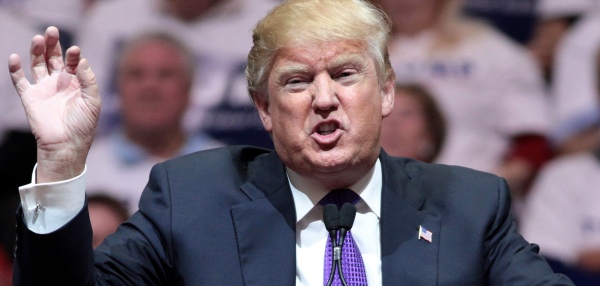
This past weekend, Donald Trump was campaigning in Dayton, Ohio. This should come as news to no one. You’ve all probably seen various blips come across your social media radar. And, as often happens, what Trump said has been picked up in the mainstream press.

Now, I am quite probably the last person in the world that would ever come to Donald Trump’s defense. But I did want to take this one example of how it’s the media, including social media, that is responsible for the distortion of reality that we often see happen.

My first impression of what happened is that Trump promised a retributive bloodbath for any and all opposition if he’s not elected president. And, like many of you, that first impression came through my social media feeds. Joe Biden’s X (formerly Twitter) post said “It’s clear this guy wants another January 6th” Republican Lawyer and founding member of the Lincoln Project George Conway also posted: “This is utterly unhinged.”  

There was also retweeting of ABC coverage featuring a soundbite from Trump that said, “There would be a bloodbath if he is not re-elected in November.” This was conflated with Trump’s decision to open the stump speech with a recording of “Justice for All” by the J6 Choir, made of inmates awaiting trial for their roles in the infamous insurrection after the last election. Trump saluted during the playing of the recording.

To be crystal clear, I don’t condone any of that. But that’s not the point. I’m not the audience this was aimed at.

First of all, Donald Trump was campaigning. In this case, he was making a speech aimed at his base in Ohio, many of whom are auto-workers. And the “bloodbath” comment had nothing to do with armed insurrection. It was Trump’s prediction of what would happen if he wasn’t elected and couldn’t protect American auto jobs from the possibility of a trade war with China over auto manufacturing.

But you would be hard pressed to know that based on what you saw, heard or read on either social media or traditional media.

You can say a lot of derogatory things about Donald Trump, but you can’t say he doesn’t know his base or what they want to hear. He’s on the campaign trail to be elected President of the United State. The way that game is played, thanks to a toxic ecosystem created by the media, is to pick your audience and tell them exactly what they want to hear. The more you can get that message amplified through both social and mainstream media, the better. And if you can get your opposition to help you by also spreading the message, you get bonus points.

Trump is an expert at playing that game. He is the personification of the axiom, “There is no such thing as bad press.”

If we try to pin this down to the point where we can assign blame, it becomes almost impossible. There was nothing untrue in the coverage of the Dayton Rally. It was just misleading due to incomplete information, conflation, and the highlighting of quotes without context. It was sloppy reporting, but it wasn’t illegal.

The rot here isn’t acute. It isn’t isolated to one instance. It’s chronic and systemic. It runs through the entire media ecosystem. It benefits from round after round of layoffs that have dismantled journalism and gutted the platform’s own fact checking and anti-misinformation teams. Republicans, led by House Judiciary Chairman Jim Jordan, are doubling down on this by investigating alleged anti-conservative censorship by the platforms.

I’m pretty sure things won’t get better. Social media feeds are – if anything – more littered than ever with faulty information and weaponized posts designed solely to provoke. So far, management of the platforms have managed to slither away from anything resembling responsibility. And the campaigns haven’t even started to heat up. In the 230 days between now and November 5th, the stakes will get higher and posts will become more inflammatory.

Buckle up. It promises to be a bumpy (or Trumpy?) ride!

What If We Let AI Vote?

In his bestseller Homo Deus – Yuval Noah Harari thinks AI might mean the end of democracy. And his reasoning for that comes from an interesting perspective – how societies crunch their data.

Harari acknowledges that democracy might have been the best political system available to us – up to now. That’s because it relied on the wisdom of crowds. The hypothesis operating here is that if you get enough people together, each with different bits of data, you benefit from the aggregation of that data and – theoretically – if you allow everyone to vote, the aggregated data will guide the majority to the best possible decision.

Now, there are a truckload of “yeah, but”s in that hypothesis, but it does make sense. If the human ability to process data was the single biggest bottle neck in making the best governing decisions, distributing the processing amongst a whole bunch of people was a solution. Not the perfect solution, perhaps, but probably better than the alternatives. As Winston Churchill said, “it has been said that democracy is the worst form of Government except for all those other forms that have been tried from time to time.…’

So, if we look back at our history, democracy seems to emerge as the winner. But the whole point of Harari’s Homo Deus is to look forward. It is, he promises, “A Brief History of Tomorrow.” And that tomorrow includes a world with AI, which blows apart the human data processing bottle neck: “As both the volume and speed of data increase, venerable institutions like elections, parties and parliaments might become obsolete – not because they are unethical, but because they don’t process data efficiently enough.”

The other problem with democracy is that the data we use to decide is dirty. Increasingly, thanks to the network effect anomalies that come with social media, we are using data that has no objective value, it’s simply the emotional effluent of ideological echo chambers. This is true on both the right and left ends of the political spectrum. Human brains default to using available and easily digestible information that happens to conform to our existing belief schema. Thanks to social media, there is no shortage of this severely flawed data.

So, if AI can process data exponentially faster than humans, can analyze that data to make sure it meets some type of objectivity threshold, and can make decisions based on algorithms that are dispassionately rational, why shouldn’t we let AI decide who should form our governments?

Now, I pretty much guarantee that many of you, as you’re reading this, are saying that this is B.S. This will, in fact, be humans surrendering control in the most important of arenas. But I must ask in all seriousness, why not? Could AI do worse than we humans do? Worse than we have done in the past? Worse than we might do again in the very near future?

These are exactly the type of existential questions we have to ask when we ponder our future in a world that includes AI.

It’s no coincidence that we have some hubris when it comes to us believing that we’re the best choice for being put in control of a situation. As Harari admits, the liberal human view that we have free will and should have control of our own future was really the gold standard. Like democracy, it wasn’t perfect, but it was better than all the alternatives.

The problem is that there is now a lot of solid science that indicates that our concept of free will is an illusion. We are driven by biological algorithms which have been built up over thousands of years to survive in a world that no longer exists. We self-apply a thin veneer of ration and free will at the end to make us believe that we were in control and meant to do whatever it was we did. What’s even worse, when it appears we might have been wrong, we double down on the mistake, twisting the facts to conform to our illusion of how we believe things are.

But we now live in a world where there is – or soon will be – a better alternative. One without the bugs that proliferate in the biological OS that drives us.

As another example of this impending crisis of our own consciousness, let’s look at driving.

Up to now, a human was the best choice to drive a car. We were better at it than chickens or chimpanzees. But we are at the point where that may no longer be true. There is a strong argument that – as of today – autonomous cars guided by AI are safer than human controlled ones. And, if the jury is still out on this question today, it is certainly going to be true in the very near future. Yet, we humans are loathe to admit the inevitable and give up the wheel. It’s the same story as making our democratic choices.

So, let’s take it one step further. If AI can do a better job than humans in determining who should govern us, it will also do a better job in doing the actual governing. All the same caveats apply. When you think about it, democracy boils down to various groups of people pointing the finger at those chosen by other groups, saying they will make more mistakes than our choice. The common denominator is this; everyone is assumed to make mistakes. And that is absolutely the case. Right or left, Republican or Democrat, liberal or conservative, no matter who is in power, they will screw up. Repeatedly.

Because they are, after all, only human.