The Strange Social Media Surge for Luigi Mangione

Luigi Mangione is now famous. Just one week ago, we had never heard of him. But now, he has become so famous, I don’t even have to recount the reason for his fame.

But, to me, what’s more interesting than Mangione’s sudden fame is how we feel about him. According to the Network Contagion Research Institute there is a lot of online support for Luigi Mangione. An online funding campaign has raised over $130,000 for his legal defense fund. The hashtag #FreeLuigi, #TeamLuigi and other pro-Luigi memes have taken over every social media channel. Amazon, Etsy and E-Bay are scrambling to keep Luigi inspired merchandise out of their online stores. His X (formerly Twitter) account has ballooned from 1500 followers to almost half a million.

It’s an odd reaction for someone who is accused of gunning down a prominent American businessman in cold blood.

The outpouring of support for Luigi Mangione is so consequential, it’s threatening to lay a very heavy thumb on the scales of justice. There is so much public support for Luigi Mangione, prosecutors are worried that it could lead to jury nullification. It may be impossible to find unbiased and impartial jurors who would find Mangione guilty, even if it’s proven beyond a reasonable doubt.

Now, I certainly don’t want to comment or Mr. Mangione’s guilt, innocence or whether he’s appropriate material from which to craft a folk hero. Nor do I want to talk about the topic of American Healthcare and the corporate ethics of United Healthcare or any other medical insurance provider.  I won’t even dive into the admittedly juicy and ironic twist that our latest anti-capitalist hero of the common people is a young, white, male, good looking, wealthy and privately educated scion who probably leans right in his political beliefs.

No, I will leave all of that well enough alone. What I do want to talk about is how this had played out through social media and why it’s different than anything we’ve seen before.

We behave and post differently depending on what social platform we’re on at the time. In sociology and psychology, this is called “modality.”  How we act depends on what role we’re playing and what mode we’re in. The people we are, the things we do, the things we say and the way we behave are very different when we’re being a parent at home, an employee at work or a friend having a few drinks after work with our buddies. Each mode comes with different scripts and we usually know what is appropriate to say in each setting.

It was sociologist Erving Goffman who likened it to being on stage in his 1956 book, The Presentation of Self in Everyday Life. The roles we choose to play depends on the audience we’re playing too. We try to stay consistent with the expectations we think the audience has of us. Goffman said, “We are all just actors trying to control and manage our public image, we act based on how others might see us.”

Now, let’s take this to the world of social media. What we post depends on how it plays to the audience of the platform we’re on. We may have a TikTok persona, a Facebook persona and an X persona. But all of those are considered mainstream platforms, especially when compared to platforms like 4Chan, Parler or Reddit. If we’re on any of those platforms, we are probably taking on a very different role and reading from a different script.

Think of it this way. Posting something on Facebook is a little like getting up and announcing something at a townhall meeting that’s being held at your kid’s school. You assume that the audience will be somewhat heterogenous in terms of tastes and ideologies, and you consider your comments accordingly.

But posting something on 4Chan is like the conversation that might happen with your 4 closest bros (4Chan’s own demos admit their audience is 70% male) after way too many beers at a bar. Fear about stepping over the line is non-existent. Racial slurs, misogynistic comments and conspiracy theories abound in this setting.

The thing that’s different with the Mangione example is that comments we would only expect to see on the fringes of social media are showing up in the metaphorical Town Square of Facebook and Instagram (I no longer put X in this category, thank to Mr. Musk’s flirting with the Fringe). In the report from the Network Contagion Research Institute, the authors said,  “While this phenomenon was once largely confined to niche online subcultures, we are now witnessing similar dynamics emerging on mainstream platforms, amplifying the risk of further escalation,”

As is stated in this report, the fear is that by moving discussions of this sort into a mainstream channel, we legitimize it. We have moved the frame of what’s acceptable to say (my oft referenced example of Overton’s Window) into uncharted territory in a new and much more public arena. This could create an information cascade, when can encourage copycats and other criminal behavior.

This is a social phenomenon that will have implications for our future. The degrees of separation between the wild, wacky outer fringes of social media and the mainstream information sources that we use to view the world through are disappearing, one by one. With the Luigi Mangione example, we just realized how much things have changed.

The World vs Big Tech

Around the world, governments have their legislative cross hairs trained on Big Tech. It’s happening in the US, the EU and here in my country,  Canada. The majority of these are anti-trust suits. But Australia has just introduced a different type of legislation, a social media ban for those under 16. And that could change the game – and the conversation -completely for Big Tech.

There are more anti-trust actions in the queue in the US than at any time in the previous five decades. The fast and loose interpretation of antitrust enforcement in the US is that monopolies are only attacked when they may cause significant harm to customers through lack of competition. The US approach to anti-trust since the 1970s has typically followed the Chicago School of neoclassical economy theory, which places all trust in the efficiency of markets and tells government to keep their damned hands off the economy. Given this and given the pro-business slant of all US administrations, both Republican and Democratic, since Reagan, it’s not surprising that we’ve seen relatively few anti-trust suits in the past 50 years.

But the rapid rise of monolithic Big Tech platforms has raised more discussion about anti-trust in the past decade than in the previous 5 decades. These platforms suck along the industries they spawn in their wake and leave little room for upstart competitors to survive long enough to gain significant market share.

Case in point: Google. 

The recent Canadian lawsuit has the Competition Bureau (our anti-trust watchdog) suing Google for anti-competitive practices selling its online advertising services north of the 49th parallel. They’re asking Google to sell off two of its ad-tech tools, pay penalties worth up to 3% of the platform’s global gross revenues and prohibit the company from engaging in anti-competitive practices in the future.

According to a 3-year inquiry into Google’s Canadian business practices by the Bureau, Google controls 90% of all ad servers and 70% of advertising networks operating in the country. Mind you, Google started the online advertising industry in the relatively green fields of Canada back when I was still railing about the ignorance of Canadian advertisers when it came to digital marketing. No one else really had a chance. But Google made sure they never got one by wrapping its gigantic arms around the industry in an anti-competitive bear hug.

The recent Australian legislation is of a different category, however. Anti-trust suits are – by nature – not personal. They are all about business. But the Australian ban puts Big Tech in the same category as Big Tobacco, Big Alcohol and Big Pharma – alleging that they are selling an addictive product that causes physical or emotional harm to individuals. And the rest of the world is closely watching what Australia does. Canada is no exception.

The most pertinent question is how will Australia enforce the band? Restricting social media access to those under 16 is not something to be considered lightly.  It’s a huge technical, legal and logistical hurdle to get over. But if Australia can figure it out, it’s certain that other jurisdictions around the world will follow in their footsteps.

This legislation opens the door to more vigorous public discourse about the impact of social media on our society. Politicians don’t introduce legislation unless they feel that – by doing so – they will continue to get elected. And the key to being elected is one of two things; give the electorate what they want or protect them against what they fear. In Australia, recent polling indicates the ban is supported by 77% of the population. Even those opposing the ban aren’t doing so in defense of social media. They’re worried that the devil might be in the details and that the legislation is being pushed through too quickly.

These types of things tend to follow a similar narrative arc: fads and trends drive widespread adoption – evidence mounts about the negative impacts – industries either ignore or actively sabotage the sources of the evidence – and, with enough critical mass, government finally gets into the act by introducing protective legislation.

With tobacco in the US, that arc took a couple of decades, from the explosion of smoking after World War II to the U.S. Surgeon General’s 1964 report linking smoking and cancer. The first warning labels on cigarette packages appeared two years later, in 1966.

We may be on the cusp of a similar movement with social media. And, once again, it’s taken 20 years. Facebook was founded in 2004.

Time will tell. In the meantime, keep an eye on what’s happening Down Under.

Democracy Dies in the Middle

As I write this, I don’t know what the outcome of the election will be. But I do know this. There has never been an U.S. Presidential election campaign quite like this one. If you were scripting a Netflix series, you couldn’t have made up a timeline like this (and this is only a sampling):

January 26 – A jury ordered Donald Trump to pay E. Jean Carroll $83 million in additional emotional, reputation-related, and punitive damages. The original award was $5 million.

April 15 – Trial of New York vs Donald Trump begins. Trump was charged with 34 counts of felony.

May 30 – Trump is found guilty on all 34 counts in his New York trial, making him the first U.S. president to be convicted of a felony

June 27 – Biden and Trump hold their first campaign debate hosted by CNN. Biden’s performance is so bad, it’s met with calls for him to suspend his campaign

July 1 – The U.S. Supreme Court delivers a 6–3 decision in Trump v. United States, ruling that Trump had absolute immunity for acts he committed as president within his core constitutional purview.  This effectively puts further legal action against Trump on hold until after the election

July 13 – Trump is shot in the ear in an assassination attempt at a campaign rally held in Butler, Pennsylvania. One bystander and the shooter are killed and two others are injured.

July 21 – Biden announces his withdrawal from the race, necessitating the start of an “emergency transition process” for the Democratic nomination. On the same day, Kamala Harris announces her candidacy for president.

September 6 – Former vice president Dick Cheney and former Congresswoman Liz Cheney announce their endorsements for Harris. That’s the former Republican Vice President and the former chair of the House Republican Conference, endorsing a Democrat.

September 15: A shooting takes place at the Trump International Golf Club in West Palm Beach, Florida, while Donald Trump is golfing. Trump was unharmed in the incident and was evacuated by Secret Service personnel.

With all of that, it’s rather amazing that – according to a recent PEW Research Centre report – Americans don’t seem to be any more interested in the campaign than in previous election years. Numbers of people closely following election news are running about the same as in 2020 and are behind what they were in 2016.

This could be attributed in part to a certain ennui on the part of Democrats. In the spring, their level of interest was running behind Republicans. It was only when Joe Biden dropped out in July that Democrats started tuning in in greater numbers. As of September, they were following just as closely as Republicans.

I also find it interesting to see where they’re turning for their election coverage. For those 50 plus, it is overwhelmingly television. News websites and apps come in a distant second.

But for those under 50, Social Media is the preferred source, with news websites and television tied in second place. This is particularly true for those under 30, where half turn to Social media. The 30 to 49 cohort is the most media-diverse, with their sources pretty much evenly split between TV, websites and social media. 

If we look at political affiliations impacting where people turn to be informed, there was no great surprise. Democrats favour the three networks (CBS, NBC and ABC, with CNN just behind. Republicans Turn first to Fox News, then the three networks, then conservative talk radio.

The thing to note here is that Republicans tend to stick to news platforms known for having a right-wing perspective, where Democrats are more open to what could arguably be considered more objective sources.

It is interesting to note that this flips a bit with younger Republicans, who are more open to mainstream media like the three networks or papers like the New York Times. Sixty percent of Republicans aged 18 – 29 cited the three networks as a source of election information, and 45% mentioned the New York Times.

But we also have to remember that all younger people, Republican or Democrat, are more apt to rely on social media to learn about the election. And there we have a problem. Recently, George Washington University political scientist Dave Karpf was interviewed on CBC Radio about how Big Tech is influencing this election.  What was interesting about Karpf’s comments is how social media is now just as polarized as our society. X has become a cesspool of right-leaning misinformation, led by Trump supporter Elon Musk, and Facebook has tried to depoliticize their content after coming under repeated fire for influencing previous campaigns.

So, the two platforms that Karpf said were the most stabilized in past elections have effectively lost their status as common ground for messaging to the right and the left.  Karpf explains, “Part of what we’re seeing with this election cycle is a gap where nothing has really filled into those voids and left campaigns wondering what they can do. They’re trying things out on TikTok, they’re trying things out wherever they can, but we lack that stability. It is, in a sense, the first post social media election.”

This creates a troubling gap. If those under the age of 30 turn first to social media to be informed, what are they finding there? Not much, according to Karpf. And what they are finding is terribly biased, to the point of lacking any real objectivity.

In 2017, the Washington Post added this line under their masthead: “Democracy Dies in Darkness”. , in this polarized mediascape, I think it’s more accurate to say “Democracy Dies in the Middle”.  There’s a Right-Wing reality and a Left-Wing reality. The truth is somewhere in the middle. But it’s getting pretty hard to find it.

Band Identities and Identity Bands

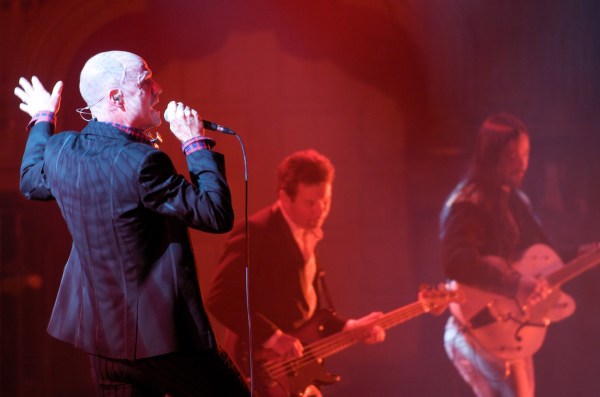
If one nation ever identified with one band, it would be Canada and The Tragically Hip. Up here in the Great White North, one can’t even mention the band without the word “iconic” spilling out. And, when iconic is defined as “a representative symbol or worthy of veneration” – well, as a Canadian, all I can say is – the label fits. I went on about why this was way back in 2016 when the Tragically Hip did their farewell concert in Kingston, Ontario. Just 14 months later, lead singer Gord Downie was gone, a victim at far-too-young an age of glioblastoma – a deadly form of brain cancer.

If you are at all curious about how a bond can build between a nation and a band, I would highly recommend diving into the new Prime Video docuseries, The Tragically Hip: No Dress Rehearsal. Directed by Gord’s brother, Mike Downie, it’s a 256-minute, 4 part love story to a band. A who’s who of famous Canadian Hip fans, including Dan Ackroyd, Jay Baruchel, Will Arnett and even our Prime Minister, Justin Trudeau, go on about the incredible connection between the band and our nation.

But, like all love stories, there is bitter and sweet here. Over their 32-year history as Canada’s favorite band, there were rough patches. Mike Downie interviews the remaining 4 band members and pulls no punches when it comes to talking about one particularly tense time – from 2009 to 2014 – when the band was barely communicating with each other.

Most Canadians had no idea there was “Trouble at the Henhouse” (the name of the Hip’s 6th album). As George Stromboulopoulos, a Canadian journalist who interviewed the band more than once, said, “”There are a couple of things that you can’t tell the truth about in this country, and one of the things you can’t tell the truth about in the country is that the guys in the Tragically Hip probably didn’t get along as often as everybody said they did.” 

As I watched the series, I couldn’t help but think about the strange nature of band identities and how they play out, both internally and externally. How and why do we find part of our identities in a rock band, and what happens on the inside when the band breaks up? That didn’t happen to the Hip, but that’s possibly because Downie received his terminal diagnosis in 2015 and he wanted to do one last tour.

In the Panther, the campus newspaper of California’s Chapman University, reporter Megan Forrester explores why bands break up. She points to a psychological theory as the possible culprit: “Psychology professor Samantha Gardner told The Panther that friction and an ultimate dissolution of a group happens due to social identity theory. This theory suggests that any group that people associate themselves with, whether that is an extracurricular club, volunteer organization or a band, helps boost their self-esteem and reduce uncertainty in one’s identity. 

“But once the values of the group change course, Gardner said that is when tensions rise. 

‘The group members may have thought, ‘I don’t think this identity of being a member of this group is really who I am or it’s not what I envisioned,’ Gardner said.”

The issue with bands is that evolution of values and identities happens at different times to different members. We, as the public, find it hard to identify with 4 or 5 individuals equally. We naturally elevate one or – at the most – two members of the band to star status. This is typically the lead singer. That can be a tough pill to swallow for the rest of the band who play just beyond the reach of the spotlight. That is, in part, what happened to the Tragically Hip. When you have a mesmerizing front man, it’s hard not to focus on him. Gord Downie was moving at a different speed than the rest of the Hip.

But an equally interesting thing is what happens to the fans of the band. Not only do the members get their identify from the band. If we follow a band, we also get part of our identity from that band. And when that band breaks up, we lose a piece of ourselves. We still haven’t forgiven Yoko Ono for breaking up the Beatles, and that supposedly happened (we should blame social identity theory rather than Yoko) over 50 years ago.

I think the Tragically Hip also knew Canada would never forgive them if they broke up. We needed to believe in 5 guys who were happy to be famous in Canada, who more than once flipped US-based stardom the bird (including getting high before their SNL debut) and who banded together to create great music for the world – but especially Canada – to enjoy. 

There’s nothing new about us common folks looking to the famous to help define ourselves. We’ve been doing that for centuries. But there is a difference when we look to get that identity from a group rather than an individual. Canada has lots of stars – singular – that we could identify with: Celine Dion, Drake, Justin Bieber. So why did 5 guys from Kingston, Ontario become the ones we chose as our identity badge? We did we resist the urge to look for an individual star and chose the Tragically Hip instead?

I think part of it was what I wrote before: the Tragically Hip appealed to Canadians because they stayed in Canada and gained a very Canadian type of stardom. But I also think Canadians liked the idea of identifying with a group rather than an individual. That was a good fit for our shared values.

Let’s do a little “napkin-back” testing of that hypothesis. If Canadians looked to a band for identity, would a more individualistic culture – like the U.S. – be more likely to look for that identify in individuals?

Given U.S. domination of pretty much every type of culture, you would expect it to also dominate a list of the greatest bands of all time. But a little research on Google will tell you that of a typical Top 10 list of the Greatest Bands, about two-thirds are British. There are a few that are American, but they are typically named with the same formula: Lead Singer + the Name of Band. For example: Prince and the Revolution, Joan Jett and the Blackhearts, Bruce Springsteen and the E Street Band. There are exceptions, but I was surprised how few really famous US based bands have names that are not tied to a person or persons in the band (Nirvana and The Eagles are two that come to mind).

Let’s try another angle: as our culture becomes more individualistic – as it undoubtedly has over the last 3 decades – would our search for identity follow a similar trend? There again, the proof seems to be in our playlists. If you look for the greatest hits of the last 20 years, you will find very few bands in there. Maroon 5 seems to be the only band that creeps into the top 20.

Be that as it may, I recommend taking 256 minutes to learn what Canadians already know: The Tragically Hip kicked ass!

Can Media Move the Overton Window?

I fear that somewhere along the line, mainstream media has forgotten its obligation to society.

It was 63 years ago, (on May 9, 1961) that new Federal Communications Commission Chair Newton Minow gave his famous speech, “Television and the Public Interest,” to the convention of the National Association of Broadcasters.

In that speech, he issued a challenge: “I invite each of you to sit down in front of your own television set when your station goes on the air and stay there, for a day, without a book, without a magazine, without a newspaper, without a profit and loss sheet or a rating book to distract you. Keep your eyes glued to that set until the station signs off. I can assure you that what you will observe is a vast wasteland.”

Minow was saying that media has an obligation to set the cultural and informational boundaries for society. The higher you set them, the more we will strive to reach them. That point was a callback to the Fairness Doctrine, established by the FCC in 1949. The policy required that “holders of broadcast licenses to present controversial issues of public importance and to do so in a manner that fairly reflected differing viewpoints.” The Fairness Doctrine was abolished by the FCC in 1987.

What Minow realized, presciently, was that mainstream media is critically important in building the frame for what would come to be called, three decades later, the Overton Window. First identified by policy analyst Joseph Overton at the Mackinaw Center for Public Policy, the term would posthumously be named after Overton by his colleague Joseph Lehman.

The term is typically used to describe the range of topics suitable for public discourse in the political arena. But, as Lehman explained in an interview, the boundaries are not set by politicians: “The most common misconception is that lawmakers themselves are in the business of shifting the Overton Window. That is absolutely false. Lawmakers are actually in the business of detecting where the window is, and then moving to be in accordance with it.

I think the concept of the Overton Window is more broadly applicable than just within politics. In almost any aspect of our society where there are ideas shaped and defined by public discourse, there is a frame that sets the boundaries for what the majority of society understands to be acceptable — and this frame is in constant motion.

Again, according to Lehman,  “It just explains how ideas come in and out of fashion, the same way that gravity explains why something falls to the earth. I can use gravity to drop an anvil on your head, but that would be wrong. I could also use gravity to throw you a life preserver; that would be good.”

Typically, the frame drifts over time to the right or left of the ideological spectrum. What came as a bit of a shock in November of 2016 was just how quickly the frame pivoted and started heading to the hard right. What was unimaginable just a few years earlier suddenly seemed open to being discussed in the public forum.

Social media was held to blame. In a New York Times op-ed written just after Trump was elected president (a result that stunned mainstream media) columnist Farhad Manjoo said,  “The election of Donald J. Trump is perhaps the starkest illustration yet that across the planet, social networks are helping to fundamentally rewire human society.”

In other words, social media can now shift the Overton Window — suddenly, and in unexpected directions. This is demonstrably true, and the nuances of this realization go far beyond the limits of this one post to discuss.

But we can’t be too quick to lay all the blame for the erratic movements of the Overton Window on social media’s doorstep.

I think social media, if anything, has expanded the window in both directions — right and left. It has redefined the concept of public discourse, moving both ends out from the middle. But it’s still the middle that determines the overall position of the window. And that middle is determined, in large part, by mainstream media.

It’s a mistake to suppose that social media has completely supplanted mainstream media. I think all of us understand that the two work together. We use what is discussed in mainstream media to get our bearings for what we discuss on social media. We may move right or left, but most of us realize there is still a boundary to what is acceptable to say.

The red flags start to go up when this goes into reverse and mainstream media starts using social media to get its bearings. If you have the mainstream chasing outliers on the right or left, you start getting some dangerous feedback loops where the Overton Window has difficulty defining its middle, risking being torn in two, with one window for the right and one for the left, each moving further and further apart.

Those who work in the media have a responsibility to society. It can’t be abdicated for the pursuit of profit or by saying they’re just following their audience. Media determines the boundaries of public discourse. It sets the tone.

Newton Minow was warning us about this six decades ago.

Post-mortem of a Donald Trump Sound Bite

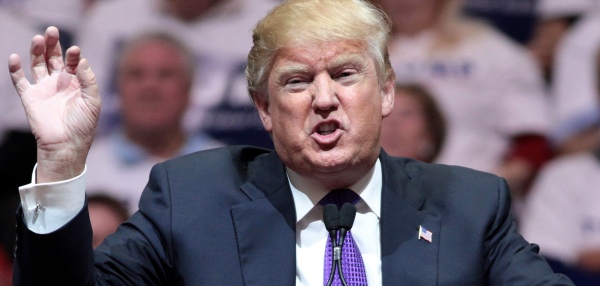
This past weekend, Donald Trump was campaigning in Dayton, Ohio. This should come as news to no one. You’ve all probably seen various blips come across your social media radar. And, as often happens, what Trump said has been picked up in the mainstream press.

Now, I am quite probably the last person in the world that would ever come to Donald Trump’s defense. But I did want to take this one example of how it’s the media, including social media, that is responsible for the distortion of reality that we often see happen.

My first impression of what happened is that Trump promised a retributive bloodbath for any and all opposition if he’s not elected president. And, like many of you, that first impression came through my social media feeds. Joe Biden’s X (formerly Twitter) post said “It’s clear this guy wants another January 6th” Republican Lawyer and founding member of the Lincoln Project George Conway also posted: “This is utterly unhinged.”  

There was also retweeting of ABC coverage featuring a soundbite from Trump that said, “There would be a bloodbath if he is not re-elected in November.” This was conflated with Trump’s decision to open the stump speech with a recording of “Justice for All” by the J6 Choir, made of inmates awaiting trial for their roles in the infamous insurrection after the last election. Trump saluted during the playing of the recording.

To be crystal clear, I don’t condone any of that. But that’s not the point. I’m not the audience this was aimed at.

First of all, Donald Trump was campaigning. In this case, he was making a speech aimed at his base in Ohio, many of whom are auto-workers. And the “bloodbath” comment had nothing to do with armed insurrection. It was Trump’s prediction of what would happen if he wasn’t elected and couldn’t protect American auto jobs from the possibility of a trade war with China over auto manufacturing.

But you would be hard pressed to know that based on what you saw, heard or read on either social media or traditional media.

You can say a lot of derogatory things about Donald Trump, but you can’t say he doesn’t know his base or what they want to hear. He’s on the campaign trail to be elected President of the United State. The way that game is played, thanks to a toxic ecosystem created by the media, is to pick your audience and tell them exactly what they want to hear. The more you can get that message amplified through both social and mainstream media, the better. And if you can get your opposition to help you by also spreading the message, you get bonus points.

Trump is an expert at playing that game. He is the personification of the axiom, “There is no such thing as bad press.”

If we try to pin this down to the point where we can assign blame, it becomes almost impossible. There was nothing untrue in the coverage of the Dayton Rally. It was just misleading due to incomplete information, conflation, and the highlighting of quotes without context. It was sloppy reporting, but it wasn’t illegal.

The rot here isn’t acute. It isn’t isolated to one instance. It’s chronic and systemic. It runs through the entire media ecosystem. It benefits from round after round of layoffs that have dismantled journalism and gutted the platform’s own fact checking and anti-misinformation teams. Republicans, led by House Judiciary Chairman Jim Jordan, are doubling down on this by investigating alleged anti-conservative censorship by the platforms.

I’m pretty sure things won’t get better. Social media feeds are – if anything – more littered than ever with faulty information and weaponized posts designed solely to provoke. So far, management of the platforms have managed to slither away from anything resembling responsibility. And the campaigns haven’t even started to heat up. In the 230 days between now and November 5th, the stakes will get higher and posts will become more inflammatory.

Buckle up. It promises to be a bumpy (or Trumpy?) ride!

Wishful Thinking for 2024

I write this on the first day of 2024. My 2023 went out last night with a whimper. That was intentional. Given the global trauma inflicted on us over the past few years, I felt a muted goodbye was best. And I’d be lying if I said I was looking forward to 2024. I am approaching it with the same enthusiasm as a minefield I have to tiptoe to the other side of.

I never really got celebrating New Year’s. It is literally just another day. In my childhood, many eons ago, New Year’s Eve was significant only because it was the one day a year when we were able to get both potato chips and dip.  If I remember rightly French Onion was our dip of choice. And I got to stay up late. The glow of that perk had dimmed dramatically over the years.

I suppose New Year’s gives us a chance for a global reset, to put the past year behind us and promise to do better in the coming year. It’s like that moment right after you have sorted out your sock drawer, writ large. You go forward swearing that only matched and bundled socks will go there from this point forward. Of course, it’s probably only a matter of days before that first stray Nike athletic sock finds its way there and the portal to the alternative universe of mismatched socks is prised open, allowing them to proliferate in your drawer without restraint.

But still, a fellow can dream, can’t he?

So, in that spirit, I do have a few things I hope take place in 2024. They are not resolutions – more like wishful thoughts.

Less Toxic Social Media

Given that 2024 is a US election year and is promises to be the most bizarre one yet, I hope that social media starts to move away from the cesspool of misinformation it currently is. Digital Anthropologist Giles Crouch (a job title I wish I had pursued 30 years ago) thinks “the invisible hand” (subscription required) will start to move on social media. Recent lawsuits and more restrictive legislation are already impacting the profitability of the main platforms.

But more than that, usage is changing. People under 30 are using social media as a connector less and less, preferring to meet face to face IRL (in Real Life). And the toxic audience (yes, I’m talking about my generation) that made Facebook and X (the former Twitter) such a threat to democracy is aging out. Hopefully new social media players that fill this emerging gap will learn from past mistakes.

World Governments Getting Serious about Climate Change

I hope that 2023 will prove to be the tipping point for dealing with Climate Change, moving it from a right vs left campaign talking point to something that we actually start doing something about.  Here in Canada, I’ve seen a few promising signs. Our federal government has a nasty habit of setting climate targets and then completely ignoring them. The website Climateactiontracker lists our targets as “Almost Sufficient” but our overall action as “Highly Insufficient” (putting us behind the US, which is rated as “Insufficient”).

But after last summer, when much of our country was on fire, I think we might finally be getting some legislation with some teeth in it.  Canada just unveiled plans to phase out sales of gas-powered cars by 2035. We just have to make our government stick to that plan.

Make Conscientious Capitalism a Real Thing

My final hope is that this year, we start to find a way to make free markets, consumerism and capitalism work for a sustainable society rather than against it. History has proven that there is no more efficient engine for innovation than capitalism, but it has also shown that economist Milton Friedman was right: the only thing corporations care about (or should care about) is maximizing profit.

Maybe this year, we can find a way to make good behavior more profitable. And that puts the onus on us, the market. We have to make our purchase decisions with our future in mind. Ultimately, that future will follow the money and for that reason, the buck always stops with us. In a capitalist society, no one is more powerful than the consumer. We have to wield that power wisely.

It’s 2024. Good luck. I think we’ll need it.

(Image – Laura Billings – Creative Commons License)