Being in the Room Where It Happens

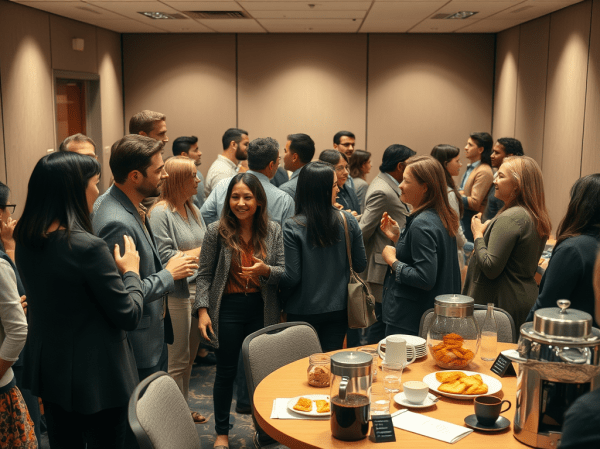
I spent the past weekend attending a conference that I had helped to plan. As is now often the case, this was a hybrid conference; you could choose to attend in person or online via Zoom. Although it involved a long plane ride, I choose to attend in person. It could be because – as a planner – I wanted to see how the event played out. Also, it’s been a long time since I attended a conference away from my home. Or – maybe – it was just FOMO.

Whatever the reason, I’m glad I was there, in the room.

This was a very small conference planned on a shoestring budget. We didn’t have money for extensive IT support or AV equipment. We were dependent solely on a laptop and whatever sound equipment our host was able to supply. We knew going into the conference that this would make for a less-than-ideal experience for those attending virtually. But – even accounting for that – I found there was a huge gap in the quality of that experience between those that were there and those that were attending online. And, over the duration of the 3-day conference, I observed why that might be so.

This conference was a 50/50 mix of those that already knew each other and those that were meeting each other for the first time. Even those who were familiar with each other tended to connect more often via a virtual meeting platform than in a physical meeting space. I know that despite the convenience and efficiency of being able to meet online, something is lost in the process. After the past two days, carefully observing what was happening in the room we were all in, I have a better understanding of what that loss might be – it was the vague and inexact art of creating a real bond with another person.

In that room, the bonding didn’t happen at the speaking podium and very seldom happened during the sessions we so carefully planned. It seeped in on the sidelines, over warmed-over coffee from conference centre urns, overripe bananas and the detritus of the picked over pastry tray. The bonding came from all of us sharing and digesting a common experience. You could feel a palpable energy in the room. You could pick up the emotion, read the body language and tune in to the full bandwidth of communication that goes far beyond what could be transmitted between an onboard microphone and a webcam.

But it wasn’t just the sharing of the experience that created the bonds. It was the digesting of those experiences after the fact. We humans are herding animals, and that extends to how we come to consensus about things we go through together. We do so through communication with others – not just with words and gesture, but also through the full bandwidth of our evolved mechanisms for coming to a collective understanding. It wasn’t just that a camera and microphone couldn’t transmit that effectively, it was that it happened where there was no camera or mic.

As researchers have discovered, there is a lived reality and a remembered reality and often, they don’t look very much alike. The difference between the effectiveness of an in-person experience and one accessed through an online platform shouldn’t come as a surprise to us. This is due to how our evolved sense-making mechanisms operate. We make sense of reality both internally, through a comparison with our existing cognitive models and externally, through interacting with others around us who have shared that same reality. This communal give-and-take colors what we take with us, in the form of both memories and an updated model of what we know and believe. When it comes to how humans are built, collective sense making is a feature, not a bug.

I came away from that conference with much more than the content that was shared at the speaker dais. I also came away with a handful of new relationships, built on sharing an experience and, through that, laying down the first foundations of trust and familiarity. I would not hesitate to reach out to any of these new friends if I had a question about something or a project I felt they could collaborate on.

I think that’s true largely because I was in the room where it happened.
Saying Goodbye to our Icons

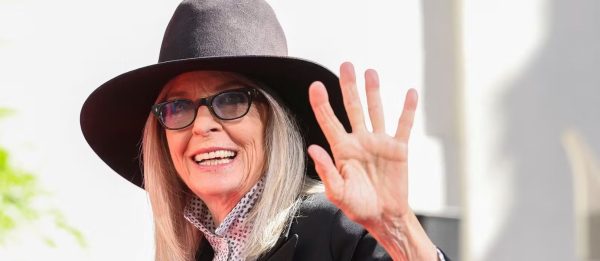
It’s been a tough couple of months for those of us who grew up in the 60s and 70s. Last month, we had to say goodbye to Robert Redford, and then, just over a week ago, we bid farewell to Diane Keaton.

It’s always sobering to lose those cultural touchstones of our youth. It brings us to forcibly reckon with our own mortality. Our brains play that maudlin math, “I remember them being young when I was young, so they can’t be that much older than me.”  We tend to conflate the age difference between us and those we watch when we’re young, so when they’re gone, we naturally wonder how much time we have left.

This makes it hard to lose any of the icons of our youth, but these two – for me – felt different: sadder, more personal. It was like I had lost people I knew.

I know there are many who swooned for Bobby Redford. But I know first-hand that an entire generation of male (and possibly female) adolescents had a crush on Diane Keaton’s Annie Hall. Her breakout role was one of those characters that carved a permanent place in our psyche. “Annie Hall-esque” became a descriptor we could all immediately understand – quirky, cute, with insecurities that were rendered as charming. We all wanted to be her port in a storm.

Diane Keaton and Robert Redford seemed like people we could know, given the chance. If circumstances ever caused our paths to cross, we felt we could have a real conversation with them. We could talk about meaningful things and perhaps connect on a personal level. There was depth below the celebrity and the heart of a real person beating there. We may have just known them through a screen – but they used those platforms to build a connection that felt real and human.

I wondered what it was about these two – in particular – that made the connection real. It was something that went beyond their talent, although their talent was undeniable. One only has to watch an example of Keaton’s master acting with Al Pacino in The Godfather: Part Two. After a visit with her estranged children, she is being pushed out the door before ex-husband Michael Corleone comes home, but he walks in while she’s still standing in the doorway. No words are said between the two for almost a minute. Everything is conveyed just by their expressions. It’s a scene that still rips my heart out.

It was also not about celebrity. In fact, Redford and Keaton both eschewed the life of a celebrity. Robert Redford found his life away from Hollywood in the ranch lands of Montana and Diane Keaton – well – in typical Keaton fashion, she just kind of ignored being a celebrity. In an interview with Vanity Fair in 1985, she said, ““I think I like to deny it (being famous). It suits me to deny it. It’s more comfortable for me to deny it, but I suppose that’s another one of my problems. Look, I don’t think it’s such a big deal. I don’t think I’m that big a thing.”

So, if it wasn’t their talent or their celebrity status, what was it about Keaton and Redford that forged such a strong bond with many of us? I think it may have been three things.

First, it was about consistency. They were judicious about what they shared with us but what they did choose to share was rock solid and reliable. Whatever was at the core of who they were – it shone through their performances. There was a foundation to each Redford and Keaton performance that was both essential and relatable. You couldn’t imagine anyone else playing these roles. 

The authenticity of their humanness was another factor. Robert Redford’s acting style was restrained and typically underplayed, but his charismatic good looks sometimes got in the way of the depth and vulnerability he tried to bring to his performances. He famously tried out for the title role in 1967’s The Graduate (which went to Dustin Hoffman) but was turned down by director Mike Nichols because he couldn’t see Redford as a believable “loser.” “Let’s put it this way,” Nichols reportedly said, “Have you ever struck out with a girl?” “What do you mean?” Redford replied.

Keaton was a little different. She embodied vulnerability in every role she played. She wasn’t perfect, and that was the point. We loved her imperfections. The characters Diane Keaton played were neither aspirational nor cautionary, they were revelatory. We connected with them, because we could see ourselves in them.

Finally, we knew there was depth to both Diane Keaton and Robert Redford. They believed passionately in things and weren’t afraid to speak out on behalf of those beliefs. I would have loved to have a conversation with either of them about serious things, because I feel I would have walked away with a perspective worth discovering.

It’s sadly ironic that for two icons who shared so much screen time with us, they never shared it with each other. They were tentatively scheduled to appear in a 2012 Holiday comedy but it never made it to the screen.

I will miss having both Robert Redford and Diane Keaton in my world. They made it better.

My 1000th Post – and My 20 Year Journey

Note: This week marks the 1000th post I’ve written for MediaPost. For this blog, all of those posts are here, plus a number that I’ve written for other publications and exclusively for Out of My Gord. But the sentiments here apply to all those posts. If you’re wondering, I’ve written 1233 posts in total.

According to the MediaPost search tool, this is my 1000th post for this publication. There are a few duplicates in there, but I’m not going to quibble. No matter how you count them up, that’s a lot of posts.

My first post was written on August 19th, 2004. Back then I wrote exclusively for the emerging search industry. Google was only 6 years old.  They had just gone public, with investors hoping to cash in on this new thing called paid search. Social media was even greener. There was no Facebook. Something called Myspace had launched the year before.

In the 20 years I’ve written for MediaPost, I’ve bounced from masthead to masthead. My editorial bent evolved from being Search industry specific to eventually find my sweet spot, which I found at the intersection of human behavior and technology.

It’s been a long and usually interesting journey. When I started, I was the parent of two young children who I dragged along to industry events, using the summer search conference in San Jose as an opportunity to take a family camping vacation. I am now a grandfather, and I haven’t been to a digital conference for almost 10 years (the last being the conferences I used to host and program for the good folks here at MediaPost).

When I started writing these posts, I was both a humanist and a technophile. I believed that people were inherently good, and that technology would be the tool we would use to be better. The Internet was just starting to figure out how to make money, but it was still idealistic enough that people like me believed it would be mostly a good thing. Google still had the phrase “Don’t be Evil” as part of its code of conduct.

Knowing this post was coming up, I’ve spent the past few months wondering what I’d write when the time came. I didn’t want it to be yet another look back at the past 20 years. The history I have included I’ve done so to provide some context.

No, I wanted this to be what this journey has been like for me. There is one thing about having an editorial deadline that forces you to come up with something to write about every week or two. It compels you to pay attention. It also forces you to think. The person I am now – what I believe and how I think about both people and technology – has been shaped in no small part by writing these 1000 posts over the past 20 years.

So, If I started as a humanist and technophile, what am I now, 20 years later? That is a very tough question to answer. I am much more pessimistic now. And this post has forced me to examine the causes of my pessimism.

I realized I am still a humanist. I still believe that if I’m face to face with a stranger, I’ll always place my bet on them helping me if I need it. I have faith that it will pay off more often than it won’t. If anything, we humans may be just a tiny little bit better than we were 20 years ago: a little more compassionate, a little more accepting, a little more kind.

So, if humans haven’t changed, what has? Why do I have less faith in the future than I did 20 years ago? Something has certainly changed. But what was it, I wondered?

Coincidentally, as I was thinking of this, I was also reading the late Philip Zimbardo’s book – The Lucifer Effect: Understanding How Good People Turn Evil. Zimbardo was the researcher who oversaw the Stanford Prison Experiment, where ordinary young men were randomly assigned roles as guards or inmates in a makeshift prison set up in a Stanford University basement. To make a long story short – ordinary people started doing such terrible things that they had to cut the experiment short after just 6 days.

 Zimbardo reminded me that people are usually not dispositionally completely good or bad, but we can find ourselves in situations that can push us in either direction. We all have the capacity to be good or evil. Our behavior depends on the environment we function in. To use an analogy Zimbardo himself used, it may not be the apples that are bad. It could be the barrel.

So I realized, it isn’t people who have changed in the last 20 years, but the environment we live in. And a big part of that environment is the media landscape we have built in those two decades. That landscape looks nothing like it did back in 2004.  With the help of technology, we have built an information landscape that doesn’t really play to the strengths of humanity. It almost always shows us the worst side of ourselves. Journalism has been replaced by punditry. Dialogue and debate have been pushed out of the way by demagoguery and divisiveness.

So yes, I’m more pessimistic now that I was when I started this journey 20 years ago. But there is a glimmer of hope here. If people had truly changed, there is not a lot we can do about that. But if it’s the media landscape that’s changed, that’s a different story. Because we built it, we can also fix it.

It’s something I’ll be thinking about as I start a new year.