AI, Creativity and the Last Beatle’s Song

I have never been accused of being a Luddite. Typically, I’m on the other end of the adoption curve – one of the first to adopt a new technology. But when it comes to AI, I am stepping forward gingerly.

Now, my hesitancy notwithstanding, AI is here to stay. In my world, it is well past the tipping point from a thing that exists solely in the domain to tech to a topic of conversation for everyone, from butchers to bakers to candlestick makers. Everywhere I turn now I see those ubiquitous two letters – AI. That was especially true in the last week, with the turmoil around Sam Altman and the “is he fired/isn’t he” drama at OpenAI.

In 1991 Geoffery Moore wrote the book Crossing the Chasm, looking at how technologies are adopted. He explained that it depends on the nature of the technology itself. If it’s a continuation of technology we understand, the adoption follows a fairly straight-forward bell curve through the general population.

But if it’s a disruptive technology – one that we’re not familiar with – then adoption plots itself out on an S-Curve. The tipping point in the middle of that curve where it switches from being skinny to being fat is what he called the “chasm.” Some technologies get stuck on the wrong side of the chasm, never to be adopted by the majority of the market.  Think Google Glass, for example.

There is often a pattern to the adoption of disruptive technologies (and AI definitely fits this description).  To begin with, we find a way to adapt it and use it for the things we’re already doing. But somewhere along the line, innovators grasp the full potential of the technology and apply it in completely new ways, pushing capabilities forward exponentially. And it’s in that push forward where all the societal disruption occurs. Suddenly, all the unintended consequences make themselves known.

This is exactly where we seem to be with AI. Most of us are using it to tweak the things we’ve always done. But the prescient amongst us are starting to look at what might be, and for many of us, we’re doing so with a furrowed brow. We’re worried, and, I suspect, with good reason.

As one example, I’ve been thinking about AI and creativity. As someone who has always dabbled in creative design, media production and writing, this has been top of mind for me. I have often tried to pry open the mystic box that is the creative process.

There are many, creative software developers foremost amongst them, that will tell you that AI will be a game changer when it comes to creating – well – just about anything.

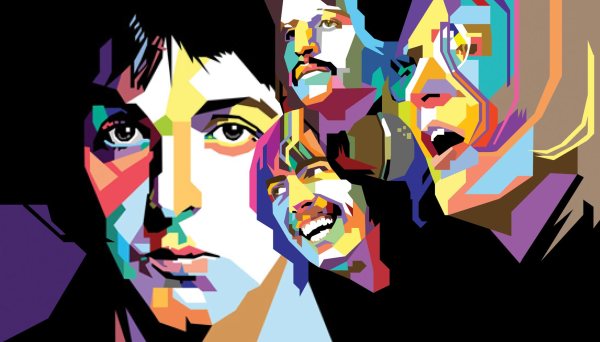
Or, in the case of the last Beatle single to be released, recreating anything. Now and Then, the final Beatles song featuring the Fab Four, was made possible by an AI program created by Peter Jackson’s team for the documentary Get Back. It allowed Paul McCartney, Ringo Starr and their team of producers (headed by George Martin’s son Giles) to separate John Lennon’s vocals from the piano background on a demo tape from 1978.

One last Beatle’s song featuring John Lennon – that should be a good thing – right?  I guess. But there’s a flip side to this.

Let’s take writing, for example. Ask anyone who has written something longer than a tweet or Instagram post. What you start out intending to write is never what you end up with. Somehow, the process of writing takes its own twists and turns, usually surprising even the writer. Even these posts, which average only 700 to 800 words, usually end up going in unexpected directions by the time I place the final period.

Creativity is an iterative process and there are stages in that process. It takes time for it all to  play out. No matter how good my initial idea is, if I simply fed it in an AI black box and hit the “create” button, I don’t know if the outcome would be something I would be happy with.

“But,” you protest, “what about AI taking the drudgery out of the creative process? What if you use it to clean up a photo, or remove background noise from an audio recording (a la the Beatles single). That should free up more time and more options for you to be creative, right?”

That’s promise is certainly what’s being pitched by AI merchants right now. And it makes sense. But it only makes sense at the skinny end of the adoption curve. That’s where we’re at right now, using AI as a new tool to do old jobs. If we think that’s where we’re going to stay, I’m pretty sure we’re being naïve.

I believe creativity needs some sweat. It benefits from a timeline that allows for thinking, and rethinking, over and over again. I don’t believe creativity comes from instant gratification, which is what AI gives us. It comes from iteration that creates the spaces needed for inspiration.

Now, I may be wrong. Perhaps AI’s ability to instantly produce hundreds of variation of an idea will prove the proponents right. It may unleash more creativity than ever. But I still believe we will lose an essential human element in the process that is critical to the act of creation.

Time will tell. And I suspect it won’t take very long.

(Image – The Beatles in WPAP – wendhahai)

In Defense of SEO

Last week, my social media feeds blew up with a plethora (yes – a plethora!) of indignant posts about a new essay that had just dropped on The Verge.

It was penned by Amanda Chicago Lewis and it was entitled: “The People that Ruined the Internet”

The reason for the indignation? Those “people” included myself, and many of my past colleagues. The essay was an investigation of the industry I used to be in. One might even call me one of the original pioneers of said industry. The intro was:

“As the public begins to believe Google isn’t as useful anymore, what happens to the cottage industry of search engine optimization experts who struck content oil and smeared it all over the web? Well, they find a new way to get rich and keep the party going.”

Am I going to refute the observations of Ms. Lewis?

No, because they are not lies. They are observations. And observations happen through the lens the observer uses to observe. What struck me is the lens Lewis chose to see my former industry through, and the power of a lens in media.

Lewis is an investigative journalist. She writes exposes. If you look at the collection of her articles, you don’t have to scroll very far before you have seen the words “boondoggle”, “hustler”, “lies”, “whitewashing”, and “hush money” pop up in her titles. Her journalistic style veers heavily towards being a “hammer”, which makes all that lie in her path “nails.”

This was certainly true for the SEO article. She targeted many of the more colorful characters still in the SEO biz and painted them with the same acerbic, snarky brush. Ironically, she lampoons outsized personalities without once considering that all of this is filtered through her own personality. I have never met Lewis, but I suspect she’s no shrinking violet. In the article, she admits a grudging admiration for the hustlers and “pirates” she interviewed.

Was that edginess part of the SEO industry? Absolutely. But contrary to the picture painted by Lewis, I don’t believe that defined the industry. And I certainly don’t believe we ruined the internet. Google organic search results are better than they were 10 years ago. We all have a better understanding of how people actually search and a good part of that research was done by those in the SEO industry (myself included). The examples of bad SEO that Lewis uses are at least 2 decades out of date.

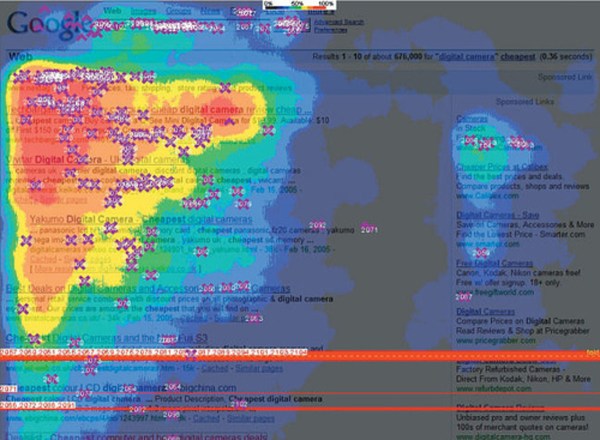
I think Lewis, and perhaps others of her generation, suffer from “rosy retrospection” – a cognitive bias that automatically assumes things were better yesterday. I have been searching for the better part of 3 decades and – as a sample of one – I don’t agree. I can also say with some empirical backing that the search experience is quantitatively better than it was when we did our first eye tracking study 20 years ago. A repeat study done 10 years ago showed time to first click had decreased and satisfaction with that click had increased. I’m fairly certain that a similar study would show that the search experience is better today than it was a decade ago. If this is a “search optimized hellhole”, it’s much less hellish than it was back in the “good old days” of search.

One of the reasons for that improvement is that millions of websites have been optimized by SEOs (a label which, by the way Amanda, has absolutely nothing to do with wanting to be mistaken for a CEO) to unlock unindexable content, fix broken code, improve usability, tighten up and categorize content and generally make the Internet a less shitty and confusing place. Not such an ignoble pursuit for “a bunch of megalomaniacal jerks (who) were degrading our collective sense of reality because they wanted to buy Lamborghinis and prove they could vanquish the almighty algorithm.”

Amanda Chigaco Lewis did interview those who sat astride the world of search providers and the world of SEO: Danny Sullivan (“angry and defensive” – according to Lewis), Barry Schwartz (“an unbelievably fast talker”), Duane Forrester (a “consummate schmoozer”) and Matt Cutts (an “SEO celebrity”). Each tried to refute her take that things are “broken” and the SEOs are to blame, but she brushed those aside, intent on caricaturing them as a cast of characters from a carnival side show.  Out of the entire scathing diatribe, one scant paragraph grudgingly acknowledges that maybe not all SEO is bad. That said, Lewis immediately spins around and says that it doesn’t matter, because the bad completely negates the good.

Obviously, I don’t agree with Lewis’s take on the SEO industry. Maybe it’s because I spent the better part of 20 years in the industry and know it at a level Lewis never could. But what irritates me the most is that she made no attempt to go beyond taking the quick and easy shots. She had picked her lens through which she viewed SEO before the very first interview and everything was colored by that lens. Was her take untrue? Not exactly. But it was unfair. And that’s why reporters like Lewis have degraded journalism to the point where it’s just clickbait, with a few more words thrown in.

Lewis gleefully stereotypes SEOs as “content goblin(s) willing to eschew rules, morals, and good taste in exchange for eyeballs and mountains of cash.” That’s simply not true. It’s no more true than saying all investigative journalists are “screeching acid-tongued harpies who are hopelessly biased and cover their topics with all the subtlety of a flame-thrower.”

P.S.  I did notice the article was optimized for search, with keywords prominently shown in the URL. Does that make the Verge and Lewis SEOs?

Getting from A to Zen

We live in a Type A world. And sometimes, that’s to our detriment.

According to one definition, Type A is achievement oriented, competitive, fast-paced and impatient.

All of that pretty much sums up the environment we live in. But you know what’s hard to find in a Type A world? Your Zen.

I know what you’re thinking — “I didn’t peg Gord for a Zen-seeking kinda guy.” And you’re mostly right. I’m not much for meditation. I’ve tried it — it’s not for me. I’ll be honest. It feels a little too airy-fairy for my overly rational brain.

But I do love cutting the grass. I also love digging holes, retouching photos in Photoshop and cleaning pools. Those are some of the activities where I can find my Zen.

For best-selling author Peggy Orenstein, she found her Zen during COVID – shearing sheep. She shares her journey in her new book, “Unraveling: What I Learned About Life While Shearing Sheep, Dyeing Wool, and Making the World’s Ugliest Sweater.” Orenstein has a breezy, humorous, and self-deprecating style, but there are some deep thoughts here.

In reading the book, I learned it wasn’t the act of shearing where Peggy found her Zen. That’s because sheep shearing is really hard work. You can’t let your mind wander as you wrestle 200 to 300 pounds of Ovis aries, holding a buzzing, super-sharp set of sheers while trying to give it a haircut.

As Orenstein said in a recent interview, “Imagine you were in a ballet with Nureyev and nobody told you the steps. That was what it felt like to reach shearing sheep, you know, for the first time.”

No. You might find a lot of things in that activity, but Zen isn’t likely to be one of them. Orenstein finds her Zen in a less terrifying place, cleaning poop out of the newly shorn wool. She did it the way it’s been done for centuries, in a process called carding. While she carded the wool, she would “Facetime” her dad, who has dementia.

In the interview, she said, “You know, I could just slow down. These ancient arts are slow. They’re very slow and (I would) sit with him and just be next to him and have that time together and sing.”

When I heard her say that in the interview, that hit me. I said, “I have to read this book.” Because I got it. That slowing down, that inner connection, the very act of doing something that seems mindless but isn’t – because doing the act creates the space for your mind to think the thoughts it normally doesn’t have time to do. All that stuff is important.

To me, that’s my Zen.

Now, unless you’re a Mahayana Buddhist, Zen is probably nothing more than a buzzword that made its way westward into our zeitgeist sometime in the last century. I am certainly not a Buddhist, so I am not going to dare tell you the definitive meaning of Zen. I am just going to tell you what my version is.

For me, Zen is a few things:

I think these Zen acts have to contribute to the world in some small way. There has to be something at the end that gives you a sense of accomplishment – the feeling of a job well done.

Maybe that’s why meditation is not for me. There is not a tangible reward at the end. But you can look at a pile of newly shorn fleece or a lawn neatly delineated with the tire tracks of your lawnmower.

The brain must be engaged in a Zen task, but not too much. It needs some space to wander. Repetition helps. As you do the task, your mind eventually shifts to auto-pilot mode. And that’s when I find Zen, as my mind is given the license to explore.

I think this is where step one is important – whatever you’re doing has to be useful enough that you don’t feel that you’re wasting time doing it.

Finally, it helps if your Zen tasks are done in a place where the Type A world doesn’t intrude. You need the space to push back interruption and let your mind wander freely.

I realize there are some of you who will immediately connect with what I’m saying, and others who won’t have a clue. That’s okay.

I think that’s the magic of Zen: it’s not for everyone. But for those of us who understand how important it is, we sometimes need a little reminder to sometimes go seek it. Because in this Type A world, it’s becoming harder to find.

When the News Hits Home

My, how things have changed.

My intention was to write a follow up to last week’s post about Canada’s Bill C-18 and Meta’s banning of news on Facebook. I suppose this is a follow up of sorts. But thanks to Mother Nature – that ofttimes bully – that story was pushed right out of the queue to be replaced with something far more tragic and immediate.

To me, anyway.

I live in Kelowna. Chances are you’ve heard about my home in the last few days. If you haven’t, I can tell you that when I look out my window, all I can see is thick smoke. Which may be a good thing. Last Friday, when I could see, I spent the entire evening watching West Kelowna, across Okanagan Lake from my home, burn in the path of the oncoming McDougall Creek Wildfire. As the flames would suddenly leap towards the sky, you knew that was someone’s home being ignited.

We don’t know how many homes have been lost. The fire has been too active for authorities to have the time to count. We have firefighters and first responders pouring in from around our province to help. . Our Air Quality Index is 11 on a scale of 10, as bad as it can get. Thousands are out of their home. More thousands have their things packed by the door, ready to leave at a moment’s notice. We’re one of those.

But that’s enough about the fire. This post is about our weird relationship with the news.

When something like this happens, you have a very real, very visceral need to know what’s going on. For those of us that live here in British Columbia, the news has hit home in a way we could never imagine. A few posts ago, I said it might be healthier for me to ignore the news, because it’s always alarming and very seldom relevant to me. Well, those words are now coming back to haunt me.

This disaster has thrown our reliance on Facebook for new into stark relief. This last Friday, Canada’s Transportation Minster, Pablo Rodriguez, asked Meta to reverse its current ban on news, “We’ve seen that, throughout this emergency, Canadians have not had access to the crucial information they need. So, I ask Meta to reverse its decision, allow Canadians to have access to news on their platforms.”

But there’s another dimension to this that’s a bit more subtle yet even more frightening. It goes to the heart of how we handle crisis. I think you necessarily must “zoom in,” performing some type of terrible triage in your mind to be able to imagine the unimaginable. As the winds shift the fire away from your home, there’s relief. But other homes now lie in the path of the fire. In your head, you know that, but emotionally you can’t help but feel a lift. It’s not noble, but it’s human.

So let’s “zoom out” – a lot. We’re not the only ones this is happening to. This is a global crisis. Twenty-six thousand people are evacuated on the Spanish island of Tenerife. A friend of mine, who’s an airline pilot, was one week ago volunteering to fly people out of Maui who had lost their homes in the tragic Lahaina fire.

Take a look at Nasa’s FIRMS (Fire Information for Resource Management) website, which gives a global map of all hotspots from wildfires burning. I’ve set this link to wildfire activity in the last 7 days.

Scary as hell, right?

But can we actually process that, in a way that lets us move forward and start coping with this massive issue? Is it enough to change our behaviors in the way we must to finally start addressing climate change?

In a recent article on BBC.com, Richard Fisher talks about “Construal level theory” – which says that the greater the psychological distance there is between the news and your life, the less likely it is to make you change your behavior. For me, the psychological distance between myself and climate change is roughly 1 kilometer (just over half a mile) as the crow flies. That’s how far it is from my house to the nearest evacuation alert area.

It doesn’t get much closer than that.  But will we change? Will anything change?

I’m not so sure. We’ve been through this before. Exactly 20 years ago, the Okanagan Mountain wildfire raged through Kelowna, displacing over 30,000 people and destroying 239 homes. It was a summer much like this, at the time the driest summer on record. This year, we have smashed that record, as we have many times since that fire. Once we picked up, rebuilt our homes and got back to life, nothing really changed.

And now, here we are again. Let’s hope that this time is different.

How Canada is Killing its News Industry

In Canada, an interesting game of brinkmanship is happening. To help bring you up to speed, here are the Cole’s notes:

  • Like everywhere in the world, Canada’s news outlets are starving for revenue. Advertising is drying up, as more budget moves online.
  • In an ill-advised attempt to shore up the Canadian News industry, the federal government passed bill C-18, the Online News Act, which says that Facebook, Google and other tech giants must pay news organizations when someone comes to a web story through a link on one of their platforms.
  • Meta said – basically – WTF? We’re sending you traffic. You want us to pay for that? Fine, we’ll shut off that traffic.

Back in June, Meta posted this notice:

“In order to comply with the Online News Act, we have begun the process of ending news availability in Canada. These changes start today, and will be implemented for all people accessing Facebook and Instagram in Canada over the course of the next few weeks.”

Those changes started stripping news from our social media feeds in the last few weeks. I haven’t seen one news item on my Facebook feed in the last week.

 If you’re confused, you have a lot of company north of the 49th. Logic seems to be totally missing from this particular legislative hammer toss from Justin Trudeau and his merry band of lawmakers.

If there is any logic, it may be that for many some users, they never bother to click through to the actual story. They apparently get all the news they need from doomscrolling on Facebook.

Michael Geist, the Canadian Research Chair in Internet and E-commerce law at the University of Ottawa, calls the bill a “Lose-Lose-Lose-Lose.” 

For the media outlets that this bill is supposedly protecting, Geist says, “It is difficult to overstate the harm that Bill C-18 will create for the media sector in Canada, with enormous losses that will run into the hundreds of millions of dollars.”

Oops.

Geist details how lobbyists and supporters of the bill were sure Meta was bluffing and would come to the table to negotiate when bidden to do so. A law professor from Carleton University said “I am not worried. The threats they are making, they are doing this all around the world.”

But Meta wasn’t bluffing. And why would they?  When you hold all the cards, you don’t have to bluff. Some news publishers estimate that as much as 50% of their traffic comes from these online channels. A recent study by Maru Public Opinion showed that 26% of Canadians say they get their news from social media sites. For younger age cohorts, this percentage jumps to 35%.

News publishers have now lost that traffic, with no offsetting revenue from Bill C-18 to compensate for it. For a bill that was supposed to save the Canadian news industry, this seems to be hammering nails in the coffin at an alarming rate.

Like Geist said, this is “a cautionary tale for a government that blithely ignored the warning signs, seemed to welcome a fight with the tech companies, and had no Plan B.”

If there are lessons to be learned – or, at least, points to be pondered – in this Canadian debacle, here are two to consider:

This shows that legislators, not just in Canada but around the world, have no idea of the new power dynamics in a digital economy. They still carry the quaint notion they are the power brokers within their borders. But this shows that Meta could care less about the Canadian market. We are a drop in their global revenue bucket. Not only have they not caved in when confronted with the awesome might of the Canadian government, they haven’t even bothered coming back to the table to talk. When the Liberal lawmakers decided to take on Meta, they were taking a knife to a gun fight.

Secondly, I wonder how one third of Canadians will now be informed about what’s happening in the world. With any information sources with even a shred of journalistic integrity stripped from their Facebook and Instagram feeds, who will they be listening to? In a bid for survival, Canada’s news publishers are supposedly launching a desperate campaign to “re-educate” us on how to find the news.

Yeah. We all know how successful “re-education” campaigns are.

Finally, in the irony of ironies, as they squared off against Facebook in this ill-fated battle, Canada’s Liberal government launched a new campaign asking for us to share our thoughts on a “Summer Check-In Survey.”

Their platform of choice for this campaign? Facebook.

It’s All in How You Spin It

I generally get about 100 PR pitches a week. And I’m just a guy who writes a post on tech, people and marketing now and then. I’m not a journalist. I’m not even gainfully employed by anyone. I am just one step removed — thanks to the platform  MediaPost has provided me — from “some guy” you might meet at your local coffee shop.

But still, I get 100 PR pitches a week. Desperation for coverage is the only reason I can think of for this to be so. 99.9999% of the time, they go straight to my trash basket. And the reason they do is that they’re almost never interesting. They are — well, they’re pitches for free exposure.

Now, the average pitch, even if it isn’t interesting, should at least try to match the target’s editorial interest. It should be in the strike zone, so to speak.

Let’s do a little postmortem on one I received recently. It was titled “AI in Banking.” Fair enough. I have written a few posts on AI. Specifically, I have written a few posts on my fear of AI.

I have also written about my concerns about misuse of data. When it comes to the nexus between AI and data, I would be considered more than a little pessimistic. So, something linking AI and banking did pique my interest, but not in a good way. I opened the email.

There, in the first paragraph, I read this: “AI is changing how banks provide personalized recommendations and insights based on enriched financial data offering tailored suggestions, such as optimizing spending, suggesting suitable investment opportunities, or identifying potential financial risks.”

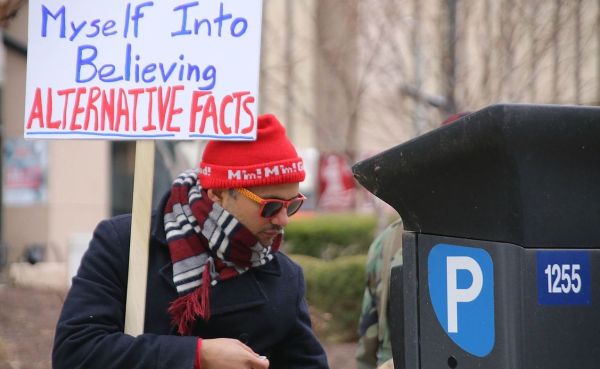
This, for those of you not familiar with “PR-ese,” is what we in the biz call “spin.” Kellyanne Conway once called it — more euphemistically — an alternative fact.

Let me give you an example. Let’s say that during the Tour de France half the Peloton crashes and bicyclists get a nasty case of road rash. A PR person would spin that to say that “Hundreds of professional cyclists discover a new miracle instant exfoliation technique from the South of France.”

See? It’s not a lie, it’s just an alternative fact.

Let’s go on. The second paragraph of the pitch continued: “Bud, a company that specializes in data intelligence is working with major partners across the country (Goldman Sachs, HSBC, 1835i, etc.) to categorize and organize financial information and data so that users are empowered to make informed decisions and gain a deeper understanding of their financial situation.”

Ah — we’re now getting closer to the actual fact. The focus is beginning to switch from the user, empowered to make better financial decisions thanks to AI, to what is actually happening: a data marketplace being built on the backs of users for sale to corporate America.

Let’s now follow the link to Bud’s website. There, in big letters on the home page, you read:

“Turn transactional data into real-time underwriting intelligence

Bud’s AI platform and data visualizations help lenders evaluate risk, reduce losses and unlock hidden revenue potential.”

Bingo. This is not about users, at least, not beyond using them as grist in a data mill. This is about slipping a Trojan Horse into your smartphone in the form of an app and hoovering your personal data up to give big banks an intimate glimpse into not just your finances, but also your thinking about those finances. As you bare your monetary soul to this helpful “Bud,” you have established a direct pipeline to the very institutions that hold your future in their greedy little fingers. You’re giving an algorithm everything it needs to automatically deny you credit.

This was just one pitch that happened to catch my eye long enough to dig a little deeper. But it serves as a perfect illustration of why I don’t trust big data or AI in the hands of for-profit corporations.

And that will continue to be true — no matter how you PR pros spin it.

No News is Good News

I’m trying not to pay too much attention to the news. This is partly because I’m exhausted by the news, and partly because of the sad state of journalism today.

This isn’t just a “me” thing. Almost everyone I talk to says they’re trying to find coping mechanisms to deal with the news. The News industry – and its audience – has gone from being an essential part of a working democracy to something that is actually bad for you.  In an online essay from 4 years, Swiss author Rolf Dobelli equates news consumption to a bad diet:

“(translated from its original German) News is to the mind what sugar is to the body. News is appetizing, easily digestible and at the same time highly harmful. The media feeds us morsels of trivial stories, tidbits that by no means satisfy our hunger for knowledge. Unlike with books and long, well-researched, long articles, there is no saturation when consuming news. We can devour unlimited amounts of messages; they remain cheap sugar candies. As with sugar, the side effects only show up with a delay.”

Rolf Dobelli, 2019

This alarming state is due to the fact that the News (in the US) is supported by advertising, which means it has a ravenous appetite for eyeballs. Because of this, it is highly profitable to make news addictive.

This creates a state, as Dobelli points out, where even though the news is highly inflammatory, like a constantly jangling alarm bell, almost all the news we consume is irrelevant to our daily lives. While the news we watch pushes all our hot buttons, it doesn’t serve a useful purpose. In fact, it does the exact opposite: it leads to chronic mental and physical ill-being and may cause us to start ignoring the warning signs we should be paying attention to.

A study last year (McLaughlin, Gotlieb and Mills) found ties between problematic news consumption and mental ill-being. The study found that 16.5% of 1,100 people polled in an online survey showed signs of “severely problematic” news consumption, which led them to focus less on school, work and family, and contributed to an inability to sleep.

Dobelli’s essay goes even further, pointing a finger at excessive news consumption as the cause of a list of issues including cognitive errors, inhibiting deeper thinking, wasting time, killing creativity, making us more passive and even wiring our brains for addiction in a manner similar to drugs.

All these negative side effects come from chronic stress – a constant and pervasive alarmed state that excessive news consumption puts our brains into. And if you thought Dobelli’s list was scary, wait until you see the impact of chronic stress! It actually attacks the brain by releasing excessive amounts of cortisol and restricting the uptake of serotonin, which can increase inflammation, lead to depression, shrink your hippocampus and impact your memory, make it difficult to sleep and impair your ability to think rationally.

To put a new twist on an old saying, “No news is good news.”

But let’s put aside for a moment the physical and mental toll that news takes on us. Even if none of that were true, our constant diet of bad news can also lead to something known as “alarm fatigue.”

Alarm fatigue is essentially our response to the proverbial boy who calls wolf. After several false alarms, we stop paying attention. And on that one time when we should be paying attention, we are caught with our guard down.

There is one other problem with our news diet: it oversimplifies complex problems into simple sound bites. Thomas Jefferson said, “An educated citizenry is a vital requisite for our survival as a free people.” But when the news abdicates its role as an informer to pursue profit as entertainment, it is no longer educating us. It is pandering to us by stuffing bite sized opinion pieces that reinforce our beliefs – right or wrong. We are never challenged to examine our beliefs or explore the complexity of the wicked problems that confront us. Real journalism has been replaced by profitable punditry.

All this leaves us with a choice. Until the News industry cleans up its act (I’m not holding my breath), you’re likely far better off to ignore it. Or at least, ignore the profit driven platforms that are hungry for eyeballs. Stay informed by turning to books, long articles and true investigative journalism. That’s what I’m going to start doing.

Failing all that, just think about things. I understand it’s good for you.

Why I’m Worried About AI

Even in my world, which is nowhere near the epicenter of the technology universe, everyone is talking about AI And depending on who’s talking – it’s either going to be the biggest boon to humanity, or it’s going to wipe us out completely. Middle ground seems to be hard to find.

I recently attended a debate at the local university about it. Two were arguing for AI, and two were arguing against. I went into the debate somewhat worried. When I walked out at the end of the evening, my worry was bubbling just under the panic level.

The “For” Team had a computer science professor – Kevin Leyton-Brown, and a philosophy professor – Madeleine Ransom. Their arguments seemed to rely mainly on creating more leisure time for us by freeing us from the icky jobs we’d rather not do. Leyton-Brown did make a passing reference to AI helping us to solve the many, many wicked problems we face, but he never got into specifics.

“Relax!” seemed to be the message. “This will be great! Trust us!”

The “Against” Team was comprised of a professor in Creative and Critical Studies – Bryce Traister. As far as I could see, he seemed to be mainly worried about AI replacing Shakespeare. He did seem quite enamored with the cleverness of his own quips.

It was the other “Against” debater who was the only one to actually talk about something concrete I could wrap my head around. Wendy Wong is a professor of Political Science. She has a book on data and human rights coming out this fall. Many of her concerns focused on this area.

Interestingly, the AI debaters all mentioned Social Media in their arguments. And on this point, they were united. All the debaters agreed that the impact of Social Media has been horrible. But the boosters were quick to say that AI is nothing like Social Media.

Except that it is. Maybe not in terms of the technology that lies beneath it, but in terms of the unintended consequences it could unleash, absolutely! Like Social Media, what will get us with AI are the things we don’t know we don’t know.

I remember when social media first appeared on the scene. Like AI, there were plenty of evangelists lining up saying that technology would connect us in ways we couldn’t have imagined. We were redefining community, removing the physical constraints that had previously limited connections.

If there was a difference between social media and AI, it was that I don’t remember the same doomsayers at the advent of social media. Everyone seemed to be saying “This will be great! Trust us!”

Today, of course, we know better. No one was warning us that social media would divide us in ways we never imagined, driving a wedge down the ideological middle of our society. There were no hints that social media could (and still might) short circuit democracy.

Maybe that’s why we’re a little warier when it comes to AI. We’ve already been fooled once.

I find that AI Boosters share a similar mindset – they tend to be from the S.T.E.M. (Science, Technology, Engineering and Math) School of Thought. As I’ve said before, these types of thinkers tend to mistake complex problems for complicated ones. They think everything is solvable, if you just have a powerful enough tool and apply enough brain power. For them, AI is the Holy Grail – a powerful tool that potentially applies unlimited brain power.

But the dangers of AI are hidden in the roots of complexity, not complication, and that requires a different way of thinking. If we’re going to get some glimpse of what’s coming our way, I am more inclined to trust the instincts of those that think in terms of the humanities. A thinker, for example, such as Yuval Noah Harari, author of Sapiens.

Harari recently wrote an essay in the Economist that may be the single most insightful thing I’ve read about the dangers of AI: “AI has gained some remarkable abilities to manipulate and generate language, whether with words, sounds or images. AI has thereby hacked the operating system of our civilisation.”

In my previous experiments with ChatGPT, it was this fear that was haunting me. Human brains operate on narratives. We are hard-wired to believe them. By using language, AI has a back door into our brains that bypass all our protective firewalls.

My other great fear is that the development of AI is being driven by for-profit corporations, many of which rely on advertising as their main source of revenue. If ever there was a case of putting the fox in charge of the henhouse, this is it!

When it comes to AI it’s not my job I’m afraid of losing. It’s my ability to sniff out AI generated bullshit. That’s what’s keeping me up a night.

The Comedic Comeback

Public confessions are a funny thing.

No, seriously. They’re funny. At least, John Mulaney hopes they’re funny.

His latest Netflix special, Baby J, which just dropped two weeks ago is all about coming back from having his reputation hammered on social media.

John has had a tough time of late. He filled his “Covid Years” with getting divorced from his wife, Anna Marie Tendler, stumbling into an intervention, going to rehab, relapsing, going back to rehab, dating Olivia Munn – and – oh yeah – announcing he’s having a baby with Munn. All of that happening not necessarily in that order.

Mulaney opens his Neflix show with a little song and dance:

“You know what I mean!
We all quarantined!
We all went to rehab and we all got divorced,
and now our rep-u-ta-tion is different!”
“No one knows what to think! 
Hey ya! 
All the kids like Bo Burnham more!
Because he’s currently less problematic.…

Likability is a jail.”


“Likability is a jail.” Mulaney sang that with a smile on his face, but there is some grit in that line. You can almost feel it grinding in the gears of his career.

To be fair, when you build a career on likability in the era of social media, you have to accept that it’s a pretty tenuous foundation for fame. It leaves you extremely vulnerable to being publicly called out for anything that might rub against the grain of your carefully constructed brand.  And, if you are called out – or, in extreme cases – completely cancelled, you have to somehow make it all the way back from simply being accepted to being liked again.

When you think about it, it’s probably a lot easier to build your brand on being an asshole. It’s a lot lower bar to get over. I don’t think Donald Trump loses a lot of sleep over being cancelled. And – just last week –  people gathered at the Met in New York for their Gala honoring fashion icon Karl Lagerfeld, who has never apologized for being one of the biggest and most outspoken assholes in history.  

Mulaney is the latest of a long line of comedian come backs who have been hammered by the fickle fist of being “social media famous.” He is gingerly treading in the footsteps of Louis C.K., Aziz Ansari – even Chris Rock took a stab at it, and he wasn’t the one that got cancelled. That would be Will Smith, who is still trying to pick up the pieces of his career after an ill-considered incident of physical assault in front of a worldwide audience.

You probably wouldn’t be surprised to learn that there’s a playbook for coming back after being eviscerated in the public arena of social media. According to Lori Levine, CEO of the PR firm Flying Television, it requires something called an “Apology Tour.”

The timing of this is critical. According to Levine, you first have to fly under the radar for a bit, “take a certain amount of time to stay quiet, stay off social media, not engage in any press interviews.” After a period of being suitably and silently contrite, you then move to Stage Two, “Slowly return explaining that they have ‘done the work’ [and] are feeling remorseful.”

This was pretty much the playbook that Mulaney followed. The advantage, if you’re a comedian, is that the stand-up stage is the perfect platform for the “apology tour.” It has the built in advantage of being an entertainment form that thrives on making fun of yourself. That’s probably why a good portion of Netflix’s programming calendar consists of comedians lining up for their respective “apology tours.”

Comedians on the social media comeback tour are also given a helping hand in this by the emergence of the “uneasy laughter” of dark comedy over the past decade or so. While dark – or black – humor has been around decades in the form of novels or movies, it has only been in the last decade or so that stand-up comedians combined dark humor with an unflinchingly intimate look into their own personal struggles. Since the unapologetically brilliant live performance of Tig Notaro in 2012 where she talked about her recent diagnosis of breast cancer, stand-up has dared to go to places never imagined just a few years ago.

This creates the perfect environment for the “apology tour.” The whole point is to have a no holds barred discussion of where the comedian erred in judgement. Mulaney navigated this potential minefield with surefooted grace. Probably the funniest and most authentic bit was when he started riffing with a 5th grader up in the balcony at the start of the show, warning him not to “do any of the things I’m about to talk about.”  Somehow – to me – that felt more real than everything that was to follow.

If anything, Mulaney’s recent performance was a sign of our times. It was a necessary step back from public humiliation. I’m not sure it was that funny. But it was John Mulaney reclaiming some control over his public persona. He was telling us we can’t possibly do anything worst to him than he’s done to himself…

“What, are you gonna cancel John Mulaney? I’ll kill him. I almost did.”

Search and ChatGPT – You Still Can’t Get There From Here

I’m wrapping up my ChatGPTrilogy with a shout out to an old friend that will be familiar to many Mediaposters – Aaron Goldman. 13 years ago Aaron wrote a book called Everything I Know About Marketing I Learned from Google.  Just a few weeks ago, Aaron shared a post entitled “In a World of AI, is Everything I Know about Marketing (still) Learned from Google”. In it, he looked at the last chapter of the book, which he called Future-Proofing. Part of that chapter was based on a conversation Aaron and I had back in 2010 about what search might look like in the future.

Did we get it right? Well, remarkably, we got a lot more right than we got wrong, especially with the advent of Natural Language tools such as ChatGPT and virtual assistants like Siri.

We talked a lot about something I called “app-sistants”. I explained, “the idea of search as a destination is an idea whose days are numbered. The important thing won’t be search. It will be the platform and the apps that run on it. The next big thing will be the ability to seamlessly find just the right app for your intent and utilize it immediately.” In this context, “the information itself will become less and less important and the app that allows utilization of the information will become more and more important.”

To be honest, this evolution in search has taken a lot longer than I thought back then, “Intent will be more fully supported from end to end. Right now, we have to keep our master ‘intent’ plan in place as we handle the individual tasks on the way to that intent.”

Searching for complex answers as it currently sits requires a lot of heavy lifting. In that discussion, I used the example of planning a trip.  “Imagine if there were an app that could keep my master intent in mind for the entire process. It would know what my end goal was, would be tailored to understand my personal preferences and would use search to go out and gather the required information. When we look at alignment of intent, [a shift from search to apps is] a really intriguing concept for marketers to consider.”

So, the big question is, do we have such a tool? Is it ChatGPT? I decided to give it a try and see. After feeding ChatGPT a couple of carefully crafted prompts about a trip I’d like to take to Eastern Europe someday, I decided the answer is no. We’re not quite there yet. But we’re closer.

After a couple of iterations, ChatGPT did a credible job of assembling a potential itinerary of a trip to Croatia and Slovenia. It even made me aware of some options I hadn’t run across in my previous research. But it left me hanging well short of the “app-ssistant” I was dreaming of in 2010. Essentially, I got a suggestion but all the detail work to put it into an actual trip still required me to do hundreds of searches in various places.

The problem with ChatGPT is that it gets stuck between the millions of functionality siloes – or “walled gardens” – that make up the Internet. Those “walled gardens” exist because they represent opportunities for monetization. In order for an app-ssistant to be able to multitask and make our lives easier, we need a virtual “commonage” that gets rid of some of these walls. And that’s probably the biggest reason we haven’t seen a truly useful iteration of the functionality I predicted more than a decade ago.

This conflict between capitalism and the concept of a commonage goes back at least to the Magna Carta. As England’s economy transitioned from feudalism to capitalism, enclosure saw the building of fences and the wiping out of lands held as a commonage. The actual landscape became a collection of walled gardens that the enforced property rights of each parcel and the future production value of those parcels.

This history, which played out over hundreds of years, was repeated and compressed into a few decades online. We went from the naïve idealism of a “free for all” internet in the early days to the balkanized patchwork of monetization siloes that currently make up the Web.

Right now, search engines are the closest thing we have to a commonage on the virtual landscape. Search engines like Google can pull data from within many gardens, but if we actually try to use the data, we won’t get far before we run into a wall.

To go back to the idea of trip planning, I might be able to see what it costs to fly to Rome or what the cost of accommodations in Venice is on a search engine, but I can’t book a flight or reserve a room. To do that, I have to visit an online booking site. If I’m on a search engine, I can manually navigate this transition fairly easily. But it would stop something like ChatGPT in its tracks.

When I talked to Aaron 13 years ago, I envisioned search becoming a platform that lived underneath apps which could provide more functionality to the user. But I also was skeptical about Google’s willingness to do this, as I stated in a later post here on Mediapost.  In that post, I thought that this might be an easier transition for Microsoft.

Whether it was prescience or just dumb luck, it is indeed Microsoft taking the first steps towards integrating search with ChatGPT, through its recent integration with Bing. Expedia (who also has Microsoft DNA in its genome) has also taken a shot at integrating ChatGPT in a natural language chat interface.

This flips my original forecast on its head. Rather than the data becoming common ground, it’s the chat interface that’s popping up everywhere. Rather than tearing down the walls that divide the online landscape, ChatGPT is being tacked up as window decoration on those walls.

I did try planning that same trip on both Bing and Expedia. Bing – alas – also left me well short of my imagined destination. Expedia – being a monetization site to begin with – got me a little closer, but it still didn’t seem that I could get to where I wanted to go.

I’m sorry to say search didn’t come nearly as far as I hoped it would 13 years ago. Even with ChatGPT thumbtacked onto the interface, we’re just not there yet.

(Feature Image: OpenAI Art generated from the prompt: “A Van Gogh painting of a chatbot on a visit to Croatia”)