Bread and Circuses: A Return to the Roman Empire?

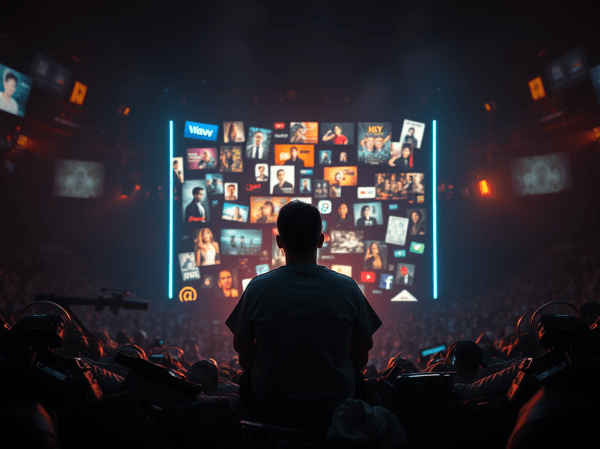
Reality sucks. Seriously. I don’t know about you, but increasingly, I’m avoiding the news because I’m having a lot of trouble processing what’s happening in the world. So when I look to escape, I often turn to entertainment. And I don’t have to turn very far. Never has entertainment been more accessible to us. We carry entertainment in our pocket. A 24-hour smorgasbord of entertainment media is never more than a click away. That should give us pause, because there is a very blurred line between simply seeking entertainment to unwind and becoming addicted to it.

Some years ago I did an extensive series of posts on the Psychology of Entertainment. Recently, a podcast producer from Seattle ran across the series when he was producing a podcast on the same topic and reached out to me for an interview. We talked at length about the ubiquitous nature of entertainment and the role it plays in our society. In the interview, I said, “Entertainment is now the window we see ourselves through. It’s how we define ourselves.”

That got me to thinking. If we define ourselves through entertainment, what does that do to our view of the world? In my own research for this column, I ran across another post on how we can become addicted to entertainment. And we do so because reality stresses us out, “Addictive behavior, especially when not to a substance, is usually triggered by emotional stress. We get lonely, angry, frustrated, weary. We feel ‘weighed down’, helpless, and weak.”

Check. That’s me. All I want to do is escape reality. The post goes on to say, “Escapism only becomes a problem when we begin to replace reality with whatever we’re escaping to.”

I believe we’re at that point. We are cutting ties to reality and replacing them with a manufactured reality coming from the entertainment industry. In 1985 – forty years ago – author and educator Neil Postman warned us in his book Amusing Ourselves to Death that we were heading in this direction. The calendar had just ticked past the year 1984 and the world collectively sighed in relief that George Orwell’s eponymous vision from his novel hadn’t materialized. Postman warned that it wasn’t Orwell’s future we should be worried about. It was Aldous Huxley’s forecast in Brave New World that seemed to be materializing:

“As Huxley remarked in Brave New World Revisited, the civil libertarians and rationalists who are ever on the alert to oppose tyranny “failed to take into account man’s almost infinite appetite for distractions…  Orwell feared that what we fear will ruin us. Huxley feared that what we desire will ruin us.”

Postman was worried then – 40 years ago – that the news was more entertainment than information. Today, we long for even the kind of journalism that Postman was already warning us about. He would be aghast to see what passes for news now. 

While things unknown to Postman (social media, fake news, even the internet) are throwing a new wrinkle in our downslide into an entertainment induced coma, it’s not exactly new.   This has happened at least once before in history, but you have to go back almost 2000 years to find an example. Near the end of the Western Roman Empire, as it was slipping into decline, the Roman poet Juvenal used a phrase that summed it up – panem et circenses – “bread and circuses”:

“Already long ago, from when we sold our vote to no man, the People have abdicated our duties; for the People who once upon a time handed out military command, high civil office, legions — everything, now restrains itself and anxiously hopes for just two things: bread and circuses.”

Juvenal was referring to the strategy of the Roman emperors to provide free wheat and circus games and other entertainment games to gain political power. In an academic article from 2000, historian Paul Erdkamp said the ploy was a “”briberous and corrupting attempt of the Roman emperors to cover up the fact that they were selfish and incompetent tyrants.”

Perhaps history is repeating itself.

One thing we touched on in the podcast was a noticeable change in the entertainment industry itself. Scarlett Johansenn noticed the 2025 Academy Awards ceremony was a much more muted affair than in years past. There was hardly any political messaging or sermons about how entertainment provided a beacon of hope and justice. In an interview with Vanity Fair  – Johanssen mused that perhaps it’s because almost all the major studies are now owned by Big-Tech Billionaires, “These are people that are funding studios. It’s all these big tech guys that are funding our industry, and funding the Oscars, and so there you go. I guess we’re being muzzled in all these different ways, because the truth is that these big tech companies are completely enmeshed in all aspects of our lives.”

If we have willingly swapped entertainment for reality, and that entertainment is being produced by corporations who profit from addicting as many eyeballs as possible, prospects for the future do not look good.

We should be taking a lesson from what happened to Imperial Rome.

My 1000th Post – and My 20 Year Journey

Note: This week marks the 1000th post I’ve written for MediaPost. For this blog, all of those posts are here, plus a number that I’ve written for other publications and exclusively for Out of My Gord. But the sentiments here apply to all those posts. If you’re wondering, I’ve written 1233 posts in total.

According to the MediaPost search tool, this is my 1000th post for this publication. There are a few duplicates in there, but I’m not going to quibble. No matter how you count them up, that’s a lot of posts.

My first post was written on August 19th, 2004. Back then I wrote exclusively for the emerging search industry. Google was only 6 years old.  They had just gone public, with investors hoping to cash in on this new thing called paid search. Social media was even greener. There was no Facebook. Something called Myspace had launched the year before.

In the 20 years I’ve written for MediaPost, I’ve bounced from masthead to masthead. My editorial bent evolved from being Search industry specific to eventually find my sweet spot, which I found at the intersection of human behavior and technology.

It’s been a long and usually interesting journey. When I started, I was the parent of two young children who I dragged along to industry events, using the summer search conference in San Jose as an opportunity to take a family camping vacation. I am now a grandfather, and I haven’t been to a digital conference for almost 10 years (the last being the conferences I used to host and program for the good folks here at MediaPost).

When I started writing these posts, I was both a humanist and a technophile. I believed that people were inherently good, and that technology would be the tool we would use to be better. The Internet was just starting to figure out how to make money, but it was still idealistic enough that people like me believed it would be mostly a good thing. Google still had the phrase “Don’t be Evil” as part of its code of conduct.

Knowing this post was coming up, I’ve spent the past few months wondering what I’d write when the time came. I didn’t want it to be yet another look back at the past 20 years. The history I have included I’ve done so to provide some context.

No, I wanted this to be what this journey has been like for me. There is one thing about having an editorial deadline that forces you to come up with something to write about every week or two. It compels you to pay attention. It also forces you to think. The person I am now – what I believe and how I think about both people and technology – has been shaped in no small part by writing these 1000 posts over the past 20 years.

So, If I started as a humanist and technophile, what am I now, 20 years later? That is a very tough question to answer. I am much more pessimistic now. And this post has forced me to examine the causes of my pessimism.

I realized I am still a humanist. I still believe that if I’m face to face with a stranger, I’ll always place my bet on them helping me if I need it. I have faith that it will pay off more often than it won’t. If anything, we humans may be just a tiny little bit better than we were 20 years ago: a little more compassionate, a little more accepting, a little more kind.

So, if humans haven’t changed, what has? Why do I have less faith in the future than I did 20 years ago? Something has certainly changed. But what was it, I wondered?

Coincidentally, as I was thinking of this, I was also reading the late Philip Zimbardo’s book – The Lucifer Effect: Understanding How Good People Turn Evil. Zimbardo was the researcher who oversaw the Stanford Prison Experiment, where ordinary young men were randomly assigned roles as guards or inmates in a makeshift prison set up in a Stanford University basement. To make a long story short – ordinary people started doing such terrible things that they had to cut the experiment short after just 6 days.

 Zimbardo reminded me that people are usually not dispositionally completely good or bad, but we can find ourselves in situations that can push us in either direction. We all have the capacity to be good or evil. Our behavior depends on the environment we function in. To use an analogy Zimbardo himself used, it may not be the apples that are bad. It could be the barrel.

So I realized, it isn’t people who have changed in the last 20 years, but the environment we live in. And a big part of that environment is the media landscape we have built in those two decades. That landscape looks nothing like it did back in 2004.  With the help of technology, we have built an information landscape that doesn’t really play to the strengths of humanity. It almost always shows us the worst side of ourselves. Journalism has been replaced by punditry. Dialogue and debate have been pushed out of the way by demagoguery and divisiveness.

So yes, I’m more pessimistic now that I was when I started this journey 20 years ago. But there is a glimmer of hope here. If people had truly changed, there is not a lot we can do about that. But if it’s the media landscape that’s changed, that’s a different story. Because we built it, we can also fix it.

It’s something I’ll be thinking about as I start a new year.