Seven Years as a Search Insider

First published April 14, 2011 in Mediapost’s Search Insider

“Ahh…our fledgling little industry is growing up.”

And with those words, I became a Search Insider on August 19, 2004, writing my very first column for MediaPost. Today, six years, seven months and 26 days later, I’m writing my 300th Search Insider column.  And yes, our little industry is still growing up.

As the senior Search Insider (both, I suspect, in terms of output and age) I’ve seen and written about a lot of things over the almost seven years I’ve been doing this. In that very first column, I forecast that we were a tipping point in the industry. Search was going to move from the cottage industry category to big business. Based on Google’s every-increasing balance sheet, I’d say that happened, but search is still an amazingly small world. At a recent search conference, a few of us (Bruce Clay, Chris Sherman, Danny Sullivan and some other “pioneers”) mentioned how we feel like a village elders council amongst more and more unfamiliar faces. Yet, for every new face encountered, these search events still feel a lot like a high school reunion.

I’ve been fortunate to be blessed with a lot of editorial leeway in what I choose to write about in Search Insider. Many have dealt with the world of search, but ironically, some of the most popular columns (at least, in terms of reader response) have been much more personal in nature. Columns about my family, our various family vacations and the loss of people dear to me (my wife’s grandmother and, more recently, my Uncle Jim) have all struck a chord with the Search Insider audience. For me, search has been an integral part of my life for the last decade and that has been reflected in my columns. It’s always been the human part of searching (or doing anything online) that I’ve found fascinating, and I’ve done my best to share that. I guess you could call it the recurring theme of the Thursday slot on the Search Insider line up.

For me, the fact that my daughter learned how to crochet on YouTube, or that my wife discovered that mobile computing can actually make a difference in her life, or that a long-haul truck driver that loved family embodied the very same ideals that we see in Facebook at its very best — these are the things we should care about. As I’ve said many, many times, technology is transitory, but people and their behaviors are what endure. At the end of the day, technology is just a tool.

I wanted to spend part of this milestone column thanking Ken Fadner, Phyllis Fine and the rest of the MediaPost editorial staff. Writing a weekly column can sometimes be a real pain when I hit Wednesday afternoon and come up completely dry on ideas. But I’ve also found that this forum has been tremendously rewarding for me personally. It reinforced for me that my internal thoughts and views become more valuable when they’re shared. You may not agree with me (and I can be pretty contentious at times, as Google, Microsoft, Yahoo, Ask and the Canadian marketing community at large can all attest to) but the discussions generated through this column have always been fascinating. And each time I’m out somewhere and someone tells me they read my column, it reinforces the value of the time I’ve spent generating some 180,000 words of content over the last seven years.

With that first column, I never imagined it would continue for as long as it has. There is no contract in place to secure the relationship. I suppose if I really wanted to quit writing tomorrow, I could. But week in and week out, I have to say that Thursday has become my favorite day. In fact, this column has been the most consistent part of my entire career in search. So I’ll be back next Thursday. And, most likely, the Thursday after that.

Why stop when you’re having fun?
Vacationing “On the Grid”

First published March 31, 2011 in Mediapost’s Search Insider

It’s 5 a.m. in Kauai. I’m sitting on the lanai of our condo, writing this in the glow from my laptop. I’ll continue to work on various things until about 8 a.m., when I’ll try to swim some lengths in the pool and then see what else my wife and daughters have planned for the day. Every so often I’ll check emails to see if there’s anything urgent that has to be responded to. The rest I’ll file away until tomorrow, when again I’ll get up at 5 a.m. Also, tomorrow (your today as you read this) I’ll have a 5-hour plane ride back to the mainland that will largely be used to “catch up.” I’m not jockeying for leadership in the holiday martyr’s club (it doesn’t seem like work when you’re watching the sun rise over Poipu), I’m simply describing a typical Hotchkiss vacation. It’s been this way for the past 14 or 15 years. I’ve heard about getting “off the grid.” I’ve just never been able to do it.

Some of my colleagues rave about dropping off this proverbial grid. “It was amazing!” they enthuse. “I didn’t check one email for five days!” I wonder what weird u-turn technology has taken when we feel we’ve created this monster we have to escape from, hiding in some far-flung unwired backwater, hiding from the penetrating gaze of our Outlook inbox. A number of analogies spring to mind: the fiery eyeball of Sauron that scans the Middle Earth landscape, ready to rain down pure, malevolent evil on the unwary tourist (or hobbit). Or, perhaps more appropriately, a massive wired mesh similar to a bug zapper, ready to trap and jolt any innocent vacationer who is foolish enough to fire up his laptop.

Much as we’d love we’d love to blame technology for our digital indentureship, it’s not really the one who’s at fault here. We started going down this path the minute we decided we wanted to work with ideas rather than physical things. My first job was loading 50-pound bags of various animal feed into the back of semi trailers. Had I chosen to stick with that original career path, I would have no problem leaving my job behind. It’s hard to pack a warehouse full of pig feed and several 18-wheelers in your suitcase. Getting “off the grid” would have simply meant changing location.

But today I earn my living by constructing ideas rather than stuff, and ideas are pretty portable. They have a nasty habit of following you around the world. In fact, the whole justification of getting “off the grid” is to recharge your mental batteries so you can come up with more ideas. It may cut into your vacation time, but I couldn’t imagine doing anything else. It’s not often I gaze longingly into the back of an empty semi, wishing I had 45 tons of something to load into it. A few hours on a laptop seems like a pretty good trade-off to me.

And let’s face it. My day job has allowed me to travel to places like Kauai with my family. This grid we speak of disparagingly is the very same grid that allows me to earn my living the other 350 days of the year. It’s often frustrating, and the pressures can be downright debilitating some days, but it’s also challenging and exciting. One of the main reasons I don’t mind staying “on the grid” during my vacation times is that I find a change of scene often helps me attack problems with a new perspective.

“But what about your family?” you ask. Getting up early to spend time with my laptop almost seems like I’m conducting some illicit affair. It’s actually a topic I’ve discussed at length with my wife and daughters. We realize that this is a mixed bag, with pros and cons. But we all agree that the pros far outweigh the cons. And, besides, they all carry their own personal “grids” around as well.

Someday, perhaps, I’ll truly get “off the grid” and I’ll have a new view of things. But as for today, this column is rapidly drawing to a close, I’m seeing a faint pink glow in the sky over Kauai, and the birds are starting to sing. All in all, it’s looking like another fabulous day, thanks to the “grid.”

The View from Haleakala

First published March 24, 2011 in Mediapost’s Search Insider

On the island of Maui, Haleakala is a dormant volcano that climbs 10,000 feet above sea level. When you visit Maui (I’m writing this column from the lanai of our rented condo in Kihei) you’re told, repeatedly, that you have to see sunrise from Haleakala. This is not an undertaking for the faint of heart. It means bundling up. Hawaiian breezes become significantly colder at 10,000 ft. It also means dragging yourself out of bed at an ungodly hour to drive an hour and a half up a winding mountain road in the dark. But the view, should you make the effort, is otherworldly. There is a reason why everyone tells you that this is a must. It’s one of those moments that forever jams itself in your memory. You’ll be talking about it for the rest of your life.

The point is, the best things in life take effort. They don’t come to you like a mai tai delivered on the beach. They belong to the same category as the view from Haleakala. You have to work your butt off to achieve it, but when you do, something stirs in your soul and lifts you to a higher plain. You feel, quite literally, on top of the world.

This analogy, although it feels far from the world of search, actually bears more relevance to my day job than you might realize. I once said that search marketing was like golf: easy to do, but almost impossible to master. Anyone can throw together a search campaign, just as anyone can hack their way around 18 holes. But to take search to its full potential takes a huge amount of time, thought and effort. It means tearing apart every element of a campaign and building it back up from scratch, looking for the advantages that raises your performance to another level. Search at this level is not for everyone. It’s only for those willing to work this hard.

One of the non-vacation things I’m doing on this trip is finalizing the agenda for the Search Insider Summit on Captiva Island, Fla. The sheer complexity of search was driven home as I reviewed dozens of pitches for the available slots on the agenda. The programming committee wants to continue what we started on Captiva last year, putting together three days that challenge marketers to take search to an entirely different level. As I read through the pitches and responded with suggestions, the theme of the Summit jumped out at me: reinvention. The next stage for search requires taking nothing for granted and being willing to reimagine everything we do.

To add to the challenge, search cannot be isolated from other marketing efforts. Its very nature is to connect and leverage every marketing element that’s in play. So, as we reinvent our search strategy, we reinvent everything: our marketing program, our sales channels, our relationship with our customers, the structure of our organizations and the fabric of our marketplaces. We really have no choice. Technology is forcing our hand in this. The world is changing quickly. We may be able to survive by going through the motions (although that’s not a sure bet) but thriving is going to take some — really, a lot of — effort .

My goal for the Search Insider Summit is to create three days that cause attendees to challenge the norm and consider the possible – even the impossible. It’s not for the faint of heart or those looking for easy answers. It’s like a drive up a 10,000 foot dormant volcano at 5 in the morning to stand shivering on the edge of a crater — inconvenient as hell, but something that may forever change your view of the world.

The 1% of News that Matters

First published March 17, 2011 in Mediapost’s Search Insider.

I first heard about the earthquake in Japan from a cab driver in Milwaukee. By the time I got to the airport, it was all over the monitors. And by the time I could find a Wi-Fi connection, the first details were just starting to emerge.

Our society digests news differently now. Electronic media paints news in broad strokes. Digital media offers a never-ending deep dive into the details. In the few days since disaster struck, the Web has already built up a vast repository of information about the Japanese earthquake and tsunami. The Web stretches infinitely to accommodate new content, stretching its digital boundaries as required. The shelf life of broadcast news is much shorter. Time constrains the content. Detail has to be sacrificed for impact.

But on the Web, news is also a participatory experience. News isn’t a broadcast, it’s a conversation, guided by editors and journalists but often veering in unexpected directions as our collective voice hits its stride. We shape the coverage by voicing our opinions, our concerns and, for those who are in the middle of the news, our experiences. The world is smaller, rawer, more visceral, more vital — and, hopefully, more human.

In the convergence of these two shifts in how we digest what happens in the world, there lies something impactful. Traditionally, because news was a shifting canvas where yesterday’s events quickly faded to make room for today’s, we had no choice but to move on to the next story. But now, thanks to the Web, the content remains, if we choose to seek it out. While Japan’s pain is still horribly fresh, more than a year later the traumatic story of Haiti is still unwinding online.

The fact is that 99% of the news you hear nightly won’t really make much of a difference in your life in five years. They’re stories of passing interest, but in the big scheme of things, they’re rather inconsequential. And the things that will make a difference seldom make the news. But, on the Web, the time limitation of being “new” doesn’t artificially constrain what is news. For those who continue to care about Haiti, the information is there, living on in indelible binary bits.

It’s this concept of “caring” about news that is served so well online. Humans tend to react to our surroundings in two distinct ways. We react to the immediate and awesome (in both its negative and positive connotations) simply because we’re wired to notice dramatic and potentially harmful events in our environment. But, if it has no personal impact, we move on with our lives. We’re like a herd of sheep that goes back to its collective grazing after a loud noise startles us in our pasture. For this fleeting level of engagement, broadcast news works exceedingly well. It’s been designed to impact us at this transitory level, hammering us for maximum effect by a parade of violence, negativity and trauma.

But for the 1% of stories that do affect us, that will matter to us in a very personal way in five years, the 30-second sound bite is simply not enough. If news can affect our well-being, the second level of human engagement kicks in. Now, we are hungry for information. We need to dive deep into the details, so we can understand what the personal impact might be.

Consider the difference in how I would react to the news coming out of Japan if, rather than observing it at arm’s length as I did, I had a child who was teaching English as a second language in Sendai, the epicenter of the quake. Think about how I would voraciously devour any information I could find online, trying to determine if my child was safe.

For the 1% of news that does matter to us, online provides us something we never had before. It takes the temporal and archives it at a scale never before possible. Individual slivers of history are frozen in a digital record. It allows us to connect to information that is personally relevant, even long after it qualifies as “news.”

A Search History of TED

First published March 10, 2011 in Mediapost’s Search Insider

I always find it interesting to look at a cultural phenomenon through the lens of search. Search provides a fascinating and quantitative look at the growth of interest in a particular topic. Having spent all last week immersed in the cult that is TED (I was at TEDActive in Palm Springs, Calif.) I thought that this was as good a subject as any to analyze.

TED’s Back Story

The TED story, for those of you not familiar with it, is pretty amazing. TED was originally held in Monterey, Calif. in 1984, the brainchild of Richard Saul Wurman and Harry Marks. Some of the content on that first TED stage? The unveiling of the Mac, a rep from Sony demonstrating the compact disc, Benoit Mandelbrot talking about fractals and Marvin Minsky speculating on the possibilities of artificial intelligence. Due to its proximity to Silicon Valley, the conference had a decidedly tech-heavy focus. The first one lost money, and Wurman didn’t attempt another one until 1990. It was then held annually in Monterey.

In 2001, Chris Anderson took over the show and broadened the focus, adopting a more philanthropic approach. Technology still figured prominently on the TED stage, but the conference became an intellectual smorgasbord of content, with a single session known to veer from musicians to world adventurers, scientists to CEOs.

Probably the biggest change in the fortunes of TED, however, came in 2006 when the world was invited to share what happened on the TED stage. The talks were videotaped and made freely available online. And it’s here where our search story begins.

TED:TSI (TED Search Investigation)

If you use Google Insights (as I did), you see something interesting begin to happen in the search activity surrounding TED. Through 2004, 2005 and 2006, most of the search activity for TED was about the conference. There were peaks every February when the conference took place, but other than this, the volumes were pretty consistent. There was little year-over-year growth. TED remained an exclusive club for the intellectually elite. The rest of the world had never heard of it.

In 2006, when the videos were launched, a new trend began. By the end of the year, more people were using search to find the TED talks themselves than to find out about the conference. The gap continued to widen until in 2011, the search popularity of the Talks themselves is almost 3 times as much as query volume for the conference. But volumes for both have seen impressive growth. The conference rode the wave of the popularity of the videos, with query volumes over 10 times the levels seen in 2006. The videos fueled the growth of TED, making it the must see conference of the year.

The Global Mapping of TED

Another interesting trend has been to see how TED has become a global phenomenon. TED talks are most popular in Canada, followed by New Zealand, the U.S. and South Africa. They’ve also shown impressive growth in South Africa, Singapore, Australia and India. And it’s this global popularity that led TED to announce TEDx, in 2009. These are independently organized shows held around the world, with some mentorship and guidance from the TED mother ship. They have been tremendously popular — and now search volumes for TEDx have surpassed queries for the main conference.  Epicenters of the TEDx tidal wave include the Netherlands, Portugal, Finland, India and Argentina.

If we drill down to the U.S., we find the greatest concentration of TEDsters (the official moniker of members of the TED community) in Oregon, Washington and Vermont. Surprisingly, California, where the conference is held, doesn’t even make the list of top TED states. Massachusetts, New York and Hawaii all beat it out. The top 10 TED states are all solidly blue (based on the last presidential election) — except for Montana.

And because Canada is such a TED hotbed (TED has an office in Vancouver) I’m proud to say that my home province of B.C. has perhaps the greatest concentration of TED fans in the world, followed by Manitoba, Alberta (which would be the Canadian equivalent of Montana) and Saskatchewan. According to Google, the TED world capital should be Victoria, B.C, which has the highest concentration of TED-related searches of any city, anywhere. The U.S. Capital? Portland, Ore. For some reason, TEDmania is very much alive and well here in the Pacific Northwest.

TED has legs!

Finally, you may ask if the wave of TED popularity is sustainable. I had this very conversation last week with another TEDster in Palm Springs. If you look at the growth of all search volumes so far in 2011, I would say the TED wave has barely begun. Volumes have skyrocketed this year in every category I looked at.  If you compare the query volume graphs to a typical S-shaped adoption curve, you would conclude that TED is just beginning a massive growth spurt.  Get used to hearing about TED, because that will be happening a lot in the future — especially if you’re visiting Victoria or Portland.

The Paradox of Social Media: The More Social It Gets, The Less Social We Become

First published February 24, 2011 in Mediapost’s Search Insider

I have teenage daughters. At least, I assume they’re still my daughters. They hang around our house and eat our food. But, to be honest, it’s been a while since we identified ourselves to each other. Between Angry Birds, SMS and Facebook, there’s precious little actual conversing going on in the Hotchkiss household. I barely recognize their faces, lit up as they are by the cool blue digital light of an iPhone screen. I assume that, at times, there’s a living being at the other end of their multi-texting, but I’m not really sure.

Yesterday, I overheard this in our lunch room: “I went for dinner the other night but have no idea how it was. Between tweeting my location, updating my status and posting a review to Yelp, I never actually ate anything.”

I’m guessing this comment was made in jest, but you never know. I remember one after-conference party held under the bridge in Sydney’s magnificent harbor, watching one very well-known search guru tweet his way through the entire evening. I don’t think he even noticed the Opera House on the other side of the bay. He was so busy tweeting his experience; he overlooked the actual “experiencing” part.

It seems to me that the more we engage in social media, the less social we actually become. The world in front of our noses is increasing being obstructed by one type of screen or another. The more we live in our new digital communities, the less we live in our real-life, flesh and blood ones. I can’t remember my neighbor’s name, but I can track the minute-by-minute location of people I’ve never met and probably never will. And by the way, congats on becoming Mayor of the Beans n’ Buns coffee shop on the corner of “LOL” and “OMG” in a city I’ll never set foot in. I’m not sure why that’s important to me, but all the “in” people assure me it is.

Humans were built to be social, but I’m not sure we were designed for social media. For one thing, research has proven that multitasking is a myth. We can’t do it. Our kids can’t do it. Nobody can do it. Much as we think we’re keeping all our digital balls in the air, eyes darting back and forth from screen to screen, it’s all a self-perpetuated ruse. Attention was designed to work with a single focus. You can switch it from target to target, but you can’t split it. If you try, you’ll just end up doing everything poorly.

Secondly, we’re built to communicate with the person in front of our nose. We pick up the vast majority of a conversation through body language and visual cues. Try as technology might, there’s just no way a virtual experience can match the bandwidth or depth of engagement you’ll find in a real face-to-face conversation. Yet, we continually pass up the opportunity to have these, opting instead to stare at a little screen and text our thumbs off.

As we spend more time with our digital connections, it’s inevitable that we’ll have less satisfying engagements with the people who share our physical space and time. The disturbing part about that is we may not realize the price we’re paying until it’s too late. Social media has slyly incorporated many elements from online gaming to make using it treacherously addictive. I suspect if we wired up the average teen while she was using Facebook or Foursquare, we’d find a hyperactive pleasure center, bathing her brain in dopamine. We’re forgoing the real pleasures of bonding to pursue an artificially wired short-cut.

The ironic part of all this is that I wrote this column on a four-hour flight, spending most of it staring at some kind of screen or another. The person sitting next to me on the plane? I don’t think we spoke more than four words to each other.

A “Page” from Google’s PR Book

First published February 10, 2011 in Mediapost’s Search Insider

Somehow, I’ve gotten myself squarely in the middle of Bing and Google again. Sometimes I should just keep my big mouth shut. The latest brouhaha is Google calling Microsoft a bunch of “cheaters” for copying search results. I called it “silly.”And it is. Pretty much everyone in the search universe (outside Mountain View) agrees that this is much more about Google trying to give Bing a black eye in the media than any serious threat to intellectual property. But somehow, as Google was swinging, it’s the one that ended up with the shiner.

If this were a one-off incident, I’d put it down to some misplaced indignation and bad PR “spin” advice. Google is within its rights to bring it to Bing’s attention. I just think Google didn’t have to be so pissy about it.

A New Attitude (and it ain’t pretty)…

But I don’t think this was a misstep. I think it’s all part of a new attitude, and a sad one at that, for Google. I wrote about this almost a year ago, in April, when I found Google becoming increasingly brittle and defensive in its public face:  “The humility is disappearing and hubris again rules the day. It’s almost as if, now that Google is the king of the hill and is drawing more than their fair share of scrutiny, much of it negative, they’ve gone into defensive mode. They’ve circled the wagons and drawn more inside.”

Apparently I’m not the only one who’s noticed that. Kara Swisher, in a post titled “Google’s Bing Attack Has Larry Page Written All Over It,” says Google’s new attitude comes right from its new CEO: “I would wager that we’re about to see a lot more of this pugnacious, in-your-face tone from Google under Page’s leadership, which could have far-reaching implications for the company.

While I have no idea if it was his decision to let loose the dogs of algo-war on Microsoft, many with knowledge of how Google manages its public persona observed to me this week that this was just the kind of popping off that the outgoing Schmidt often tried to mitigate and soften.

Google on a Ram-Page…

I now suspect that Google’s increased hubris (that I mentioned in last year’s column) was caused by Page flexing his influence within the organization. I trust Swisher’s take on the mood at Google. I’ve heard similar stories of Page’s “nerdily indignant voice” from others unfortunate enough to be on the receiving end of a tirade. Now, however, it’s permeating the company, and that’s sad.  Recently, I did a pretty extensive series of posts on where search might be heading. I had open and free- ranging conversations with Microsoft and Yahoo, but Google was “too busy” to have a real interview. I had to submit my questions by email and Google choose simply to ignore some of them because the company disagreed with my premise. Undertones of “how dare you question us?” rang clearly through my communications with the Big G.

I miss the days when Google was much more open-minded and accessible. I actually could get Marissa Mayer on the phone to talk about Google’s search interface. I could pick Peter Norvig’s brain about the future of the industry. Once I even had Eric Schmidt ask me “what [he] needed to know.” But that was then, and this is now.

I suspect there is much we don’t know about the transition from Schmidt to Page. The cracks are beginning to show in the Googleplex. I would guess the brittle bravado we’re seeing on the outside is masking a very un-Googlelike nervousness in Mountain View. Aaron Goldman nailed some of the symptoms in yesterday’s Search Insider.  Last April, I said, “I have no idea what this means in the big picture, but I do know that the tone and temper of an organization is a pretty reliable indicator of future success.” The signals I’m seeing with increased frequency indicate trouble ahead, and quite possibly, the most spectacular flame-out in high-tech history.

Uncle Jim: My Information Highway

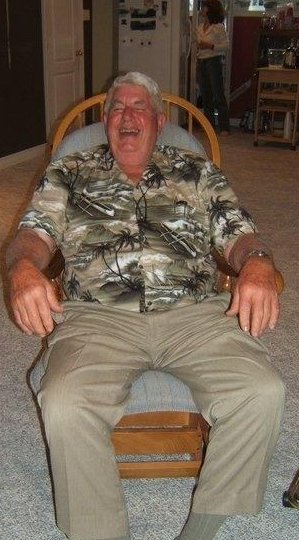
105004556_10156866970385670_4530696031889839476_nFor my last post of 2010, I’d like to take a little detour from my usual subject matter and tell you about someone very special to me. I’d like to introduce you to my Uncle Jim, who passed away on Christmas day. He was, in many ways, a precursor to the connected world we write about constantly in this column.

Uncle Jim was a long-haul truck driver. For most of his life, he delivered bricks in Eastern Canada and the United States. Over the last several years of his career, he hauled specialty vehicles for the rich and famous (i.e. he transported Celine Dion’s car from Florida to Vegas). It was this last job that caused him to crisscross the continent. And it was during this time that many of us in the family got to know Uncle Jim.

Our family is pretty spread out. In Canada, we literally span the country, from Halifax to Vancouver. And we have members who also live south of the 49th parallel, primarily in Texas. Over the years, the bonds of our family have had to become pretty elastic to accommodate the intervening miles. But the bonds have never stretched to the breaking point, and one big reason for that was Uncle Jim.

Uncle Jim was our original information highway. Family was vitally important to Jim, and as he crossed the continent, he’d always set time aside to drop in on his various nieces, nephews and cousins. Jim kept a trucker’s timetable, which meant you wouldn’t get much warning. You’d get a call, which generally went like this; “Hey, it’s your Uncle Jim. I’m in town. Got time for a coffee? I’d like to see you.”

Jim didn’t care about how tidy your house was, or whether there was anything to feed him. He was a man who appreciated a hot cup of coffee and a good chat. You would bring him up to date with your life, and in return he’d share his treasure trove of family tidbits from across the country. Through Jim, you’d reacquaint yourself with your far-flung family: the cousins who were expecting, starting a new job, going to school or getting engaged. At the end of the visit, you were always very glad you took the time for a “coffee and a chat.” And Jim was always gracious and grateful for the time you took out of your day to share with him.

Uncle Jim made the life of a long-haul trucker tolerable by using it to become the glue of our family. He tied us together in ways that we’ve only now begun to appreciate with his passing. To a person, each of us have our “Uncle Jim” stories which have become so precious to us. We even had “Uncle Jim” alerts. My sister, who lives in Edmonton (about a 12-hour drive from our home) would give me a quick call to let me know Uncle Jim was on his way and I could be expecting a call soon. This gave us enough time to grab some cookies to have with coffee.

In the past few years, as Uncle Jim battled with cancer, I was able to return the favor. Whenever my travels took me anywhere in the vicinity of their home, I took an extra day to spend some time with my aunt and uncle. I didn’t think it was possible, but in the past three years (since his original diagnosis) family became even more precious to my Uncle Jim. Whether it was weddings, reunions or joint family vacations, he was never too ill to travel and spend time with family. Fortunately, my wife and I were able to host one of these reunions at our home a year and a half ago. It would become the last family reunion that Uncle Jim was able to make.

My last visit with Jim was a week before his passing. We didn’t have coffee, but we did talk about family and share some laughs. The burly truck driver was barely recognizable in a physical sense, weighing less than half what he once did, but the spirit was still there. He struggled to sit up so he could shake my hand. He was so grateful for the time I took out of my day to spend those last few minutes with him. I can’t express how much I’ll miss those visits.

On Christmas day, we all struggled with our loss. But somehow it was fitting that Jim’s far-flung nieces and nephews reached out online to share our grief. We posted little slivers of our sadness on Facebook — and from those slivers, a picture of Uncle Jim began to emerge. It seemed fitting to me that the portrait of a man who spent so much time on the road came from people separated by miles but united by memories.

I’d like to end 2010 with my own Facebook memorial to my Uncle Jim:

Uncle Jim… there’s a stop ahead where you can rest for the night. The food is good, the coffee hot, the traffic light and there are friends and family waiting for a visit. You’ve had a long haul with a tough load. It’s okay to let someone else take the wheel. You’ve more than earned a rest. Sleep well, Uncle Jim, sleep well. Your job is done! 

Search Breaks Out of the Box in Park City

First published December 9, 2010 in Mediapost’s Search Insider

Wow! The Search Insider Summit is in full swing in Park City, Utah and for the first time in six or seven Summits, I’m not there. I don’t mind saying, it’s feeling kinda weird.

Laurie Sullivan and the team, including your emcee Aaron Goldman, did a bang-up job putting the show together. I did have some limited involvement, looking on from the sidelines as they lined up the speakers and nailed down the agenda. They’re touching on all the hot topics: the convergence of display and search, social and search (pretty much everything and search); new platforms to allow for more effective targeting; the ongoing changes on the SERP; using data to make smarter marketing decisions; and yes, once again, how mobile will change everything (and this time, it’s really true!).

The agenda is a broad one, reaching into virtually every aspect of online activity. And really, that’s what any search agenda has to be. One of the ongoing challenges of programming the past several Summits has been where to draw the line. Despite the best efforts of many to define the search “box,” search is not a box, a channel, or a tactic. It’s what we do. And as such, it connects everything. We search in social networks. We search on mobile. And if we happen to see an ad that triggers our interest, the odds are very good that we will — you guessed it — launch a search. So a Search Summit has to be, by necessity, a Social/Mobile/Testing/Analytics/Display/Target and Segmentation Summit. You can’t keep search in a box.

I started writing this column way back in 2004. Since then (for almost 300 columns), I’ve been watching how search has seeped into every nook and cranny of online behavior. It’s become the gold standard for intercepting a consumer with intent. Search inventory forms the core of any performance marketing strategy worth its salt. Most of the things Goldman and Company will be talking about, nestled in the silver frosted peaks of Utah, revolve around extending the accountability and performance of search into other channels. Once you’ve tasted the search Kool-Aid, it’s hard to settle for any other flavor. The problem is, of course, with the keyword-restricted limits on search inventory, there’s only so much Kool-Aid to go around.

But another thing struck me while I ran down the Summit agenda: we’re talking about things we would have never talked about in 2004. We’re talking about the users on the other side of that search interface as real live people, not just volume numbers in a keyword discovery tool. Tony Fagan from Google will be talking about how constant testing helps hone your marketing skills against actual behaviors. Eli Goodman from comScore will share some tasty data about how Google Instant is changing behaviors on the results page. And, of course, you can’t dive into social media without understanding how people behave when they’re traveling with the herd.

If there’s one thing I’ve found lacking in search marketing, it’s the “marketing” part of the industry. More often than not, search plays out as a technical exercise, full of algorithms, rules and tools, rather than what marketing should be: a drive to forge relevant connections to people with needs, fears and dreams. When I programmed the Summit, I always tried to bring that perspective to the stage. I’m glad to see Laurie and her team have also kept the human part of search very much alive at this Summit.

Have fun, Search Summiters. I’ll miss you (and will see you in Captiva)!

A Tale From the Trenches: 14 Years in the Search Biz

First published October 28, 2010 in Mediapost’s Search Insider

Maybe you’ve heard the news. I’ve got a new gig. This week, the Yellow Pages Group in Canada acquired the company I co-founded. As I said to my partner, Bill, as we walked out of the office Monday, “Today is the last day we worked for Enquiro.” Although we’ve been ear-lobe deep in the deal for the past several months, for some reason that’s when it hit us. Tuesday, we came to work for a new company: Mediative.

The deal is interesting in a number of ways: a traditional publisher with a strong digital foothold in a market where the consumers are light years ahead of the marketers in Internet savvy, all set on a stage right next to the springboard of the digital revolution. It may not be “The Social Network” (and I’m certainly not Aaron Sorkin) but there are at least a couple good columns there. However, that’s for the future.

Today, it’s all about me.

But, as I pondered this, I realized my story is also the story of this industry. I’ve been doing this since 1996. No one was really doing it before that, so we made it up as we went along. Eventually this Internet thing gained enough critical mass that I had to find other people to do the same thing I was doing. Before I knew it, we had a company. And, because the Internet was growing like a runaway express train, our company became one of the fastest growing companies in Canada. We ran hard, just to keep from being run over.

Somewhere along the line, in addition to inventing an industry on the fly, helping clients who are desperately trying to figure out what the hell just happened to marketing and doing the cha-cha with Google’s algorithm, we also had to figure out how to run a company. As I soon found out, it’s one thing to do something yourself to earn a buck. It’s an entirely different thing to get a bunch of people doing the same thing and somehow transform that into a company — preferably a company that makes money. There are no guidebooks on how to build a search agency. And the headaches you have with a search agency of six people are entirely different than the headaches you’ll get with 13 people, or 23 people, or 34 people. I’ve had them all at various points in the last 14 years.

Just when you think you’re getting the hang of it, throw in a year like 2000 or 2008. It’s one thing to run an Internet company when everyone’s scrambling to throw money at you. It’s an entirely different thing when everyone goes into lockdown mode and companies are disappearing faster than free beers at a search conference.

Speaking of search conferences, those turned out to be our group therapy sessions, but you really had to read between the lines to get to the truth. I saw my friends and colleagues go from wild-eyed enthusiasm to world weary yet dogged determination. We kept hearing stories of people getting rich in search, but it was tough to nail down the facts. By and large, we all just kept plugging away, making enough money to keep the lights on and knowing that working anywhere else, while undoubtedly more lucrative, just wouldn’t be the same thing.

It’s been a 14-year gauntlet and I’ve got the collection of bruises to show for it. Somewhere on this decade-and-a-half ride I got old. I went from being an “upstart” to being a “village elder” (yes, I’ve actually been called that on more than one occasion). I went from being “bright” to being “wise.” I suppose there are worse things to be called.

I don’t mean to make this sound like a swan song. I’ll still be very much part of the search biz in my new gig. But, as I found out when I walked out the doors of Enquiro on Monday night and in the doors of Mediative Tuesday morning, this is a new chapter for me. Indulge me as I thumb through the ones that preceded it.

But you know what? In hindsight, I wouldn’t change a thing. All things considered, it’s been a hell of a ride!