Why I’m Worried About AI

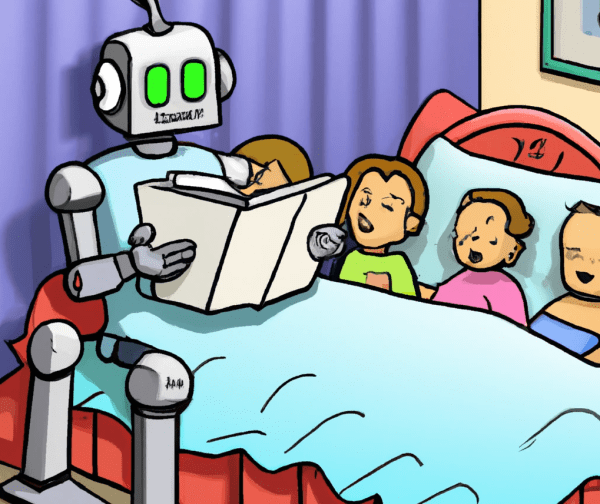
Even in my world, which is nowhere near the epicenter of the technology universe, everyone is talking about AI And depending on who’s talking – it’s either going to be the biggest boon to humanity, or it’s going to wipe us out completely. Middle ground seems to be hard to find.

I recently attended a debate at the local university about it. Two were arguing for AI, and two were arguing against. I went into the debate somewhat worried. When I walked out at the end of the evening, my worry was bubbling just under the panic level.

The “For” Team had a computer science professor – Kevin Leyton-Brown, and a philosophy professor – Madeleine Ransom. Their arguments seemed to rely mainly on creating more leisure time for us by freeing us from the icky jobs we’d rather not do. Leyton-Brown did make a passing reference to AI helping us to solve the many, many wicked problems we face, but he never got into specifics.

“Relax!” seemed to be the message. “This will be great! Trust us!”

The “Against” Team was comprised of a professor in Creative and Critical Studies – Bryce Traister. As far as I could see, he seemed to be mainly worried about AI replacing Shakespeare. He did seem quite enamored with the cleverness of his own quips.

It was the other “Against” debater who was the only one to actually talk about something concrete I could wrap my head around. Wendy Wong is a professor of Political Science. She has a book on data and human rights coming out this fall. Many of her concerns focused on this area.

Interestingly, the AI debaters all mentioned Social Media in their arguments. And on this point, they were united. All the debaters agreed that the impact of Social Media has been horrible. But the boosters were quick to say that AI is nothing like Social Media.

Except that it is. Maybe not in terms of the technology that lies beneath it, but in terms of the unintended consequences it could unleash, absolutely! Like Social Media, what will get us with AI are the things we don’t know we don’t know.

I remember when social media first appeared on the scene. Like AI, there were plenty of evangelists lining up saying that technology would connect us in ways we couldn’t have imagined. We were redefining community, removing the physical constraints that had previously limited connections.

If there was a difference between social media and AI, it was that I don’t remember the same doomsayers at the advent of social media. Everyone seemed to be saying “This will be great! Trust us!”

Today, of course, we know better. No one was warning us that social media would divide us in ways we never imagined, driving a wedge down the ideological middle of our society. There were no hints that social media could (and still might) short circuit democracy.

Maybe that’s why we’re a little warier when it comes to AI. We’ve already been fooled once.

I find that AI Boosters share a similar mindset – they tend to be from the S.T.E.M. (Science, Technology, Engineering and Math) School of Thought. As I’ve said before, these types of thinkers tend to mistake complex problems for complicated ones. They think everything is solvable, if you just have a powerful enough tool and apply enough brain power. For them, AI is the Holy Grail – a powerful tool that potentially applies unlimited brain power.

But the dangers of AI are hidden in the roots of complexity, not complication, and that requires a different way of thinking. If we’re going to get some glimpse of what’s coming our way, I am more inclined to trust the instincts of those that think in terms of the humanities. A thinker, for example, such as Yuval Noah Harari, author of Sapiens.

Harari recently wrote an essay in the Economist that may be the single most insightful thing I’ve read about the dangers of AI: “AI has gained some remarkable abilities to manipulate and generate language, whether with words, sounds or images. AI has thereby hacked the operating system of our civilisation.”

In my previous experiments with ChatGPT, it was this fear that was haunting me. Human brains operate on narratives. We are hard-wired to believe them. By using language, AI has a back door into our brains that bypass all our protective firewalls.

My other great fear is that the development of AI is being driven by for-profit corporations, many of which rely on advertising as their main source of revenue. If ever there was a case of putting the fox in charge of the henhouse, this is it!

When it comes to AI it’s not my job I’m afraid of losing. It’s my ability to sniff out AI generated bullshit. That’s what’s keeping me up a night.

Deconstructing a Predatory Marketplace

Last week, I talked about a predatory ad market that was found in — of all places — in-game ads. And the predators are — of all things — the marketers of Keto Gummies. This week, I’d like to look at why this market exists, and why someone should do something about it.

First of all, let’s understand what we mean by “predatory.” In biological terms, predation is a zero-sum game. For a predator to win, someone has to lose.  On Wikipedia, it’s phrased a little differently: “Predatory marketing campaigns may (also) rely on false or misleading messaging to coerce individuals into asymmetrical transactions. “

 “Asymmetrical” means the winner is the predator, the loser is the prey.

In the example of the gummy market, there are three winners — predators — and three losers, or prey. The winners are the marketers who are selling the gummies, the publishers who are receiving the ad revenue and the supply side platform that mediates the marketplace and take its cut.

The losers — in ascending order of loss — are the users of the games who must suffer through these crappy ads, the celebrities who have had their names and images illegally co-opted by the marketer, and the consumers who are duped into actually buying a bottle of these gummies.

You might argue the order of the last two, depending on what value you put on the brand of the celebrity. But in terms of sheer financial loss, consumer fraud is a significant issue, and one that gets worse every year.  In February, the Federal Trade Commission reported that U.S. consumers lost $8.8 billion to scams last year, many of which occurred online. The volume of scams is up 30% over 2021, and is 70% higher than it was in 2020.

So it’s not hard to see why this market is predatory. But is it fraudulent? Let’s apply a legal litmus test. Fraud is generally defined as “any form of dishonest or deceptive behavior that is intended to result in financial or personal gain for the fraudster, and does harm to the victim.”

Based on this, fraud does seem to apply. So why doesn’t anyone do anything?

For one, we’re talking about a lot of potential money here. Statista pegs the in-game ad market at $32.5 billion worldwide in 2023, with projected annual growth rate of 9.10% That kind of money provides a powerful incentive to publishers and supply-side platforms (SSPs) to look the other way.

I think it’s unreasonable expect the marketers of the gummies to police themselves. They have gone to great pains to move themselves away from the threat of legal litigation. These corporations are generally registered in jurisdictions like China or Cyprus, where legal enforcement of copyright or consumer protections are nonexistent. If someone like Oprah Winfrey has been unable to legally shut down the fraudulent use of her image and brand for two years, you can bet the average consumer who has been ripped off has no recourse. 

But perhaps one of the winners in this fraudulent ecosystem — the SSPs – should consider cracking down on this practice.

In nature, predators are kept in check by something called a predator-prey relationship. If predators become too successful, they eliminate their prey and seal their own doom. But this relationship only works if there are no new sources of prey. If we’re talking about an ecosystem that constantly introduces new prey, nothing keeps predators in check.

Let’s look at the incentive for the game publishers to police the predators. True, allowing fraudulent ads does no favours for the users of their game. A largescale study by Gao, Zeng, Lu et al found that bad ads lead to a bad user experience.

But do game publishers really care? There is no real user loyalty to games, so churn and burn seems to be the standard operating procedure. This creates an environment particularly conducive to predators.

So what about the SSPs?

GeoEdge, an ad security solution that guards against malvertising, among other things, has just released its Q1 Ad Quality Report. In an interview, Yuval Shiboli, the company’s director of product market, said that while malicious ads are common across all channels, in-game advertising is particularly bad because of a lack of active policing: “The fraudsters are very selective in who they show their malicious ads, looking for users who are scam-worthy, meaning there is no security detection software in the environment.”

Quality of advertising is usually directly correlated with the pricing of the ad inventory. The cheaper the ad, the poorer the quality. In-game ads are relatively cheap, giving fraudulent predators an easy environment to thrive in. And this entire environment is created by the SSPs.

According to Shiboli, it’s a little surprising to learn who are the biggest culprits on the SSP side: “Everybody on both the sell side and buy side works with Google, and everyone assumes that its platforms are clean and safe. We’ve found the opposite is true, and that of all the SSP providers, Google is the least motivated to block bad ads.”

By allowing — even encouraging — a predatory marketplace to exist, Google and other SSPs are doing nothing less than aiding and abetting criminals. In the short term, this may add incrementally to their profits, but at what long-term price?

The Seedy, Seedy World of Keto Gummies

OK, admit it. I play games on my phone.

Also, I’m cheap, so I play the free, ad-supported versions.

You might call this a brain-dead waste of time, but I prefer to think of it as diligent and brave investigative journalism.  The time I spend playing Bricks Ball Crusher or Toy Blast is, in actuality, my research into the dark recesses of advertising on behalf of you, the more cerebral and discerning readers of this blog. I bravely sacrifice my own self-esteem so that I might tread the paths of questionable commerce and save you the trip.

You see, it was because of my game playing that I was introduced to the seediest of seedy slums in the ad world, the underbelly known as the in-game ad. One ad, in particular, reached new levels of low.

If you haven’t heard of the Keto Gummies Scam, allow me to share my experience.

This ad hawked miracle gummies that “burn the fat off you” with no dieting or exercising. Several before and after photos show the results of these amazing little miracle drops of gelatin. They had an impressive supporting cast. The stars of the TV pitchfest “Shark Tank” had invested in them. Both Rebel Wilson and Adele had used them to shed pounds. And then — the coup de grace — Oprah (yes, the Oprah!) endorsed them.

The Gummy Guys went right the top of the celebrity endorsement hierarchy when they targeted the big O.

As an ex ad guy, I couldn’t ignore this ad. It was like watching a malvertising train wreck. There was so much here that screamed of scam, I couldn’t believe it. The celebrity pics used were painfully obvious in their use of photoshopping. The claims were about as solid as a toilet paper Taj Mahal. The entire premise reeked of snake oil.

I admit, I was morbidly fascinated.

First, of all the celebrities in all the world, why would you misappropriate Oprah’s brand? She is famously protective of it. If you’re messing with Oprah, you’ve either got to be incredibly stupid or have some serious stones. So which was it?

I started digging.

First of all, this isn’t new. The Keto Gummy Scam has been around for at least a year. In addition to Oprah, they have also targeted Kevin Costner, Rhianna, Trisha Yearwood, Tom Selleck, Kelly Clarkson, Melissa McCarthy — even Wayne Gretzky.

Last Fall, Oprah shared a video on Instagram warning people that she had nothing to do with the gummies and asking people not to fall for the scam. Other celebrities have fallen suit and issued their own warnings.

Snopes.com has dug into the Keto Gummy Scam a couple of times.  One exposé focused on the false claims that the gummies were featured on “Shark Tank.” The first report focused just on the supposed Oprah Winfrey endorsement. That one was from a year ago. That means these fraudulent ads have been associated with Oprah for at least a year and legally, she has been unable to stop them.

To me, that rules out my first supposition. These people aren’t stupid.

This becomes apparent when you start trying to pick your way through the maze of misinformation they have built to support these ads. If you click on the ad you’re taken to a webpage that looks like it’s from a reliable news source. The one I found looked like it was Time’s website. There you’ll find a “one-on-one interview” with Oprah about how she launched a partnership with Weight Watchers to create the Max Science Keto gummies. According to the interview, she called the CEO of Weight Watchers and said ‘if you can’t create a product that helps people lose weight faster without diet and exercise, then I’m backing out of my investment and moving on.”

This is all complete bullshit. But it’s convincing bullshit.

It doesn’t stop there. Clickbait texts with outrageous claims, including the supposed death of Oprah, get clicks through to more bogus sites with more outrageous claims about gummies. While the sites mimic legitimate news organizations like Time, they reside on bogus domains such as genuinesmother.com and newsurvey22offer.com. Or, if you go to them through an in-app link, the URLs are cloaked and remain invisible.

If you turn to a search engine to do some due diligence, the scammers will be waiting for you. If you search for “keto gummies scam” the results page is stuffed with both sponsored and organic spam that appear to support the outrageous claims made in the ads. Paid content outlets like Outlook India have articles placed that offer reviews of the “best keto gummies,” fake reviews, and articles assuring potential victims that the gummies are not a scam but are a proven way to lose weight.

As the Snopes investigators found, it’s almost impossible to track these gummies to any company. Even if you get gummies shipped to you, there’s no return address or phone number. Orders came from a shadowy “Fulfillment Center” in places like Smyrna, Tennessee. Once they get your credit card, the unauthorized charges start.

Even the name of the product seems to be hard to nail down. The scammers seem to keep cycling through a roster of names.

This is, by every definition, predatory advertising. It is the worst example of what we as marketers do. But, like all predators, it can only exist because an ecosystem allows it to exist. It’s something we have to think about.

I certainly will. More on that soon.

The Comedic Comeback

Public confessions are a funny thing.

No, seriously. They’re funny. At least, John Mulaney hopes they’re funny.

His latest Netflix special, Baby J, which just dropped two weeks ago is all about coming back from having his reputation hammered on social media.

John has had a tough time of late. He filled his “Covid Years” with getting divorced from his wife, Anna Marie Tendler, stumbling into an intervention, going to rehab, relapsing, going back to rehab, dating Olivia Munn – and – oh yeah – announcing he’s having a baby with Munn. All of that happening not necessarily in that order.

Mulaney opens his Neflix show with a little song and dance:

“You know what I mean!
We all quarantined!
We all went to rehab and we all got divorced,
and now our rep-u-ta-tion is different!”
“No one knows what to think! 
Hey ya! 
All the kids like Bo Burnham more!
Because he’s currently less problematic.…

Likability is a jail.”


“Likability is a jail.” Mulaney sang that with a smile on his face, but there is some grit in that line. You can almost feel it grinding in the gears of his career.

To be fair, when you build a career on likability in the era of social media, you have to accept that it’s a pretty tenuous foundation for fame. It leaves you extremely vulnerable to being publicly called out for anything that might rub against the grain of your carefully constructed brand.  And, if you are called out – or, in extreme cases – completely cancelled, you have to somehow make it all the way back from simply being accepted to being liked again.

When you think about it, it’s probably a lot easier to build your brand on being an asshole. It’s a lot lower bar to get over. I don’t think Donald Trump loses a lot of sleep over being cancelled. And – just last week –  people gathered at the Met in New York for their Gala honoring fashion icon Karl Lagerfeld, who has never apologized for being one of the biggest and most outspoken assholes in history.  

Mulaney is the latest of a long line of comedian come backs who have been hammered by the fickle fist of being “social media famous.” He is gingerly treading in the footsteps of Louis C.K., Aziz Ansari – even Chris Rock took a stab at it, and he wasn’t the one that got cancelled. That would be Will Smith, who is still trying to pick up the pieces of his career after an ill-considered incident of physical assault in front of a worldwide audience.

You probably wouldn’t be surprised to learn that there’s a playbook for coming back after being eviscerated in the public arena of social media. According to Lori Levine, CEO of the PR firm Flying Television, it requires something called an “Apology Tour.”

The timing of this is critical. According to Levine, you first have to fly under the radar for a bit, “take a certain amount of time to stay quiet, stay off social media, not engage in any press interviews.” After a period of being suitably and silently contrite, you then move to Stage Two, “Slowly return explaining that they have ‘done the work’ [and] are feeling remorseful.”

This was pretty much the playbook that Mulaney followed. The advantage, if you’re a comedian, is that the stand-up stage is the perfect platform for the “apology tour.” It has the built in advantage of being an entertainment form that thrives on making fun of yourself. That’s probably why a good portion of Netflix’s programming calendar consists of comedians lining up for their respective “apology tours.”

Comedians on the social media comeback tour are also given a helping hand in this by the emergence of the “uneasy laughter” of dark comedy over the past decade or so. While dark – or black – humor has been around decades in the form of novels or movies, it has only been in the last decade or so that stand-up comedians combined dark humor with an unflinchingly intimate look into their own personal struggles. Since the unapologetically brilliant live performance of Tig Notaro in 2012 where she talked about her recent diagnosis of breast cancer, stand-up has dared to go to places never imagined just a few years ago.

This creates the perfect environment for the “apology tour.” The whole point is to have a no holds barred discussion of where the comedian erred in judgement. Mulaney navigated this potential minefield with surefooted grace. Probably the funniest and most authentic bit was when he started riffing with a 5th grader up in the balcony at the start of the show, warning him not to “do any of the things I’m about to talk about.”  Somehow – to me – that felt more real than everything that was to follow.

If anything, Mulaney’s recent performance was a sign of our times. It was a necessary step back from public humiliation. I’m not sure it was that funny. But it was John Mulaney reclaiming some control over his public persona. He was telling us we can’t possibly do anything worst to him than he’s done to himself…

“What, are you gonna cancel John Mulaney? I’ll kill him. I almost did.”

It Took a Decade, but Google Glass is Finally Broken

Did you hear that Google finally pulled the plug on Google Glass?

Probably not. The announcement definitely flew under the radar. It came with much less fanfare than the original roll out in 2013. The technology, which has been quietly on life support as an enterprise tool aimed at select industries, finally had its plug pulled with this simple statement on its support page:

Thank you for over a decade of innovation and partnership. As of March 15, 2023, we will no longer sell Glass Enterprise Edition. We will continue supporting Glass Enterprise Edition until September 15, 2023.

Talk about your ignoble demises. They’re offering a mere 6 months of support for those stubbornly hanging on to their Glass. Glass has been thrown in the ever growing Google Graveyard, along with Google Health, Google+, Google Buzz, Google Wave, Knol – well, you get the idea.

It’s been 10 years, almost to the day, that Google invited 8000 people to become “Glass Explorers” (others had a different name – “Glassholes”) and plunge into the world of augmented reality.

I was not a believer – for a few reasons I talked about way back then. That led me to say, “Google Glass isn’t an adoptable product as it sits.” It took 10 years, but I can finally say, “I told you so.”

I did say that wearable technology, in other forms, would be a game changer. I just didn’t think that Google Glass was the candidate to do that. To be honest, I haven’t really thought that much more about it until I saw the muted news that this particular Glass was a lot more than half empty. I think there are some takeaways about the fading dividing line between technology and humans that we should keep in mind.

First of all, I think we’ve learned a little more about how our brains work with “always on” technologies like Google Glass. The short answer is, they don’t – at least not very well. And this is doubly ironic because according to an Interview with Google Glass product director Steve Lee on The Verge back in 2013, that was the whole point:

“We all know that people love to be connected. Families message each other all the time, sports fanatics are checking live scores for their favorite teams. If you’re a frequent traveler you have to stay up to date on flight status or if your gate changes. Technology allows us to connect in that way. A big problem right now are the distractions that technology causes.”

The theory was that it was much less distracting to have information right in the line of sight, rather than having to go to a connected screen that might be in your pocket.

Lee went on. “We wondered, what if we brought technology closer to your senses? Would that allow you to more quickly get information and connect with other people but do so in a way — with a design — that gets out of your way when you’re not interacting with technology? That’s sort of what led us to Glass.” 

The problem here was one of incompatible operating systems – the one that drove Google Glass and the one we have baked into our brains. It turned out that maybe the technology was a little too close to our senses. A 2016 study (Lewis and Neider) found that trying to split attention between two different types of tasks – one scanning information on a heads up display and one trying to focus on the task at hand – ended up with the brain not being able to focus effectively on either. The researchers ended with this cautionary conclusion: “Our data strongly suggest that caution should be exercised when deploying HUD-based informational displays in circumstances where the primary user task is visual in nature. Just because we can, does not mean we should.”

For anyone who spends even a little time wondering how the brain works, this should not come as a surprise. There is an exhaustive list of research showing that the brain is not that great at multi-tasking. Putting a second cognitive task for the brain in our line of sight simply means the distraction is all that much harder to ignore.

Maybe there’s a lesson here for Google. I think sometimes they get a little starry eyed about their own technological capabilities and forget to factor in the human element. I remember talking to a roomful of Google engineers more than a decade ago about search behaviors. I remember asking them if any of them had heard about Pirolli and Card’s pioneering work on their Information Foraging theory. Not one hand went up. I was gob smacked. That should be essential reading for anyone working on a search interface. Yet, on that day, the crickets were chirping loudly at Mountainview.

If the Glass team had done their human homework, they would have found that the brain needs to focus on one task at a time. If you’re looking to augment reality with additional information, that information has to be synthesized into a single cohesive task for the brain. This means that for augmented reality to be successful, the use case has to be carefully studied to make sure the brain isn’t overloaded.

But I suspect there was another sticking point that prevented Google Glass from being widely adopted. It challenged the very nature of our relationship with technology. We like to believe we control technology, rather than the other way around. We have defined the online world as somewhere we “go” to through our connected devices. We are in control of when and where we do this. Pulling a device out and initiating an action keeps this metaphorical divide in place.

But Google Glass blurred this line in a way that made us uncomfortable. Again, a decade ago, I talked about the inevitable tipping point that will come with the merging of our physical and virtual worlds. Back then, I said, “as our technology becomes more intimate, whether it’s Google Glass, wearable devices or implanted chips, being ‘online’ will cease to be about ‘going’ and will become more about ‘being.’  As our interface with the virtual world becomes less deliberate, the paradigm becomes less about navigating a space that’s under our control and more about being an activated node in a vast network.”

I’m just speculating, but maybe Google Glass was just a step too far in this direction – for now, anyway.

(Feature image: Tim.Reckmann, CC BY-SA 3.0 https://creativecommons.org/licenses/by-sa/3.0, via Wikimedia Commons)

Real Life Usually Lives Beyond The Data

There’s an intriguing little show you’ve probably never heard of on Netflix that might be worth checking out. It’s called Travelers and it’s a Canadian produced Sci-Fi show that ran from 2016 to 2018. The only face in it you’re probably recognize is Eric McCormack, the Will from Will and Grace. He also happens to be the producer of the series.

The premise is this – special operatives from the future (the “travelers”) – travel back in time to the present to prevent the collapse of society. They essential “body snatch” everyday people from our present at the exact moment of their death and use their lives as a cover to fulfill their mission.

And that’s not even the interesting part.

The real intrigue of the show comes from the everyday conflicts which come from an imperfect shoe horning of a stranger into the target’s real-world experience. The show runners do a masterful job of weaving this into their storylines: the joy of eating a hamburger, your stomach turning at the thought of drinking actual milk from a cow, calling your “wife” her real name when you haven’t called her that in all the time you’ve known her.  And it’s in this that I discovered an unexpected parallel to our current approach to marketing.

This is a bit of a detour, so bear with me.

In the future, the research team compiles as much as they can about each of the people they’re going to “borrow” for their operatives. The profiles are compiled from social media, public records and everything they can discover from the data available.

But when the “traveler” actually takes over their life, there are no end of surprises and challenges – made up of all the trivial stuff that didn’t make it into the data profile.

You probably see where I’m going with this. When we rely solely on data to try to understand our customers or prospects, there will always be surprises. You can only learn these little quirks and nuances by diving into their lives.

That’s what A.G. Lafley, CEO of Proctor and Gamble from 2000 to 2010 and then again from 20153 to 2015, knew. In a profile on Lafley which Forbes did in 2002, writer Luisa Kroll said,

“Like the monarch in Mark Twain’s A Connecticut Yankee in King Arthurs’ Court, Lafley often makes house calls incognito to find out what’s the minds of his subjects. ‘Too much time was being spent inside Procter & Gamble and not enough outside,’ says Lafley who took over during a turbulent period two years ago. ‘I am a broken record when it comes to saying, ‘We have to focus on the customer.'”

It wasn’t a bad way to run a business. Under Lafley’s guidance, P&G doubled their market cap, making them one of the 10 most valuable companies in the world.

Humans are messy and organic. Data isn’t. Data demands to be categorized, organized and columnized. When we deal with data, we necessarily have to treat it like data. And when we do that, we’re going to miss some stuff – probably a lot of stuff. And almost all of it will be the stuff of our lives, the things that drive behavior, the sparks that light our emotions.

It requires two different ways of thinking. Data sits in our prefrontal lobes, demanding the brain to be relentlessly rational. Data reduces behavior to bits and bytes, to be manipulated by algorithms into plotted trendlines and linear graphs. In fact, automation today can totally remove we humans from the process. Data and A.I. work together to pull the levers and push the buttons on our advertising strategies. We just watch the dashboard.

But there’s another way of thinking – one that skulks down in the brain’s subcortical basement, jammed in the corner between the amygdala and the ventral striatum. It’s here where we stack all the stuff that makes us human; all the quirks and emotions, all our manias and motivations. This stuff is not rational, it’s not logical, it’s just life.

That’s the stuff A.G. Lafley found when he walked out the front door of Proctor and Gamble’s headquarters in Cincinnati and into the homes of their customers. And that’s the stuff the showrunners of Travelers had the insight to include in their narratives.

It’s the stuff that can make us sensational or stupid – often at the same time.

Little White Paper Lies

When I was writing last week’s post about poor customer service, I remembered a study I wrote about back in 2019. The study was about how so many companies were terrible at responding to customer service emails. It was released by the Norwegian CRM provider SuperOffice.

At the time, the study was mentioned in a number of articles. The findings were compelling:

Sixty-two percent of companies didn’t respond to customer service emails. Ninety percent of companies didn’t let the customer know their email had been received. Given the topic of my post, this was exactly the type of empirical evidence I was looking for.

There was just one problem. The original study was done in 2018. I wondered if the study had been updated. After a quick search, I thought I had hit pay dirt. Based on the landing page (which came at the top of the results page for “customer service benchmark report”) a new 2023 study was available.

Perfect, I thought.  I filled in the lead contact form, knowing I was tossing my name into a lead-generation mill. I figured, “What the hell. I’m willing to trade that for some legit research.” I eagerly downloaded the report.

It was the same one I had seen four years earlier. Nothing was new.

Puzzled, I carefully went over the landing page wording. Sure enough, it said a new report had just been released. It gave some tidbits of the new findings, all of which were exactly the same as the 2018 report. After each “finding,” I was told “Tweet this!”

I was starting to get the whiff of something rotten from the State of Norway.

I tracked down the post author through LinkedIn. He was an SEO contractor based in Estonia. He replied saying he thought the company was still working on the new report.

I then reached out to the company. I not only wanted to see what they said about the report, I also wanted to see if they responded to my email. Did they walk their own talk?

To their credit, they did respond, with this, “We are sorry that the report have [sic] not been updated, and right now we have no plans to do that.”

So, the landing page was a bald-faced lie? I mentioned this in an email back to them. They apologized and said they would update the landing page to be more accurate. Based on the current version, it was nudged in this direction, but it is still exceedingly misleading.

This is just one example of how corporate white papers are churned out to grab some attention, get some organic search rankings and collect leads. I fell for it, and I should have known better. I had already seen this sausage factory from the inside out.

Back in the days when we used to do usability research, we had been asked by more than one company to do a commissioned study. These discussions generally started with these words: “Here is what we’d like the research to say.”

I’m guessing things haven’t changed much since then. Most of the corporate research I quote in this column is commissioned by companies who are selling solutions to the problems the research highlights.

For any of you in the research biz, you know ethically what a slippery slope it can be. Even in the supposedly pristine world of academic research, you don’t have to turn over too many rocks to uncover massive fraud, as documented in this Nature post. Imagine, then, the world of corporate commissioned whitepaper research, where there is no such thing as peer review or academic rigor. It’s the gloves off, no-holds-barred, grimy underbelly of research.

With our research, I tried to always make sure the research itself was done well. When we did do commissioned research, we tried to make the people who paid the bills happy by the approach we took to interpreting the research. That’s probably why we didn’t get a lot of commissions. Most of the research we did was for our own purposes, and we did our best to keep it legit. If we did get sponsors, they went in with the understanding that we were going to let the results frame the narrative, rather than the other way around.  I wanted to produce research that people could trust.

That was the biggest letdown of the SuperOffice experience. When I saw how cavalier the company was with how they presented the research on their landing page, I realized that not only could I not trust their promotion of the research, I had trouble trusting the original research itself. I suspected I may have been duped into passing questionable information along the first time.

Fool me once…

Why Infuriating Your Customers May Not Be a Great Business Strategy

“Online, brand value is built through experience, not exposure”

First, a confession. I didn’t say this. I wish I’d said it, but it was actually said by usability legend Jakob Nielsen at a workshop he did way back in 2006. I was in the audience, and I was listening.  Intently.

But now, some 17 years later, I have to wonder if anyone else was. According to a new study from Yext that Mediapost’s Laurie Sullivan looked at, many companies are still struggling with the concept. Here’s just a few tidbits from her report:

“47% (of leads) in a Yext survey saying they were unable to make an online purchase because the website’s help section did not provide the information needed.”

“On average respondents said it takes nearly 9 hours for a typical customer service issue to be resolved. Respondents said resolution should take about 14.5 minutes.”

“42% of respondents say that help sites do not often provide the answers they look for with a first search.”

“The biggest challenge, cited by 61%, is that the help site does not understand their question.”

This isn’t rocket science, people. If you piss your customers and prospects off, they will go find one of your competitors that doesn’t piss them off. And they won’t come back.

Perhaps the issue is that businesses doing business online have a bad case of the Lake Wobegon effect. This, according to Wikipedia, is a “a natural human tendency to overestimate one’s capabilities.” It came from Garrison Keillor’s description of his fictional town in Minnesota where “all the women are strong, all the men are good-looking, and all the children are above average”

When applied to businesses, it means that they think they’re much better at customer service than they actually are. In a 2005 study titled “Closing the delivery gap”, Global consulting firm Bain & Company found that 80% of companies believe they are delivering a superior service. And yet, only 8% of customers believe that they are receiving excellent service.

I couldn’t find an update to this study but I suspect this is probably still true. It’s also true that when it comes to judging the quality of your customer service, your customer is the only one that can do it. So you should listen to them.

If you don’t listen, the price you’re paying is huge. In yet another study, Call Centre Platform Provider TCN’s second annual “Consumer Insights about Customer Service,” 66% of Americans are likely to abandon a brand after a poor customer service experience.

Yet, for many companies, customer service is at the top of their cost-cutting hit list. According to the Bureau of Labor Statistics, the projected average growth rate for all occupations from 2020 – 2030 is 8%, but when looking at customer service specifically, the estimated growth is actually -4%. In many cases, this reduced head count is due to companies either outsourcing their customer service or swapping people for technology.

This is probably not a great move.

Again, according to the TCN study, when asked what their preferred method of communication with a company’s customer service department was, number one was “talking to a live agent by phone” with 49 % choosing it. Just behind was 45% choosing an “online chat with a live agent.”

Now, granted, this is coming from a company that just happens to provide these solutions, so take it with a grain of salt, but still, this is probably not the place you should be reducing your head count.

One final example of the importance customer service, not from a study but from my own circle of influencers. My wife and I recently booked a trip with my daughter and her husband and, like everyone else in the last few years, we found we had to cancel the trip. The trip was booked through Expedia so the credits, while issued by the carrier, had to be rebooked through Expedia.

My daughter tried to rebook online and soon found that she had to talk to an Expedia Customer Service Agent. We happened to be with her when she did this. It turned out she talked to not one, but three different agents. The first flatly refused to rebook and seemed to have no idea how the system worked. The second was slightly more helpful but suggested a way to rebook that my daughter wasn’t comfortable with. The third finally got the job done. This took about 3 hours on the phone, all to do something that should have taken 2 minutes online.

I haven’t mustered up the courage to attempt to rebook my credits yet. One thing I do know – it will involve whiskey.

What are the chances that we will book another flight on Expedia?    About the same as me making the 2024 Olympic Chinese Gymnastic Team.

Actually, that might have the edge.

SaaS Inflation: Please Explain This To Me

Right now, everybody’s talking about inflation. And when we do talk about about inflation, it tends to be focused on gas or grocery prices. That’s understandable. Those consumer categories are out there, for all of us to see. We all eat food, and most of us have gas powered vehicles.  

But gas prices go up and down. So too – I hope – will grocery prices. They are commodities and are subject to the whims of supply chains as well as supply and demand.

I worry more about the inflation I see creeping into other places – like online platforms. Those are services and shouldn’t be impacted as much by world market variations. But their price increases are outpacing much of what makes up the consumer price index.

Take inflation in the pricing of streaming platforms. In the US, Disney Plus bumped their rates on December 8th from 7.99 a month to $10.99. That’s a 37.5% hike!  Disney is jacking prices on their entire collection of streaming services, and all those hikes are similarly substantial.

Netflix has passed along 3 separate price increases since 2019. Add those all up and we’d see yearly inflation of 20 to 30% plus over the past 3 years.

Now, if you do some research into these platforms, you can find some rationale for these hikes. Original programming is expensive. Amazon is dropping a record $450 million dollars for one season of Lord of the Rings. Next to that, HBO’s House of the Dragon seems like a cut-rate bargain at just $20 million per episode. And if the subscriber base isn’t growing, then the money needed for these productions has to come from jumps in subscription prices.

But let’s face it. Rationalized or not, if a profit driven company has a chance to pass along a rate hike to pad the bottom line without us complaining too much, they’re going to do so. And given the current flurry of inflation that’s hitting us like a winter storm, it’s perhaps the perfect time to jump on the price gouging bandwagon.

One of the things going for streaming platforms is that if you look at the rates in terms of actual dollars and cents, they’re not going to break us. We’re talking about relatively small numbers here relative to our total monthly spend – a few dollars here – a few dollars there. We tend shrug and say, “It sucks but I can afford it”. It’s a psychological trick that platforms depend on to slip price hikes past us that are simply highway robbery if we stop to think about them in percentage terms.

The one thing that does tend to control inflation is consumer pushback. Ultimately, we can always stop buying. When demand drops, prices tend to drop in lockstep. When we look at business to consumer categories, the buck literally stops with us.

But what about B2B focused SaaS (Software as a Service) platforms, which are at least one step removed from consumers?

Take Eventbrite. I just received notice that the online ticket platform is raising their fees here in Canada. I won’t get into the dollar and cent specifics, but let’s just say their new fees amount to a hike of almost 100%!

In fact, almost every SaaS platform I use has recently sent me notifications of price increases. Although not as substantial as Eventbrites, they’re all significant. For example, Mailchimp is hoisting the fees on their entry level package by 17.5%.

Just in case you think I’m cherry picking my examples to make a point, let’s take a broader look at SaaS inflation, thanks to a recent report out of Vertice, a SaaS purchasing platform. According to this cross-industry look, SaaS inflation is 4 times the rate of consumer inflation (as determined by the consumer price index).

From the Vertice Report - SaaS Inflation Index - 2022


I have to suspect the motives of the SaaS platforms in passing these rate hikes along. Unlike consumer category price increases that are tied to supply chain issues, labor costs or other market factors, SaaS platforms typically offer nothing in the way of justification for their hikes. If they do, it’s something like “we need these increases to continue to build new features for you.” Isn’t building new features their job? If anything, the relative cost of development should go down as a product matures, not up.

Part of the reason SaaS platforms can get away with this is that we chalk it up to the cost of doing business and simply pass the costs along. Take the Eventbrite hike, for example. Most organizations using Eventbrite will simply pass these fees along to the ticket buyer, justifying it by saying that the actual cost to the customer will only be an extra dollar or two.

I think this is the wrong way to think about it. What worries me most about these hikes is that they’re insidious – by which I mean they’re subtle but dangerous. They don’t jump out at us the same way a hike that impacts one of our major spending categories – like food or fuel – does. When it comes to SaaS – we’re the frogs, and these hikes are the boiling water. We have more than enough inflation caused by legitimate factors. We shouldn’t add insult to injury by shrugging off price increases from SaaS developers who are simply taking advantage of an inflationary market to greedily gouge us.

It Should Be No Surprise that Musk is Messing Up Twitter

I have to admit – I’m somewhat bemused by all the news rolling out of Elon Musk’s V2.0 edition of Twitter. Here is just a quick round up of headlines grabbed from a Google News search last week:

Elon Musk took over a struggling business with Twitter and has quickly made it worse – CNBC

Elon Musk is Bad at This – The Atlantic

The Elon Musk (Twitter) Era Has Been a Complete Mess – Vanity Fair

Elon Musk “Straight-up Alone,” “Winging” Twitter Changes – Business Insider

To all these, I have to say, “What the Hell did you expect?”

Look, I get that Musk is on a different plane of smart from most of us. No argument there.

The same is true, I suspect, for most tech CEOs who are the original founders of their company. The issue is that the kind of smart they are is not necessarily the kind of smart you need to run a big complex corporation. If you look at the various types of intelligence, they would excel at logical-mathematical intelligence – or what I would call “geek-smart.” But this intelligence can often come at the expense of other kinds of intelligence that would be a better fit in the CEO’s role. Both interpersonal and intrapersonal intelligence immediately come to mind.

Musk is not alone. There is a bushel load of Tech CEOs who have pulled off a number of WTF moves. In his article in the Atlantic titled Silicon Valley’s Horrible Bosses, Charlie Warzel gives us a few examples ripped straight from the handbook of the “Elon Musk School of Management.” Most of them involve making hugely impactful HR decisions with little concern for the emotional impact on employees and then doubling down on mistake by choosing to communicate through Twitter.

For most of us with even a modicum of emotional intelligence, this is unimaginable. But if you’re geek-smart, it probably seems logical. Twitter is a perfect communication medium for geek-smart people – it’s one-sided, as black and white as you can get and conveniently limited to 280 characters. There is no room for emotional nuance or context on Twitter.

The disconnect in intelligence types comes in looking at the type of problems a CEO faces. I was CEO of a very small company and even at that scale, with a couple dozen employees, I spent the majority of my time dealing with HR issues. I was constantly trying to navigate my way through these thorny and perplexing issues. I did learn one thing – issues that include people, whether they be employees or customers, generally fall into the category of what is called a “complex problem.”

In 1999, an IBM manager named Dave Snowden realized that not every problem you run into when managing a corporation requires the same approach. He put together a decision-making model to help managers identify the best decision strategy for the issue they’re dealing with. He called the model Cynefin, which is the Welsh word for habitat. In the model, there are five decision domains: Clear, Complicated, Complex, Chaotic and Confusion. Cynefin is really a sense-making tool to help guide managers through problems that are complicated or complex in the hope that chaos can be avoided.

Geek Smart People are very good at complicated problems. This is the domain of the “expert” who can rapidly sift through the “known unknowns.”

Give an expert a complicated problem and they’re the perfect fit for the job. They have the ability to hone in on the relevant details and parse out the things that would distract the rest of us. Cryptography is an example of a complicated problem. So is most coding. This is the natural habitat of the tech engineer.

Tech founders initially become successful because they are very good at solving complicated problems. In fact, in our culture, they are treated like rock stars. They are celebrated for their “expertise.” Typically, this comes with a “smartest person in the room” level of smugness. They have no time for those that don’t see through the complications of the world the same way they do.

Here we run into a cognitive obstacle uncovered by political science writer Philip E. Tetlock in his 2005 book, Expert Political Judgement: How Good Is It? How Can We Know?

As Tetlock discovered, expertise in one domain doesn’t always mean success in another, especially if one domain has complicated problems and the other has complex problems.

Complex problems, like predicting the future or managing people in a massive organization, lie in the realm of “unknown unknowns.” Here, the answer is emergent. These problems are, by their very nature, unpredictable. The very toughest complex problems fall into a category I’ve talked about before: Wicked Problems. And, as Philip Tetlock discovered, experts are no better at dealing with complexity than the rest of us. In fact, in a complex scenario like predicting the future, you’d probably have just as much success with a dart throwing chimpanzee.

But it gets worse. There’s no shame in not being good at complex problems. None of us are. The problem with expertise lies not in a lack of knowledge, but in experts sticking to a cognitive style ill-suited to the task at hand: trying to apply complicated brilliance to complex situations. I call this the “everything is a nail” syndrome. When all you have is a hammer, everything looks like a nail.

Tetlock explains, “ They [experts] are just human in the end. They are dazzled by their own brilliance and hate to be wrong. Experts are led astray not by what they believe, but by how they think.”

A Geek-Smart person believes they know the answer better than anyone else because they see the world differently. They are not open to outside input. And it’s just that type of open-minded thinking that is required to wrestle with complex problems.

When you consider all that, is it any wonder that Musk is blowing up Twitter –  and not in a good way?