The Raging Ripple Effect of AirBNB

Ripple Effect: the continuing and spreading results of an event or action.

I’m pretty sure Brian Chesky and Joe Gebbia had no idea what they were unleashing when they decided to rent out an air mattress in the front room of their San Francisco apartment in the fall of 2007. The idea made all kinds of sense: there was not a hotel room to be had, there was a huge conference in town and they were perpetually short on their rent. It seemed like the perfect win-win – and, at first, it was.

But then came the Internet. AirBnB was born and would unleash unintended consequences that would change the face of tourism, up-end real estate markets and tear apart neighborhoods in cities around the world..

For the past two decades we have seen the impact of simple ideas that can scale massively thanks to the networked world we live in. In a physical world, there are real world factors that limit growth. Distribution, logistics, production, awareness – each of these critical requirements for growth are necessarily limited by geography and physical reality. 

But in a wired world, sometimes all you need is to provide an intermediary link between two pools of latent potential and the effect is the digital equivalent of an explosion. There is no physical friction to moderate the effect. That’s what AirBnB Did. Chesky and Gebbia’s simple idea became the connection between frustrated travellers who were tired of exorbitant hotel prices and millions of ordinary people who happened to have a spare bed. There was enormous potential on both sides and all AirBNB had to do was facilitate the connection.

AirBnB’s rise was meteoric. After Chesky and Gebbia’s initial brainstorm in 2007, they launched a website the next spring, in 2008. One year later there were hosts in 1700 cities in 100 different countries. Two years after that, AirBnB had hosted their 1 millionth guest and had over 120,000 listings. By 2020, the year Covid threw a pandemic sized spanner in the works of tourism, AirBnB had 5.6 million listings and was heading towards an IPO. 

Surprisingly, though, a global pandemic wasn’t the biggest problem facing AirBnB. There was a global backlash building that had nothing to do with Covid 19. AirBnB’s biggest problem was the unintended ripple effects of Chesky and Gebbia’s simple idea.

Up until the debut of the internet and the virtual rewiring of our world, new business ideas usually grew slowly enough for the world to react to their unintended consequences. As problems emerged, new legislation could be passed, new safeguards could be introduced and new guidelines could be put in place. But when AirBnB grew from a simple idea to a global juggernaut in a decade, things happened too quickly for the physical world to respond. Everything was accelerated: business growth, demand and the impact on both tourism and the communities those tourists were flocking to. 

Before we knew what was happening, tourism had exploded to unsustainable levels, real estate markets went haywire and entire communities were being gutted as their character changed from a traditional neighborhood to temporary housing for wave after wave of tourists. It’s only recently that many cities that were being threatened with the “AirBnB” effect responded with legislation that either banned or severely curtailed short term vacation rentals.

The question is, now that it’s been unleashed, can the damage done by AirBnB be undone? Real estate markets that were artificially fueled by sales to prospective short term rental hosts may eventually find a new equilibrium, but many formerly affordable listings could remain priced beyond the reach of first time home buyers. Will cities deluged by an onslaught of tourism ever regain the charm that made them favored destinations in the first place? Will neighbourhoods that were transformed by owners cashing in on the AirBnB boom ever regain their former character?

In our networked world, the ripples of unintended consequences spread quickly, but their effects may be with us forever.
It’s Tough to Consume Conscientiously

It’s getting harder to be both a good person and a wise consumer.

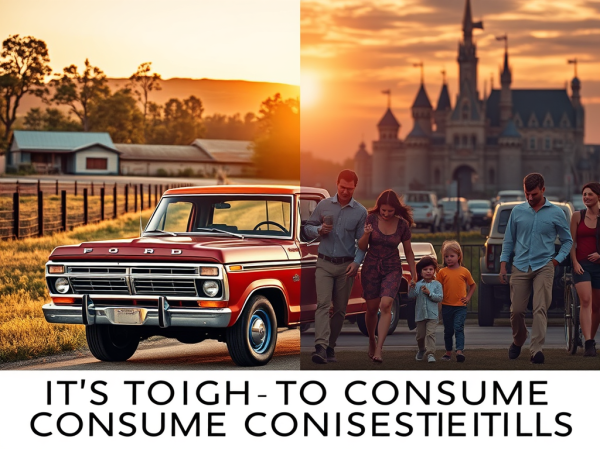
My parents never had this problem when I was a kid. My dad was a Ford man. Although he hasn’t driven for 10 years, he still is. If you grew up in the country, your choices were simple – you needed a pickup truck. And in the 1960s and 70s, there were only three choices: Ford, GMC or Dodge. For dad, the choice was Ford – always.

Back then, brand relationships were pretty simple. We benefited from the bliss of ignorance. Did the Ford Motor Company do horrible things during that time? Absolutely. As just one example, they made a cost-benefit calculation and decided to keep the Pinto on the road even though they knew it tended to blow up when hit from the rear. There is a corporate memo saying – in black and white – that it would be cheaper to settle the legal claims of those that died than to fix the problem. The company was charged for negligent homicide. It doesn’t get less ethical than that.

But that didn’t matter to Dad. He either didn’t know or didn’t care. The Pinto Problem, along with the rest of the shady stuff done by the Ford Motor Company, including bribes, kickbacks and improper use of corporate funds by Henry Ford II, was not part of Dad’s consumer decision process. He still bought Ford. And he still considered himself a good person. The two things had little to do with each other.

Things are harder now for consumers. We definitely have more choice, and those choices are harder, because we know more.  Even buying eggs becomes an ethical struggle. Do we save a few bucks, or do we make some chicken’s life a little less horrible?

Let me give you the latest example from my life. Next year, we are planning to take our grandchildren to a Disney theme park. If our family has a beloved brand, it would be Disney. The company has been part of my kids’ lives in one form or another since they were born and we all want it to be part of their kid’s lives as well.

Without getting into the whole debate, I personally have some moral conflicts with some of Disney’s recent corporate decisions. I’m not alone. A Facebook group for those planning a visit to this particular park has recently seen posts from those agonizing over the same issue. Does taking the family to the park make us complicit in Disney’s actions that we may not agree with? Do we care enough to pull the plug on a long-planned park visit?

This gets to the crux of the issue facing consumers now – how do we balance our beliefs about what is wrong and right with our desire to consume? Which do we care more about? The answer, as it turns out, seems to almost always be to click the buy button as we hold our noses.

One way to make that easier is to tell ourselves that one less visit to a Disney mark will make virtually no impact on the corporate bottom line. Depriving ourselves of a long-planned family experience will make no difference. And – individually – this is true. But it’s exactly this type of consumer apathy which, when aggregated, allows corporations to get away with being bad moral characters.

Even if we want to be more ethically deliberate in our consumer decisions, it’s hard to know where to draw the line. Where are we getting our information about corporate behavior from? Can it be trusted? Is this a case of one regrettable action, or is there a pattern of unethical conduct? These decisions are always complex, and coming to any decision that involves complexity is always tricky.

To go back to a simpler time, my grandmother had a saying that she applied liberally to any given situation, “What does all this have to do with the price of tea in China?” Maybe she knew what was coming.

The Credibility Crisis

We in the western world are getting used to playing fast and loose with the truth. There is so much that is false around us – in our politics, in our media, in our day-to-day conversations – that it’s just too exhausting to hold everything to a burden of truth. Even the skeptical amongst us no longer have the cognitive bandwidth to keep searching for credible proof.

This is by design. Somewhere in the past four decades, politicians and society’s power brokers have discovered that by pandering to beliefs rather than trading in facts, you can bend to the truth to your will. Those that seek power and influence have struck paydirt in falsehoods.

In a cover story last summer in the Atlantic, journalist Anne Applebaum explains the method in the madness: “This tactic—the so-called fire hose of falsehoods—ultimately produces not outrage but nihilism. Given so many explanations, how can you know what actually happened? What if you just can’t know? If you don’t know what happened, you’re not likely to join a great movement for democracy, or to listen when anyone speaks about positive political change. Instead, you are not going to participate in any politics at all.”

As Applebaum points out, we have become a society of nihilists. We are too tired to look for evidence of meaning. There is simply too much garbage to shovel through to find it. We are pummeled by wave after wave of misinformation, struggling to keep our heads above the rising waters by clinging to the life preserver of our own beliefs. In the process, we run the risk of those beliefs becoming further and further disconnected from reality, whatever that might be. The cogs of our sensemaking machinery have become clogged with crap.

This reverses a consistent societal trend towards the truth that has been happening for the past several centuries. Since the Enlightenment of the 18th century, we have held reason and science as the compass points of our True Norh. These twin ideals were buttressed by our institutions, including our media outlets. Their goal was to spread knowledge. It is no coincidence that journalism flourished during the Enlightenment. Freedom of the press was constitutionally enshrined to ensure they had the both the right and the obligation to speak the truth.

That was then. This is now. In the U.S. institutions, including media, universities and even museums, are being overtly threatened if they don’t participate in the wilful obfuscation of objectivity that is coming from the White House. NPR and PBS, two of the most reliable news sources according to the Ad Fontes media bias chart, have been defunded by the federal government. Social media feeds are awash with AI slop. In a sea of misinformation, the truth becomes impossible to find. And – for our own sanity – we have had to learn to stop caring about that.

But here’s the thing about the truth. It gives us an unarguable common ground. It is consistent and independent from individual belief and perspective. As longtime senator Daniel Patrick Moynihan famously said, “Everyone is entitled to his own opinion, but not to his own facts.” 

When you trade in falsehoods, the ground is consistently shifting below your feet. The story is constantly changing to match the current situation and the desired outcome. There are no bearings to navigate by. Everyone had their own compass, and they’re all pointing in different directions.

The path the world is currently going down is troubling in a number of ways, but perhaps the most troubling is that it simply isn’t sustainable. Sooner or later in this sea of deliberate chaos, credibility is going to be required to convince enough people to do something they may not want to do. And if you have consistently traded away your credibility by battling the truth, good luck getting anyone to believe you.

The Tesla Cybertruck’s Branding Blow-Up

The inexact science of branding is nowhere more evident that in the case of the Tesla Cybertruck, which looks like it might usurp the Edsel’s title as the biggest automotive flop in history.

First, a little of the Tesla backstory. No, it wasn’t founded by Elon Musk. It was founded in 2003 by Martin Eberhard and Marc Tarpenning. Musk came in a year later as a money man. Soon, he had forced Eberhard and Tarpenning out of the company. But their DNA remained, notably in the design and engineering of the hugely popular Tesla Model S, Model X and Model 3. These designs drove Tesla to capture over 50% of the electric car market and are straight line extensions of the original technology developed by Eberhard, Tarpenning and their initial team

Musk is often lauded as an eccentric genius in the mold of Steve Jobs, who had his fingers in every aspect of Tesla. While he was certainly influential, it’s not in the way most people think. The Model S, Model X and Model 3 soon became plagued by production issues, failed software updates, product quality red flags and continually failing to meet to meet Musk’s wildly optimistic and often delusional predictions, both in terms of sales and promised updates. Those things all happened on Musk’s watch.  Even with all this, Tesla was the darling of investors and media, driving it to be the most valuable car company in the world.

Then came the Cybertruck.

Introduced in 2019, the Cybertruck did have Musk’s fingerprints all over it. The WTF design, the sheer impracticality of a truck in name only, a sticker price nearly double of what Musk originally promised and a host of quality issues including body panels that have a tendency to fall off have caused sales to not even come close to projections.

In its first year of sales (2024), the Cybertruck sold 40,000 units, about 16% of what Musk predicted annual sales could be. That makes it a bigger fail than the Edsel, which sold 63,000 units against a target of 200,000 sales in its introductory year – 1958. The Edsel did worse in 1959 and was yanked from the market in 1960. The Cybertruck is sinking even faster. In the first quarter of this year, only 6406 Cybertrucks were sold, half the number sold in the same quarter a year ago. There are over 10,000 Cybertrucks on Tesla lots in the U.S., waiting for buyers that have yet to show up.

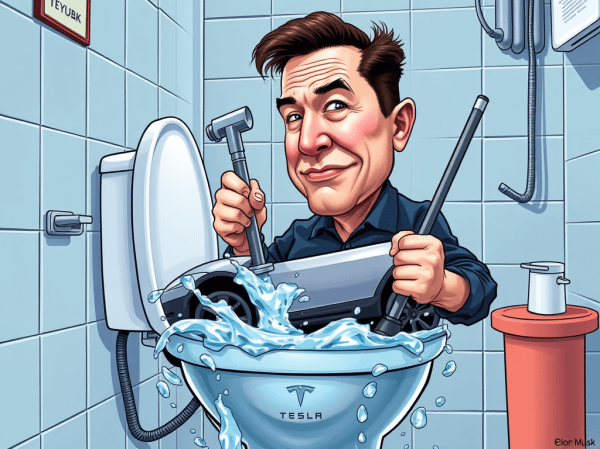
But it’s not just that the Cybertruck is a flawed product. Musk has destroyed Tesla’s brand in a way that can only be marvelled at. His erratic actions have managed to generate feelings of visceral hate in a huge segment of the market and that hate has found a visible target in the Cybertruck. It has become the symbol of Elon Musk’s increasingly evident meltdown.

I remember my first reaction when I heard that Musk had jumped on the MAGA bandwagon. “How the hell,” I thought, “does that square with the Tesla brand?” That brand, pre-Musk-meltdown and pre-Cybertruck, was a car for the environmentally conscious who had a healthy bank account – excitingly leading edge but not dangerously so. Driving a Tesla made a statement that didn’t seem to be in the MAGA lexicon at all. It was all very confusing.

But I think it’s starting to make a little more sense. That brand was built by vehicles that Musk had limited influence over. Sure, he took full credit for the brand, but just like company he took over, it’s initial form and future direction was determined by others.

The Cybertruck was a different story. That was very much Musk’s baby. And just like his biological ones (14 and counting), it shows all the hallmarks of Musk’s “bull in a China shop” approach to life. He lurches from project to project, completely tone-deaf to the implications of his actions. He is convinced that his genius is infallible. If the Tesla brand is a reflection of Musk, then the Cybertruck gives us a much truer picture. It shows what Tesla would have been if there had never been a Martin Eberhard and Marc Tarpenning and Musk was the original founder.

To say that the Cybertruck is “off brand” for Tesla is like saying that the Titanic had a tiny mishap. But it’s not that Musk made a mistake in his brand stewardship. It’s that he finally had the chance to build a brand that he believed in.

Can Innovation Survive in Trump’s America?

If there was one thing that has sparked America’s success, it has been innovation. That has been the engine that has driven the U.S. forward for at least the last several decades. Yes, the U.S. has natural resources. Yes, at one time the U.S. led the world in manufacturing output. But in their pursuit of adding value to economic output to maximize profit, the U.S. has moved beyond resource extraction and manufacturing to the far-right end of the value chain, where the American economic engine relies heavily on innovation.

Donald Trump can talk all he wants about making America great again by bringing back manufacturing jobs that have migrated elsewhere in the world (a goal that many, including the Economic Policy Institute, feel is delusion, at least using Trump’s approach), but if innovation dies in the process, the U.S. loses. Game over. It’s innovation that now fuels the American Dream.

Given that, MAGA adherents should be careful what they wish for. The Great America they envision is a place where it may be impossible for that kind of innovation to survive.

World class innovation needs an ecosystem, where there is adequate funding for start-ups, a friendly regulatory framework, a robust research environment and an open-door policy for innovative immigrants from other countries – all of which the US has historically had in spades. And – theoretically at least – it’s an ecosystem that Trump is promising high tech and why the tech broligarchy has been quick to court him. But like so many things with Trump, the reality will fall far short of his promises. In fact, he will likely stop innovation in its tracks and send U.S. ingenuity reeling backwards.

Next to the regulatory and economic inputs required for innovation – and perhaps more important than both – the biggest requirement for innovation is an environment that fosters divergent thinking. Study after study has shown that innovation lives best in an environment that fosters collaboration, invites different perspectives and provides a safe space for experimentation. All those things can be found in exactly the opposite of the direction in which the U.S. is currently headed.

Each year, the World Intellectual Property Organization publishes their Global Innovation Index. In 2024, the U.S. was in third spot, behind Switzerland and Sweden. To understand how innovation flourishes, it’s worth looking at what the most innovative countries have in common. Of the top ten (the others are Singapore, the U.K., South Korea, Finland, Netherlands, Germany and Denmark), almost all score the highest marks from the Economist Democracy Index for the strength of their democracy. Singapore is still struggling towards full democracy, and the U.S. is now considered to be a “flawed democracy”, in real danger of becoming an authoritarian regime.

The European contenders also receive very high marks for their social values and enshrining personal rights and freedoms. Those are exactly the things currently being dismantled in America.

There is only one country which is defined as an authoritarian regime that made the top 25 of the Global Innovation Index. China sits in the 11th spot. This brings us to a good question, “Can innovation happen in an authoritarian regime?” The answer, I believe, is a qualified yes. But it’s innovation we may not recognize, and which may turn out to be a lot less attractive than we thought.

I happened to visit China right around the time that Google was trying to move into the huge Chinese Market. Their main competition was Baidu, the home-grown search engine. I was talking to a Google engineer about how they were competing with Baidu. He said it was almost impossible to match the speed at which they could roll out new features. The reason wasn’t that they were more innovative. It was because they innovated through brute force. They could throw hundreds of programmers at an issue and hard code it at the interface level, rather than take the Western approach of embedding core functionality in the base code in a more elegant and sustainable approach. The Chinese could afford to endlessly code and recode.

It’s Brute Force Innovation that you’ll find in authoritarian regimes and dictatorships. It’s what the Soviets used to compete in the space race. It’s what Nazi Germany used when they developed rocket science in a desperate bid to survive World War II. It is innovation dictated by the regime, innovating in prioritized areas by sheer force despite the fact that the typical underpinnings of innovation – creative freedom, divergent thinking, the security needed to experiment and fail – have been eliminated.

If you look at the playbook Trump seems to be following – akin to the one Victor Orbán used in Hungary (ranked 36th on the Global Innovation Index) or Putin’s Russia (ranked 59th) – there appears to be  little hope for the U.S. to retain its world dominance in innovation.

Will There Be a Big-Tech Reckoning?

Jeff Bezos, Mark Zuckerberg and Tim Cook must be thanking their lucky stars that Elon Musk is who he is. Musk is taking the brunt of any Anti-Trump backlash and seems to be relishing in it. Heaven only knows what is motivating Musk, but he is casting a smoke screen so wide and dense it’s obliterating the ass-kissing being done by the rest of the high-tech oligarchs.  In addition to Bezos, Zuckerberg and Cook, Microsoft’s Satya Nadella, Google’s Sundar Pichai and many other high-tech leaders have been making goo-goo eyes at Donald Trump.

Let’s start with Jeff Bezos. One assumes he is pandering to the president because his companies have government contracts worth billions. That pandering has included a pilgrimage to Trump’s Mar-a-Lago, a one million donation to his inauguration fund (which was streamed live on Amazon Prime), and green-lighting a documentary on Melania Trump. The Bezos-owned Washington Post declined from endorsing Kamala Harris as a presidential candidate, prompting some of its editorial staff to resign. At Amazon, the company has backed off some of its climate pledge commitments and started stripping Diversity, Equity and Inclusion programs from their HR handbook.

Mark Zuckerberg joined Trump supporting podcaster Joe Rogan for almost three hours to explain how they were realigning Facebook to be more Trump-friendly. This included canning their fact checkers and stopping policing of misinformation. During the interview, Zuckerberg took opportunities to slam media and the outgoing Biden administration for daring to question Facebook about misleading posts about Covid-19 vaccines. Zuckerberg, like Bezos, also donated $1 million to Trump’s inaugural fund and has rolled back DEI initiatives at Meta.

Tim Cook’s political back-bend had been a little more complicated. On the face of it, Apple’s announcement that it would be investing more than $500 billion in the U.S. and creating thousands of new jobs certainly sounds like a massive kiss to the Trumpian posterior but if you dig through the details, it’s really just putting a new spin on commitments Apple already made to support their development of Apple’s AI. And in many cases, the capital investment isn’t even coming from Apple. For instance, that new A.I. server manufacturing plant in Houston that was part of the announcement? That plant is actually being built by Apple partner Foxconn, not Apple.

As far as the rest of the Big Tech cabal, including Microsoft, Google and OpenAI, their new alignment with Trump is not surprising. Trump is promising to make the U.S. the undisputed leader in A.I. One would also imagine he would be more inclined than the Democrats to look the other way when it comes to things like anti-trust investigations and enforcement. So Big-Tech’s deferment to Trump is both entirely predictable and completely self-serving. I’m also guessing that all of them think they’re smarter than Trump and his administration, providing them a strategic opportunity to play Trump like a fiddle while pursuing their long-term corporate goals free from any governmental oversight or resistance. All evidence to date shows that they’re probably not mistaken in that assumption.

But all this comes at what cost? This could play out one of two ways. First, what happens if these High-Tech Frat Rat’s bets are wrong? There is an anti-Trump, anti-MAGA revolt building. Who knows what will happen, but in politically unprecedented times like this one has to consider every scenario, no matter how outrageous they may seem. One scenario is a significant percentage of Republicans decide their political future (and, hopefully, the future of the US as a democracy also factors into their thinking) is better off without a Donald Trump in it and start the wheels turning to remove him from power. If this is the case, things are going to get really, really nasty. There is going to be recrimination and finger pointing everywhere. And some of those fingers are going to be pointed at the big tech leaders who scrapped the ground bowing to Trump’s bluster and bullying.

Will that translate into a backlash against high-tech? I really am not sure. To date, these companies have been remarkably adept at sluffing off blame. IF MAGA ends up going down in flames, will Big Tech even get singed as they warm their hands at Donald Trump’s own bonfire of his vanities? Will we care about Big Tech’s obsequiousness when it comes time to order something from Amazon or get a new iPhone?

Probably not.  

But the other scenario is even more frightening: Trump stays in power and Big Tech is free to do whatever they hell they want. Based on what you know about Elon Musk, Mark Zuckerberg, Jeff Bezos and the rest, are you willing to let them be the sole architects of your future? Their about-face on Trump has shown that they will always, always, always place profitability above their personal ethics.

When Branding and Politics Collide

It is the worst timing possible to open a Tesla dealership.

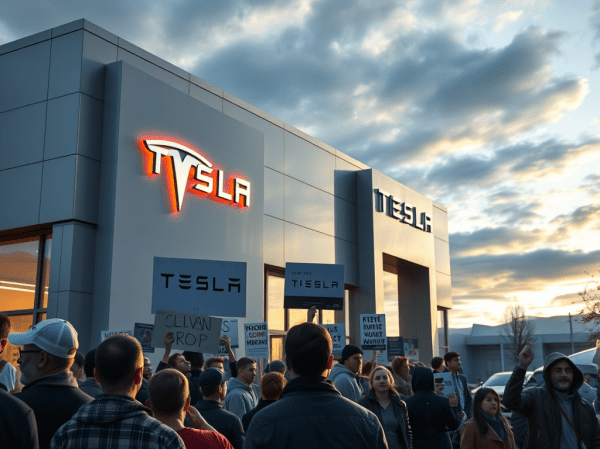
 In Kelowna, the western Canadian city I live in, a new 30,000 square foot Tesla dealership is scheduled to open their doors any day now.  When they do, I’m guessing business will not be brisk. It takes a lot to get Canadians worked up (hockey games aside) but the Trump administration has managed to do something I haven’t seen before in my lifetime – uniting Canadians in a passionate rage. Between picking a totally unjustified trade war with us and continually threatening to make us a 51st State, Donald Trump hasn’t made any friends in my country. And – by extension – that includes his hatchet/chainsaw man and the face of Tesla, Elon Musk.

This is not just happening here in Canada. Tesla owners are having a rough month everywhere. Their cars are being customized with swastikas. Their daily drive is regularly punctuated with middle finger salutes. They are being verbally accosted at Tesla charging stations. And, if they happen to have to go to their dealership, chances are very good that they’ll have to navigate past a pack of protesters. According to the website Actionnetwork.org, there are 101 TeslaTakedown protests scheduled across the US and around the world in the next few weeks.

That is a dramatic turnaround for a car brand that single handedly made driving an electric vehicle cool. The TeslaTakedown campaign is urging drivers to dump their cars and shareholders to sell their stock. A recent survey out of the Netherlands says that one in three Tesla owners are considering selling.

This has nothing to do with whether Teslas are good cars or not. They’re the same vehicles they were 6 months ago. This is simply about branding, and right now, the Tesla brand and Elon Musk are one and the same. That brand is not popular with the majority of the world right now, especially here in Canada.

Like I said – it’s really bad timing to open a new dealership.

As this is all playing out, it got me thinking about another car brand that got on the wrong side of politics 80 years ago. In 1945, Volkswagen was not the 2nd largest car manufacturer in the world, as it is now. It was a shuttered factory in Wolfsburg, Germany that was set to be dismantled by the Allied occupiers, led by the British.  

Volkswagen was founded in 1937 by the Nazi Party’s German Labor Front as a prestige project to show that German workers could produce the world’s best “People’s Car” (which is literally what “Volkswagen” means). That vehicle would be the first prototype of the now much-loved Beetle that we of a certain age immediately associate with Volkswagen. In 1938, Hitler himself christened this the KdF-Wagen, which stood for “Kraft durch Freude” – Strength through Joy. Even the car’s name was a banner for Nazi propaganda.

Eight years later – in 1945 – it was a different story. The Wolfsburg factory was to be dismantled as part of the de-Nazification of German industry and the equipment was to be sent to a British car manufacturer, but none of them wanted it. Three things saved Volkswagen:

  • The design was solid. The wartime version of the VW – the Kubelwagen – was exceptionally reliable
  • There was a desperate need for military transportation in the now occupied zone and there was no manufacturer able to fulfill that need
  • There was a factory ready to go and a skilled workforce who were in danger of starving if they didn’t go back to work

These three things convinced the British trustees to reopen the Wolfsburg plant. By March of 1946, the plant was producing 1000 cars a month.  In 1947, Volkswagen began exporting passenger vehicles to other European markets, including the Netherlands, Switzerland and Denmark. This export model became the Beetle in the form I first knew it.

By the end of the 1950’s, Volkswagen had expanded through Europe and was ready to take on the US, a market dominated by the Big Three (Ford, GM and Chrysler) domestic manufacturers. At the time, almost no imported vehicles were sold in America.

Thanks to an inspired “Think Small” advertising campaign, created by copywriter Julian Koenig and Art Director Helmut Krone from Doyle Dane Bernbach, Volkswagen became the US’s favorite import. The campaign used humor, honesty and irony to spark a love for the VW brand. This branding and the oil crisis of the 1970’s placed VW in the perfect position to capitalize on a sudden market for smaller, more fuel-efficient vehicles. In 1961, Volkswagen passed the 1 million vehicles manufactured per year milestone. By 1972, that had more than doubled to almost 2.2 million cars made per year. Three quarters of those were sold in export markets.

As I said, today the Volkswagen group is now the number 1 or 2 auto manufacturer in the world, depending on which yardstick you use (per unit sales or total revenue). They do fall short on the list of most valuable car companies in the world, based on market capitalization.

So, what is the most valuable car company in the world? Tesla.

For now, anyway.

The World vs Big Tech

Around the world, governments have their legislative cross hairs trained on Big Tech. It’s happening in the US, the EU and here in my country,  Canada. The majority of these are anti-trust suits. But Australia has just introduced a different type of legislation, a social media ban for those under 16. And that could change the game – and the conversation -completely for Big Tech.

There are more anti-trust actions in the queue in the US than at any time in the previous five decades. The fast and loose interpretation of antitrust enforcement in the US is that monopolies are only attacked when they may cause significant harm to customers through lack of competition. The US approach to anti-trust since the 1970s has typically followed the Chicago School of neoclassical economy theory, which places all trust in the efficiency of markets and tells government to keep their damned hands off the economy. Given this and given the pro-business slant of all US administrations, both Republican and Democratic, since Reagan, it’s not surprising that we’ve seen relatively few anti-trust suits in the past 50 years.

But the rapid rise of monolithic Big Tech platforms has raised more discussion about anti-trust in the past decade than in the previous 5 decades. These platforms suck along the industries they spawn in their wake and leave little room for upstart competitors to survive long enough to gain significant market share.

Case in point: Google. 

The recent Canadian lawsuit has the Competition Bureau (our anti-trust watchdog) suing Google for anti-competitive practices selling its online advertising services north of the 49th parallel. They’re asking Google to sell off two of its ad-tech tools, pay penalties worth up to 3% of the platform’s global gross revenues and prohibit the company from engaging in anti-competitive practices in the future.

According to a 3-year inquiry into Google’s Canadian business practices by the Bureau, Google controls 90% of all ad servers and 70% of advertising networks operating in the country. Mind you, Google started the online advertising industry in the relatively green fields of Canada back when I was still railing about the ignorance of Canadian advertisers when it came to digital marketing. No one else really had a chance. But Google made sure they never got one by wrapping its gigantic arms around the industry in an anti-competitive bear hug.

The recent Australian legislation is of a different category, however. Anti-trust suits are – by nature – not personal. They are all about business. But the Australian ban puts Big Tech in the same category as Big Tobacco, Big Alcohol and Big Pharma – alleging that they are selling an addictive product that causes physical or emotional harm to individuals. And the rest of the world is closely watching what Australia does. Canada is no exception.

The most pertinent question is how will Australia enforce the band? Restricting social media access to those under 16 is not something to be considered lightly.  It’s a huge technical, legal and logistical hurdle to get over. But if Australia can figure it out, it’s certain that other jurisdictions around the world will follow in their footsteps.

This legislation opens the door to more vigorous public discourse about the impact of social media on our society. Politicians don’t introduce legislation unless they feel that – by doing so – they will continue to get elected. And the key to being elected is one of two things; give the electorate what they want or protect them against what they fear. In Australia, recent polling indicates the ban is supported by 77% of the population. Even those opposing the ban aren’t doing so in defense of social media. They’re worried that the devil might be in the details and that the legislation is being pushed through too quickly.

These types of things tend to follow a similar narrative arc: fads and trends drive widespread adoption – evidence mounts about the negative impacts – industries either ignore or actively sabotage the sources of the evidence – and, with enough critical mass, government finally gets into the act by introducing protective legislation.

With tobacco in the US, that arc took a couple of decades, from the explosion of smoking after World War II to the U.S. Surgeon General’s 1964 report linking smoking and cancer. The first warning labels on cigarette packages appeared two years later, in 1966.

We may be on the cusp of a similar movement with social media. And, once again, it’s taken 20 years. Facebook was founded in 2004.

Time will tell. In the meantime, keep an eye on what’s happening Down Under.

The Political Brinkmanship of Spam

I am never a fan of spam. But this is particularly true when there is an upcoming election. The level of spam I have been wading through seems to have doubled lately. We just had a provincial election here in British Columbia and all parties pulled out all stops, which included, but was not limited to; email, social media posts, robotexts and robocalls.

In Canada and the US, political campaigns are not subject to phone and text spam control laws such as our Canadian Do Not Call List legislation. There seems to be a little more restriction on email spam. A report from Nationalsecuritynews.com this past May warned that Americans would be subjected to over 16 billion political robocalls. That is a ton of spam.

During this past campaign here in B.C., I noticed that I do not respond to all spam with equal abhorrence. Ironically, the spam channels with the loosest restrictions are the ones that frustrate me the most.

There are places – like email – where I expect spam. It’s part of the rules of engagement. But there are other places where spam sneaks through and seems a greater intrusion on me. In these channels, I tend to have a more visceral reaction to spam. I get both frustrated and angry when I have to respond to an unwanted text or phone call. But with email spam, I just filter and delete without feeling like I was duped.

Why don’t we deal with all spam – no matter the channel – the same? Why do some forms of spam make us more irritated than others? It’s almost like we’ve developed a spam algorithm that dictates how irritated we get when we deal with spam.

According to an article in Scientific American, the answer might be in how the brain marshalls its own resources.

When it comes to capacity, the brain is remarkably protective. It usually defaults to the most efficient path. It likes to glide on autopilot, relying on instinct, habit and beliefs. All these things use much less cognitive energy than deliberate thinking. That’s probably why “mindfulness” is the most often quoted but least often used meme in the world today.

The resource we’re working with here is attention. Limited by the capacity of our working memory, attention is a spotlight we must use sparingly. Our working memory is only capable of handling a few discrete pieces of information at a time. Recent research suggests the limit may be around 3 to 5 “chunks” of information, and that research was done on young adults. Like most things with our brains, the capacity probably diminishes with age. Therefore, the brain is very stingy with attention. 

I think spam that somehow gets past our first line of defence – the feeling that we’re in control of filtering – makes us angry. We have been tricked into paying attention to something that was unsuspected. It becomes a control issue. In an information environment where we feel we have more control, we probably have less of a visceral response to spam. This would be true for email, where a quick scan of the items in our inbox is probably enough to filter out the spam. The amount of attention that gets hijacked by spam is minimal.

But when spam launches a sneak attack and demands a swing of attention that is beyond our control, that’s a different matter. We operate with a different mental modality when we answer a phone or respond to a text. Unlike email, we expect those channels to be relatively spam-free, or at least they are until an election campaign comes around. We go in with our spam defences down and then our brain is tricked into spending energy to focus on spurious messaging.

How does the brain conserve energy? It uses emotions. We get irritated when something commandeers our attention. The more unexpected the diversion, the greater the irritation.  Conversely, there is the equivalent of junk food for the brain – input that requires almost no thought but turns on the dopamine tap and becomes addictive. Social media is notorious for this.

This battle for our attention has been escalating for the past two decades. As we try to protect ourselves from spam with more powerful filters, those that spread spam try to find new ways to get past those filters. The reason political messaging was exempt from spam control legislation was that democracies need a well-informed electorate and during election campaigns, political parties should be able to send out accurate information about their platforms and positions.

That was the theory, anyway.

The Relationship Between Young(er) People and Capitalism: It’s Complicated

If you, like me, spend any time hanging out with Millennials or Gen Z’s, you’ll know that capitalism is not their favorite thing. That’s fair enough. I have my own qualms with capitalism.

But with capitalism, like most things, it’s not really what you say about it that counts. It’s what you do about it. And for all of us, Millennials and Gen Z included, we can talk all we want, but until we stop buying, nothing is going to change. And – based on a 2019 study from Epsilon – Gen Z and Millennials are outspending Baby Boomers in just about every consumer category.

Say all the nasty stuff you want about capitalism and our consumption obsessed society, but the truth is – buying shit is a hard habit to break

It’s not that hard to trace how attitudes towards capitalism have shifted over the generations that have been born since World War II, at least in North America. For four decades after the war, capitalism was generally thought to be a good thing, if only because it was juxtaposed against the bogeyman of socialism. Success was defined by working hard to get ahead, which led to all good things: buying a house and paying off the mortgage, having two vehicles in the garage and having a kitchen full of gleaming appliances. The capitalist era peaked in the 1980s: during the reign of Ronald Reagan in the US and the UK’s Margaret Thatcher.

But then the cracks of capitalism began to show. We began to realize the Earth wasn’t immune to being relentlessly plundered. We started to see the fabric of society showing wear and tear from being constantly pulled by conspicuous consumerism. With the end of the Cold War, the rhetoric against socialism began to be dialed down. Generations who grew up during this period had – understandably – a more nuanced view towards capitalism.

Our values and ethics are essentially formed during the first two decades of our lives. They come in part from our parents and in part from others in our generational cohort. But a critical factor in forming those values is also the environment we grow up in. And for those growing up since World War II, media has been a big part of that environment. We are – in part – formed by what we see on our various screens and feeds. Prior to 1980, you could generally count on bad guys in media being Communists or Nazis. But somewhere mid-decade, CEOs of large corporations and other Ultra-Capitalists started popping up as the villains.

I remember what the journalist James Fallows once said when I met him at a conference in communist China. I was asking how China managed to maintain the precarious balance between a regime based on Communist ideals and a society that embraced rampant entrepreneurialism. He said that as long as each generation believed that their position tomorrow would be better than it was yesterday, they would keep embracing the systems of today.

I think the same is true for generational attitudes towards capitalism. If we believed it was a road to a better future, we embraced it. But as soon as it looked like it might lead to diminishing returns, attitudes shifted. A recent article in The Washington Post detailed the many, many reasons why Americans under 40 are so disillusioned about capitalism. Most of it relates back to the same reason Fallows gave – they don’t trust that capitalism is the best road to a more promising tomorrow.

And this is where it gets messy with Millennials and Gen Z. If they grew up in the developed world, they grew up in a largely capitalistic society. Pretty much everything they understand about their environment and world has been formed, rightly or wrongly, by capitalism. And that makes it difficult to try to cherry-pick your way through an increasingly problematic relationship with something that is all you’ve ever known.

Let’s take their relationship with consumer brands, for example. Somehow, Millennials and Gen Z have managed the nifty trick of separating branding and capitalism. This is, of course, a convenient illusion. Brands are inextricably tied to capitalism. And Millennials and Gen Z are just as strongly tied to their favorite brands.

 According to a 2018 study from Ipsos, 57% of Millennials in the US always try to buy branded products. In fact, Millennials are more likely than Baby Boomers to say they rely on the brands they trust. This also extends to new brand offerings. A whopping 84% of Millennials are more likely to trust a new product from a brand they already know.

But – you may counter – it all depends on what the brand stands for. If it is a “green” brand that aligns with the values of Gen X and Millennials, then a brand may actually be anti-capitalistic.  

It’s a nice thought, but the Ipsos survey doesn’t support it. Only 12% of Millennials said they would choose a product or service because of a company’s responsible behavior and only 16% would boycott a product based on irresponsible corporate behavior. These numbers are about the same through every generational cohort, including Gen X and Baby Boomers.

I won’t even delve into the thorny subject of “greenwashing” and the massive gap between what a brand says they do in their marketing and what they actually do in the real world. No one has defined what we mean by a “ethical corporation” and until someone does and puts some quantifiable targets around it, companies are free to say whatever they want when it comes to sustainability and ethical behavior.

This same general disconnect between capitalism and marketing extends to advertising. The Ipsos study shows that – across all types of media – Millennials pay more attention to advertising than Baby Boomers and Gen X. And Millennials are also more likely to share their consumer opinions online than Boomers and Gen X. They may not like capitalism and consumerism, but they are still buying lots of stuff and talking about it.

The only power we have to fight the toxic effects of capitalism is with our wallets. Once something becomes unprofitable, it will disappear. But – as every generation is finding out – ethical consumerism is a lot easier said than done.