Notes from China

First published May 31, 2007 in Mediapost’s Search Insider

I let Chris Sherman convince me that if I had to choose one overseas show this year, it should be SES China in Xiamen. Part of me is thanking Chris, and part of me is cursing the hell out of him. To be fair, he warned me that this is a cultural shock of significant magnitude. He was right.

I’ll leave the personal observations for my blog. One of the reasons I came was that I knew this was the most important online market in the world, and I had to dip my toe in for myself. For that, I do have to thank Chris. A few weeks ago I was in Florida for the Search Insider Summit, and made a note of some advice Esther Dyson passed in the keynote presentation to the ersatz “Bill Gates” (played by David Vise): “Make sure your kids learn Mandarin.” Xie Xie (thank you), Esther. You’re absolutely right.

Big, But Just Beginning

Let me give you some sense of the magnitude of this market. Right now, the Chinese Internet market is the second largest in the world, only a whisker behind the U.S.: 150 million users to the U.S.’154 million. But the U.S has 68% penetration. That 150 million represents only about 10% of the Chinese market. At full saturation, the Chinese market will be almost seven times as large as that of the U.S.

But don’t make the mistake of projecting the U.S. experience onto the emerging Chinese market. Chinese culture is vastly different from ours, and their online community reflects this difference. For one thing, much of the Chinese online experience will likely happen through mobile devices, since the mobile market is much more mature here. While the number of Internet subscribers is 150 million, the number of cell phone subscribers is significantly higher, nearly 500 million (as of October, 2006) and is growing at the rate of 5.5 million subscribers per month. For another, the Sino mind just clicks at a different speed than ours.

Hot and Noisy Online

One of my favorite phrases I’ve learned while here was renao, which loosely translates into “hot and noisy.” It was explained to me by Deborah Fallows from the PEW Internet Group, an U.S. ex-pat living in Shanghai for two years with her husband, author and journalist Jim Fallows. It sums up so much of what I’ve seen here. The Chinese like to be bombarded by visual stimuli. They operate at a frenetic pace, juggling several things at once, each loudly demanding attention. Some look at this as a lack of maturity in the Asian market. Western eyes see Chinese Web sites as garish, and we think this is because the designers aren’t very sophisticated yet. Perhaps it’s just designers catering to their audience, who like it “hot and noisy.”

Savoring Information

The other difference is how Western cultures treat information, compared to the Chinese. In the West, information is in no short supply, and for the most part, we inherently trust the source of that information. We believe most things we read online to be true. Our biggest challenge is to wade through the mountain of information available to us and to eliminate the irrelevant. The Chinese treasure information yet have a healthy skepticism as to its veracity. While Western Web users are ruthless in their filtering of information, particularly on a search page, the Chinese are more apt to gather and consider, taking time to digest and choose. They often have multiple windows open at the same time, both as a way to keep busy with the slower load times typical in China, and also because they like their desktop “hot and noisy.”

Keeping an Eye on the Market

One of the reasons I was here was to share preliminary findings from an eye-tracking study we did with Chinese users on the two main Chinese search properties, Baidu and Google.cn. This difference in user behavior became very apparent in the study. In North America, the average interaction with a search results page, from launch to first click, is generally less than 10 seconds. In the Chinese study, we saw averages of 30 seconds on Google and up to a minute on Baidu. While North American scan activity is condensed in the Golden Triangle, in China, it’s spread around the page.

It’s fascinating to watch an individual session. The eye zips around the page, picking up information in an apparently haphazard manner. Baidu has been taken to task for the opaque nature of its listings, where you can pay for placement. The results are also much more prone to affiliate spam (on both engines, but particularly Baidu) than we see in North America. But the Chinese don’t mind. Baidu has captured 62% of the search market here, compared to 20% for Google. After all, lack of trust in information is nothing new to the Chinese. Why should it be any different on a search engine?

Everyone I’ve talked to here agrees. This is a market ready to explode. Innovation is happening organically and at an incredibly rapid pace. The development cycle to turn out new functionality on Chinese sites is 30% to 50% as long as their North-American-based rivals. As somebody told me, “In China, you point, shoot and then aim. Deliberation will kill you here.”

This is a lesson Google is learning the hard way. Chris noted that the level of sophistication has increased immensely from the last trade show here, in 2006. The Chinese Internet market is like a Beijing taxi: there may be no logic to its route, but it’s sure getting to wherever it’s going in a hurry!

Universal Search and Other Surprises from Google’s Searchology

When Google yesterday invited a number of reporters to come down to Mountain View for an event they called Searchology, I figured they had something in the works. I had to turn down the invitation because of other commitments, but we sent Enquiro’s Director of Technology and analytics blogger, Manoj Jasra down in my stead. Sure enough, just after noon yesterday, I received a press release announcing the introduction of universal search. I haven’t had a chance to talk to Manoj about what else Google may have unveiled in Mountain View yesterday, but even just working my way through the official release from Google gave me plenty of food for thought. For the extensive list of the announcements and some running commentary, check out Danny’s post on Searchengineland.

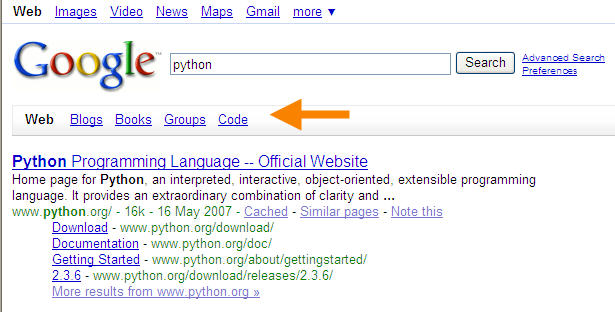
To me, the one thing that jumps out in this is the announcement of Universal Search. Basically, Universal Search is the breaking down of the information silos that currently exist on Google and blending them into a single set of results. The changes right now are very subtle. Web results still dominate the typical results page and the primary thing that would be noticeable by the user are additional dynamically generated navigation links that sit just about the results.

universalsearch

The key to universal search results is an on-the-fly algorithm that looks across all of Google’s information sources and prioritizes and ranks all the items coming from these disparate sources based on the user intent. Now, it’s in those last five words, “based on the user intent” that the really important piece of this comes out. Just a few weeks ago, I interviewed Marissa Mayer about the inclusion of Web history in the dataset to calculate personalized search results. This just gives Sep Kamvar and his personalization algorithm a lot more to chew on as they determine user intent. During the interview, I asked Marissa Mayer if personalization allows Google to be more confident in delivering vertical results. Marissa indicated that this was not an area they were currently looking at.

There are a lot of different things that we could do with this data. I’ll be totally honest. Verticals isn’t something that has been first and foremost in our minds so I don’t really think there’s a strong vertical angle here at the moment.

To me it just didn’t make sense. Couple that with yesterday’s announcement of Universal search results and I’ve got to conclude that Marissa was throwing up a smokescreen.

Personalized search is the engine is going to drive universal search. The two are inextricably linked. When you look at the wording the Google throws around about the on-the-fly ranking of content from all the sources for Universal Search, that’s exactly the same the wording they use for the personalization algorithm. It operates on-the-fly, looks at the content in the Google index and re-ranks it according to be perceived intent of the user, based on search history, Web history and other signals. It’s not a huge stretch to extend that same real-time categorization of content across all of Google’s information silos. That is, in fact, what Google’s announcement yesterday said. Call it a silo, call it a vertical, the end result is the same. As Google gains more confidence in disambiguating user intent, more specific types of search results, extending beyond Web results, will get included on the results page and presented to the user.

This introduces something else that opens up some interesting implications for Google. And again, if they choose to go down this path, it flies in the face of something that Marissa Mayer has previously stated. On the search results page as we know it, display or other types of advertising just don’t work that well. The search results pages is heavily text-based. We look for text, we respond to text, we click on text. Anything that’s not text acts as an interruption and distraction. There’s no place on this page for display or rich media advertising.

But if you mix up the search results page and start including things like images, video clips, maps, icons for audio files, you move away from the common paradigm of the text based search results page. The Google page becomes much more like a personalized, on-the-fly portal based around the intent of our query. As such, it includes stimuli from a lot of different sources, presented in a lot of different ways. There will be many things fighting for your attention. And in this paradigm, perhaps display and rich media advertising works better. In another announcement from Google, Marissa Mayer appears to have backtracked and open the door for this.

Yesterday, Marissa responded to a question about possible inclusion of non text-based ads in this way:

Well we don’t have anything to announce on that today. I do think this opens the door for the introduction of richer media into the search results page. We are now going to understand how users interact with that. And as Alan always likes to say search is about finding the best answer, not just the best URL or the best textual snippet.  

For us ads are answers as well. Searching ads is just as hard as searching the Web, as searching images. And so I was hoping that we could bring some of these same advances in terms of the richness of media to ads.

Greg Sterling, in his post on Search Engine Land, calls it something of a bombshell (Greg, I’m now regreting that I didn’t attend, as I would have loved to chat to you about this) and I agree. This is a significant retraction of Google’s long running stand on keeping display ads off the SERP:

There will be no banner ads on the Google homepage or web search results pages. There will not be crazy, flashy, graphical doodads flying and popping up all over the Google site. Ever.

Google said in their announcements that the changes for the user will be subtle at first. In fact, the position of the dynamically generated navigation links that appear about the search results will largely be ignored by most users. They won’t even know they exist. But in typical Google fashion, this tentative presentation of new functionality will be an incremental one. The typical path that Google takes when introducing new functionality is

  • subtly introduce new navigation options in the way of links that tend to be out of the primary scan path
  • make it an opt in experience for the user
  • gradually roll this functionality into a default opt in
  • eventually integrate more fully into the standard presentation of results
  • move to full integration and remove the ability for the user to opt out

if Google goes down this path with both universal and personal search, you can expect to see a substantially different look for search results in the near future. And as with most things we’ve talked about that Google is looking at introducing, there will be a trade-off between overall functionality for most users and a relinquishing of control for a small number of users.

My final point for this post is the speed of which Google is introducing new search innovations. A few weeks ago I posted that Google may be treating search as the forgotten child, devoting more attention to the sexier new channels they were acquiring, including pretty much everything under the sun. Matt Cutts was quick to post a comment saying that Google was still very much involved with search and that there would be a number of new things rolling out in the near future. It appears that I didn’t know what the hell I was talking about and now have to eat my words, as the announcements over the last few weeks have indicated that Google is still very much in the search game and is moving forward at, what for them, is breakneck pace.

I’ve often stated before the Google was the victim of their own success. Because they have such a large slice search market, any changes to the actual presentation of the search pages came with a lot of risk. It’s a major monetization channel for them, their biggest one by far, and any changes in user experience through the introduction of new functionality comes with the potential of dramatically reducing click through on sponsored ads. I predicted that this would make it tough for Google to really innovate with search and we would probably be looking to the smaller players to aggressively pursue innovation. Interestingly, much of my recent conversation with Ask’s usability team lead, Michael Ferguson, revolved around this point. That interview will be running tomorrow on Search Engine Land, with full transcript posted to this blog. If you look at what Ask is been doing with AskX:

AskX

 It’s very similar to what Google says they will be doing with universal search results. It’s taking content from a number of different sources and rolling it into one combined search results page. It came as a complete surprise to me when I read the release indicating that Google is moving aggressively down the same path. Google will not be taking the path that Ask is, by aggressively presenting new functionality on their main site, Google will introduce it incrementally, bit by bit. But expect the evolution of the search experience on Google to move fairly quickly.

All of Google’s announcements in the last few months point in the same direction. They all point to a highly personalized, highly relevant portal to all of Google’s information. Here’s my other prediction. While Marissa was very careful in past interviews to state that personalization is currently impacting only the organic search results, with no work being done on the personalized presentation of sponsored content, I smell another smokescreen. Personalized presentation of advertising content is just too huge a revenue opportunity for Google and we’ll be seeing it in the very near future.

Interview with Ask’s Michael Ferguson

I recently had the opportunity to chat with one of my favorite usability people, Michael Ferguson at Ask.com. You can find excerpts of the interview, along with commentary, on Search Engine Land in this week’s Just Behave column. Some of Michael’s comments are particularly timely now, given Google’s announcement of Universal search.

Gord: How does Ask.com approach the search user experience and in big terms, what is your general philosophy?

Michael: A lot of what we do is, to some extent, informed by core search needs but also by our relevant market share, understanding that people have often experienced other engines before they come to us, not necessarily in that session but generally on the web. People have at least done a few searches on Google and Yahoo, so they have some context coming from those search experiences. So often, we’re taking what we’ve learned from best practices from competitors and others and then, on top of that, trying to add a lot of product experience and relevance experiences that are differentiated. Of course, we’re coming from this longer history of the company where we’ve had various user experiences over the time that we’ve been around. We’ve marketed around natural language, in the late 90’s and answered people’s questions at the top of the page, but in the last year and a half or so, we’ve rebranded and really focused on getting the word out to the end users that we are a keyword search engine, an everyday search engine.

A lot of the things that we’ve done with users have been to try to, implicitly, if not explicitly, inform users that are coming to the site you can use it very much like you can use any other kind of search engine you’ve been on before. Or, if they’re current users and people are coming back to the site, to let them know that the range of experiences and the type of information we bring back to them has greatly expanded. So that’s pretty much it. It’s informed by the context of not just a sense of pure search and information retrieval and all the research that’s gone on that in the last 35 or 40 years but also the dynamics of the experiences that we’ve had before and people’s previous experiences with Ask. Then, an acknowledgement that they’ve often searched on other sites and looked for information.

Gord: You brought up a number of topics that I’d like to touch on, each in sequence. You mentioned that in a lot of cases, they’re coming to Ask and they’ve used Google or Yahoo or they’ve used another engine as one of their primary search tools. Does Ask’s role as a supplemental engine or an alternative engine give you a little more latitude? You can add things from a functionality point of view to really differentiate yourselves. I actually just did a search and see that you, at least on my computer here, have made the move to incorporate some of the things that you were testing on AskX into the main site. Maybe we’ll start there. Is that an ongoing test? Am I just part of a beta test on that or this rollover complete now?

Michael: We’re still in testing with that and it will roll out. We have decided because of a lot of the user experience metrics that we’re getting from the beta test that we’re going to go for it. We have decided to move the full experience over to the AskX experience. Of course, there are variants to that, but the basic theme of, in a smart way, bringing together results from different search verticals and wrapping those around the core organic results (as well as) a sponsored experience. So that will happen sometime this year. We don’t know exactly when, but just a couple of days ago, we really decided we’ve seen enough and we’re pretty excited about that.

Google has a really great user experience going, and Yahoo does too, but they have so many different levers that move so much revenue and traffic and experience metrics that I think it’s harder for them to take chances and to move things around and get buy-offs at a bureaucratic level. To some extent, we see ourselves as having permission and a responsibility to really innovate on the user experience. It’s definitely a good time for us because we have such great support from IAC and they’re very much invested in us improving the user experience and getting more traffic and getting frequency and taking market share and they’re ready to very much invest in that. So we don’t need to cram the page with sponsored links and things like that. It’s mostly a transitional time when we’re getting people to reconsider the brand and the search engine as a full keyword based, everyday search engine that has lots to offer. I’m talking to people all the time about Ask and there’s definitely still people that say, “Hey, last night, it came up with my buddies at the bar, this trivia question about the Los Angeles Lakers, 1966 to 1972 (and I went to Ask and asked a question)”. Then there are other people that see us as evolving beyond that but still really surprised that we haven’t had image search.  Now with AskX we’ll have preview search and there’s lots of other stuff coming along now. So yes, it’s a great place to be. I love working with it. There are so many things that, in an informed way, we can take chances on, relative to our competitors.

Gord: So does this mean that the main site becomes more of an active site? Are you being more upfront with the testing on Ask.com rather than on AskX.com?

Michael: Well, I think the general sense of what we’re going to do is that, at some point this year, the AskX experience will, at least at a wireframe level, become the default experience and, of course, we have a lot of next generation “after that” stuff queued up that we’re thinking about and we’re actively testing right now but not in any live sense.  So potentially, things will slide in behind the move of the full interface going out and then AskX will remain a sandbox for another instance of, hopefully, new and really useful and differentiated search experience coming after that. A general thing that we’re going to try to do, instead of having 15 or 18 different product managers and engineering teams working on all these different facets of information retrieval and services, we’re going to stay search focused and just have one sandbox area where people go in and see multiple facets of what we’re thinking about.

Gord: Let’s talk about the sponsored ads for a bit. I notice that for a couple of searches that I’ve done while we’ve been talking that they’ve definitely been dialed down as far as the presence of sponsored on the page. I’m only seeing top sponsored appear, so you’re using the right rail to add additional search value or information value, whether it be suggested searches or on a local search, where it brought me back the current weather and time. So what’s the current strategy on Ask as far as presentation of sponsored results and the amount of real estate devoted to them?

Michael: Just to fit along with the logic of Eye Tracking II (Enquiro’s second eye tracking study), those ads are not a delineated part of the user experience for the end user and they’re relevance and their frequency can color the perception of the rest of the page and especially the organic listings below them. Right now, as I said, we’re very much focusing on improved user experience and building frequency and retention of customers, which all the companies are, I’m sure. But we’re really being, basically, cautious with the ads and getting them there when they’re appropriate and, as best we can, adjust them over time, so that when they’re there, they’re going to valuable for the user and for the vendor.

Gord: That’s a fairly significant evolution in thinking about what the results page looks like from say, two years ago, with Ask. Is that purely a function of IAC knowing that this is a long term game and it begins with market share and after that comes the monetization opportunities?

Michael: Actually, I think way before we got acquired by IAC we knew that. We test like other engines would. We test lots of different ad configurations and presentations and things like that but definitely you want to balance that. Way before we got acquired we realized that there’s one thing that’s kind of fun about making the quarter and blowing through it a little bit and then there’s another thing about eroding customers. And definitely there’s a lifetime value that can be gained by giving people what you know is a better user experience over time, so once we did become part of the IAC family, we brought them up to speed with the results that we were finding that were pointing to taking that road and they’ve very much been in support of it. And, of course, their revenue is spread amongst a lot of different pieces of online and offline business so their ability to absorb it is probably more flexible than ours was as a stand alone company.

Gord: That brings me to my next question, which is, with all the different properties that IAC has and their deep penetration into some of the vertical areas, you had talked about the opportunity to bring some of that value to the search results page. What are we looking at as far as that goes? Are we going to see more and more information pulled from other IAC into the main AskX interface?

Michael: Maybe the most powerful thing about the internet is that you as an individual now have a very empowered position relative to other producers of information, other businesses where you can consume a bunch of different points of view. You have a bunch of different opportunities to do business and get the lowest price and read reviews that the company itself hasn’t sanctioned, or anything like that.  You have access to your peer network and to your social networks. Search, like the internet, becomes, and it necessarily needs to be, a proxy for that neutral, unbiased view of all the information that’s available. This probably gets a little bit into what may or not may work with something like Google’s search history. Users over time have said again and again, “Don’t hide anything from me or don’t over think what you may think I might want. Give me all of the best stuff, use your algorithms to rank all that, but if I get the sense that anything’s biased or people are paying for this, then I’m not going to trust you and I’m going to go somewhere else where I can get that sense of empowerment again.”

As I’ve sat in user experience research over time, I’ve seen people..and I know this isn’t true of Google and I know it isn’t true of Ask right now with the  retraction from paid inclusion…but you ask users why they think this came up first on Google, maybe with a navigational query like Honda or Honda Civic and Honda comes up first. They’ll say, “Oh, Honda paid for that.” So even with the engines that aren’t doing paid inclusion, there’s still this kind of wariness that consumers have of just generally somebody on the internet, somewhere, behind the curtains, trying to take advantage of them or steer them in some way. So as soon as we got acquired by IAC, we have made it very much part of their perception of this and their culture. Their product management point of view is that you can’t sacrifice that neutrality. You can’t load a bunch of IAC stuff all over the place. The relationship with IAC does give us access to proprietary databases that we can do lots of deep dives in and get lots of rich information out  that can help the user in their instance of their search needs that other companies wouldn’t be able to get access to, while maintaining access to everything else.

The way we approached AskCity was a great example of this. We had leveraged a lot of CitySearch data but at the same time, we know that when people go out and want to see reviews, they want to see reviews from AOL Neighborhoods, they want to see reviews from Yelp they want to see reviews from all these other points of view too. So we go and scrape all those and fold them into the CitySearch stuff. We give access to all those results that come up on AskCity. If they’re, for instance, at a restaurant, you can get Open Table reviews and you can get movie reservations through Fandango and other stuff like that. Those companies have nothing to do with IAC. Those decisions were borne from user needs and from us looking as individuals in particular urban areas, and saying “Hey, what would I want to come up?” We know from previous experience from AOL that the walled garden thing doesn’t work. It’s just not what people expect from search and not what they expect from the internet, so that lesson’s been learned. I don’t know how much it would be different if we had some dominant market share over search, but that’s even more reason for us to be appealing to as wide a population as possible. That’s my philosophy right now.

Gord: I guess the other thing that every major engine is struggling with right now is in this quest to disambiguate intent, where is the trade-off with user control? Like you said, just show me a lot of the best stuff and I’ll decide where I want to drill down and I’ll change the query based on what I’m seeing to filter down to what I want. In talking to Marissa at Google and their moves towards personalization and introducing web history, I  think for anyone who understands how search engines work, it’s not that hard to see the benefits of personalization but from a user perspective there does seem to be some significant push back against that. Some users are saying, “I don’t want a lot of things happening in the background that are not transparent to me. I want to stay in control.” How is Ask approaching that?

Michael: The other major thing that’s going on right now is that we have fully revamped how we’re taking this. We developed the Direct Hit late 90’s technology. And then the Teoma technology we acquired. And really, it’s not that we’re taking those to the next level, we got all of that stuff together and over the past three years, we’ve been saying, “Okay, what do we have and what’s unique and differentiated?” There’s a lot of great user behavior data that Direct Hit understands.  We have a whole variety of things there and that’s unlocked, that’s across all the people coming in and out over time but not any personally identifiable type of stuff. And then there’s Teoma, which is good at seeing communities on the web, expertise within the communities and how communities relate. So right now, even though we have personalization stuff and My Stuff and other things that are coming up, we’re investing a lot more in the next version of the algorithm and the infrastructure for us to grow called Edison. And we started talking about that a week ago since A.G. (Apostolos Gerasoulis) mentioned it. Across a lot of user data it understands a lot about the context from the user intention side and because we’re constantly capturing the topology of the web and it’s communities and how they’re related, we then match the intention and the map of the web as it stands and the  blogosphere as it stands and other domains as they stand. Our Zoom product, which is now on the left under the search box in the AskX experience and it’s on the right on the live site, is the big area that we’re going to more passively offer people different paths.

For example, just like with AskX, you search for U2, it’s going to bring up news, and product results, and video results and images, and a Smart Answer at the top of the page. It’s also going to know that there’s U2 as the entity, the music band and therefore search the blogosphere but just search within music blogs. So what it’s doing, over time, is trying to give a personalized experience that’s informed by lots of behavior and trying to capture the structure of the web, basically. So that’s where we are there.

There’s a book that came out in early 1999 called Net Worth, which you might want to read. I almost want to revisit it myself now. It’s a Harvard Business School book that Marc Singer and John Hagel came out with. It talked about infomediaries and it imagined this future where there’d be these trusted brands and companies. They were thinking along the lines of American Express or some other concurrent banking entity at the time, but these infomediaries would have outside vendors come to them and they would entrust all their information, as much as they wanted to, they could control that, both online and offline.  You were talking in your latest blog post about understanding in the consideration phase where somebody is and presenting, potentially, websites that they hadn’t seen yet or ones that they might like at that point in the car purchase behavior. But the way that they were imagining it was that there would be a credit card that might show that someone had been taking trips from the San Francisco Bay area to the Tahoe region at a certain time of year and had maybe met with real estate agents up there and things like that. But these infomediaries, on top of not just web history but even offline stuff, would be a broker for all that information and there would be this nice marketplace where someone could come and say, “I want to pay $250 to talk to this person right now with this specific message”. So it seems that Google is doing a lot of that, especially with the DoubleClick acquisition. But I’m just wondering about the other side of it, keeping the end user aware of and empowered over that information and where it’s at. So Net Worth is a neat book to check out because the way they were describing it, the end user, even to the broker, would seep out exactly what they wanted to seep out at any given time. It wouldn’t be this passive recording device thing that’s silently taping. My experience so far of using the Google Toolbar that’s allowing the collection of history, is that it’s ambiguous to me about how much of my behavior is getting taken up by that system and used. We’ll see where it goes but right now we don’t have strong plans to do anything with that for search.

Gord: It’s going to be really interesting because, up to now, the tool bar was collecting data but there was no transparency into what it was collecting, and now that they’ve done that, we’ll see what the user response is to that. Now that they can go into their web history and have that initial shock of realizing how much Google actually does know about them.

One other question, and this is kind of a sidelight, but it’s always something that I’ve been interested in. Now that you have the search box along the left side there and it gives search suggestions as you’re typing, have you done any tracking to see how that’s altered your query logs? Have you noticed any trends in people searching differently now that you’re suggesting possible searches to them as they’re typing?

Michael: There are two broad things that are encouraging to us. One is that over time, the natural language queries are down tremendously. Our queries, because we promoted in the late nineties this “ask a question” thing, tended to be longer and more phrase based, more natural language based.  That’s really gone down and is approaching what we would consider normal for an every day search engine profile as far as the queries. And we really think that this zooming stuff has really helped that because it’s often keyword based. You will sometimes see some natural language stuff in there. There are communities on the web that are informing us that there’s an interest in this topic that’s related to the basic topic so it is helping change the user behavior on Ask.

And the other result of that is as people use it more for everyday keyword based search engine, the topics or the different categories of queries that people see are normalizing out too. Less and less they’re reference type stuff and more and more they’re transactional type queries, so that’s a good thing. And that’s just been happening as we rebranded and we presented Zoom.

And then with the AskX experience, we are definitely seeing that even more because of the fact that they’re just in proximity to the search box. We always knew that these suggestions should ideally be close to the search box so that people understand fully what we’re trying to offer them. For instance, on the current site, we do see users that will sometimes type a query in the search box on top and because they’re used to seeing ads on the right rail on so many other sites and because they don’t necessarily know what narrow and expand your search is they think those are just titles to other results or websites. It’s a relatively small portion. Most people get what it is, but there was that liability there. Now in the AskX experience, it’s close and visually grouped with the search box. It’s definitely getting used more and guiding queries and people seem even more comfortable putting general terms in. We’ve made it that you can just arrow down to the one and hit return. It’s definitely driving the queries differently.

Gord: I’ve always liked what you guys have done on the search page. I think it’s some of the most innovative stuff with a major search property that I see out there and I think that there’s definitely a good place for that kind of initiative. So let me wrap up by asking, if you had your way, in two years, what part would Ask be playing in the total search landscape?

Michael: We’d definitely have significantly more than 10% market share. My point of view, from dealing with the user experience, is that I’ve been proud of the work that we’ve done and I really think that we’ve been very focused and innovative with a very talented team here and we’re really hoping that as we look at the rest of the year and we put out Edison and the AskX experience, that we become recognized for taking chances and presenting the user experience in a differentiated way that people have to respond to us in the market and start adopting some of the things that we’re doing. Because of the amount of revenue that Microsoft, Yahoo and Google are dealing with on the search side, they often get a lot of press but our hope is really to take share and to hopefully have a user experience that inform and improve the user experience of our competitors.

Gord: Thank you for your time Michael.

Shari Thurow Talking Smack about Eye Tracking

You know, if I didn’t know better I’d say that Shari Thurow had issues with me and eye tracking. I ran across a column a couple of weeks ago where she was talking about the niches that SEO’s are carving out for themselves and she mentioned eye tracking specifically. In fact she devoted a whole section to eye tracking. Now, it’s pretty hard not to take it personally when Enquiro is the only search marketing company I know that does extensive eye tracking. We’re the only ones I’m aware of that have eye tracking equipment in-house. So when Shari singles out eye tracking and warns about using the results in isolation…

That brings me to my favorite group of SEO specialists: search usability professionals. As much as I read and admire their research, they, too, often don’t focus on the big picture.

…I’m not sure who else she might be talking about.

I’ve been meaning to post on this for awhile but I just didn’t get around to it. I’m on the road today and feeling a little cranky so what the heck. It’s time to respond in kind. First, here’s Shari’s take on on eye tracking and SEO.

Eye-tracking data is always fascinating to observe on a wide variety of Web pages, including SERPs (define). As a Web developer, I love eye-tracking data to let me know how well I’m drawing visitors’ attention to the appropriate calls to action for each page type.

Nonetheless, eye-tracking data can be deceiving. Most search marketers understand the SERP’s prime viewing area, which is in the shape of an “F.” Organic or natural search results are viewed far more often than search engine ads are, and (as expected) top, above-the-fold results are viewed more often than the lower, below-the-fold results. Viewing a top listing in a SERP isn’t the same as clicking that link and taking the Web site owner’s desired call to action.

Remember, usability testing isn’t the same as focus groups and eye tracking. Focus groups measure peoples’ opinions about a product or service. Eye-tracking data provide information about where people focus their visual attention. Usability testing is task-oriented. It measures whether participants complete a desired task. If the desired task isn’t completed, the tests often reveal the many roadblocks to task completion.

Eye-tracking tests used in conjunction with usability tests and Web analytics analysis can reveal a plethora of accurate information about search behavior. But eye-tracking tests used in isolation yield limited information, just as Web analytics and Web positioning data yield limited (and often erroneous) information.

Okay Shari, you didn’t mention me or Enquiro by name but again, who else would you be talking about?

Actually, Shari and I agree more than we disagree here. I agree that no single data source or research or testing approach provides all the answers, including eye tracking. However, eye tracking data adds an extraordinarily rich layer of data to common usability testing. When Shari says eye tracking is not the same as usability testing, she’s only half right. As Shari points out, eye tracking combines very well with usability testing but in many cases, can be overkill. Usability testing is task oriented. There’s no reason why eye tracking studies can’t be task oriented as well (most of ours are). The eye tracking equipment we use is very unobtrusive. It virtually like interacting with any computer in a usability lab. In usability testing you put someone in front of the computer with the task and asked them to complete the task. Typically you record the entire interaction with software such as TechSmith’s Morae. After you can replay the session and watch where the cursor goes. Eye tracking can capture all that, plus capture where the eyes went. It’s like taking a two dimensional test and suddenly making it three-dimensional. Everything you do in usability can also be done with eye tracking.

The fact is, the understanding we currently have of interaction with the search results would be impossible to know without eye tracking. I’d like to think that a lot of our current understanding of interaction with search results comes from the extensive eye tracking testing we’ve done on the search results page. The facts that Shari says are common knowledge among search marketers comes, in large part, from our work with eye tracking. And we’re not the only ones. Cornell and Microsoft have done their own eye tracking studies, as has Jakob Nielsen, and findings have been remarkably similar. I’ve actually talked to the groups responsible for these other eye tracking tests and we’ve all learned from each other.

When Enquiro produced our studies we took a deep dive into the data that we collected. I think we did an excellent job at not presenting just the top level findings but really tried to create an understanding of what the interaction with the search results page looks like. Over the course of the last two years I’ve talked to Google, Microsoft and Yahoo. I’ve shared the findings of our research and learned a little bit more about the findings of their own internal research. I think, on the whole, we know a lot more about how people interact with search than we did two years ago, thanks in large part to eye tracking technology. The big picture Shari keeps alluding to has broadened and been colored much more extensively thanks to those studies. And Enquiro has tried to share that information as much as possible. I don’t know of anyone else in the search marketing world who’s done more to help marketers understand how people interact with search. When we released our first study, Shari wrote a previous column that basically said, “Duh, who didn’t know this before?” Well, based on my discussions with hundreds, actually, thousands of people, almost everyone, save for a few usability people at each of the main engines.

There are some dangers with eye tracking. Perhaps the biggest danger is that heat maps are so compelling visually. People tend not to go any further. The Golden Triangle image has been displayed hundreds, if not thousands of times, since we first released it. It’s one aggregate snapshot of search activity. And perhaps this is what Shari’s referring to. If so, I agree with her completely. This one snapshot can be deceiving. You need to do a really deep dive into the data to understand all the variations that can take place. But it’s not the methodology of eye tracking that’s at fault here. It’s people’s unwillingness to roll up their sleeves and weed through the amount of data that comes with eye tracking, preferring instead to stop at those colorful heat maps and not go any further. Conclusions on limited data can be dangerous, no matter the methodology behind them. I actually said the same for an eye tracking study Microsoft did that had a few people drawing overly simplified conclusions. The same is true for usability testing, focus groups, quantitative analysis, you name it. I really don’t believe Enquiro is guilty of doing this. That’s why we released reports that are a couple hundred pages in length, trying to do justice to the data we collected.

Look, eye tracking is a tool, a very powerful one. And I don’t think there’s any other tool I’ve run across that can provide more insight into search experience, when it’s used with a well designed study. Personally, if you want to learn more about how people interact with engines, I don’t think there’s any better place to start than our reports. And it’s not just me saying so. I’ve heard as much from hundreds of people who have bought them, including representatives at every major search engine (they all have corporate licenses, as well as a few companies you might have heard of, IBM, HP, Xerox..to name a few). I know the results pages you see at each of the major engines look the way they do in part because of our studies.

Shari says we don’t focus on the big picture. Shari, you should know that you can’t see the big picture until you fill in the individual pieces of the puzzle. That’s what we’ve been trying to do. I only wish more people out there followed our example.

User-centricity is More than Just a Word

Ever since Time Magazine made you and I the person of the year, user experience has been the two words on the tip of everyone’s tongue. We’re all saying that the user is king and that we’re building everything around them. But I fear that user-centricity is quickly becoming one of those corporate clichés that’s easy to say, but much, much harder to do. All too often I see internal fighting in a lot of companies between those that truly get user centricity and have become the internal user champions and those that are continuing to push the corporate agenda, at the expense of the user experience. The tough part of user centricity is seeing things through the users eyes. We can do user testing but if we truly put the user first, it requires tremendous courage and fortitude to make the user the primary stakeholder. All too often, I see user considerations being one of several factors that are being balanced in the overall design. And often, it takes a backseat to other considerations, such as monetization. This is the trap that Yahoo currently finds themselves in. They talk about user experience all the time. But the fact is, over the last two years it’s really been the advertiser whose’s owned their search results page. I’ve recently seen signs of the balance tipping more towards the user’s favor with the rollout of Panama and a more judicious presentation of top sponsored ads. But I’m still not sure the user is winning the battle at Yahoo!

It’s not easy to step inside your user’s head when it comes to designing interfaces. It’s very tought to toggle the user perspective on and off when you’re going through a design cycle. The feedback we get from usability testing tends to be too far removed from the actual implementation of the design. By that time the meat of the findings has been watered down and diluted to the point where the user’s voice is barely heard. That’s why I like personas as a design vehicle. A well formulated persona keeps you on track. It keeps you in the mindset of the user. It gives you a mental framework you can step into quickly and readjust your perspective to that of the user, not the designer.

If you’re truly going to be user centric, be prepared to take a lot of flack from a lot of people. This is not a promise to be made lightly. You have to commit to it and not let anything dissuade you from delivering the best possible end-user experience, defined in the user’s own terms. This can’t be a corporate feel good thing. It has to be a corporate commitment that requires balls the size of Texas. And if you’re going to make a commitment, you better be damn sure that the entire company is also willing to make the same commitment. The user experience group can’t be a lone bastion for the user, fighting a huge sea of corporate momentum going in the opposite direction. This isn’t about balancing the user in the grand scheme of things, it’s about committing wholeheartedly to them and getting everyone else in the organization to make the same commitment. If you can do so, I think the potential wins are huge. There’s a lot of people talking about user centricity but there’s not a lot of people delivering on it consistently and wholeheartedly.

Personalized Search Brouhaha

Predictably, Google’s announcement late last week about pushing more users to personalized search results has created a lot of buzz in the blogosphere. There’s a lot of “what the hell does this mean” questioning going on out there. This will continue for the forseeable future as more engines move down the personalization road.

Normally, I’d be right in there swinging, but I have been on vacation this week, so I’m somewhat looking from afar. However, I do think that we can debate personalized search all we want in the SEM/SEO circles, but Google is going to do what Google is going to do. So, to that end, I’m reaching out to the two people who really have a say in this. Matt Cutts and I have been chatting about this for some time, but Matt wanted to defer an official interview until later this month (due, no doubt, to the timing of Google’s recent accouncement). I’m just confirming a time with Matt now. More details on this soon.

The other person I need to speak to is Marissa Mayer, on what this means for the Google search experience. Again, the wheels are in motion and I’m hoping to jump on this as soon as I get back (next week, reluctantly–I mean reluctantly returning to work, not reluctantly interviewing Marissa, which is always a delight!).

Which leads me to a lot of the buzz that’s currently happening. There’s a lot of talk about user experience. Honestly, most of the opposition I’ve heard to personalized search results are coming from SEO’s, and I have to question whether their motives are pure as they take up the UI banner here. Graywolf has been one of the most prolific critics, including posts on my blog. Here was one:

Let’s take personalized SERP’s a bit farther, let’s imagine we have something like digital books that can rewrite themselves based on user preferences. Instead of Hermione Granger being a brown haired slightly bookish student at Hogwarts, she’s a buxom blonde in a mini-skirt because I’ve demonstrated a preference for that in the past. For someone else she’s a raven haired gothic princess, for another she’s more of a debutante prom queen.

Sure the example is bit over the top but that’s not that far in concept to what they are doing. The top 10 listings in a SERP are pretty similar in concept to the main characters of a book, making them different for everyone is like having a different book for everyone.

Not sure I get the analogy here. It’s a stretch to try to compare SERP’s with a book. It doesn’t work on a number of levels. The average person spends a few seconds on a SERP, several hours with a book. And the goal is to spend as little time as possible on the results page.

Also, the nature of engagement is totally different. I’m looking for one link, the best one, on a SERP, not delving into the nuances of a character, whatever her appearance.

I do agree that Google is making it more difficult to know if you’re signed in, which is not ideal, and the current level of personalization is pretty watered down, but ultimately if personalization increases relevance to me, that’s a good thing.

Here are the challenges for Google in the personalization path they’re going down. Right now, the introduction of a few organic listings doesn’t really make a significant difference for the user. To significantly change the user experience, someone has to be bolder with personalization. And that means you have to be pretty confident that you’ve disambiguated intent. Google currently uses sites you’ve visited in the past as the indicator. As Danny said in his post, the net effect of this is your own sites, which you visit regularly, will enjoy a boost but other than that, I don’t really count this as personalization, at least not to the level I want.

What if you use the immediately preceding clickstream, as in behavioral targeting? What if you start identifying themes in the clickstream data and become bolder in grouping related search suggestions. What if you do, as Marissa Mayer suggested in her interview with me, and start mixing in contextual relevance based on your current task, as determined by Google desktop search or another Google plug in. And what if you use all this to drop the user into a much richer experience?

Let me give you an example. I’m currently on my way to Kauai, Hawaii. I’ve been doing a lot of searching for things to do, especially in the area around our hotel in Lihue. We’ve been looking for family beaches, places to go snorkeling, places to rent a bike, local events in the time frame we’re there, etc. This could have all been captured in my search history. Now, let me go to Google and launch a search for Kauai Restaurants. What would be cool is if Google presented me with restaurants close to my hotel, preferably with maps. Also, it could suggest other geographically targeted results or suggested searches. That’s personalization.

I do believe Google needs to allow users to toggle any type of customized results, with clear controls. One of the current user issues I have with Google is their transparent geo-targeting of results in Canada. When I search using a non-geographically specific query, as in “search engine marketing”, I see different results in Canada than I would in the US, favoring sites based in Canada. But 99.9999% of users in Canada would never know this, as there is nothing on the results page to indicate this. I only know it because we need to see results as they appear on both sides of the border and so use US based proxies a lot to fool Google into thinking we’re searching from the US.

For a lot of searches from Canada, it probably makes sense to push Canadian based sites higher in the result set, but for others, it doesn’t. Whatever the search, Google needs to be clearer when they filter results based on a criteria the user might not be aware of, such as personalization or geographic location.

For the search user experience, it comes down to two significant issues, and whoever can do this best will win:

Relevance Aligned to Intent: I’ve always said that search is the connector between intent and content. The more successful you can make that connection, the better. Take my intent and by whatever means necessary, personalization, demographic targeting, behavioral targeting, social targeting, give me links to the content I’m looking for. Be the best at doing that and you’ll win. And you simply can’t do that with universal search results. Personalization is inevitable.

User Control: If I have a quibble with what Google is doing, it’s in the taking control from the hands of the user. What we don’t want here is the “Google knows best” attitude that the company has been guilty of in the past. Always leave clear options for the user to navigate and tailor the results to their preferences. If you go to personalized results as a default, indicate how the user can toggle the option on and off.

We can debate whether personalization is a good or bad thing. Honestly, I think it’s a moot point. The next generation of search is impossible without personalization, in one form or another. In three interviews with usability people at Google, Yahoo and Microsoft, when I asked them about the biggest challenge to overcome, they all pointed to getting away from the current paradigm of a query box and a standard set of results. Everyone acknowledges that search is in it’s infancy. By saying that we shouldn’t go down the personalization path, it’s like saying we always want our baby to remain 9 months old. Sure, they’re easier to control at that age, but it makes it a little difficult for them to realize their potential as a human being.

 A new study from BIGResearch has shown that Word of Mouth continues to be the most influential factor in consumer decisions.

080193

There’s nothing too earth shaking about this. But consider how Word of Mouth is defined today.

The Web has taken Word of Mouth, which used to be restricted by geographic realities, and exploded it outwards in all directions. Even the very phrase implies a face to face conversation, which by necessity restricts how quickly word of mouth could spread. But now, word of mouth encompasses consumer generated media, which means that stated opinions can spread much further and faster than ever before.

Perhaps the easiest way to judge the implications of the web effect on word of mouth is to strip it back to it’s essential meaning, and then work outwards again.

Word of mouth implies that you’re getting an opinion from someone who:

    1. is familiar with a product or service through personal experience; and,
    2. can be objective because they have no vested interested in whether you buy the item or service in question.

If it meets these two criteria, word of mouth has the ring of authenticity, which is rapidly becoming a valuable commodity on the Web. Historically, word of mouth came primarily from friends and family, so our circle of potential influencers was limited to a few hundred people at the most. We received our word of mouth recommendations in two ways. Either the person giving the opinion had become an evangelist for the product and was offering their opinion whether it was asked for or not, or we would seek out someone we knew who we trusted and who we knew to have previous experience with a product or service. For me, the second type of word of mouth was generally a little more influential. In either case, the reach was restricted, because there was no way for the average person to expand their communication network beyond their normal contacts.

If you took an evangelist and tried to expand their coverage, the value of the message eroded. If the vendor facilitated this, the authenticity decreased and the message became a testimonial. Influential, yes, but not truly word of mouth. Or if the person happened to have a forum that allowed them the spread the word farther, i.e. a newspaper columnist or a TV personality, the authenticity was lost and it became another celebrity endorsement. Again, influential, but missing the grass roots power of true word of mouth.

For word of mouth to be truly powerful, it has to live close to the ground, come from real people, and not have the faintest whiff of commercialism about it.

Now, look at what the empowerment and connectivity of the Web has enabled. If a person chooses to be an evangelist, they still sacrifice authenticity, even if distribution of the message is done digitally. But search allows consumers to connect to real people, just like you and I, who have shared their opinion on something with us online. This maintains authenticity, and opens up the new power of word of mouth.

Think of what sites like TripAdvisor has done for travel. If you were going to go to Florence and you wanted to find a hotel, what would be the odds 15 years ago of finding someone in your social circle that would have the personal experience necessary to give you the advice you were looking for? Probably slim. But now, through search, you can find a number of people who have all stayed at hotels in Florence and have shared their experiences, both good and bad. TripAdvisor uses this collective “word of mouth” to rate the hotels. It’s tremendously influential and it’s available to all of us.

This tying together of consumers into ad hoc ideological communities around a product or service is becoming tremendously powerful, and is completely redefining the principles of marketing and branding.

Top Spot or Not in Google?

Brandt Dainow at Think Metrics shared the results of his campaign performance with Google Adwords and came up with the following conclusions:

    • There is no relationship between the position of an advertisement in the Google Ad listings and the chance of that ad being clicked on.
    • Bidding more per visitor in order to get a higher position will not get you more visitors.
    • The number one position in the listings is not the best position.
    • No ad position is any better than any other.
    • The factor which has the most bearing on your chance of being clicked on is the text in your ad, not the ad’s position.

These conclusions were arrived at after analyzing the Google ads he ran this year. He says,

“while position in the listings used to be important, it is not anymore. People are more discriminating in their use of Google Ads than they used to be; they have learned to read the ads rather than just click the first one they see”

This runs directly counter to all the research we’ve done, and also that done by others, including Atlas one point. So I decided it was worth a deeper dive.
First, some facts about the analysis. It was done on ads he ran in October and November of last year, for the Christmas season. He acknowledges that this isn’t a definitive analysis, but the results are surprising enough that he encourages everyone to test their own campaigns.
In the following chart, he tracks the click through per position.

Dainow
Brandt expected to see a chart that started high on the left, and tapered down as it moved to the right. But there seemed to be little correlation between position and click through. This runs counter to our eye tracking, which showed a strong correlation, primarily on first page visits. Top sponsored ads on Google received 2 to 3 times the click throughs.

enquirorank

Further, Atlas OnePoint did some analysis from their data set, and similarly found a fairly high correlation between position and click through on Google and Overture/Yahoo.

atlasrank

So why the difference?

Well, here are a couple thoughts right off the bat. Dainow’s data is exclusively for his campaigns. We don’t see click through rates for the other listings, both paid and non-paid, on the page, so we can’t see how his ads stack up against others on the page. Also, it may be that for the campaigns in question, Brandt’s creative is more relevant than the other ads that show. He makes the point that creative is more important than position. I don’t necessarily agree completely. The two work together. The odds of being seen are substantially higher in the top spots, and your creative doesn’t work if it isn’t seen. The discriminating searcher that Dainow sees emerging who takes the time to read all the ads isn’t the searcher we see in eye tracking tests. That searcher quickly scans 3 to 4 listings, usually top sponsored and the top 1 or 2 organic listings and then makes their choice. This is not only true of our study, but the recent Microsoft one that just came out. Although Dainow’s charts over time certainly seem to show that position is less important, there could be a number of other factors contributing to this.

I will agree with Brandt though that if seen, relevant and compelling copy does make a huge difference in the click through rate of the ad. And for consumer researchers in particular, I still see search advertiser’s cranking out copy that’s not aligned to intent. But all the evidence I’ve seen points to much higher visibility, and hence, click throughs, in the top sponsored spots.

When looking at analysis like Brandt Dainow is presenting, you have to be aware of all the variables. In this case, I’d really like to know the following:

  • What were the keywords that made up the campaigns
  • What was the creative that was running for his clients
  • What was the creative the competition was running
  • What were the overall click throughs for the page

In doing the analysis, you really need to control for these variables before you can make valid conclusions. Some are ones we can know, others, like the overall click throughs, only the engines would know.

But Dainow is quick to point that his findings show the need for individual testing on a campaign by campaign basis. And in that, we’re in complete agreement. Our eye tracking tests and other research shows general patterns over common searches, and the patterns have been surprisingly consistent from study to study. It probably gives us as good idea as any what typical searcher behavior might be. But as I’ve said before, there is no such thing as typical behavior. Look at enough searches and an average, aggregate pattern emerges, but each search is different. It depends on searcher intent, it depends on the results and what shows on the page, it depends on the engines,  it depends on what searchers find on the other side of the click. All these things can dramatically affect a scan pattern. So while you might look to our studies or others as a starting point, we continually encourage you to use our findings to set up your own testing frameworks. Don’t take anything for granted. But that’s a message that often doesn’t get through. And my concern is that advertisers looking for a magic bullet will read Dainow’s conclusions highlighted at the top of this post and swallow them whole, without bothering to digest them. And there’s still far too many question marks about this analysis for anyone to do that. I’ve contacted Dainow to set up a chat so I can find out more. Hopefully we can shed more light on this question.

Social Networking Research Update from KnowledgeStorm

A few posts ago I talked about KnowledgeStorm’s new study on the use of social networking by B2B technology buyers. Apparently, the two facts that were getting reported were a little misleading in the way they were presented. Matt Lohman from KnowledgeStorm clears them up:

“I wanted to thank you for referencing the recent research study from KnowledgeStorm. I thought I would clarify some of the confusion with the respondent percentages: The write up of results that you reference is a bit misleading. I’ll try to explain without getting too off the deep end…

We asked about familiarity with social networks first, for which 35% replied “not familiar at all” while another 42% replied “somewhat familiar” adding up to the 77% figure. As part of further validation, the next question asked “How often do you visit social networking sites?” from which we received 31% stating “Never”. This is very close to the 35% who were “not at all familiar” in the previous question. Good confirmation there. From that point forward in the questioning, we excluded anyone who claimed they “never” visit social networking sites (the 31%). Therefore, when we got to the question that asked “What are your primary reasons for using social networking sites?” the only respondents were those individuals who visit social networking sites at least once a month (69%). Of the individuals using these sites, 70% are doing so for business development networking or development reasons.

I still think your conclusions are valid but also wanted to make sure our research wasn’t getting misconstrued. “

Thanks Matt

Why No “Golden Triangle” in the Microsoft Eye Tracking Study

Over at Searchengineland, Danny Sullivan did a deeper dive into the Microsoft Eye Tracking Study that I posted about last Friday. In it, Danny said:

“Interesting, the pattern is different that the “golden triangle” that Enquiro has long talked about in its eye tracking studies, where you see all the red along the horizontal line of the top listing (indicating a lot of reading there), then less on the second listing, then less still as you move down. “

I just want to draw a few distinctions between the studies. In our study, we wanted to replicate typical search behavior as much as possible, so let people interact with actual results pages. In the Microsoft study, they were testing what would happen when the most relevant result was moved down the page and how searchers responded to different snippet lengths. The results, while actual results, were intercepted and were restructured in a way (i.e., stripping out sponsored ads) to let the researchers test different variables. We have said repeatedly that the Golden Triangle is not a constant, as is shown in our second study, but follows intent and the presentation of the search results.

In fact, the Microsoft study does confirm many of our findings, in the linear scanning of results, the scanning of groups of results and the importance of being in the top 5.

Another potential misconception that could be drawn from Danny’s interpretation of results is hard and fast rules about how many results searchers scan. He settled on the number five. When looking at eye tracking results, it’s vital to remember that there is no typical activity. Please don’t take an average and apply it as a rule of thumb. Averages, or aggregate heat maps, are just that. They’re what happens when you take a lot of different sessions, varying greatly, and mash them together. Scanning activity is highly dependent on the intent of the user and what appears on the search results page. A particularly relevant result in top sponsored, matched to the intent of the majority of users, would probably mean little scanning beyond the first or second organic result. On the other hand, if the query is more ambiguous, you could see scanning a lot deeper on the page. The Microsoft study used two tasks that would generate a limited number of queries, and recorded interactions based on this limited scope. Our studies, while using more tasks, still out of necessity represented the tiniest slice of possible interactions.

After looking at over a thousand sessions in the past 2 years, I’ve learned first hand that there are a lot of variables in scanning patterns and interactions with the search page. An eye tracking study provides clues, but no real answers. You have to take the results and try to extrapolate them beyond the scope of the study. We spent a lot of time doing this when writing up both our reports. You try to find universal behaviors and commonalities, but you have to be very careful not to accept the results at face value. Drawing conclusions such as snippet lengths should be longer or that official site tags should become standard are dangerous, because it’s not true for every search. The study actually found that ideal snippet length is highly dependent on the task and intent of the user.

If anything, what eye tracking has shown me is the need for more flexible search results, personalized to me and my intent at the time.