Revisiting Entertainment vs Usefulness

brain-cogsSome time ago, I did an extensive series of posts on the psychology of entertainment. My original goal, however, was to compare entertainment and usefulness in how effective they were in engendering long-term loyalty. How do our brains process both? And, to return to my original intent, in that first post almost 4 years ago, how does this impact digital trends and their staying power?

My goal is to find out why some types of entertainment have more staying power than other types. And then, once we discover the psychological underpinnings of entertainment, lets look at how that applies to some of the digital trends I disparaged: things like social networks, micro-blogging, mobile apps and online video. What role does entertainment play in online loyalty? How does it overlap with usefulness? How can digital entertainment fads survive the novelty curse and jump the chasm to a mainstream trends with legs?

In the previous set of posts, I explored the psychology of entertainment extensively, ending up with a discussion of the evolutionary purpose of entertainment. My conclusion was that entertainment lived more in the phenotype than the genotype. To save you going back to that post, I’ll quickly summarize here: the genotype refers to traits actually encoded in our genes through evolution – the hardwired blueprint of our DNA. The phenotype is the “shadow” of these genes – behaviors caused by our genetic blueprints. Genotypes are directly honed by evolution for adaptability and gene survival. Phenotypes are by-products of this process and may confer no evolutionary advantage. Our taste for high-fat foods lives in the genotype – the explosion of obesity in our society lives in the phenotype.

This brings us to the difference between entertainment and usefulness – usefulness relies on mechanisms that predominately live in the genotype.  In the most general terms, it’s the stuff we have to do to get through the day. And to understand how we approach these things on our to-do list, it’s important to understand the difference between autotelic and exotelic activities.

Autotelic activities are the things we do for the sheer pleasure of it. The activity is it’s own reward. The word autotelic is Greek for “self + goal” – or “having a purpose in and not apart from itself.” We look forward to doing autotelic things. All things that we find entertaining are autotelic by nature.

Exotelic activities are simply a necessary means to an end. They have no value in and of themselves.  They’re simply tasks – stuff on our to do list.

The brain, when approaching these two types of activities, treats them very differently. Autotelic activities fire our reward center – the nucleus accumbens. They come with a corresponding hit of dopamine, building repetitive patterns. We look forward to them because of the anticipation of the reward. They typically also engage the prefrontal medial cortex, orchestrating complex cognitive behaviors and helping define our sense of self. When we engage in an autotelic activity, there’s a lot happening in our skulls.

Exotelic activities tend to flip the brain onto its energy saving mode. Because there is little or no neurological reward in these types of activities (other than a sense of relief once they’re done) they tend to rely on the brain’s ability to store and retrieve procedures. With enough repetition, they often become habits, skipping the brain’s rational loop altogether.

In the next post, we’ll look at how the brain tends to process exotelic activities, as it provides some clues about the loyalty building abilities of useful sites or tools. We’ll also look at what happens when something is both exotelic and autotelic.

Our Brain on Books

Brain-on-BooksHere’s another neuroscanning study out of Emory University showing the power of a story.

Lead researcher Gregory Burns and his team wanted to “understand how stories get into your brain, and what they do to it.” Their findings seem to indicate that stories, in this case a historical fiction novel about Pompeii, caused a number of changes in the participants brain, at least in the short term. Over time, some of these changes decayed, but more research is required to determine how long lasting the changes are.

One would expect reading to alter related parts of the brain and this was true in the Emory study. The left temporal cortex, a section of the brain that handles language reception and interpretation showed signs of heightened connectivity for a period of time after reading the novel. This is almost like the residual effects of exercise on a muscle, which responds favorably to usage.

What was interesting, however, was that the team also saw increased connectivity in the areas of the brain that control representations of sensation for the body. This relates to Antonio Damasio’s “Embodied Semantics” theory where the reading of metaphors, especially those relating specifically to tactile images, activate the same parts of the brain that control the corresponding physical activity. The Emory study (and Damasio’s work) seems to show that if you read a novel that depicts physical activity, such as running through the streets of Pompeii as Vesuvius erupts, your brain is firing the same neurons as it would if you were actually doing it!

There are a number of interesting aspects to consider here, but what struck me is the multi-prong impact a story has on us. Let’s run through them:

Narratives have been shown to be tremendously influential frameworks for us to learn and update our sense of the world, including our own belief networks. Books have been a tremendously effect agent for meme transference and propagation. The structure of a story allows us to grasp concepts quickly, but also reinforces those concepts because it engages our brain in a way that a simple recital of facts could not. We relate to protagonists and see the world through their eyes. All our socially tuned, empathetic abilities kick into action when we read a story, helping to embed new information more fully. Reading a story helps shape our world view.

Reading exercises the language centers of our brain, heightening the neural connectivity and improving the effectiveness. Neurologists call this “shadow activity” – a concept similar to muscle memory.

Reading about physical activity fires the same neurons that we would use to do the actual activity. So, if you read an action thriller, even through you’re lying flat on a sofa, your brain thinks you’re the one racing a motorcycle through the streets of Istanbul and battling your arch nemesis on the rooftops of Rome. While it might not do much to improve muscle tone, it does begin to create neural pathways. It’s the same concept of visualization used by Olympic athletes.

For Future Consideration

As we learn more about the underlying neural activity of story reading, I wonder how we can use this to benefit ourselves? The biggest question I have is if a story in written form has this capacity to impact us at all the aforementioned levels, what would  more sense-engaged media like television or video games do? If reading about a physical activity tricks the brain into firing the corresponding sensory controlling neurons, what would happen if we are simulating that activity on an action controlled gaming system like Microsoft’s X Box? My guess would be that the sensory motor connections would obviously be much more active (because we’re physically active). Unfortunately, research in the area of embodied semantics is still at an early stage, so many of the questions have yet to be answered.

However, if our stories are conveyed through a more engaging sensory experience, with full visuals and sound, do we lose some opportunity for abstract analysis? The parts of our brain we use to read depend on relatively slow processing loops. I believe much of the power of reading lies in the requirements it places on our imagination to fill in the sensory blanks. When we read about a scene in Pompeii we have to create the visuals, the soundtrack and the tactile responses. In all this required rendering, does it more fully engage our sense-making capabilities, giving us more time to interpret and absorb?

The Death and Rebirth of Google+

google_plus_logoGoogle Executive Chairman Eric Schmidt has come out with his predictions for 2014 for Bloomberg TV. Don’t expect any earth-shaking revelations here. Schmidt plays it pretty safe with his prognostications:

Mobile has won – Schmidt says everyone will have a smartphone. “The trend has been mobile was winning..it’s now won.” Less a prediction than stating the obvious.

Big Data and Machine Intelligence will be the Biggest Disruptor – Again, hardly a leap of intuitive insight. Schmidt foresees the evolution of an entirely new data marketplace and corresponding value chain. Agreed.

Gene Sequencing Has Promise in Cancer Treatments – While a little fuzzier than his other predictions, Schmidt again pounces on the obvious. If you’re looking for someone willing to bet the house on gene sequencing, try LA billionaire Patrick Soon-Shiong.

See Schmidt’s full clip:

The one thing that was interesting to me was an admission of failure with Google+:

The biggest mistake that I made was not anticipating the rise of the social networking phenomenon.  Not a mistake we’re going to make again. I guess in our defense we were busy working on many other things, but we should have been in that area and I take responsibility for that.

I always called Google+ a non-starter, despite a deceptively encouraging start. But I think it’s important to point out that we tend to judge Google+ against Facebook or other social destinations. As Google+ Vice President of Product Bradley Horowitz made clear in an interview last year with Dailytech.com, Google never saw this as a “Facebook killer.”

I think in the early going there was a lot of looking for an alternative [to Facebook, Twitter, etc.],” said Horowitz. “But I think increasingly the people who are using Google+ are the people using Google. They’re not looking for an alternative to anything, they’re looking for a better experience on Google.

social-networkAnd this highlights a fundamental change in how we think about online social activity – one that I think is more indicative of what the future holds. Social is not a destination, social is a paradigm. It’s a layer of connectedness and shared values that acts as a filter, a lens  – a way we view reality. That’s what social is in our physical world. It shapes how we view that world. And Horowitz is telling us that that’s how Google looks at social too. With the layering of social signals into our online experience, Google+ gives us an enhanced version of our online experience. It’s not about a single destination, no matter how big that destination might be. It’s about adding richness to everything we do online.

Because humans are social animals our connections and our perception of ourselves as part of an extended network literally shape every decision we make and everything we do, whether we’re conscious of the fact or not. We are, by design, part of a greater whole. But because online, social originated as distinct destinations, it was unable to impact our entire online experience. Facebook, or Pinterest, act as a social gathering place – a type of virtual town square – but social is more than that. Google+ is closer to this more holistic definition of “social.”

I’m not  sure Google+ will succeed in becoming our virtual social lens, but I do agree that as our virtual sense of social evolves, it will became less about distinct destinations and more about a dynamic paradigm that stays with us constantly, helping to shape, sharpen, enhance and define what we do online. As such, it becomes part of the new way of thinking about being online – not going to a destination but being plugged into a network.

Whom Would You Trust: A Human or an Algorithm?

First published October 31, 2013 in Mediapost’s Search Insider

I’vmindrobote been struggling with a dilemma.

Almost a year ago, I wrote a column asking if Big Data would replace strategy. That started a several-month journey for me, when I’ve been looking for a more informed answer to that query. It’s a massively important question that’s playing out in many arenas today, including medicine, education, government and, of course, finance.

In marketing, we’re well into the era of big data. Of course, it’s not just data we’re talking about. We’re talking about algorithms that use that data to make automated decisions and take action. Some time ago, MediaPost’s Steve Smith introduced us to a company called Persado, that takes an algorithmic approach to copy testing and optimization. As an ex-copywriter turned performance marketer I wasn’t sure how I felt about that. I understand the science of continuous testing but I have an emotional stake in the art of crafting an effective message. And therein lies the dilemma. Our comfort with algorithms seems to depend on the context in which we’re encountering them and the degree of automation involved.

Let me give you an example, from Ian Ayre’s book “Super Crunchers.” There’s a company called Epagogix that uses an algorithm to predict the box-office appeal of unproduced movie scripts. Producers can retain the service to help them decide which projects to fund. Epagogix will also help producers optimize their chosen scripts to improve box-office performance. The question here is, do we want an algorithm controlling the creative output of the movie industry? Would we be comfortable take humans out of the loop completely and see where the algorithm eventually takes us?

Now, you may counter that we could include feedback from audience responses. We could use social signals to continually improve the algorithm, a collaborative filtering approach that uses the power of Big Data to guide the film industry’s creative process. Humans are still in the loop in this approach, but only as an aggregated sounding board. We have removed the essentially human elements of creativity, emotion and intuition. Even with the most robust system imaginable, are you comfortable with us humans taking our hands off the wheel?

Here’s another example from Ayre’s book. There is substantial empirical evidence that shows algorithms are better at diagnosing medical conditions than clinical practitioners. In a 1989 study by Dawes, Faust and Meehl, a diagnosis algorithmic rule set was consistently more reliable than actual clinical doctors. They then tried a combination, where doctors were made aware of the outcomes of the algorithm but were the final judges. Again, doctors would have been better off going with the results of the algorithm. Their second-guessing increased their margin of error significantly.

But, even knowing this, would you be willing to rely completely on an automated algorithm the next time you need medical attention? What if there was no doctor involved at all, and you were diagnosed and treated by an algo-driven robot?

There is also mounting (albeit highly controversial) evidence showing that direct instruction produces better learning outcomes that traditional exploratory teaching methods. In direct instruction, scripted automatons could easily replace the teacher’s role. Test scores could provide self-optimizing feedback loops. Learning could be driven by algorithms and delivered at a distance. Classrooms, along with teachers, could disappear completely. Is this a school you’d sign your kid up for?

Let’s stoke the fires of this dilemma a little. In a frightening TED talk, Kevin Slavin talks about how algorithms rule the world and offers a few examples of how algorithms have gotten it wrong in the past. The pricing algorithms of Amazon priced an out-of-print book called “The Making of a Fly” at a whopping $23.6 million dollars. Surprisingly, there were no sales. And in financial markets, where we’ve largely abdicated control to algorithms, those same algorithms spun out of control in 2012 no fewer than 18,000 times. So far, these instances have been identified and corrected in milliseconds, but there’s always a Black Swan chance that one time, they’ll crash the economy just for the hell of it.

But should we humans feel too smug, let’s remember this sobering fact: 20% of all fatal diseases were misdiagnosed. In fact, misdiagnosis accounts for about one-third of all medical error. And we humans have no one but ourselves to blame but for that.

As I said – it’s a dilemma.

The Marketing Classic Few Marketers Have Ever Read

First published August 22, 2013 in Mediapost’s Search Insider

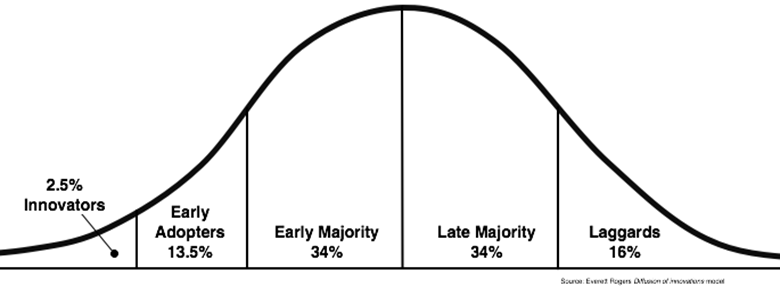
It may be the best book you’ll ever read on marketing, but you won’t find it in the marketing section of Amazon.  They have it variously filed in three different categories: Politics and Social Sciences, Technology and Text Books. The book is Everett Rogers’ “Diffusion of Innovations,” and you should add it to your reading list.

The book is a comprehensive review of how new ideas spread and take hold in our society, and although it was first written in the 60s (it’s currently in its fifthedition), the findings are as fresh and relevant as ever. Its relevance to marketing is immediate and tangible. After all, what else is marketing but promoting the  adoption and diffusion of new things?

Rogers traces almost a century of diffusion research to see how everything from new high-yield corn varieties to birth control were adopted in various cultures. While there are not a lot of examples purely from the consumer marketplace, the generalized observations beg to be applied to marketing campaigns pushing new (and hopefully improved) products.

Consider these five innovation-specific variables that affect how quickly a new idea is adopted:

1)   Relative advantage – How much of a true advantage does the new innovation offer over what is currently being used? Rogers offers an important caveat here: “The receiver’s perceptions of the attributes of an innovation – not the attributes as classified by experts or change agents, affect its rate of adoption.”

2)   Compatibility – How well does the innovation fit into the framework of the customer’s current situation? Is it an incremental innovation, easily added, or a discontinuous innovation, requiring significant pain on the part of the user to adopt?

3)   Complexity – What is the learning curve that comes bundled with the innovation? The steeper the curve, the slower the rate of adoption.

4)   Trialability – Is it possible to try the product firsthand to determine the relative advantage (see #1)?

5)   Observability – Being the herders we are, adoption is sometimes a matter of “monkey see, monkey do.”

These factors may seem fundamental, but every day new “innovative” products are turned loose on the market, there to wither and die, simply because one or several of these check boxes remain unchecked.

Rogers also spend significant time looking at the social dynamics of diffusion and adoption, including the role of early adopters, change agents, influencers, mass communication channels and interpersonal persuasion. I found amazing close correlations to the findings of my own research into buying behaviors in the B2B world.

At the risk of oversimplifying this seminal work, Rogers found that adoption balances at the intersection of risk and reward. Risk stalls adoption, reward drives it forward, and clarity of communicating this risk/reward balance in a relevant way is either the catalyst or the inhibitor that determines how steep the adoption curve is.

This is a textbook, so expect a small investment of effort to wade through the rather academic delivery, but if you persevere (and to be fair, I’ve suffered through much worse in other books) you’ll come away with perhaps the clearest summation of marketplace dynamics ever put in print.

Psychological Priming and the Path to Purchase

First published March 27, 2013 in Mediapost’s Search Insider

In marketing, I suspect we pay too much attention to the destination, and not enough to the journey. We don’t take into account the cumulative effect of the dozens of subconscious cues we encounter on the path to our ultimate purchase. We certainly don’t understand the subtle changes of direction that can result from these cues.

Search is a perfect example of this.

As search marketers, we believe that our goal is to drive a prospect to a landing page. Some of us worry about the conversion rates once a prospect gets to the landing page. But almost none of us think about the frame of mind of prospects once they reach the landing page.

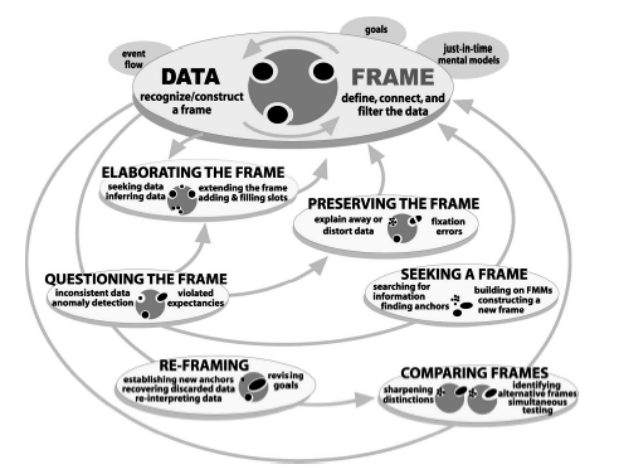
“Frame” is the appropriate metaphor here, because the entire interaction will play out inside this frame. It will impact all the subsequent “downstream” behaviors. The power of priming should not be taken likely.

Here’s just one example of how priming can wield significant unconscious power over our thoughts and actions. Participants primed by exposure to a stereotypical representation of a “professor” did better on a knowledge test than those primed with a representation of a “supermodel.”

A simple exposure to a word can do the trick. It can frame an entire consumer decision path. So, if many of those paths start with a search engine, consider the influence that a simple search listing may have.

We could be primed by the position of a listing (higher listings = higher quality alternatives).  We could be primed (either negatively or positively) by an organization that dominates the listing real estate. We could be primed by words in the listing. We could be primed by an image. A lot can happen on that seemingly innocuous results page.

Of course, the results page is just one potential “priming” platform. Priming could happen on the landing page, a third-party site or the website itself. Every single touch point, whether we’re consciously interacting with it or not, has the potential to frame, or even sidetrack, our decision process.

If the path to purchase is littered with all these potential landmines (or, to take a more positive approach, “opportunities to persuade”), how do we use this knowledge to become better marketers? This does not fall into the typical purview of the average search marketer.

Personally, I’m a big fan of the qualitative approach (I know — big surprise) in helping to lay down the most persuasive path possible. Actually talking to customers, observing them as they navigate typical online paths in a usability testing session, and creating some robust scenarios to use in your own walk-throughs will yield far better results than quantitative number-crunching. Excel is not a particularly good at being empathetic.

Jakob Nielsen has said that online, branding is all about experience, not exposure. As search marketers, it’s our responsibility to ensure that we’re creating the most positive experience possible, as our prospects make their way to the final purchase.

The devil, as always, is in the details — whether we’re paying conscious attention to them or not.

Weighing Positive and Negative Impacts on Users

First published January 31, 2013 in Mediapost’s Search Insider

We humans hate loss. In fact, we seem to value losing something about twice as high as gaining something. For example, imagine I gave you a coffee cup and then offered to buy it back from you. That’s scenario 1. In scenario 2, I ask you to buy the same coffee cup from me. The price you assign to the coffee cup in the first scenario will be, on the average, about twice as much as in the second. And yes, there’s research to back this up.

When it comes to winning and losing, it’s been proven that “loss looms larger than gains.” It’s just one of the weird glitches in our logical circuitry.  We tend to be hardwired to look at glasses as half empty.

Recently, I was reviewing an academic study done in 2008, with this scintillating title: “Procedural Priming and Consumer Judgment: Effects on the Impact of Positively and Negatively Valenced Information” by Shen and Wyer. If you can get beyond the rather dry title, you find a treasure trove of tidbits to consider when crafting your online user experience.

For example, when we evaluate a product for potential purchase, we may run across both positive and negative information. The order we run into this information can have a dramatic impact on what we do downstream from that interaction. To use psychological terms, it “primes” our mental framework.  And, because we tend to focus on negatives, less favorable information has a greater impact on our decision than positive information.

But it’s not just that we pay more attention to bad news than good news. It’s that bad news can hijack the entire consideration process. According to Shen and Wyer, if we run into negative information, it can change our information-seeking strategies, leading us down further negatively biased channels to confirm the initial information we saw. Bad news tends to lead to more bad news.

Also, we can get “bad news” hangovers. If we compare negatives in one decision process, that negative mental framework can carry over to an entirely different decision that has nothing to do with the first, giving us a heightened awareness of negative information in the new situation.

Here’s another interesting finding. If we’re rushed for time, this preoccupation with the negatives will dramatically affect the decision we make. But, if we have all the time in the world, the impact is relatively insignificant. Given time, we seem to cancel out our inherently negative biases.

All this news is not bad for marketers, however. It seems that simply getting users to state their preference for one feature over another, even though they’re not actively considering purchase at that time, leads to a much greater likelihood of purchase in the future. It seems that if you can get users to compare alternatives — and, more importantly, to commit to saying they prefer one alternative over another — they clear the mental hurdle of deciding “will I buy?” and instead start considering  “what will I buy?”

Finally, there is also a recency effect, especially if prospects had ample time to consider all their alternatives. Shen and Wyer found that the last information considered seemed to have the greatest effect on the buyer.  So, if information was both positive and negative, it was good to get the least favorable information in front of the prospect early, and then move to the most favorable information. Again, this is true only if the user had plenty of time to weigh the options. If they were rushed, the opposite was true.

All in all, these are all intriguing concepts to consider when crafting an ideal online user experience. They also underscore the importance of first impressions, especially negative ones.

The “Savanna” Hypothesis of Online Design

First published December 6, 2012 in Mediapost’s Search Insider

I’m currently reading a fascinating paper titled “Evolved Responses to Landscapes” by Gordon Orians and Judith Heerwagen that was written back in 1992. The objective was to see if humans have an evolved preference for an ideal habitat. The researchers called their hunch the Savanna Hypothesis, noting that because homo sapiens spent much of our evolutionary history on the plains of tropical Africa, we should have a natural affinity for this type of landscape.

Your typical savanna features some cover from vegetation and trees, but not too much, which would allow natural predators to advance unnoticed. The environment should offer enough lushness to indicate the presence of ample food and water. It should allow for easy mobility. And it should be visually intriguing, encouraging us to venture and explore our habitat.

Here’s a quote from the paper: “Landscapes that aid and encourage exploration, wayfinding and information processing should be more favored than landscapes that impede these needs.”

The researchers, after showing participants hundreds of pictures of different landscapes, found significant support for their hypothesis. Most of us have a preference for landscapes that resemble our evolutionary origin. And the younger we are, the more predictable the preference. With age, we tend to adapt to where we live and develop a preference for it.

In reading this study, I couldn’t help but equate it to Pirolli and Card’s Information Foraging Theory. The two PARC researchers said that the strategies we use to hunt for information in a hyperlinked digital format (such as a webpage) seem to correspond to evolved optimal foraging strategies used by many species, including humans back in our hunting and foraging days. If, as Pirolli and Card theorized, we borrow inherent strategies for foraging and adapt them for new purposes, like looking for information, why wouldn’t we also apply evolved environmental preferences to new experiences, like the design of a Web page?

Consider the description of an ideal habitat quoted above. We want to be able to quickly determine our navigation options, with just a teaser of things still to explore. We want open space, so we can quickly survey our options, but we also want the promise of abundant rewards, either in the form of food and sustenance — or, in the online case, information and utility. After all, what is a website but another environment to navigate?

I find the idea of creating a home page design that incorporates a liberal dose of intrigue and promise particularly compelling. In a physical space, such an invitation may take the form of a road or pathway curving behind some trees or over a gentle rise. Who can resist such an invitation to explore just a little further?

Why should we take the same approach with a home page or landing page? Orians and Heerwagen explain that we tend to “way-find” through new environments in three distinct stages: First, we quickly scan the environment to decide if it’s even worth exploring. Do we stay here or move on to another, more hospitable location? This very quick scan really frames all the interactions to take place after it. After this “go-no/go” scan, we then start surveying the environment to gather information and find the most promising path to take. The final phase — true engagement with our surroundings — is when we decide to stay put and get some things done.

Coincidentally (or not?), I have found users take a very similar approach to evaluating a webpage. We’ve even entrenched this behavior into a usability best practice we call the “3 Scan Rule.” The first scan is to determine the promise of the page. Is it visually appealing? Is it relevant? Is it user-friendly? All these questions should be able to be answered in one second or less. In fact, a study at Carleton University found that we can reliably judge the aesthetic appeal of a website in as short a span as 50 milliseconds. That’s less time than it takes to blink your eye.

The second scan is to determine the best path. This typically involves exploring the primary navigation options, scanning graphics and headings and quickly looking at bullet lists to determine how “rich” the page is. Is it relevant to our intent? Does it look like there’s sufficient content for us to invest our time? Are there compelling navigation options that offer us more? This scan should take no more than 10 seconds.

Finally, there’s the in-depth scan. It’s here where we more deeply engage with the content. This can take anywhere from several seconds to several minutes.

At this point, the connection between the inherently pleasing characteristics of the African savanna and a well-designed website is no more than a hypothesis on my part. But I have to admit: I find the concept intriguing, like a half-obscured pathway disappearing over a swell on the horizon, waiting to be explored.

Paralyzed by Choice

First published June 28, 2012 in Mediapost’s Search Insider

In last week’s column, I looked at how Harvard Business Review bloggers Karen Freeman, Patrick Spenner and Anna Bird spelled the end of the purchase funnel. Today, I’d like to look at the topic they tackled in the second of the three-part series, “If Customers Ask for More Choice, Don’t Listen.”

Barry Schwartz, the author of “The Paradox of Choice,” believes we’re overloaded with choices. In fact, we have so many choices to make, often about inconsequential things, that we live with the constant anxiety of making the wrong choice.

This paradox meets today’s consumer head on, over and over, in situation after situation. The other factor, which I’ve seen play a massive role in buying behaviors, is the degree of risk in the purchase. The bigger the purchase, the higher the risk.

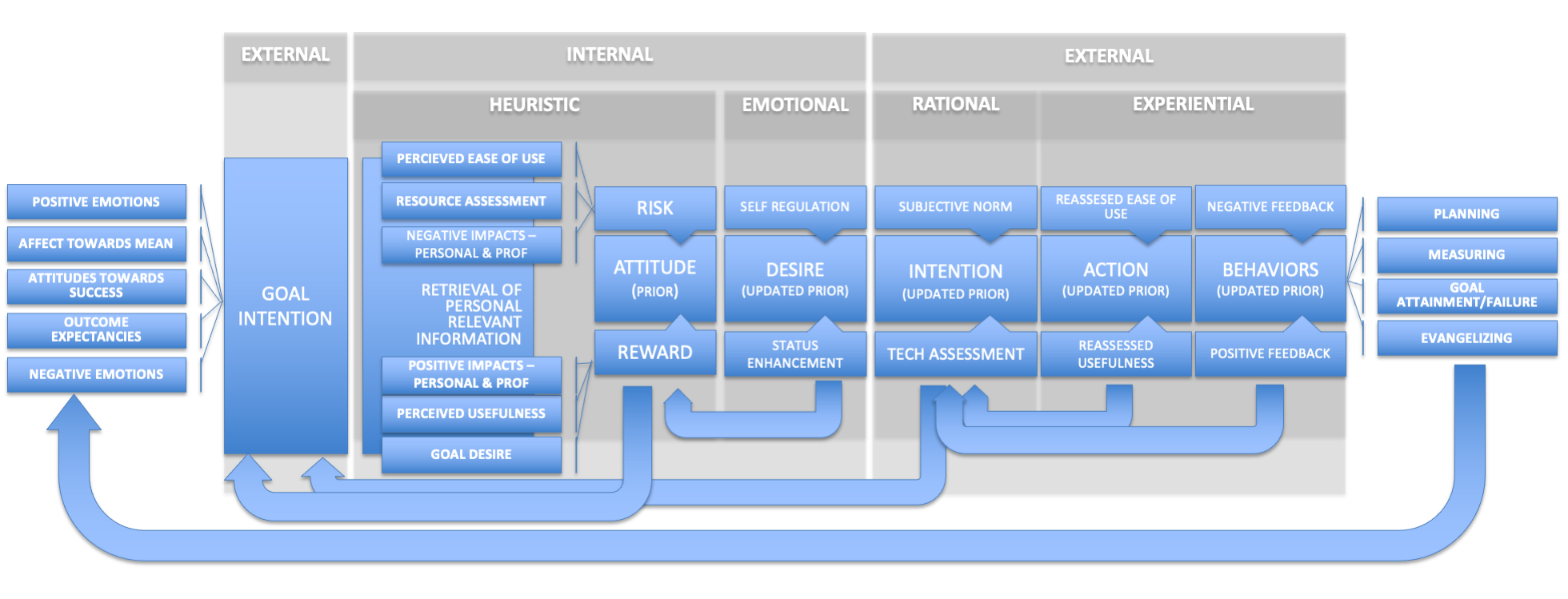
The final piece of the buying puzzle is the reward that lies at the end of the potential purchase. Our brains are built to balance risk and reward in fractions of a second. But we don’t do it by a calm, rational weighing of pros and cons, thus engaging the enlightened thinking part of our brains. We do it by unleashing emotions from the dark, primitive core of our brain. The risk/reward balance whips up a potent mix of neural activity that sets our decision-making engine in motion.

The degree of risk or reward sets the emotional framework for a purchase. High reward, low risk generally means a fairly fast purchase, such as an impulse buy. High risk, low reward may mean a very long purchase cycle with an extended consideration process. Whatever the buying path, there will be an undercurrent of emotion running just below the surface.

Now, let’s match up the findings of the HBR team. High-risk purchases automatically ramp up the level of anxiety we feel. We’re afraid we’ll make the wrong decision. And, in a complex purchase, there’s not just one decision to be made – there are several. At each decision point, we’re bombarded by choices. If the hundreds of purchase path evaluations I’ve done are any indication, the seller spends little time worrying about presenting those choices in a user-friendly way. Catalog pages are jammed with useless and irrelevant items. Internal site search results are generally abysmal. And product information typically takes the form of a long shopping list of features. Very little of it speaks to buyers in a language they care about.

This is a dangerous combination. We have the natural anxiety that comes with risk. We have a gauntlet of decisions to make, each raising the level of anxiety. And we have websites that contribute greatly to the frustration by making it difficult to navigate the information that does exist, which is either too little, too much, too irrelevant or too salesy — never does it seem to be just right.

Again, Freeman, Spenner and Bird ask us to make it simpler for the buyer. Provide them with fewer choices, and make them as relevant and compelling as possible. Ease the burden of risk by providing information that reassures. Realize that one of the components of risk is the degree of bias in the information we’re given. It that information reeks of marketing hyperbole, it will be discounted immediately.

In our numerous eye-tracking studies, we’ve found that in most instances, three to four options seems to be the right number to consider on a Web page. These can be easily loaded into working memory and compared without causing undue wear on our mental mechanics. So, on a landing or home page, three or four groups of coherent and relevant information seems to be an optimal level. We call them “intent clusters.” For navigation bar options, we try to keep it between five and seven choices. If we expect mostly transactional traffic, we ensure there is a “fast path” to purchase. If we expect a lot of purchase research, we aim for rich promises of relevant and reliable information.

As Freeman, Spenner and Bird remind us, “The harder consumers find it to make purchase decisions, the more likely they are to overthink the decision and repeatedly change their minds or give up on the purchase altogether. In fact, regression analysis points to decision complexity and resulting cognitive overload as the single biggest barrier to purchase.”

As marketers, our job is to eliminate the barriers, not erect new ones.

The Death of the Purchase Funnel

First published June 21, 2012 in Mediapost’s Search Insider

A recent series of three posts on the Harvard Business Review blog by Karen Freeman, Patrick Spenner and Anna Bird explored some of the myths about how consumers make decisions. I think each of these has direct implications for search marketers, so over the next three weeks I want to explore them one at a time.

The first, titled “What Do Consumers Really Want? Simplicity,” talks about the breakdown of the purchase funnel. The HBR bloggers contend the funnel, which has been around for well over a hundred years, no longer applies to consumer behaviors. I concur, and said as much in my book, “The BuyerSphere Project.”

We differ a little on the reason for the demise, however. The HBR team credits the demise to cognitive overload on the part of the consumer. We’re simply bombarded by too much information on the purchase path to fit it all into the nice, simple, rational filtering process captured in St. Elmo Lewis’s elegant funnel-shaped model. The accompanying research, a survey of 7,000 consumers, shows decision simplicity was the number-one thing people wanted when making a purchase.

I agree that information overload is part of it, but I also believe that two other factors have led to the end of the purchase funnel. First, the purchase funnel assumes a rational filtering of options based on careful consideration of a consumer’s requirements. I don’t think this was ever the case. Emotions drive our decisions, and more often than not, rationality is applied after the fact to justify our choices. Prior to the Internet, emotion was tough to distinguish from rationality, as buyers didn’t have much control over the content they accessed during the consideration process. They were limited to whatever the marketer pushed out at them. So, whether driven by emotion or logic, they tended to go down the same path and display many of the same behaviors. Given the pervasive believe in humans as rational animals at the time, it was not surprising that a logic-driven model emerged.

The other factor, as I alluded to, was that the Internet shifted the balance of power during the purchase process. Suddenly, we could choose which paths we took during the consideration process. We weren’t all forced down the same path, according to some arbitrary notion of a funnel-shaped model.

What became clear, when consumers could choose their own path, was that the simplicity of the funnel model bore little relation to the actual paths consumers took. And those paths were driven by emotion. People bounced all around, depending on what they were looking to buy. They could go all the way to a shopping cart, then suddenly abandon it and go back to a destination that would be considered “upper funnel” and start all over again. From the outside looking in, this resembled a bowl of spaghetti much more than it did a funnel.

So, we have a trio of suspects in the death of the purchasing funnel: cognitive overload, emotion trumping logic, and consumers gaining more control over their consideration path. All lead to an interesting concept to consider: laying an online path that anticipates the emotional needs of the buyer, and yet keeps the information presented from overwhelming them. For example, marketing has traditionally taken a “turf war” approach to persuading a prospect: “as long as they’re on our turf, we do everything possible to close the sale.

But this doesn’t really match up with the three trends we’re talking about. What online consumers are looking for, according to the HBR research, is a safe online zone that will make their decision easier. Rather than going from site to site, collecting information and filtering out overt marketing hyperbole, what consumers want is a single information source they can trust. They want to be able to lower their “anti-BS” shields, because being a rational, cynical shopper takes a lot of time and effort.

Today, it’s extremely rare to find that trustworthy information on a site you can actually purchase from, but it’s starting to happen in some high activity categories, where independent portals facilitate this simplified approach to shopping. Travel comes to mind.

But let’s consider what would happen if a brand’s website took this approach. Rather than bombard a prospect with exaggerated sales pitches, putting them on the defensive, what if a more neutral, objective experience was provided?  After all, why shouldn’t the decision path be built on your own turf, giving you a home field advantage?