Uncommon Sense

Let’s talk about common sense.

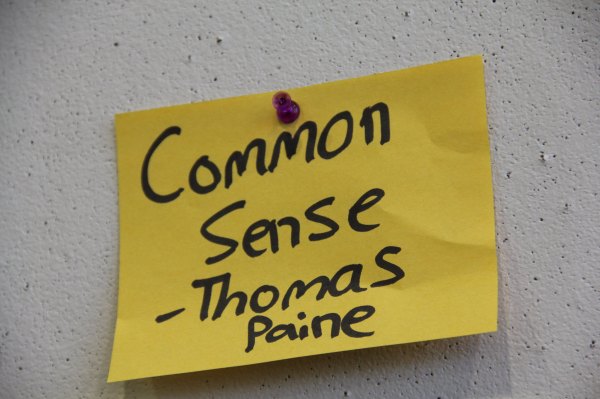
“Common sense” is one of those underpinnings of democracy that we take for granted. Basically, it hinges on this concept: the majority of people will agree that certain things are true. Those things are then defined as “common sense.” And common sense becomes our reference point for what is right and what is wrong.

But what if the very concept of common sense isn’t true? That was what researchers Duncan Watts and Mark Whiting set out to explore.

Duncan Watts is one of my favourite academics. He is a computational social scientist at the University of Pennsylvania. I’m fascinated by network effects in our society, especially as they’re now impacted by social media. And that pretty much describes Watt’s academic research “wheelhouse.” 

According to his profile he’s “interested in social and organizational networks, collective dynamics of human systems, web-based experiments, and analysis of large-scale digital data, including production, consumption, and absorption of news.”

Duncan, you had me at “collective dynamics.”

 I’ve cited his work in several columns before, notably his deconstruction of marketing’s ongoing love affair with so-called influencers. A previous study from Watts shot several holes in the idea of marketing to an elite group of “influencers.”

Whiting and Watts took 50 claims that would seem to fall into the category of common sense. They ranged from the obvious (“a triangle has three sides”) to the more abstract (“all human beings are created equal”). They then recruited an online panel of participants to rate whether the claims were common sense or not. Claims based on science were more likely to be categorized as common sense. Claims about history or philosophy were less likely to be identified as common sense.

What did they find? Well, apparently common sense isn’t very common. Their report says, “we find that collective common sense is rare: at most a small fraction of people agree on more than a small fraction of claims.” Less than half of the 50 claims were identified as common sense by at least 75% of respondents.

Now, I must admit, I’m not really surprised by this. We know we are part of a pretty polarized society. It no shock that we share little in the way of ideological common ground.

But there is a fascinating potential reason why common sense is actually quite uncommon: we define common sense based on our own realities, and what is real for me may not be real for you. We determine our own realities by what we perceive to be real, and increasingly, we perceive the “real” world through a lens shaped by technology and media – both traditional and social.

Here is where common sense gets confusing. Many things – especially abstract things – have subjective reality. They are not really provable by science. Take the idea that all human beings are created equal. We may believe that, but how do we prove it? What does “equal” mean?

So when someone appeals to our common sense (usually a politician) just what are they appealing to? It’s not a universally understood fact that everyone agrees on. It’s typically a framework of belief that is probably only agreed on by a relatively small percent of the population. This really makes it a type of marketing, completely reliant on messaging and targeting the right market.

Common sense isn’t what it once was. Or perhaps it never was. Either common or sensible.

Feature image: clemsonunivlibrary

We SHOULD Know Better — But We Don’t

“The human mind is both brilliant and pathetic.  Humans have built hugely complex societies and technologies, but most of us don’t even know how a toilet works.”

– from The Knowledge Illusion: Why We Never Think Alone” by Steven Sloman and Philip Fernback.

Most of us think we know more than we do — especially about things we really know nothing about. This phenomenon is called the Dunning-Kruger Effect. Named after psychologists Justin Kruger and David Dunning, this bias causes us to overestimate our ability to do things that we’re not very good at.

That’s the basis of the new book “The Knowledge Illusion: Why We Never Think Alone.” The basic premise is this: We all think we know more than we actually do. Individually, we are all “error prone, sometimes irrational and often ignorant.” But put a bunch of us together and we can do great things. We were built to operate in groups. We are, by nature, herding animals.

This basic human nature was in the back of mind when I was listening to an interview with Es Devlin on CBC Radio. Devlin is self-described as an artist and stage designer.  She was the vision behind Beyonce’s Renaissance Tour, U2’s current run at The Sphere in Las Vegas, and the 2022 Superbowl halftime show with Dr. Dre, Snoop Dogg, Eminem and Mary J. Blige.

When it comes to designing a visually spectacular experience,  Devlin has every right to be a little cocky. But even she admits that every good idea doesn’t come directly from her. She said the following in the interview (it’s profound, so I’m quoting it at length):

“I learned quite quickly in my practice to not block other people’s ideas — to learn that, actually,  other people’s ideas are more interesting than my own, and that I will expand by absorbing someone else’s idea.

“The real test is when someone proposes something in a collaboration that you absolutely, [in] every atom of your body. revile against. They say, ‘Why don’t we do it in bubblegum pink?’ and it was the opposite of what you had in mind. It was the absolute opposite of anything you would dream of doing.

“But instead of saying, ‘Oh, we’re not doing that,’  you say ‘OK,’ and you try to imagine it. And then normally what will happen is that you can go through the veil of the pink bubblegum suggestion, and you will come out with a new thing that you would never have thought of on your own.

“Why? Because your own little batch of poems, your own little backpack of experience. does not converge with that other person, so you are properly meeting not just another human being, but everything that led up to them being in that room with you. “

From Interview with Tom Powers on Q – CBC Radio, March 18, 2024

We live in a culture that puts the individual on a pedestal.  When it comes to individualistic societies, none are more so than the United States (according to a study by Hofstede Insights).  Protection of personal rights and freedom are the cornerstone of our society (I am Canadian, but we’re not far behind on this world ranking of individualistic societies). The same is true in the U.K. (where Devlin is from), Australia, the Netherlands and New Zealand.

There are good things that come with this, but unfortunately it also sets us up as the perfect targets for the Dunning-Kruger effect. This individualism and the cognitive bias that comes with it are reinforced by social media. We all feel we have the right to be heard — and now we have the platforms that enable it.

With each post, our unshakable belief in our own genius and infallibility is bulwarked by a chorus of likes from a sycophantic choir who are jamming their fingers down on the like button. Where we should be cynical of our own intelligence and knowledge, especially about things we know nothing about, we are instead lulled into hiding behind dangerous ignorance.

What Devlin has to say is important. We need to be mindful of our own limitations and be willing to ride on the shoulders of others so we can see, know and do more. We need to peek into the backpack of others to see what they might have gathered on their own journey.

(Feature Image – Creative Commons – https://www.flickr.com/photos/tedconference/46725246075/)

Post-mortem of a Donald Trump Sound Bite

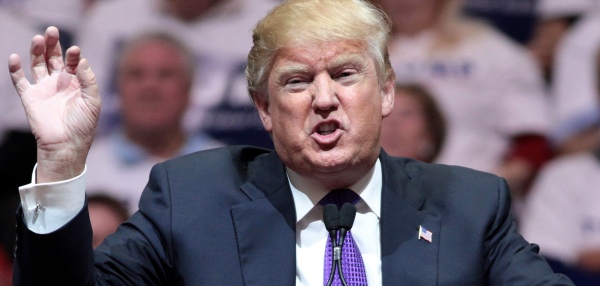
This past weekend, Donald Trump was campaigning in Dayton, Ohio. This should come as news to no one. You’ve all probably seen various blips come across your social media radar. And, as often happens, what Trump said has been picked up in the mainstream press.

Now, I am quite probably the last person in the world that would ever come to Donald Trump’s defense. But I did want to take this one example of how it’s the media, including social media, that is responsible for the distortion of reality that we often see happen.

My first impression of what happened is that Trump promised a retributive bloodbath for any and all opposition if he’s not elected president. And, like many of you, that first impression came through my social media feeds. Joe Biden’s X (formerly Twitter) post said “It’s clear this guy wants another January 6th” Republican Lawyer and founding member of the Lincoln Project George Conway also posted: “This is utterly unhinged.”  

There was also retweeting of ABC coverage featuring a soundbite from Trump that said, “There would be a bloodbath if he is not re-elected in November.” This was conflated with Trump’s decision to open the stump speech with a recording of “Justice for All” by the J6 Choir, made of inmates awaiting trial for their roles in the infamous insurrection after the last election. Trump saluted during the playing of the recording.

To be crystal clear, I don’t condone any of that. But that’s not the point. I’m not the audience this was aimed at.

First of all, Donald Trump was campaigning. In this case, he was making a speech aimed at his base in Ohio, many of whom are auto-workers. And the “bloodbath” comment had nothing to do with armed insurrection. It was Trump’s prediction of what would happen if he wasn’t elected and couldn’t protect American auto jobs from the possibility of a trade war with China over auto manufacturing.

But you would be hard pressed to know that based on what you saw, heard or read on either social media or traditional media.

You can say a lot of derogatory things about Donald Trump, but you can’t say he doesn’t know his base or what they want to hear. He’s on the campaign trail to be elected President of the United State. The way that game is played, thanks to a toxic ecosystem created by the media, is to pick your audience and tell them exactly what they want to hear. The more you can get that message amplified through both social and mainstream media, the better. And if you can get your opposition to help you by also spreading the message, you get bonus points.

Trump is an expert at playing that game. He is the personification of the axiom, “There is no such thing as bad press.”

If we try to pin this down to the point where we can assign blame, it becomes almost impossible. There was nothing untrue in the coverage of the Dayton Rally. It was just misleading due to incomplete information, conflation, and the highlighting of quotes without context. It was sloppy reporting, but it wasn’t illegal.

The rot here isn’t acute. It isn’t isolated to one instance. It’s chronic and systemic. It runs through the entire media ecosystem. It benefits from round after round of layoffs that have dismantled journalism and gutted the platform’s own fact checking and anti-misinformation teams. Republicans, led by House Judiciary Chairman Jim Jordan, are doubling down on this by investigating alleged anti-conservative censorship by the platforms.

I’m pretty sure things won’t get better. Social media feeds are – if anything – more littered than ever with faulty information and weaponized posts designed solely to provoke. So far, management of the platforms have managed to slither away from anything resembling responsibility. And the campaigns haven’t even started to heat up. In the 230 days between now and November 5th, the stakes will get higher and posts will become more inflammatory.

Buckle up. It promises to be a bumpy (or Trumpy?) ride!

The Messaging of Climate Change

86% of the world believes that climate change is a real thing. That’s the finding of a massive new mega study with hundreds of authors (the paper’s author acknowledgement is a page and a half). 60,000 participants from 63 countries around the world took part. And, as I said, 86% of them believe in climate change.

Frankly, there’s no surprise there. You just have to look out your window to see it. Here in my corner of the world, wildfires wiped out hundreds of homes last summer and just a few weeks ago, a weird winter whiplash took temperatures from unseasonably warm to deep freeze cold literally overnight. This anomaly wiped out this region’s wine industry. The only thing surprising I find about the 86 percent stat is that 14% still don’t believe. That speaks of a determined type of ignorance.

What is interesting about this study is that it was conducted by behavioral scientists. This is an area that has always fascinated me. From the time I read Richard Thaler and Cass Sunstein’s book, Nudge, I have always been interested in behavioral interventions. What are the most effective “nudges” in getting people to shift their behaviors to more socially acceptable directions?

According to this study, that may not be that easy. When I first dove into this study, my intention was to look at how different messages had different impacts depending on the audience: right wing vs left wing for instance. But in going through the results, what struck me the most was just how poorly all the suggested interventions performed. It didn’t matter if you were liberal or conservative or lived in Italy or Iceland. More often than not, all the messaging fell on deaf ears.

What the study did find is that how you craft your campaign about climate change depends on what you want people to do. Do you want to shift non-believers in Climate Change towards being believers? Then decrease the psychological distance. More simply put, bring the dangers of climate change to their front doorstep. If you live next to a lot of trees, talk about wildfires. If you live on the coast, talk about flooding. If you live in a rural area, talk about the impacts of drought. But it should be noted that we weren’t talking a massive shift here – with an “absolute effect size of 2.3%”. It was the winner by the sheer virtue of sucking the least.

If you want to build support for legislation that mitigates climate change, the best intervention was to encourage people to write a letter to a child that’s close to you, with the intention that they read it in the future. This forces the writer to put some psychological skin in the game.  

Who could write a future letter to someone you care about without making some kind of pledge to make sure there’s still a world they can live in? And once you do that, you feel obligated to follow through. Once again, this had a minimal impact on behaviors, with an overall effect size of 2.6%.

A year and a half ago, I talked about Climate Change messaging, debating Mediapost Editor-in-Chief Joe Mandese about whether a doom and gloom approach would move the needle on behaviors. In a commentary from the summer of 2022, Mandese wrapped up by saying, “What the ad industry really needs to do is organize a massive global campaign to change the way people think, feel and behave about the climate — moving from a not-so-alarmist “change” to an “our house is on fire” crisis.”

In a follow up, I worried that doom and gloom might backfire on us, “Cranking up the crisis intensity on our messaging might have the opposite effect. It may paralyze us.”

So, what does this study say?

The answer, again, is, “it depends.” If we’re talking about getting people to share posts on social media, then Doom and Gloom is the way to go. Of all the various messaging options, this had the biggest impact on sharing, by a notable margin.

This isn’t really surprising. A number of studies have shown that negative news is more likely to be shared on social media than positive news.

But what if we’re asking people to make a change that requires some effort beyond clicking the “share” button? What if they actually have to do something? Then, as I suspected, Doom and Gloom messaging had the opposite effect, decreasing the likelihood that people would make a behavioral change to address climate change (the study used a tree planting initiative as an example). In fact, when asking participants to actually change their behavior in an effortful way, all the tested climate interventions either had no effect or, worse, they “depress(ed) and demoralize(d) the public into inaction”.

That’s not good news. It seems that no matter what the message is, or who the messenger is, we’re likely to shoot them if they’re asking us to do anything beyond bury our head in the sand.

What’s even worse, we may be losing ground. A study from 10 years ago by Yale University had more encouraging results. They showed that effective climate change messaging, was able to shift public perceptions by up to 19 percent. While not nearly as detailed as this study, the results seem to indicate a backslide in the effectiveness of climate messaging.

One of the commentators that covered the new worldwide study perhaps summed it up best by saying, “if we’re dealing with what is probably the biggest crisis ever in the history of humanity, it would help if we actually could talk about it.”

Fooling Some of the Systems Some of the Time

If there’s a system, there’s a way to game it. Especially when those systems are tied to someone making money.

Buying a Best Seller

Take publishing, for instance. New books that say they are on the New York Times Best-Seller List sell more copies than ones that don’t make the list. A 2004 study by University of Wisconsin economics professor Alan Sorenson found the bump is about 57%. That’s; certainly motivation for a publisher to game the system.

There’s also another motivating factor. According to a Times op-ed, Michael Korda, former editor in chief of Simon and Schuster, said that an author’s contract can include a bonus of up to $100,000 for hitting No. 1 on the list.

This amplifying effect is not a one-shot deal. Make the list for just one week, in any slot under any category, and you can forever call yourself a “NY Times bestselling author,” reaping the additional sales that that honor brings with it. Given the potential rewards, you can guarantee that someone is going to be gaming the system.

And how do you do that? Typically, by doing a bulk purchase through an outlet that feeds its sales numbers to TheTimes. That’s what Donald Trump Jr. and his publisher did for   his book “Triggered,” which hit No. 1 on its release in November of 2019, according to various reports.  Just before the release, the Republican National Committee reportedly placed a $94,800 order with a bookseller, which would equate to about 4,000 books, enough to ensure that “Triggered” would end up on the Times list. (Note: The Times does flag these suspicious entries with a dagger symbol when it believes that someone may be potentially gaming the system by buying in bulk.)

But it’s not only book sales where you’ll find a system primed for rigging. Even those supposedly objective 5-star buyer ratings you find everywhere have also been gamed.

5-Star Scams

A 2021 McKinsey report said that, depending on the category, a small bump in a star rating on Amazon can translate into a 30% to 200% boost in sales. Given that potential windfall, it’s no surprise that you’ll find fake review scams proliferate on the gargantuan retail platform.

A recent Wired exposé on these fake reviews found a network that had achieved a level of sophistication that was sobering. It included active recruitment of human reviewers (called “Jennies” — if you haven’t been recruited yet, you’re a “Virgin Jenny”) willing to write a fake review for a small payment or free products. These recruitment networks include recruiting agents in locations including Pakistan, Bangladesh and India working for sellers from China.

But the fake review ecosystem also included reviews cranked out by AI-powered automated agents. As AI improves, these types of reviews will be harder to spot and weed out of the system.

Some recent studies have found that, depending on the category, over one-third of the reviews you see on Amazon are fake. Books, baby products and large appliance categories are the worst offenders.

Berating Ratings…

Back in 2014, Itamar Simonson and Emanuel Rosen wrote a book called “Absolute Value: What Really Influences Customers in the Age of (Nearly) Perfect Information.” Spoiler alert: they posited that consumer reviews and other sources of objective information were replacing traditional marketing and branding in terms of what influenced buyers.

They were right. The stats I cited above show how powerful these supposedly objective factors can be in driving sales. But unfortunately, thanks to the inevitable attempts to game these systems, the information they provide can often be far from perfect.

When the News Hits Home

My, how things have changed.

My intention was to write a follow up to last week’s post about Canada’s Bill C-18 and Meta’s banning of news on Facebook. I suppose this is a follow up of sorts. But thanks to Mother Nature – that ofttimes bully – that story was pushed right out of the queue to be replaced with something far more tragic and immediate.

To me, anyway.

I live in Kelowna. Chances are you’ve heard about my home in the last few days. If you haven’t, I can tell you that when I look out my window, all I can see is thick smoke. Which may be a good thing. Last Friday, when I could see, I spent the entire evening watching West Kelowna, across Okanagan Lake from my home, burn in the path of the oncoming McDougall Creek Wildfire. As the flames would suddenly leap towards the sky, you knew that was someone’s home being ignited.

We don’t know how many homes have been lost. The fire has been too active for authorities to have the time to count. We have firefighters and first responders pouring in from around our province to help. . Our Air Quality Index is 11 on a scale of 10, as bad as it can get. Thousands are out of their home. More thousands have their things packed by the door, ready to leave at a moment’s notice. We’re one of those.

But that’s enough about the fire. This post is about our weird relationship with the news.

When something like this happens, you have a very real, very visceral need to know what’s going on. For those of us that live here in British Columbia, the news has hit home in a way we could never imagine. A few posts ago, I said it might be healthier for me to ignore the news, because it’s always alarming and very seldom relevant to me. Well, those words are now coming back to haunt me.

This disaster has thrown our reliance on Facebook for new into stark relief. This last Friday, Canada’s Transportation Minster, Pablo Rodriguez, asked Meta to reverse its current ban on news, “We’ve seen that, throughout this emergency, Canadians have not had access to the crucial information they need. So, I ask Meta to reverse its decision, allow Canadians to have access to news on their platforms.”

But there’s another dimension to this that’s a bit more subtle yet even more frightening. It goes to the heart of how we handle crisis. I think you necessarily must “zoom in,” performing some type of terrible triage in your mind to be able to imagine the unimaginable. As the winds shift the fire away from your home, there’s relief. But other homes now lie in the path of the fire. In your head, you know that, but emotionally you can’t help but feel a lift. It’s not noble, but it’s human.

So let’s “zoom out” – a lot. We’re not the only ones this is happening to. This is a global crisis. Twenty-six thousand people are evacuated on the Spanish island of Tenerife. A friend of mine, who’s an airline pilot, was one week ago volunteering to fly people out of Maui who had lost their homes in the tragic Lahaina fire.

Take a look at Nasa’s FIRMS (Fire Information for Resource Management) website, which gives a global map of all hotspots from wildfires burning. I’ve set this link to wildfire activity in the last 7 days.

Scary as hell, right?

But can we actually process that, in a way that lets us move forward and start coping with this massive issue? Is it enough to change our behaviors in the way we must to finally start addressing climate change?

In a recent article on BBC.com, Richard Fisher talks about “Construal level theory” – which says that the greater the psychological distance there is between the news and your life, the less likely it is to make you change your behavior. For me, the psychological distance between myself and climate change is roughly 1 kilometer (just over half a mile) as the crow flies. That’s how far it is from my house to the nearest evacuation alert area.

It doesn’t get much closer than that.  But will we change? Will anything change?

I’m not so sure. We’ve been through this before. Exactly 20 years ago, the Okanagan Mountain wildfire raged through Kelowna, displacing over 30,000 people and destroying 239 homes. It was a summer much like this, at the time the driest summer on record. This year, we have smashed that record, as we have many times since that fire. Once we picked up, rebuilt our homes and got back to life, nothing really changed.

And now, here we are again. Let’s hope that this time is different.

How Canada is Killing its News Industry

In Canada, an interesting game of brinkmanship is happening. To help bring you up to speed, here are the Cole’s notes:

  • Like everywhere in the world, Canada’s news outlets are starving for revenue. Advertising is drying up, as more budget moves online.
  • In an ill-advised attempt to shore up the Canadian News industry, the federal government passed bill C-18, the Online News Act, which says that Facebook, Google and other tech giants must pay news organizations when someone comes to a web story through a link on one of their platforms.
  • Meta said – basically – WTF? We’re sending you traffic. You want us to pay for that? Fine, we’ll shut off that traffic.

Back in June, Meta posted this notice:

“In order to comply with the Online News Act, we have begun the process of ending news availability in Canada. These changes start today, and will be implemented for all people accessing Facebook and Instagram in Canada over the course of the next few weeks.”

Those changes started stripping news from our social media feeds in the last few weeks. I haven’t seen one news item on my Facebook feed in the last week.

 If you’re confused, you have a lot of company north of the 49th. Logic seems to be totally missing from this particular legislative hammer toss from Justin Trudeau and his merry band of lawmakers.

If there is any logic, it may be that for many some users, they never bother to click through to the actual story. They apparently get all the news they need from doomscrolling on Facebook.

Michael Geist, the Canadian Research Chair in Internet and E-commerce law at the University of Ottawa, calls the bill a “Lose-Lose-Lose-Lose.” 

For the media outlets that this bill is supposedly protecting, Geist says, “It is difficult to overstate the harm that Bill C-18 will create for the media sector in Canada, with enormous losses that will run into the hundreds of millions of dollars.”

Oops.

Geist details how lobbyists and supporters of the bill were sure Meta was bluffing and would come to the table to negotiate when bidden to do so. A law professor from Carleton University said “I am not worried. The threats they are making, they are doing this all around the world.”

But Meta wasn’t bluffing. And why would they?  When you hold all the cards, you don’t have to bluff. Some news publishers estimate that as much as 50% of their traffic comes from these online channels. A recent study by Maru Public Opinion showed that 26% of Canadians say they get their news from social media sites. For younger age cohorts, this percentage jumps to 35%.

News publishers have now lost that traffic, with no offsetting revenue from Bill C-18 to compensate for it. For a bill that was supposed to save the Canadian news industry, this seems to be hammering nails in the coffin at an alarming rate.

Like Geist said, this is “a cautionary tale for a government that blithely ignored the warning signs, seemed to welcome a fight with the tech companies, and had no Plan B.”

If there are lessons to be learned – or, at least, points to be pondered – in this Canadian debacle, here are two to consider:

This shows that legislators, not just in Canada but around the world, have no idea of the new power dynamics in a digital economy. They still carry the quaint notion they are the power brokers within their borders. But this shows that Meta could care less about the Canadian market. We are a drop in their global revenue bucket. Not only have they not caved in when confronted with the awesome might of the Canadian government, they haven’t even bothered coming back to the table to talk. When the Liberal lawmakers decided to take on Meta, they were taking a knife to a gun fight.

Secondly, I wonder how one third of Canadians will now be informed about what’s happening in the world. With any information sources with even a shred of journalistic integrity stripped from their Facebook and Instagram feeds, who will they be listening to? In a bid for survival, Canada’s news publishers are supposedly launching a desperate campaign to “re-educate” us on how to find the news.

Yeah. We all know how successful “re-education” campaigns are.

Finally, in the irony of ironies, as they squared off against Facebook in this ill-fated battle, Canada’s Liberal government launched a new campaign asking for us to share our thoughts on a “Summer Check-In Survey.”

Their platform of choice for this campaign? Facebook.

X Marks the Spot

Elon Musk has made his mark. Twitter and its cute little birdy logo are dead. Like Monty Python’s famous parrot, this bird has shuffled off its mortal coil.

So Twitter is dead, Long live X?

I know — that seems weird to me, too.

Musk clearly has a thing for the letter X. He founded a company called X.com that merged with PayPal in 2000. In his portfolio of companies, you’ll find SpaceX, xAI, X Corp. Its seldom you see so much devotion to 1/26th of the Latin alphabet.

It’s not unprecedented to pick a letter and turn it into a brand. Steve Jobs managed to make the letter “i” the symbol for everything Apple. Mind you, he also tacked on helpful product descriptors to keep us from getting confused. If he had changed the name of Apple to “I” and just left it at that, it might not have worked so well.

At their best, brands should immediately bridge the gap between the DNA of a company and a long-term niche in the brains of those of us in the marketplace. Twitter did that. When you saw the iconic bird logo or hear the word Twitter, you know exactly what it referred to.

This is easier when the company is known for a handful of products. But when companies stretch into multiple areas, it’s tough to make one brand synonymous with hundreds or thousands of products. 

This brand diffusion is common with the hyper-accelerated world of tech. You launch a product and it’s so successful, it becomes a mega-corporation. At some point you’re stuck with an awkward transition: You leave the original brand associated with that product and create an umbrella brand that is vague enough to shelter a diverse and expanding portfolio of businesses. That’s why Google created the generic Alpha brand, and why Facebook became Meta.

But Musk didn’t create an umbrella to shelter Twitter and its brand. He used it to beat the brand to death. Maybe he just doesn’t like blue birds.

When a brand does its job well, we feel a personal relationship with it. Twitter’s brand did this. It was unique in tech branding, primarily because it was cute and organic. It was an accessible brand, a breath of fresh air in a world of cryptic acronyms and made-up terms with weird spellings. It made sense to us. And we are sorry to see it go.

In fact, some of us are flat-out refusing to admit the bird is dead. One programmer has already whipped together a Chrome extension that strips out the X branding and brings our favorite little Tweeter back from the beyond. Much as I admire this denial, I suspect this is only delaying the inevitable. It’s time to say bye-bye birdy. 

This current backlash against Musk’s rebranding could be a natural outcome of his effort to move from being one tied to a product to one that creates a bigger tent for multiple products. He has been pretty vocal about X becoming an “everything” app, a la China’s WeChat.

I suspect the road to making X a viable brand is going to be a rocky one. First of all, if you were going to pick the most generic symbol imaginable, X would be your choice. It literally has been a stand in for pretty much everything you could think of for centuries now. Even my great, great grandfather signed his name with an “X.”

We Hotchkisses have always been ahead of our time.

But the ubiquity of “X” brings up another problem, this time on the legal front. According to a lengthy analysis of Twitter’s rebranding by Emma Roth, you can trademark a single letter, but trying to make X your brand will come with some potentially litigious baggage. Microsoft has a trademark on X. So does Meta.

As long at Musk’s X sticks to its knitting, that might not be a problem. Microsoft registered X for its Xbox gaming console. Meta’s trademark also has to do with gaming. Apparently, as long as you don’t cross industries and confuse customers, having the same trademark shouldn’t be an issue.

But the chances of Elon Musk playing nice and following the rules of trademark law while pursuing his plan for world domination are somewhat less than zero. In this case, I think it’s fair to speculate that the formula for the future will be: X = a shitload of lawyer fees

Also, even if you succeed in making X a recognized and unique brand, protecting that brand will be a nightmare. How do you build a legal fence around X when the choice of it as a brand was literally to tear down fences?

But maybe Musk has already foreseen all this. Maybe he has some kind of superpower to see things we can’t.

Kind of like Superman’s X-Ray vision.

The Challenge in Regulating AI

A few weeks ago, MediaPost’s Wendy Davis wrote a commentary on the Federal Trade Commission’s investigation of OpenAI. Of primary concern to the FTC was ChatGPT’s tendency to hallucinate. I found this out for myself when ChatGPT told some whoppers about who I was and what I’ve done in the past.

Davis wrote, “The inquiry comes as a growing chorus of voices — including lawmakers, consumer advocates and at least one business group — are pushing for regulations governing artificial intelligence. OpenAI has also been hit with lawsuits over copyright infringement, privacy and defamation.”

This highlights a problem with trying to legislate AI. First, the U.S. is using its existing laws and trying to apply them to a disruptive and unpredictable technology. Laws, by their nature, have to be specific, which means you have to be able to anticipate circumstances in which they’d be applied. But how do you create or apply laws for something unpredictable? All you can do is regulate what you know. When it comes to predicting the future, legislators tend to be a pretty unimaginative bunch. 

In the intro to a Legal Rebels podcast on the American Bar Association’s website, Victor Li included this quote, “At present, the regulation of AI in the United States is still in its early stages, and there is no comprehensive federal legislation dedicated solely to AI regulation. However, there are existing laws and regulations that touch upon certain aspects of AI, such as privacy, security and anti-discrimination. “

The ironic thing was, the quote came from ChatGPT. But in this case, ChatGPT got it mostly right. The FTC is trying to use the laws at its disposal to corral OpenAI by playing a game of legal whack-a-mole:  hammering things like privacy, intellectual property rights, defamation, deception and discrimination as they pop their heads up.

But that’s only addressing the problems the FTC can see. It’s like repainting the deck railings on the Titanic the day before it hit the iceberg. It’s not what you know that’s going to get you, it’s what you don’t know.

If you’re attacking ChatGPT’s tendency to fabricate reality, you’re probably tilting at the wrong windmill. This is a transitory bug. OpenAI benefits in no way from ChatGPT’s tendency to hallucinate. The company would much rather have a large language-based model that is usually truthful and accurate. You can bet they’re working on it. By the time the ponderous wheels of the U.S. legislative system get turned around and rolling in the right direction, chances are the bug will be fixed and there won’t really be anything to legislate against.

What we need before we start talking about legislation is something more fundamental. We need an established principle, a framework of understanding from which laws can be created as situations arise.

This is not the first time we’ve faced a technology that came packed with potential unintended consequences. In February, 1975, 140 people gathered at a conference center in Monterey, California to attempt to put a leash on genetic manipulation, particularly Recombinant DNA engineering.

This group, which included mainly biologists with a smattering of lawyers and physicians, established principle-based guidelines that took its name from the conference center where they met. It was called the Asilomar Conference agreement.

The guidelines were based on the level of risk involved in proposed experiments. The higher the risk, the greater the required precautions.

These guidelines were flexible enough to adapt as the science of genetic engineering evolved. It was one of the first applications of something called “the precautionary principle” – which is just what it sounds like: if the future is uncertain, go forward slowly and cautiously.

While the U.S. is late to the AI legislation party, the European Union has been taking the lead. And, if you look its first attempts at E.U. AI regulation drafted in 2021, you’ll see it has the precautionary principle written all over it. Like the Asilomar guidelines, there are different rules for different risk levels. While the U.S. attempts at legislation are mired in spotty specifics, the EU is establishing a universal framework that can adapt to the unexpected.

This is particularly important with AI, because it’s an entirely different ballgame than genetic engineering. Those driving the charge are for-profit companies, not scientists working in a lab.

OpenAI is intended as a platform that others will build on. It will move quickly, and new issues will pop up constantly. Unless the regulating bodies are incredibly nimble and quick to plug loopholes, they will constantly be playing catch-up.

It’s All in How You Spin It

I generally get about 100 PR pitches a week. And I’m just a guy who writes a post on tech, people and marketing now and then. I’m not a journalist. I’m not even gainfully employed by anyone. I am just one step removed — thanks to the platform  MediaPost has provided me — from “some guy” you might meet at your local coffee shop.

But still, I get 100 PR pitches a week. Desperation for coverage is the only reason I can think of for this to be so. 99.9999% of the time, they go straight to my trash basket. And the reason they do is that they’re almost never interesting. They are — well, they’re pitches for free exposure.

Now, the average pitch, even if it isn’t interesting, should at least try to match the target’s editorial interest. It should be in the strike zone, so to speak.

Let’s do a little postmortem on one I received recently. It was titled “AI in Banking.” Fair enough. I have written a few posts on AI. Specifically, I have written a few posts on my fear of AI.

I have also written about my concerns about misuse of data. When it comes to the nexus between AI and data, I would be considered more than a little pessimistic. So, something linking AI and banking did pique my interest, but not in a good way. I opened the email.

There, in the first paragraph, I read this: “AI is changing how banks provide personalized recommendations and insights based on enriched financial data offering tailored suggestions, such as optimizing spending, suggesting suitable investment opportunities, or identifying potential financial risks.”

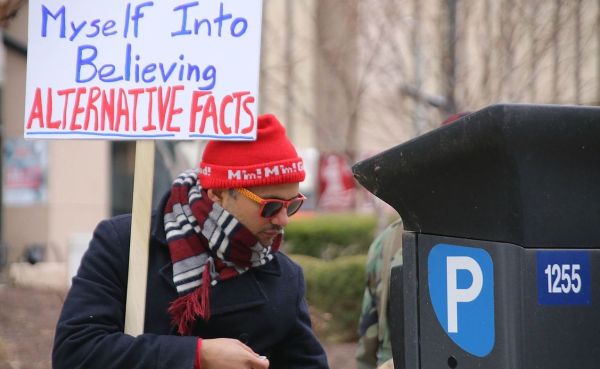
This, for those of you not familiar with “PR-ese,” is what we in the biz call “spin.” Kellyanne Conway once called it — more euphemistically — an alternative fact.

Let me give you an example. Let’s say that during the Tour de France half the Peloton crashes and bicyclists get a nasty case of road rash. A PR person would spin that to say that “Hundreds of professional cyclists discover a new miracle instant exfoliation technique from the South of France.”

See? It’s not a lie, it’s just an alternative fact.

Let’s go on. The second paragraph of the pitch continued: “Bud, a company that specializes in data intelligence is working with major partners across the country (Goldman Sachs, HSBC, 1835i, etc.) to categorize and organize financial information and data so that users are empowered to make informed decisions and gain a deeper understanding of their financial situation.”

Ah — we’re now getting closer to the actual fact. The focus is beginning to switch from the user, empowered to make better financial decisions thanks to AI, to what is actually happening: a data marketplace being built on the backs of users for sale to corporate America.

Let’s now follow the link to Bud’s website. There, in big letters on the home page, you read:

“Turn transactional data into real-time underwriting intelligence

Bud’s AI platform and data visualizations help lenders evaluate risk, reduce losses and unlock hidden revenue potential.”

Bingo. This is not about users, at least, not beyond using them as grist in a data mill. This is about slipping a Trojan Horse into your smartphone in the form of an app and hoovering your personal data up to give big banks an intimate glimpse into not just your finances, but also your thinking about those finances. As you bare your monetary soul to this helpful “Bud,” you have established a direct pipeline to the very institutions that hold your future in their greedy little fingers. You’re giving an algorithm everything it needs to automatically deny you credit.

This was just one pitch that happened to catch my eye long enough to dig a little deeper. But it serves as a perfect illustration of why I don’t trust big data or AI in the hands of for-profit corporations.

And that will continue to be true — no matter how you PR pros spin it.