The 150 Millisecond Gap: The Timing of Brand Love

A few weeks ago, I was sitting in a meeting room at Simon Fraser University, looking at two squiggly lines on a graph in a Powerpoint slide. In fact, five of us in the room were all looking at it intently. Among the five of us, there was a PhD and a handful of Masters degrees in Neurology and Psychology. I contributed nothing to this impressive collection of academic achievement. Still, there was something on the chart that fascinated me.

SI140gapimage

The chart was the result of a neuroscanning experiment we conducted with SFU and Isabel Taake and Dr. Mario Liotti last year.  We were exploring how the brain responded to brands we like, brands we don’t like and brands we could care less about. The study was an ERP (Event Related Brain Potential) study. The idea of the study was to divide up the groups, based on brands they buy and brands they don’t buy and measure their brain waves as they’re presented with pictures of the brands with an EEG scanner. After, these waves were averaged and the averages of each group were compared with each other. What we were looking for were differences between the waves. We were looking for gaps.

It turned out we found two gaps. The brain waves are measured based on time, in millisecond increments. When we initially did the study, we were looking for something called the DM effect. This effect has been shown to represent a difference in how we encode memories and how effective we are in retrieving them later. We wanted to see if well liked brands showed different levels of brain activity when it came to memory encoding than neutral or disliked brands. The answer, as it turned out, was a qualified yes. What was most interesting, however, was the difference in the brain waves we saw when people were presented pictures of  brands they love and brands they either dislike or  feel ambivalent about. There was something going on here, and it was happening in two places. The first was happening very quickly, literally in the blink of an eye. We found our first gap right around 150 milliseconds – in just over 1/10th of a second. The second gap was a little later, at about 450 milliseconds, or about half a second.

Brands = Faces?

Previous ERP work often used faces as the visual stimuli that subjects were presented with. Researchers like working with faces because the human brain is so well attuned to responding to faces. As a stimuli, they provide plenty of signal with little noise. What researchers found is that there were significant differences in how our brains processes well known faces and unknown faces. They also found differences in how we processed smiling faces and scowling faces. And the differences in processing showed up in two places, one in the 150 millisecond range and the second at about 300 – 500 milliseconds. The first gap is what neurologists call the Vertex Positive Potential. The second is called the P300. I’ll explain what each of these means in more depth in a second.

What was interesting with this study is that we were seeing the same  thing play out when we substituted familiar brands for familiar faces. Respondents were responding to brands they liked the same way they would respond to a friendly face they recognized. So, what’s the big deal about that? And why two gaps? What was the significance of the 300 milliseconds that separate the two? Well, it’s the difference between gut instinct and rational thought. What we might have been seeing, as we stared at the projector screen, was two very different parts of the brain processing the same thought, with the first setting up the second.

The Quick Loop and the Slow Loop

Neurologists, including Joseph LeDoux and Antonio Damasio, have found that as we live our lives, our brains can respond to certain people, things and situations in two different ways.

The first is the quick and dirty loop. This expressway in our brain literally rips through the ancient, more primal part of our brain – what has popularly been called the Lizard brain (neurologists and psychologists hate this term, by the way). Why? Because if we hesitate in dangerous situations, we’re dead. So, we have a hair trigger response mechanism that alerts us to danger in a blink of an eye. How quick is this response? Well, coincidentally, it’s usually measured in the 100 to 200 millisecond range. This is the VPP, the Vertex Positive Potential. It’s an emotional processing of a stimulus, an immediate assessment of threat or reward.

Previous research (Jeffreys Takumachi 1992) found that the VPP is common when we see faces but could also be found when we looked at some objects.  Some, but not all objects. What we (and by we, I mean Isabel and Dr. Liotti) did was substitute preferred and non-preferred brands for faces. And we saw the same VPP gap. Typically, this early processing is done by the amygdala (our danger detection module) and other areas of the brain including the orbitofrontal cortex.  If you look at the map of neural activity, you’ll find more frontal activity in the “Buy” group. The brain is responding emotionally to what it is seeing and it’s doing so almost instantaneously, in the blink of an eye.

Slide17

But then there’s a slower loop that feeds the signal up to our prefrontal cortex, where there’s a more deliberate processing of the signal. If the signal turns out to be non threatening, the brain damps down the alarms and returns the brain to it’s pre-alert status. Cooler heads prevail, quite literally. The time for this more circuitous path? About half a second, give or take a few milliseconds. This more deliberate evaluation represents the second gap, the P300 gap, we saw in our averaged brain waves. This is a more deliberate evaluation of the stimulus. It’s here where our reasoning brains kick in and either contradict or reinforce the early signals of the VPP gap. If it’s a smiling face, we go beyond instant recognition and start to retrieve (from memory) our concept of the person behind the face. The same is true, I suspect, for our favorite brands. The neural map here shows the difference in scalp potential activity between the “Buy” group and the “Non-Buy” group. The heat we see is the home of brand love.

Slide19

Where Brand Love Lives

In neurological research, different methods deliver different insights. The ERP methodology we used provides accurate timing, thus the discovery of the 150 and 450 ms gaps. But fMRI scanning provides accurate tracking of the exact locations of neural activity. Another study, conducted in 2004, starts to give us some clues as to exactly where brand love lives. Dr. Read Montague and a team at Baylor University staged a rather elaborate repeat of the Coke-Pepsi Challenge, but this time, people took the challenge while they were in a fMRI scanner. I’ve written before about the study if you’re interested in more detail about how they pulled it off.  Today, what I want to talk about is where in the brain brand love lives.

Coke is one of the most beloved brands in the world. It elicits strong loyalty amongst its fans, to the point where they swear it tastes much better than it’s rival – Pepsi. Well, as Montague found, if they didn’t know what they’re drinking, this isn’t really true. Even the most fervent Coke fan often choose Pepsi as their preferred drink when they didn’t know what they were drinking. But when they knew the brand they were tasting, something very interesting happened. Suddenly, other parts of the Coke fan’s brain started lighting up.

cokestudy

The hippocampus, the left parahippocampal cortex, the midbrain and the dorsolateral prefrontal cortex started lighting up. This is significant because it indicates that the brain was actually retrieving concepts and beliefs from memory (the hippocampal activity) and the retrieved concepts were being integrated into feelings of reward (the prefrontal cortical activity). The brain was enhancing the physical sensation of taste with the full strength of brand love.

So?

Perhaps we’re starting to see not only the home of brand love, but also the timing. This was why I fixated on that small gap between the squiggly lines at 150 milliseconds. It’s because this represented our immediate, visceral response to brands. Before the brain really kicks in at all, we are already passing judgement on brands. And this judgement will color everything that comes after it. It sets the stage for our subsequent brand evaluations, happening at the 450 ms gap. This is when the brain structures identified in the Baylor study start to kick in and reinforce that “blink of an eye” first impression. Brands appear to deliver a one-two punch.

We’re currently planning our follow up research for 2010. I’m not exactly sure what it will entail, but you can bet we’ll be looking much closer at those 150 and 450 ms gaps!

The Psychology of Entertainment: Why We Love Ross, Rachel, Chandler, Monica, Joey and Phoebe

friendsIn a post last week, I dove into the question: Why are some TV shows enduring hits, some flash-in-the-pans and some none starters?

What separates a M*A*S*H, Friends or Cheers from a Baby Bob, Mama’s Family or Veronica’s Closet (Huh..you say? Exactly my point).

The difference, according to researchers Cristel Russell, Andrew Norman, and Susan Heckler (“Chapter Fifteen People and “their” Television Shows: an Overview of Television Connectedness,” The Psychology of Entertainment Media:  Blurring the Lines between Entertainment and Persuasion, ed. L. J. Shrum. Lawrence Erlbaum Associates, 2004) is our degree of connectedness with the show. Do we take the characters and situations into our own lives? Do we build a bridge between our reality and their fantasy? The stronger the bridge, the more durable the connection will be.

Successful Sitcoms have to go beyond the “Sit”

Imagine you were in a pitch for a new sitcom. “We have 6 20-something friends in Greenwich Village who hang out at a coffee shop and talk a lot” or “we have a middle aged sports writer and his family who move across from his Italian mom and dad in Long Island.”  In a Hollywood pitch for a new sitcom, it will typically be the “sit” part that gets pitched – what’s the situation? This is where the concept tends to trump character in most premises. But situations are only of fleeting interest to us humans. Situations engage the mind in the same way a puzzle or brain teaser would. They can introduce a partial picture and our curiosity wants to resolve it to our satisfaction. We want to see how the situation turns out. By the way, this mastery of unresolved situations is the basis of the appeal of humor and drama as well. But situations don’t have “legs” when it comes to consistently engaging us. We have limited attention spans for situations. Once we resolve them, or feel that we’ve resolved them, our attention moves on. This is the way it works in the real world. Life will throw us situation after situation, often several in a day. If we lingered over each one longer than was necessary, we’d never move forward. We’d keep getting caught in situational “eddies”, separated from the main current of our lives.

It gets worse. If situations can’t be resolved in a timely manner, we grow frustrated and bored with them. Our brain starts telling us, through our emotions, that it’s time to move on. So, for a show to be successful, it has to introduce a parade of situations, just like real life would.

So, how does a show keep us engaged in between situations? What keeps us tuned in? The characters. Characters are what we connect to. Characters engage us at a completely different level than situations. Situations are an intellectual challenge. Characters create emotional bonds. We care what happens to them. And this caring, this connection, provides the emotional overtones that keep the situations consistently interesting.

Let’s look at the mother of all entertainment situations, the budding romantic relationship. This has universal appeal. We all (hopefully) experience love. And we all experience sexual attraction. This is something we can relate to. When it’s simmering between two characters we care about, it’s almost irresistible. Hollywood has tested this formula thousands of times in all different situations. They have mastered the ability to mercilessly tease us through the various stages of outright hostility but inner intrigue, unrequited love, flirtatious exploration, tentative connection, secretive romance, open declaration, romantic entanglement, betrayal, the inevitable break up, and then, the cycle can start all over again. It seems contrived because it is. But it works. I’ve just described 10 seasons of Friends. The truth is, however, that we would have never stuck it out if we didn’t care about Ross and Rachel, Chandler and Monica, Joey and Phoebe. The appeal of Friends was the appeal of the characters, not the situations.

Tomorrow, I’ll look at humor. What strikes us as funny, and why? Why is there a fine line between a baby’s laughter and tears? How can we find both Tyler Perry and Oscar Wilde funny? What part of the brain processes humor? Why is this different in men and women?

The Psychology of Entertainment: Our Connection with TV

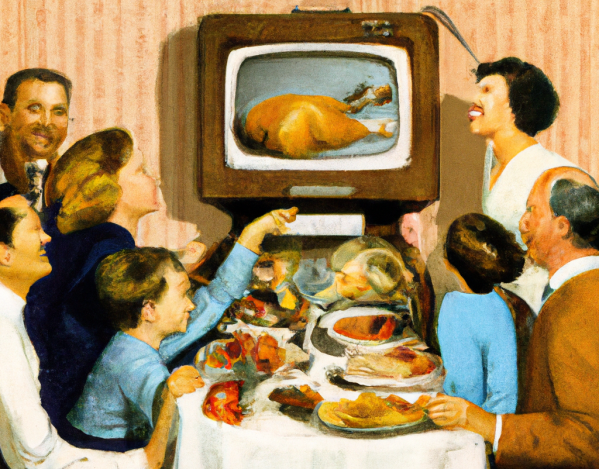
TV viewing, like everything else, has changed drastically in the last few decades. America used to have fairly homogenous tastes in TV. Any given night, it was a safe bet that a significant portion of America was sitting down to watch Happy Days, or All in the Family or, in an early generation, I Love Lucy.

But, with the explosion of the multi-channel universe, our TV tastes have fragmented along several lines. The result? It’s difficult for an advertiser to gain critical mass with an audience by advertising on any one show. America now watches TV in thousands of small splinter segments. And, as we consume more video online, we can pick and choose not just from a broad swath of programming, we can also shift consumption to match out schedule.

This post, however, is not about the challenges of time shifting, market fragmentation or digital consumption. This posts asks a more basic question: what is it about TV that we find entertaining? Why are some shows hits for several seasons, some for a single season, and others complete misses out of the gate? Why do we love the boob tube?

Why We Love TV

Well, the answer, in part, explains the fragmentation of the TV universe. There doesn’t seem to be any universal answer. Humans are too unpredictable to allow Hollywood to forecast with any great accuracy the success of a TV show. There are several different levels on which we can connect with a TV show and the success of any show depends on it’s unique mix of factors that lead to it’s connectability.

TV shows somehow have to weave themselves into the fabric of our society. It becomes a resonating soundboard for our popular culture. This means that the popularly of TV has to not only successfully navigate the churning waters of the diversity of human behaviour but also has to do so against the ever changing snapshot of our cultural context. Obviously, in the 1960’s, the Beverly Hillbillies struck a chord with a significant number of people. It’s unlikely that it would survive today.

In The Psychology of Entertainment Media: Blurring the Lines between Entertainment and Persuasion. (Lawrence Erlbaum Associates. 2004. Page Number: 275) Cristel Russell, Andrew Norman and Susan Heckler explore the various dimensions of TV “connectedness” and identify just some of the variables at play here. I’ll touch on the more interesting ones.

There are some fundamental truths here when it comes to why we watch TV. At the highest possible levels, there is commonality across all of us. We watch TV to improve our moods, learn something, aspire to a higher place in our society and give us something in common to talk about with our friends and co-workers. But each of those things are much too general to give us much insight into why one show succeeds while another might fail. For example, most sitcoms are funny enough to lift our mood, but some last for 10 seasons and others die shortly after the pilot airs. Simple mood improvement is obviously not enough to explain TV success.

Connecting through the Tube

We start to gain more insight when we look at the level of connection people have with one particular show. The depth of that connection determines loyalty, the degree of social “grease” (how much you talk about a show within your social circle) and, ultimately, the longevity of a show. What is that distinct “something” that causes us to connect with a TV show? On the basis of connectedness, one could argue that, although it only lasted 10 short episodes, Star Trek might be one of the most successful TV shows of all time. It engendered a level of connectiveness that was almost obsessive (remember the backlash when William Shatner told a bunch of Trekkies on Saturday Night Live to “get a life?”). That connectedness created a franchise that spawned 11 movies, 6 TV series and a lifetime slate of speaking gigs (if they want them) for the original cast.

So, what is connectedness? It’s that quality of a TV show that goes beyond simple watching to directly influence the personal and social aspects of our lives. When we connect with a TV show, we seek to jump over the gap that separates us from the show. Russell, Norman and Heckler show that this can happen in three ways:

The Vertical Connection: Viewer to Program

The connection between a viewer and a program is very similar to a brand connection. We become fans of the “brand” of the show. We watch every episode, we feel anxious when we miss an episode, We admire the quality of the production (i.e. the writing) and we may extend our loyalty to the purchase of the show on DVD  or perhaps books, soundtracks or other spin offs from the show.

The Horizontal Connection: Viewer to Viewer

Here, shared appreciation for a TV show acts as sort of a “social lubricant.” It gives us common ground for discussion within our social circles. This level of connectedness leads to group watching of a TV show. Often, there are real or aspirational similarities between the cast of the show and these groups of fans. For example, med students love to watch Grey’s Anatomy (and ER before that, and St. Elsewhere before that).

The Vertizontal Connection: Viewer to Character

Here’s where the line between reality and fantasy starts to get disturbingly blurred. Often, fans begin to identify with the cast members in a show, seemingly forgetting that they’re fictional. This combines aspects of the two previous connections. The connection is between the viewer and the show, but it’s a social relationship that goes beyond simple brand-like loyalty. We want to be friends with Ross and Rachel. We want to have Ray Romano as our next door neighbour (preferably without his parents). We want to join the Glee Club at William McKinley High School. We begin to adjust our reality to incorporate the characters fictional reality. This level of connection leads fans to begin adopting gestures, facial expression and vocal characteristics. They want to wear the same clothes, eat the same food and experience the same things.

It’s these three levels of connectedness that account for loyalty to, and through that, the success of a TV show. What leads to these connections?

Growing a Relationship over Time

If you look at the great TV series that have endured over time, they often have one thing in common – few were hits right out of the gate. Cheers, All in the Family, M*A*S*H and many others all took some time to find their audience. And, if we look at our connection to a TV show as a type of relationship, this is not surprising. Relationships don’t suddenly blossom overnight. They take time to develop.

The most successful TV series rely heavily on strong characters. And the series with longevity seem to have characters with some depth and complexity. It takes time to get to know a Hawkeye Pierce, a Sam Malone or even an Archie Bunker. What at first seems to be a one dimensional character reveals more of themselves over time, in a multitude of situations. Strong writing drives this character development.  Just like in real life, our strongest TV relationships tend to be with people we’ve known for awhile. Their initial appeal first catches our interest, but there better be some depth there to maintain our interest.

A Continuing Storyline

Just like relationships, a narrative that bridges the gaps from episode to episode seems to lead to greater loyalty. The price of entry is higher (you need to invest in watching a few episodes to pick up the threads that carry from show to show) but once you make the investment, it’s much easier to get hooked.

A personal example shows how powerful this loyalty can be. One of my favorite shows on TV was West Wing. My level of connectedness was primarily between viewer and show – I was awestruck by Aaron Sorkin’s writing. But if ever a TV show required a substantial investment on the part of the viewer, West Wing was it. If you missed an episode or two, the rapid fire dialogue between Toby, C.J. and Josh might has well have been in Mandarin. You had no idea what the hell was going on. I managed to make this investment for the first 3 seasons of West Wing but then lost the storylines somewhere in season 4 and, despite trying a few times, never managed to pick them up again for the rest of the show’s primetime run. Last year, I bought the show in a box set and I’m now working my way through it. The advantage of watching on DVD is that you can always go back to listen to a particular piece of dialogue again.

The Human Connection to the Narrative

A continuing storyline gives us a narrative to follow. And we are huge fans of narratives. We tend to see the world, and even ourselves, through the narrative lens. As I said in a previous post, our brains have a inherent connection to stories. Our brain is built to process a story.

Narratives give us a self view that we use to make sense of the world and our place in it. It provides a frame of reference for the very tricky question of consciousness: Why do we exist? How do we exist? What causes us to act? What causes others to act? Good, evil, God, the Devil, nature, catastrophe, our place in the world – all these questions that we have relentlessly pondered since we were first able to, all have been woven into narratives that form our common mythology. “All the world’s a stage, and all the men and women merely actors.” Shakespeare was on to something, but he had it backwards. The stage is in our minds, a construct of our brain. The script is written by us, and we assign the roles as we see fit, including our own.

If we constantly participate in this ongoing narrative we write of our own lives, deciphering the motivations of others from our vantage point in our own life stories, is it any wonder that we find  continuing story lines particularly appealing in our favorite TV shows? This is, as we see it, life. And these story lines bring the characters alive (sometimes too alive) for us.

Why We Love Happy Endings

If we see life as a story, it makes sense that we’re suckers for a happy ending. Aristotle figured this out about humans 2000 years ago. ” A good man must not be seen passing from happiness to misery,” and “a bad man from misery to happiness.” Narratives have to make sense to us, based on our understanding of what is right or wrong. In other words, shit happens, but don’t let it happen in my favorite TV show. Of course, script writers use our inherent dislike of this moral unfairness to tweak us on a regular basis. But in doing so, they run the risk of losing us. After getting hooked on an entire season of 24, I was so upset at the resolution of season 1 that I never watched it again. I had the same reaction when Mark Green died in ER. There are consequences if you decide to break Aristotle’s laws of narrative.

Tomorrow, I’ll further explore how we connect with TV. For example, I’ll look at why women tend to accept fictional characters at face value, while men remain more detached, treating characters as a literary device to be manipulated by the author. Why teenagers in particular are susceptible to being influenced by characters in TV shows. Why some of us go “over the edge” in our degree of “fan-ship”. And why some of us love action packed shows and others like to relax with more sedate shows.

The Psychology of Entertainment: Our Need for Entertainment

Anytime we talk about human behavior thats triggered by the equipment we all ship with – namely our brains-we have to account for variations in how that equipment operates. We are not turned out by assembly line, with quality control measures insuring that all brains are identical. Each brain is distinct, formed both by our own genetic signature and by our environment. While variation across the human genome is remarkably minor, we are all products of bespoke design – handcrafted to make us uniquely us.

Distribution of Our Uniqueness

SnvThis variation typically plays out in a normal distribution curve, more commonly known as a bell curve. Most of us cluster towards the center – the norm. And as we move out from the center, venturing one or two standard deviations from the norm into outlier territory, our numbers drop dramatically.
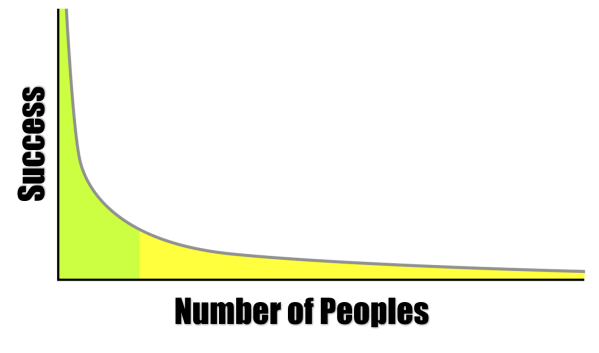
If we talk about the phenomenon of entertainment, we are definitely talking about how our brains operate. This means that we could expect to find a normal distribution in attitudes towards entertainment, with a peak in the middle and rapidly descending slopes on both sides. For example, one would expect such a distribution in the types of entertainment we prefer: the books we read, the shows we watch, the music we listen to. in fact, with a little statistical origami, we can do a quick check on this. Take a standard distribution curve and fold it in half along the “norm” line (shown as 0). The shape should look familiar. We have Chris Anderson’s Long Tail. The similarity of tastes close to the norm accounts for blockbusters and best sellers. These are the forms of entertainment that appeal to the greatest number of individuals. More esoteric entertainment tastes live well down the curve, in outlier territory.

Long_Tail

The Need for Entertainment Scale

I’ll come back to the types of entertainment we prefer and why in a later post. Today, I want to concentrate on another variable in the human psyche that also can impact our engagement with entertainment: how much do we need to be entertained? Why are some of us drawn more to fiction and others to non-fiction. Why do some of us like the escapism of a TV sitcom and others prefer to watch the news? Why do some of us have 5 TV’s in our house, with hundreds of digital channels, and others have none? What does the normal distribution curve of our need for entertainment look like. That was exactly the question that Timothy Brock and Stephen Livingston from Ohio State University tackled (The Psychology of Entertainment Media: Blurring the Lines between Entertainment and Persuasion. Publisher: Lawrence Erlbaum Associates. Place of Publication: Mahwah, NJ. Publication Year: 2004. p 255-268).

The need for entertainment seems to be almost addictive in some cases. In the study, Brock and Livingston restrict their definition of entertainment to passive consumption of some form of entertainment, either TV, radio, film, print, theatre or sport spectacles. Of these, television is the most common, so many of the measures revolved around our relationship with that specific entertainment medium. I’ve talked before about the impact of TV on society, but some of the empirical research on our reliance on the tube is astounding. In 2002, Robert Kubey and Mihaly Csikszentmihalyi found troubling evidence of a true biological addiction to TV:

“To track behavior and emotion in the normal course of life, as opposed to the artificial conditions of the lab, we have used the Experience Sampling Method (ESM). Participants carried a beeper, and we signaled them six to eight times a day, at random, over the period of a week; whenever they heard the beep, they wrote down what they were doing and how they were feeling using a standardized scorecard.

“As one might expect, people who were watching TV when we beeped them reported feeling relaxed and passive.

“What is more surprising is that the sense of relaxation ends when the set is turned off, but the feelings of passivity and lowered alertness continue. Survey participants commonly reflect that television has somehow absorbed or sucked out their energy, leaving them depleted. They say they have more difficulty concentrating after viewing than before. In contrast, they rarely indicate such difficulty after reading. After playing sports or engaging in hobbies, people report improvements in mood. After watching TV, people’s moods are about the same or worse than before.

“Thus, the irony of TV: people watch a great deal longer than they plan to, even though prolonged viewing is less rewarding. In our ESM studies the longer people sat in front of the set, the less satisfaction they said they derived from it. When signaled, heavy viewers (those who consistently watch more than four hours a day) tended to report on their ESM sheets that they enjoy TV less than light viewers did (less than two hours a day).

What value do we place on the ability to watch TV? Brock and Livingston gave 115 undergrads two scenarios. In the first, they could correct a hypothetical mix up in their official state citizenship in return for a one time cash gift. The undergrads were asked to put a value on changing their official allegiance from one state to another. 15% would do it for free and another 40% would do it for under $1000.

The next scenario asked the students what compensation they would require to give up TV for the rest of their lives. A permanent tracking implant in their ear would notify a monitoring service if they cheated and the entire gift would be forfeited. 8% were willing to do it for free, but over 60% would need at least a million dollars to give up TV forever.

Findings: Men Need More Entertainment & The More You Think , The Less You Need to Be Entertained

In their scale of the need for entertainment, Brock and Livingston assessed three factors: Drive (how actively do you pursue passive entertainment?), Utility (how useful is passive entertainment, both to you specifically and in general?) and Passivity (how active do you like your entertainment to be?).

So, how do we fare on our need to be entertained, based on Brock and Livingston’s scale? First of all, men seem to have a stronger drive to be entertained than women. Males scored higher on the amount they spend on entertainment, the daily need for entertainment and the inability to function without entertainment. One would assume that the “couch potato curve” would skew to the male side of the demographic split.

Also interestingly, Brock and Livingston found an inverse relationship between the need to be entertained and the “need for cognition” – a measure of how much people like active problem solving and critical thinking. Again, the more you think, the less reliant you are on TV.

In a follow up study, Brock and Livingston tried to draw a defining line between entertainment (in their definition, passive consumption) and sensation seeking. I’ll touch on this in tomorrow’s post.

The Psychology of Entertainment: How Our Brains Connect with Stories

Andi Bell has an amazing memory. In fact, if you shuffled together 10 decks of cards, put them in front of Andi and gave him 20 minutes, not only would he have memorized every single card in the pack, he would have memorized them in order. 520 cards, and Andi will remember every suit, every value and what order they came in. It’s a feat that boggle the everyday mind. Andi, however, has a secret. And that secret is the power of narrative. We love a good story!

As I mentioned last Friday, I want to explore the psychology of entertainment a bit more today as we explore it’s role in marketing. In a post last week, I said that audience patterns have to establish some stability before we can effectively market to them. We have become a society of early adopters, or, at least, marketers treat us as such. Because we are continually rushing from bright shiny object to bright shiny object there is tremendous churn in most online audiences. I called it “chasing Digital Fluff”.

Keeping Your Audience in One Place

But what could create the audience stability I’m talking about? I put forward usefulness as one element. In a comment, Lance Loveday also suggested entertainment value. I found this intriguing, but of course, Lance’s suggestion also raised a number of  questions for me. What represents “staying power” in entertainment? Why are some entertainment channels fads and some long enduring trends? How do our brains respond to entertainment? What is the difference between a TV show and a video game, for instance? What is it about entertainment that makes it so…well…entertaining? And finally, is Lance right? Will the entertainment factor be enough to move some digital channels from fad to trend? And, if so, where should we place our (or more correctly, our client’s) bets?

Today, I want to begin by exploring how we respond to what seems to be the oldest form of entertainment in the world: stories. We humans have a deeply wired connection with stories. I suspect that as soon as humans began communicating, we began telling stories. In fact, stories are so important to us, it appears that we have a special channel in our brains to interpret stories – evolution has equipped us with a specialized story processor. And it’s this story processor that Andi Bell uses to memorize 10 packs of cards. Bell discovered the power of the story processor, what he calls the Linking Technique, and it made him the three time World Memory Champ.

How to Memorize 520 Playing Cards – Tell 1 Story

The human mind never evolved to deal effectively with random facts. Our brain does not deal that well with the abstract. That’s why we invented writing, symbols, alphabets and math. These are the ways we take the non-concrete and manipulate them for our use. The world of our ancestors tends to play out in much less abstract terms: Where is food? Where is water? What happens when I sleep too close to predators? What happens when I steal my neighbor’s dinner? What happens when I overstep the boundary between my tribe and the neighboring tribe?

These were the realities of our ancestor’s lives and, as such, our brain evolved native mechanisms for dealing with these realities. The ability of our brains to navigate through an physical environment or to remember parables (which are nothing more than behavioral reinforcing stories) is highly developed. But in this world, our evolutionary environment, the abstract mechanisms we take for granted may be completely absent. For example, many primitive tribes have no numbering systems, or, if they do, they may be limited to three words: one, two and many. We can remember how to navigate through hundreds of places we’ve been before, or we can remember the important details of thousands of stories, but remembering a phone number consisting of just 7 or 10 digits can be a challenge. It’s not because we’re addle minded, it’s just because our brains use different mechanisms.

Andi Bell discovered this and found a way to link the abstract to the more highly evolved memory modules of our brains: our on-board navigation computer and our capacity for remembering a story.  Bell’s technique is fairly simple. In his mind, he has a standard route imagined through his home town of London, England. He’s memorized the route in detail. That’s the first step. The second step is to create a story that plays out along the route. Here, he takes each card in a standard deck of cards and creates an imaginary stand-in for it. He replaces abstract numbers and symbols with concrete images from the real world. The 8 of clubs could become a brown bear. The 3 of diamonds could become a pineapple. These become the “characters” of a story imagined on the fly. 520 random cards becomes 520 elements in a story spread through the streets of London. To recall all the cards, Andi has to follow the route through London, retelling the story as he goes. Bell’s technique is not new. It’s called the Method of Ioci, otherwise known as the Memory Palace, and was used by the ancient Greeks and Romans.

Why do stories seem to have a more direct path to our memory? What is it about the power of a story that’s so compelling to humans? Whatever it is, Malcolm Gladwell is a master of the power of a story and it’s kept him on top of the best seller list for several years now.

Gladwell’s Secret for Writing Bestsellers

Writing non-fiction is a challenge. It almost always involves the writer getting a bunch of facts or opinions from their head onto paper. That in itself is not a challenge. But getting facts into a form that is compelling to read is. But at least with facts, the writer can choose interesting ones. Opinions offer even more of a challenge. We are naturally suspicious of other people’s opinions. They have to pass through the filter of what we ourselves believe in. So how does the non-fiction writer take this unwieldy bucket of fact and opinion and craft it into something that someone else will want to read? How do you write a non-fiction best seller?  With half a million books published every year (and that’s just the ones we can keep track of), there is an extraordinarily long tail in book selling.  The 100 best selling non fiction books of 2009 represents just .02% of all books published, yet represent a huge chunk of the revenue. If there is a magic formula to making this list, Malcolm Gladwell seems to have found it. Right now, Gladwell has 2 of the 15 top selling non fiction books on the New York Times best seller list – Outliers and What the Dog Saw. Gladwell’s Blink and The Tipping Point were perpetually on top of best seller lists for the better part of the last decade. So, what’s Gladwell’s formula?

Like Andi Bell, Gladwell has discovered the power of narrative and it’s appeal to humans. Malcolm Gladwell collects social observations, both through his experiences and that of his network of friends. When he uncovers a compelling question, he first goes to his collection of observations and then, with a journalists instincts, he uncovers the stories behind the observations and tells these stories with a lucid, clear style. He lets his stories make his point for him, rather than pad his narrative with reams of opinionated rhetoric. Gladwell’s style is irresistibly compelling, making him the most successful non-fiction writer of the last decade.

How We Process a Story

So, why is a story so much more compelling than facts that are simply strung together. Why does Gladwell go to the trouble of finding the stories to illustrate his questions, essentially creating a scientific and sociological “whodunnit” (and in this case, the answer to who is always the same – we did it)? Well, for one thing, the basic premise of any Gladwell book could probably be told in 500 words if all the stories were stripped away. But then, no one would read those 500 words, would they? And additionally, stories make things stick in our brains. We are more accepting of a story and we remember it better. As with memory, our brains were built to accept stories.

There is empirical evidence (Prentice and Gerrig, 1999) that we process narrative differently than we do simple factual rhetoric. Narrative slips in through a different window, one more aligned with the physical world around us. We imagine ourselves experiencing the story. There are concrete hooks in our mind that we can hang the story on, making it more relevant to us. We become engaged with characters in the story. Gladwell wisely adds a generous helping of personal detail about the central characters in his story, as in his compelling description of Lois Weisberg in the Tipping Point :

loisLois (everyone calls her Lois) is invariably smoking a cigarette and drinking one of her dozen or so daily cups of coffee. She will have been up until two or three the previous morning, and up again at seven or seven-thirty, because she hardly seems to sleep. In some accounts — particularly if the meeting took place in the winter — she’ll be wearing her white, fur-topped Dr. Zhivago boots with gold tights; but she may have on her platform tennis shoes, or the leather jacket with the little studs on it, or maybe an outrageous piece of costume jewelry, and, always, those huge, rhinestone-studded glasses that make her big eyes look positively enormous.

Gladwell has conjured an image of Lois in our minds. To make his point, which is that the make up of most social networks include hyper connected hubs like Weisberg, Gladwell invests hundreds of words in creating a vivid profile of her. Why? Because it makes it more real to us. It turns a simple observation – our networks contain super connected hubs – into a story that engages us at a totally different level. We drop our rational guard and allow ourselves to become part of the story. In doing so, he avoids that trap that keeps most non-fiction off the best seller list – he knows that best way to inform is to entertain.

So, we’ve learned that entertainment works best when it slips past our rational processing mechanisms and hits a more concrete, ancient part of our brain. There needs to be ease of access by respecting what our brains were built to do. Tomorrow, I’ll pick the thread up again when I continue to look at the psychology of entertainment.

Everyone’s a Critic: The Splinters of our Discontent

First published January 14, 2010 in Mediapost’s Search Insider

I had a bout of inbox convergence today. Just as I was speculating what this week’s Search Insider might cover, two separate emails surrounded a juicy little topic and delivered it to me on a platter. First, a post from Ad Age about how marketers are reluctant to use online conversations as a source of customer feedback: “‘Listening’ ostensibly has become the rage in consumer research, but the Advertising Research Foundation is finding that many marketers view what would seem one of the digital age’s biggest gifts to marketers — the torrent of unsolicited consumer opinion — as more of an added expense item than a blessing.”

And then, a small blog post on Echouser got me thinking: “It’s a concept for what an iPhone app designed to measure experiences (any experiences, from surfing a website to hopping on BART) could look like… Can you imagine if we were able to rate experiences on the fly, all day every day?”

Customers are Talking…

There’s been a lot of talk about the shift of control to the consumer and empowerment. As 2009 drew to a close, I talked about the shape of marketing to come. One of the key foundations I identified was participation — actively engaging in an ongoing conversation with customers. The two posts in my inbox start to get at the potential of this conversation.

In the first post, ARF laments advertisers’ reluctance to tap into ongoing online conversations as a source of customer feedback. Valid point, but I can understand their reluctance. This is unstructured content, making it qualitative, anecdotal and messy. Marketers balk at the heavy lifting required to mine and measure the collective mood. Some tools, such as Collective Intellect, are starting to take on the hard task of migrating online sentiment into a dashboard for marketers. The easier it gets, the more likely it will be for marketers to actually do it. Until then, we’re stuck with consumer surveys and comment cards.

…Anytime, Anywhere…

But it’s the second post that really got me thinking. Always-on connections have already given a voice to consumers, one that’s heard loud and clear. But what if we did indeed have a convenient and commonly structured way to provide feedback on every single interaction in our lives through mobile connections? What if marketers could know in real time what every single customer thought of them, based on the experience he or she just had? Some cringe at the thought. Others are eager for it. The second group will inevitably prevail.

Given the level of investment required on the part of the user, I suspect this channel would only be used in extremely negative and extremely positive circumstances. We don’t tend to take the time to comment on things that come reasonably close to meeting our expectations. But even so, it’s a powerful feedback channel to contemplate, giving the truly user-centric company everything they could ever wish for.

…So Listen!

Last week, I talked about the mother lode of consumer intent that exists in search query logs and how we’ve been slow to leverage it. This week, we have an equally valuable asset rapidly coming down the pipe — a real-time view of our customers’ sentiment.  That’s a one-two punch that could knock the competition out cold.

Living Between the Disconnected Dots

We’ve been in transition for a long time. And it’s starting to wear us down.

Cognitive anthropologist Bob Deutsch had a column this morning that talked about the crisis of time we’re all experiencing in our lives. It seems we’re always rushing to do something. In the column, Bob had a paragraph that jumped out at me:

The consumer finds himself at a cognitive impasse, where America is presently “between mythologies.” We are not what we once were, and we do not yet know what we will become. This is a hard place for a culture. Worse, because of the speed of the culture, and the perceived complexity and unpredictability of things, people experience the world as a series of unconnected dots.

Myth-Beggoten

virginofguadalupewikiHis line – ‘between mythologies” – was particularly interesting. Humans are animals that need to share a lot of things. We are herding animals and this need to herd drives much of our behavior. We look for commonalities and feel more comfortable when we find them. It gives us a sense of belonging that is very important. And myths are an essential part of that formula.

For our entire history, our shared acceptance of myths has united us. Myths govern our view of the world. They are the tools we have invented to explain the unexplainable. But, one by one, science and technology have stripped down our myths and thrown them into question. Myths come from the deeper, darker recesses of our brain, down in the sub cortical regions of our neural basement. They don’t stand up very to the cold hard light of rational reasoning. And increasingly, we are forced to be reasonable about the things in our life. Information drives us towards reason, and we have more information thrown at us than ever before.

Moral Reinforcement

Myths also served another purpose. They gave us rules to govern our behavior. Most of our myths were religious in nature and came with a corresponding code of social behavior. The basic rules of herd survival,  including fairness and reciprocal altruism, were baked into the package. That’s why a variation of the Golden Rule is found in every single religion in the world.

But, when the myths start to break down, what happens to the rules of behavior that came bundled with them? We start to get confused. Things start to become disconnected.

The Atheist Next Door

There’s a mix up of cause and effect that we struggle with when we talk about things like religion. Even if we renounce our religion, we don’t suddenly become evil people. Just because atheists don’t believe in God doesn’t mean they’ve freed themselves from the obligation to do right  by their fellow man.  In fact, if you had to pick someone to be your neighbor, an atheist wouldn’t be a bad choice. Statistically speaking, the percentage of atheists in prison is far less than the percentage of atheists in the general population. Atheists are also less likely to get divorced. When you look at the types of behavior that govern the continuance of social harmony, atheists have a far better track record than most segments of the population.  Religion doesn’t cause morality. Morality superseded religion. You could say morality begat religion. Unfortunately, a lot of the less noble instincts of our species also got tied up in the whole religious bundle – including the tendency of humans belonging to different herds to try to kill each other.

But when our myths, including religion, start to slip away under the scrutiny of rationalization, we start to feel cut out from the herd. We start to become disconnected from our sense of “oneness”. We still try to do the right thing, but the reason why isn’t as clear as it once was. If we stop to think about it, we can come up with a Dawkinesque rationalization using things like game theory and “tit for tat” reciprocal strategies, but it was a whole lot easier just to believe that God would smite us if we weren’t nice. The fact is, we don’t take much time in our lives to “stop and think.” We cruise through live 95% of the time on emotional autopilot and myths are great guidance systems for emotions.

Myth-drift

So, back to Deutsch’s point. What happens as we drift between mythologies? The Pew Forum on Public Life and Religion has shown that the percentage of “non religious” people in America has grown from just over 7% in 1990 to over 16% in 2007. What is perhaps even more telling is to see how that group breaks down. Only 1.6% were atheists and 2.4% agnostics. These are the ones who were, to some degree, proactive about severing their ties with an accepted mythology. 12.1% were simply drifting away from their mythologies. They were wandering out there, beyond the idealogical boundaries of the herd.

Deutsch talks abut the increasing pace of our lives being the culprit in our sense of disconnection. And, in that drive to do more in less time, we tend to sample life in little commoditized chunks. Ironically, in the same email that continued the link to Deutsch’s article was a sidebar with the top 10 franchises of 2009, courtesy of Entrepreneur magazine:

Top 10 Franchises Of 2009
1.    Subway
2.    McDonald’s
3.    7-Eleven
4.    Hampton Inn/ Hampton Inn & Suites
5.    Supercuts
6.    H & R Block
7.    Dunkin’ Donuts
8.    Jani-King
9.    Servpro
10.    am/pm Mini Market

It was a fitting echo to Deutsch’s words. The most successful businesses are the ones that slice off some aspect of our lives and serves it up to us fast and shrink wrapped, preferably at a cheap price.

I’m not so sure we are simply “between mythologies” as Bob Deutsch suggests.  I suspect we’re moving too fast for myths to keep up. Myths, by their very nature, have to grow to critical mass to be effective. Historically, myths were the foundation for global religions. Today, myths are email strings that quickly get exposed on snopes.com. We deconstruct myths before they get a chance to gain enough traction to serve their purpose: uniting us in a common view. We have access to too much information for myths to stand much of a chance of survival. That’s where I’ll pick up in tomorrow’s post.

The Shape of Marketing: 2010 and Beyond

First published December 24, 2009 in Mediapost’s Search Insider

You’re going the get the inevitable recap and prediction columns as the days of 2009 dwindle. I’ve been spending a lot of time lately thinking about the shift in marketing. It seems to me that there are three fundamental drivers of this shift. I’m going to spend today talking a little bit more about them, as I believe these are the bearing points we have to pay attention to.

Influence

It’s somewhat odd, but for something as old as advertising, we still have remarkably little information about how it actually influences us. What are the exact buttons that are pushed by advertising? We’ve tried to come up with metrics that measure influence, like brand recall and affinity, but they have generally proven to have little to do with what we actually do in the real world. The ARF have been continuously pressing to introduce engagement as a new cross-channel metric, but the work of at least some academics have shown that even engagement might not be an indicative measure.  The whole question of subliminal influence has generally been pushed under the carpet because of the tainted perception going back to the ’50s and Vance Packard.

But the fact is, as we learn more about the mind and how we really make decisions, we find that the role of advertising in influencing our purchases is perhaps not so clear as we first imagined. The ability to quantify influence still evades us, but the call for measurable and accountable advertising is louder than ever. As you move closer to the purchase, measurement becomes easier. But when you move backwards to the earlier influencers, the picture becomes much murkier. I think the trails we leave online will help shed light on influence, along with the explosion of research being done through new neuro-research methods.

Participation

Perhaps the biggest shift in the marketplace has been the balancing of George Akerlof’s information asymmetry. We spend a lot of time talking about consumers being in control. I think this is taking it too far. What is true is that marketing is now about meeting the consumer halfway. Consumers have access to more information, not all of which is supplied by the manufacturer. Think of the difference between a church and a community hall to understand what the new marketplace looks like.  We have taken brands from behind the pulpit and forced them to sit down at a table and talk to us. This is new territory for the brands, as they learn that listening is at least as important as talking. Preaching has given way to participating. And when you think of it that way, this whole question of control becomes somewhat irrelevant. Do you control most of your conversations?

Intention

The last is a big one, and it has really driven digital marketing, particularly search. A consumer’s intention has always been an overlooked part of most marketing programs. Intent was assumed but wasn’t really integral to marketing strategies. The only place intent played a part was in directory advertising (such as the Yellow Pages) — and when you’re the only game in town, you don’t have to spend much time refining the rules.

Search changed all that. We have become a “just in time” information economy, where intent drives huge volumes of very focused consumer activity as they gather required information. Harvesting intent at the end of the process has been relatively simple — a good search placement and an effective landing page are all that’s sometimes needed. It becomes much more difficult when intent is further removed from the end transaction. Intents can change as you move through a long consideration process, shifting from gathering information to checking prices to short-listing your alternatives to actually placing an order. Understanding intent and meeting it effectively are the challenges that separate the great search marketers from the bottom-feeders

These three drivers are the forces that are changing marketing. When I look at them for commonalities, one comes to mind: in each, we have to get better at knowing the people on the other side of the transaction. We have to spend more time understanding what influences our prospects’ buying decisions, how we can participate effectively in the process and how we can help satisfy their intent. All of this depends on us getting to know our prospects better. It’s not a “market”; it’s dozens — or hundreds, thousands or millions — of individuals. And we have to learn to have conversations with each of them.

Mindless Online Behavior: Web Navigation on Autopilot

One of the biggest problems with Rupert Murdoch’s view of the world is that he’s assuming people are making conscious decisions about where they go to get their news and information. He somehow believes that people are consciously deciding to get their information from Google rather than one of his properties, and Google is encouraging this behavior by indexing content and providing free “back doors” into the WSJ and other sites. In other words, Murdoch has a conspiracy theory, and Google and online users are co-conspirators. The truth isn’t quite so evil or intentional.

Our Stomach’s Autopilot

I talked yesterday about the importance of information foraging and how we use the same strategies we use to find food to find online information. But tell me, how conscious are your decisions about where and what to eat? How long do you deliberate over eating a piece of toast in the morning, a sandwich at lunch or a plate of pasta at night? If you’re hungry, how often do you find yourself standing in front of the fridge, staring inside for a quick snack? It wasn’t as if you had a detailed series of decisions here: Hmmm..I’m hungry. Where would be the best place in the house to find food? The bathroom? No, that didn’t work. How about the bedroom? No, no food there. Hey, this kitchen place seems to be promising! Now..where in the kitchen might there be food? In this cupboard? No, that’s dishes. Down under the sink? Ooops..no, I don’t know what the hell’s under there, but it’s definitely not food. Hey..what’s in this big steel box here? Ah…Bingo!

Okay..it’s a ridiculous scenario, but that’s my point. It only seems ridiculous because we’ve found a more efficient way of doing it. We don’t have to go through these decisions every time because we’ve done it before and we know where to find food. Even if we went into someone else’s house, we would know that the kitchen is the best place to find food, and the fridge is probably the surest bet in the kitchen. We don’t have to think, because we’ve done the thinking before and know we can navigate by habit and instinct.

Where Do You Keep the Cockatoo Chichild Fillets?

But what if you visited the Jivaro tribe of South America, where the culture is so different that we have no cognitive short cuts to follow? Much of the food they eat we’ve never even seen before. And, as one of the most primitive cultures in the world, there are not a lot of kitchens or fridges to act as hints about where we might find something to eat. If we were suddenly dropped into the middle of a Jivaro settlement with no guide, we would have to do a lot of thinking about what to eat and where to find it. And how would we feel about that? Anxious? Frustrated? Uncertain? We don’t like it when we have to think. We much prefer relying on past experience and habits. The brain heavily discourages thought if there’s a more efficient short cut. It’s the brain’s way of saving fuel, because mobilizing our prefrontal cortex, the “reasoning” part of our brain, comes with a big efficiency hit. The PFC is powerful in a “single minded” way, but it’s also an energy hog. The way the brain discourages unnecessary thought is through stimulating unpleasant emotions. If you’ve spent much time in foreign cultures, you know the constant stress of finding something to eat can quickly go from being exciting to being a complete pain.

Here’s the other thing about our brain, it isn’t discriminating about when to kick in and when not to kick in. It usually takes the path of least resistance first, relying on past experience rather than thinking. The more familiar the environment, the more the brain feels safe in relying on past experience and habit. What does this mean? Well, when you’re hungry, it will mean you suddenly find yourself standing in front of the fridge with the door open without even knowing what you’re looking for. When you realize you actually want some crackers (i.e. when your brain finally kicks in), you swing the door shut and go to where the crackers are kept. Online, it means you go to Google and launch a search without thinking through what your actual destination might be.

Google, The Information “Fridge”?

So, I’ve gone fairly far down the path of this analogy to make a point. According to Pirolli, we use exactly the same mechanisms to find online information. We go first to the fridge, or, in this case, Google, because nine times out of ten, or even 99 times out of a hundred, we find what we’re looking for there. And, if we don’t, we start to get frustrated because our brain is suddenly called into service and it isn’t at all happy about it. There’s no conscious conspiracy to screw Rupert Murdoch, there’s just us following our own mental grooves. And these grooves dictate a huge percentage of our online activity. There’s been little neuro-scanning research done on how our brains work during online activity, but the little that’s been done seems to indicate a regular shifting of activity from the “reasoning” to the “autopilot” sections of the brain. I suspect strongly that this is especially true when we use search engines. If we can navigate on autopilot, we will.

This principle holds true for almost all online interaction. I keep hearing about the “joy” of discovery online. I believe that’s largely crap. As online becomes a bigger part of our lives, we depend on it to do more and more and we don’t have the time for “discovery”. We don’t have the time to set aside 2 hours to browse through WSJ.com, meandering through the content and providing a willing set of eyeballs for all those ads. We want to find what we’re looking for, get in and get out. There are occasions when we’re willing to invest the time for a long voyage of discovery, just as there are times when we will go out and graze our way through a smorgasbord buffet, but it’s not the norm. As I said in the last post, Google and search has given us a “just in time” information economy and we have forever shifted our concept of information retrieval. How the providers of the information make money from that remains to be figured out, something I’ll spend some more time talking about tomorrow.

Socially, We’re Suckers for a Deal

Razorfish’s new FEED 2009 report found that consumers like to spread the word digitally about great deals on brands. In fact, this far surpassed their desire to just talk about brands.

Humans are still Humans, even Online

Here’s the thing that gets me. When we talk digital channels, we seem to forget that humans are humans. We’ll still be the way we’ve always been, we’ll just do in on a new canvas. The “finding” of FEED 2009 discovered that we like to talk about deals. This has been hardwired into humans since we crawled out of caves. In a bit, I’ll share the findings of an interesting study that looked at how this social news spreads through our networks.

The Results of FEED

But first, let’s look at the other results of the study. Despite my morning grumpiness, this is a report worth downloading:

FEED09_Chart-Q1765% of consumers have had a digital experience that either positively or negatively changed their opinion about a brand. Again, this is behavior that is common, we all have perception altering brand experiences. As we spend more time online, it’s natural that this will happen here too.

Branding is now a participatory experience. We’re no longer passive consumers of brand messaging. We now expect to roll up our sleeves, get in and muck around with the building of brands. We want to do things with the brand. We will now participate in building the aggregate story of a brand. 73% of study participants had posted a product or brand review on web sites like Amazon, Yelp, Facebook or Twitter. We now have a voice and we’re using it.

We’re becoming Brand Fans. 40% of consumers have “friended” a brand on Facebook and/or MySpace and 26% of followed a brand on Twitter. Again, this isn’t new, it’s just going digital. There are certain brands that inspire fierce loyalty: Apple, Harley Davidson, Nike. It’s natural that these Brand Fans would now be expressing themselves online. One word of caution for Brand Marketers here. People won’t suddenly become fans just because you’re on FaceBook. You have to be a brand that people care about.

FEED09_Chart-Q27Here’s the study tidbit that was “surprising”. Of those that follow brands on Twitter, 44% said access to exclusive deals is the main reason. Same is true for those that “friended” a brand on Facebook or MySpace..accounting for 37% of participants. The next highest reason for following a brand on Twitter? Being a current customer, at 23.5% And again, this would be for those brands that inspire an unusually high degree of loyalty.

Strength of Weak Ties

Sometime ago, I talked about a fascinating study by Frenzen and Nakamoto that looked at how rumors, or in this case, news of a bargain, spread through social networks. It explored the roll of Mark Granovetter’s famous “Weak Ties” in social networks. Social networks tend to be “clumpy”, rather than uniformly dense. There are dense clumps, representing our families, closest friends and co-workers that we see every day. You’re connected to these people with “Strong Ties”. But the clumps are also connected with “Weak ties” that span the gaps. These are ties between more distant family, casual friends and acquaintances. As Granovetter discovered, news spreads quickly through the strong ties within a clump, but it’s the ability to jump the weak ties that really causes word to spread throughout the network. We rely on the “connectedness” of these weak ties for things like news on potential jobs, social tidbits and yes, the scoop on a great bargain. If you look at the nature of these weak ties, you’ll realize that it’s exactly those types of ties we tend to maintain on Twitter and Facebook.

In 1993, Jonathon Frenzen and Kent Nakamoto decided to explore the conditions that had to exist for news to jump from cluster to cluster across those weak ties. They tested the nature of the message itself and also how the news would impact the person delivering the message, a condition called moral hazard. In other words, would the messenger lose something by spreading the word? The scenario they used to test the conditions for this social “viralness” was news of a sale. There were three variables built into the study: the structure of the network itself (strongly connected vs weakly connected), the attractiveness of the sale (20% off vs 50 to 70% off) and the availability of the sale item (unlimited vs very limited quantities – introducing the aspect of moral hazard).

Frenzen and Nakamoto found that in all cases, news of the sale spread quickly through the strong clusters. But when the message wasn’t that remarkable (the 20% off example), word of mouth had difficulty jumping across weak ties. Also, when moral hazard was high (quantities were limited) again, the message tended to get stuck within a cluster and not be transmitted across the weak ties. If you look back at the original post, I go into more depth about how this impacts our inclination to spread news through our networks.

Twitter: The Weak Tie Pipeline

So, let’s take this back to the Razorfish study. There needs to be a few conditions present for news to spread along weak ties: The information has to be valuable (50 to 70% off) and it can’t put the person holding the information in moral hazard (if I share this information amongst too many people, there will be nothing left for me or my family). The example given in the study, following a Brand on Twitter to get news of exclusive offers, is our “weak tie” to the brand, so we can be first to benefit. And, if the discount is substantial and there is low moral hazard, we will in turn Tweet about it ourselves.

The Razorfish study indicated surprise that more people were engaging in social networks to learn about discounts and not to evangelize brands. Again, if we look at human behavior, there is no surprise here. Brand evangelization engages a completely different part of our brain, the same part, incidentally, that gets triggered when we talk about religion and other unusually strong beliefs. These are things most of us hold closer to our chest. We share them with our strong ties, but we don’t usually spread that across weak ties. There are exceptions, of course, but I think most marketers assume all of us are willing to build public shrines to their products. That’s just not how humans tick.

But, humans can’t resist spreading the word if that word has social value (a great bargain) and we don’t miss out ourselves by spreading the word. Those are the messages built to set Granovetter’s weak ties singing in a social network. We’ve been this way for a long, long time. And now that Twitter and FaceBook are here, we’ll still be that way.